
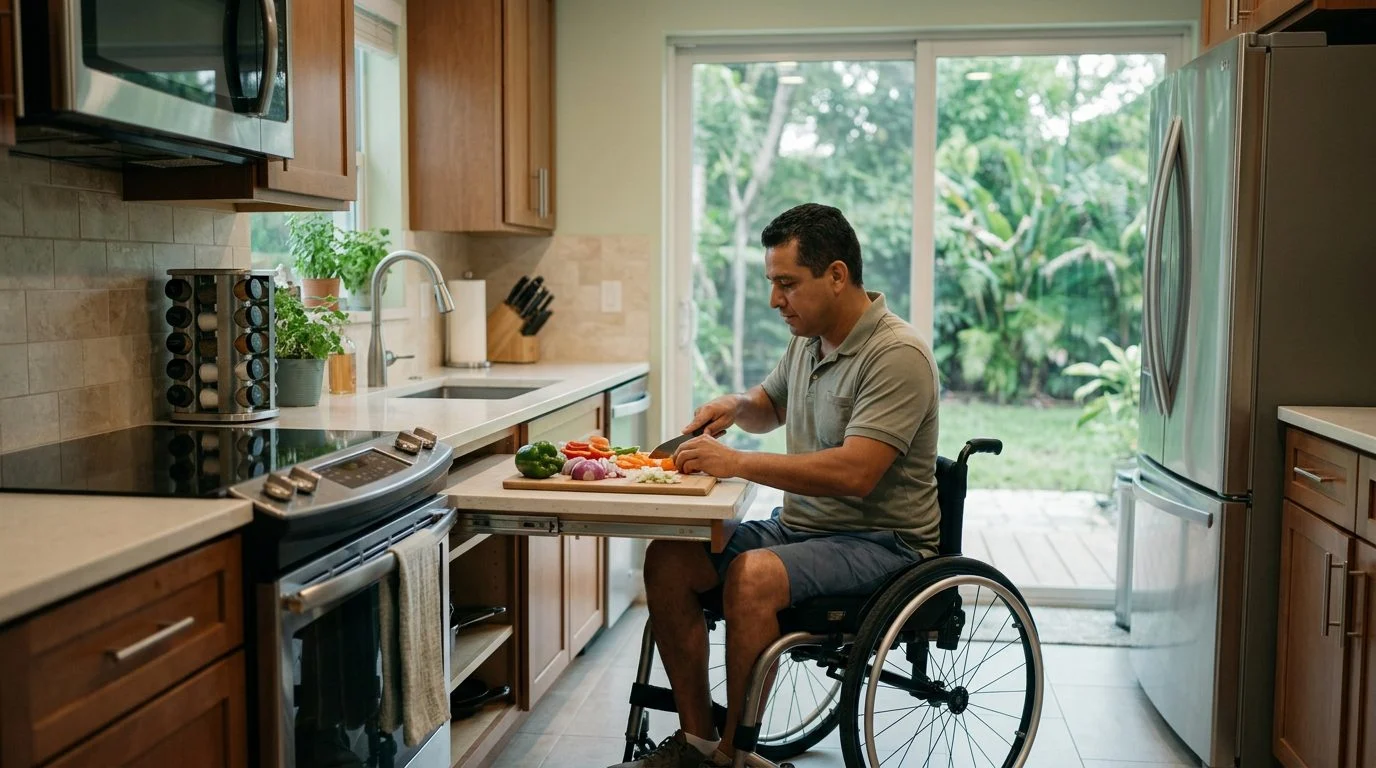
Spinal Cord Injuries | Serving Florida
Quadriplegic Meaning: Understanding the Difference from Paraplegia
Plain-language answers for injured people and their families trying to make sense of medical terms, and how CHG Personal Injury Lawyers can help with what comes next.
By CHG Lawyers · Published November 18, 2026
If a doctor just used the word quadriplegic, you may be trying to understand what it means for your family.
Quadriplegic describes a person who has paralysis in both arms and both legs. Paralysis means loss of function. The condition usually comes from damage to the spinal cord in the neck.
This guide explains the term in plain language. It covers how quadriplegia differs from paraplegia. It also covers the questions families often ask next.
What ‘Quadriplegic’ Means in Plain Language
“Quadriplegic” describes a person living with quadriplegia. Quadriplegia is paralysis that affects all four limbs.
The Cleveland Clinic explains that quadriplegia usually happens with injuries to the neck. In the neck, the spinal cord is called the cervical spinal cord.
Damage in that area can interrupt the signals that control the arms, hands, legs, and trunk. The result is loss of movement, feeling, or both.
Quadriplegia has another name: tetraplegia. Wikipedia’s tetraplegia entry describes it as loss of motor or sensory function in all four limbs. Doctors and medical references use the two terms interchangeably.
In everyday speech, “quadriplegic” works as an adjective. Person-first wording puts the person first. For example: “a person living with quadriplegia.”
The word tells you which body functions are affected. It says nothing about a person’s intelligence, personality, or worth.
If a crash or fall has left your family facing a quadriplegia diagnosis, you don't have to work out the legal questions alone. Talk with our team about what happened. Talk it through with our team — the first consultation is free, confidential, and carries no obligation.
Quadriplegia vs. Paraplegia: What Is the Difference?
The main difference is where the spinal cord injury sits.
- Quadriplegia affects the arms and legs.
- Paraplegia usually leaves the arms and hands working.
Paraplegia means paralysis of the lower body. It usually comes from an injury below the neck, in the chest or lower back.
With paraplegia, the legs and lower trunk are affected. The arms and hands typically keep their function.
Here is a simple comparison:
| Body part | Quadriplegia | Paraplegia |
|---|---|---|
| Arms | Affected | Usually spared |
| Hands | Affected | Usually spared |
| Legs | Affected | Affected |
| Trunk | Often affected | Lower trunk affected |
Real life can blur these lines. Injuries differ in level and severity. Two people with the same label can have very different abilities.
Knowing the difference helps families ask better questions. A medical team identifies the exact pattern for each patient.
Can a Quadriplegic Person Move Their Arms?
Quadriplegia affects the arms by definition. But the amount of movement varies from person to person.
The level and completeness of the injury shape what a person can move.
- Complete injury: Little or no function remains below the damage.
- Incomplete injury: Some function may remain.
Some people keep partial movement or feeling in the shoulders, arms, or hands. Others have little or none.
Arm and hand function matter a great deal for daily tasks. These tasks include eating, dressing, and using a phone. Rehabilitation teams work on these skills with each patient. They often use adaptive tools.
Ask your treating doctors and rehabilitation team for an assessment of the specific injury. They can explain what the injury means for movement. Follow their care plan.
Can a Quadriplegic Person Walk Again?
Walking again depends on the injury. No one can promise a particular recovery.
Three factors shape the picture: – Where the injury sits – Whether the injury is complete or incomplete – How the spinal cord responds over time
Quadriplegia involves the legs as well as the arms. Walking may stay limited, even when some movement returns. Results differ widely between people.
Medical research on spinal cord injury is ongoing. Current care focuses on rehabilitation, mobility aids, and adaptive equipment such as wheelchairs.
Follow your doctors’ care. Ask the treating team what recovery is realistic for the specific injury. Bring your questions to each appointment.
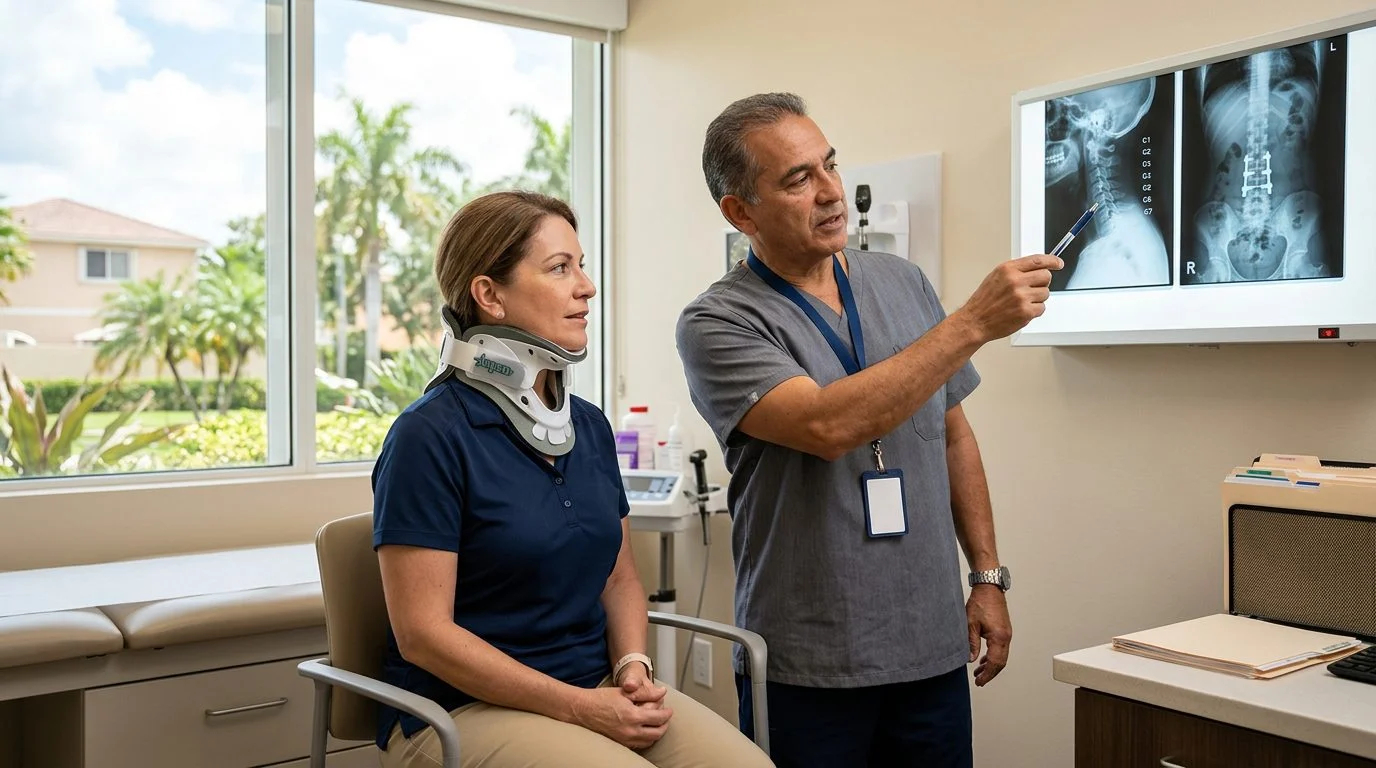
How Quadriplegia Is Caused: Common Accidents That Injure the Spinal Cord
Quadriplegia usually follows a sudden, forceful injury to the neck. This often happens in an accident. The harm can occur in a single moment, before anyone has time to react.
Accidents that can damage the cervical spinal cord include: – Car and truck crashes – Motorcycle and ATV accidents – Falls from height – Slip-and-fall incidents – Diving and drowning incidents – Construction zone accidents – Electrocution
When another person’s or a company’s carelessness caused the accident, the injured person may have a legal claim. That legal question is separate from the medical question of recovery.
Florida law uses the idea of legal cause. Florida’s standard jury instruction says negligence is a legal cause of injury if, but for the negligence, the injury would not have occurred.
Living with Quadriplegia: Daily Life, Care Needs, and Common Questions
Daily life with quadriplegia often centers on equipment, home changes, and personal care. Families commonly plan for: – Mobility equipment – Ramps or doorway changes – Bathroom modifications – Reliable transportation – Assistive technology
Personal care may come from family members, paid caregivers, or both. These roles can weigh heavily on a household. Caregivers need support too. The treating medical team can help families find it.
Can a quadriplegic man have a baby?
Fertility and parenthood after a spinal cord injury are medical questions. Raise them with your doctors and care team. They can address your options and concerns.
Is quadriplegia the same as tetraplegia?
Yes. The two words describe the same condition. Medical references use them interchangeably.
Not sure what your next step is?
Talk it through with our team — the first consultation is free, confidential, and carries no obligation.
When a Quadriplegia Injury May Lead to a Legal Claim in Florida
If someone else’s negligence caused the injury, the injured person or family may have a claim for damages.
- Past and future lost income
- Medical and funeral expenses
- Lost support and services
See § 768.81.
Long-term care and changes to daily life also matter. The facts of each case decide what applies.
Florida’s general deadline for negligence claims is two years. See § 95.11.
Florida’s filing deadlines for personal injury lawsuits depend on the type of claim and when the injury occurred, and missing a deadline can end a claim, so contact the firm promptly to learn which deadline applies to your situation. See ch. 2023-15.
In a negligence action to which this section applies, under Fla. Stat. § 768.81(6), any party found to be greater than 50 percent at fault for his or her own harm may not recover any damages. Fla. Stat. § 768.81 reads: “This subsection does not apply to an action for damages for personal injury or wrongful death arising out of medical negligence pursuant to chapter 766.” Under Fla. Stat. § 768.81(3), the court enters judgment against each liable party on the basis of that party’s percentage of fault, rather than on the doctrine of joint and several liability, subject to the exceptions in subsections (4) and (5). See § 768.81.
If the injury results in death, the Florida Wrongful Death Act may apply. A surviving spouse may recover for loss of companionship and protection. A surviving spouse may also recover for mental pain and suffering. See § 768.21.
CHG charges no attorney’s fees and no case costs unless there is a recovery.
The initial consultation is free, confidential, and without obligation to continue. Deadlines apply, so reach out promptly.
Talk With a Florida Personal Injury Firm About Your Situation
A family facing a quadriplegia diagnosis after a crash or fall can talk with CHG Personal Injury Lawyers at no cost. The firm is Florida-based. It focuses on personal injury cases of every severity, including spinal cord injuries, paralysis, and wrongful death.
Igor Hernandez is the responsible attorney for this page. Our attorneys are licensed and admitted to The Florida Bar.
In that first conversation, you can review how the accident happened. You can also review what the medical picture means for a claim. Bring any accident details and medical paperwork you already have.
La consulta inicial es gratuita, confidencial y sin compromiso de continuar.
If a crash or fall has left your family with a quadriplegia diagnosis, you don’t have to work out the legal questions alone. Contact our team to talk through what happened and what comes next.
Medical Questions Belong to Your Doctors
This page explains terminology only. It is not medical advice. Follow the guidance of your doctors and care team about your condition, treatment, and recovery.
Key Terms at a Glance
Quadriplegia
Also called tetraplegia, this term describes paralysis affecting the arms, trunk, and legs. It usually results from an injury to the cervical (neck) region of the spine.
Paraplegia
This term describes paralysis affecting the legs and lower body. It usually results from an injury to the thoracic, lumbar, or sacral spine, and arm and hand function is typically not affected.
Complete or Incomplete
Doctors also describe whether any nerve signals still pass below the level of injury. Your medical team determines this and explains what it means for you.
Why the Terms Matter
Medical records use precise language. Understanding these terms helps families follow the diagnosis, discuss care needs, and organize information for their attorneys.
How CHG Personal Injury Lawyers Can Help
Licensed Attorneys
Our lawyers are admitted to The Florida Bar and focus on serious injury claims for people across Florida.
Family-Centered Approach
We understand that a spinal cord injury changes daily life for the whole family, and we take time to listen to your concerns.
Time Matters
Injury claims involve deadlines. Contact us promptly so we can talk through your situation while your options are still open.
Free First Consultation
Your first consultation is free, confidential, and carries no obligation to continue.