

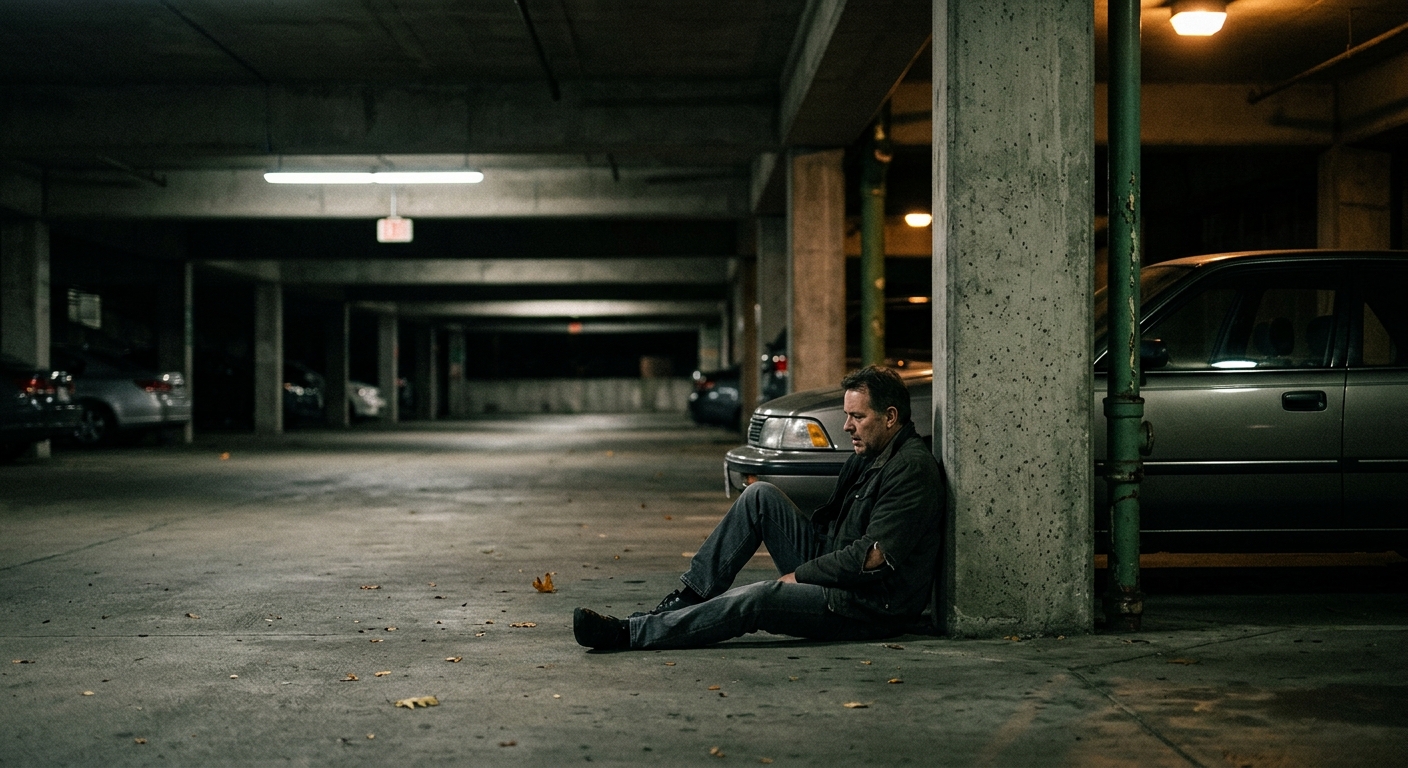
Negligent Security · Florida & Nationwide
Hurt on Someone Else's Property? Proving the Owner Should Have Kept You Safe
If you were attacked, shot, or assaulted at an apartment complex, parking garage, hotel, or business and suffered a spinal cord injury, paralysis, or another life-altering harm, the property owner may be responsible. Here is what it takes to prove it.
Why Families Turn to Us
Licensed
Florida Bar–admitted attorneys
Nationwide
We take catastrophic cases across the U.S.
Bilingual
English & Spanish support
Catastrophic
Focused on life-altering injuries only
By CHG Lawyers · Published August 07, 2026
Proving Negligent Security Caused Injury: How a Property Owner’s Failure Led to Your Paralysis
Proving that negligent security caused a paralyzing injury usually means showing four things: the owner owed you a duty to keep you reasonably safe, the attack was foreseeable, the owner failed to take reasonable security steps, and that failure allowed the attack that paralyzed you.
This page explains, in plain language, how these cases are built—and what your family can do in the first days, before the evidence disappears.
Not sure what your next step is?
Talk it through with our team — the first consultation is free, confidential, and carries no obligation.
If you were attacked on someone else’s property and left paralyzed
You were shot, robbed, beaten, or assaulted on someone else’s property. Maybe it happened in an apartment parking lot, a dark garage, a hotel hallway, a bar, a gas station, or a store. Now you or someone you love is living with paralysis, and life will never look the same.
The person who attacked you is responsible for what they did. But they may not be the only one. When a property owner failed to keep the place reasonably safe—broken locks, gates propped open, lights out, no cameras, no guards—that owner may share the blame.
When an owner’s poor security lets a foreseeable crime happen, the law calls it a negligent security claim. It is a type of premises liability, meaning a property owner’s legal responsibility for what happens on their land. You do not need to know that term to have a claim. This page walks you through how these cases are proven, step by step.
Why proving a negligent security case is different
A negligent security case is harder to prove than a typical accident case, because a criminal—a third party—stepped in between the owner’s failure and your harm. You are not just showing you got hurt. You must connect the owner’s inaction to what the attacker was able to do.
Think of it this way. In a normal fall case, a hazard on the property hurts you directly. Here, a person chose to hurt you. So your case has an extra layer: you must show that reasonable security would likely have stopped or deterred the attack.
Paralysis raises the stakes. A high neck (cervical) spinal cord injury can affect the arms, hands, trunk, and legs; a lower injury may spare the arms but still affect the trunk and legs, per the Mayo Clinic. The Christopher & Dana Reeve Foundation reports on its Stats About Paralysis page that millions of Americans live with some form of paralysis.
Because the harm is permanent and the lifetime costs are large, both sides investigate hard. That makes the evidence matter more—and it means acting fast is essential. No lawyer can promise how a case will turn out. What follows is the framework attorneys actually use.
The four things a negligent security claim generally must establish
- Duty. The owner owed you a duty to keep the place reasonably safe. How strong that duty is often depends on why you were there—a paying customer, a tenant, or a guest.
- Foreseeability. The owner knew, or should have known, that this kind of crime was a real risk on the property.
- Breach. The owner failed to take reasonable security steps that a careful owner would have taken.
- Causation and damages. The missing security allowed the attack, and the attack caused the paralysis and its lifelong costs.
The rules differ from state to state. Our firm is Florida-based and handles catastrophic-injury cases nationwide. The rest of this page explains how each piece is proven.
Proving foreseeability: showing the danger was predictable
To prove foreseeability, you show the owner knew or should have known a crime like yours was a real risk. This is often the heart of the fight. Here is the concrete proof that establishes it:
- Prior crime on the same property. Police call logs, incident reports, and arrest records for that exact address can show a pattern. If the same garage had earlier robberies, or the complex saw earlier assaults, the danger was not a surprise.
- Similar incidents nearby. Crime data for the surrounding blocks can show the location itself was high-risk. Investigators pull agency records and CAD (computer-aided dispatch) logs tied to the address and area.
- Complaints the owner ignored. Tenant or customer complaints about broken gates, dark parking areas, or people loitering put the owner on notice. So do prior 911 calls to that address and written repair or security requests that went unanswered.
- The nature and location of the property. Attorneys weigh the type of property and known security standards for that setting—a busy urban garage carries different risks than a quiet rural lot.
Violence is among the leading causes of traumatic spinal cord injury in the United States, alongside vehicle crashes and falls, according to the Mayo Clinic. In the cases our attorneys handle, the record of “what the owner should have seen coming” is often what decides whether foreseeability can be shown.
Proving breach: the security that should have been there but wasn’t
To prove breach, you compare what the owner did to the reasonable security a careful owner would have provided. The gap is the breach. Common failures include:
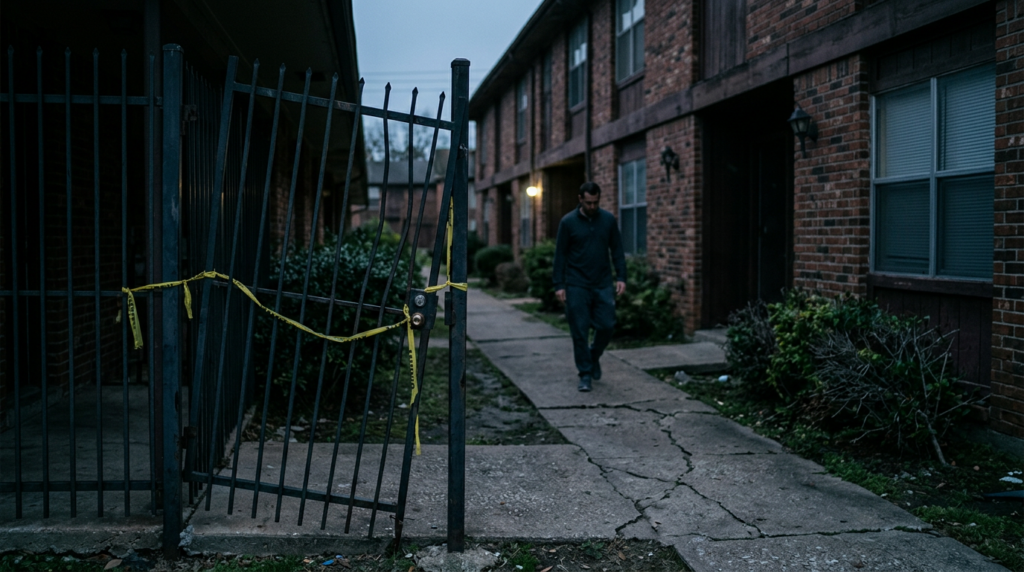
- Broken, propped-open, or missing locks and gates
- Burned-out or missing lighting in lots, garages, and stairwells
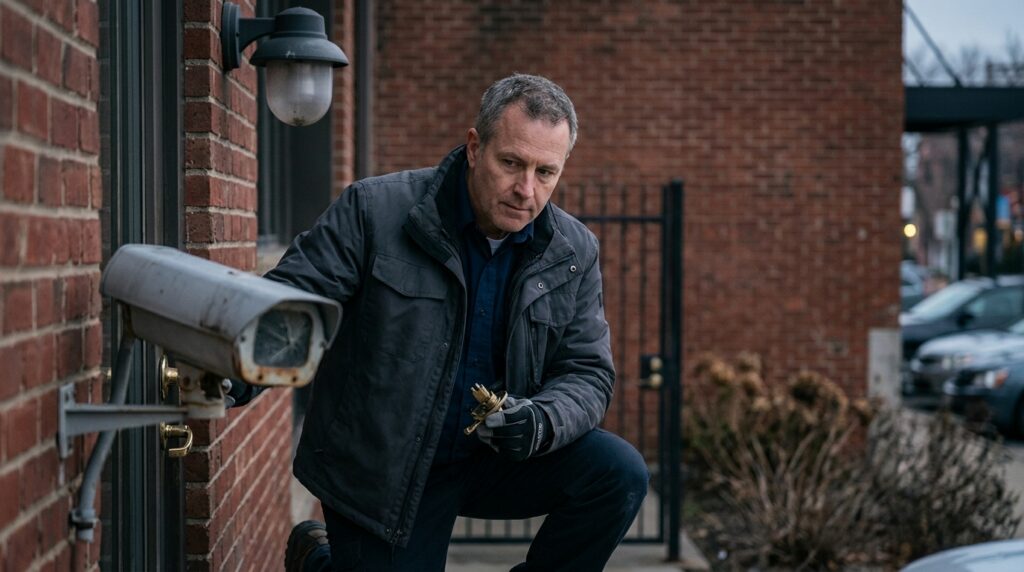
- Cameras that were absent, broken, or not recording
- No security guards where the risk clearly called for them
The question is not whether the property was a fortress. It is whether the owner did what was reasonable for that type and location of property.
Attorneys dig into the owner’s own records. Skipped maintenance, cut security budgets, and ignored repair requests can show a choice to save money over safety. Work orders and vendor contracts reveal whether the owner had a real security plan. A security expert often explains what steps the property needed—and how the owner fell short.
Have questions about what happened?
Ask our team directly. The first conversation is free, confidential, and there is no obligation to continue.
Proving causation: connecting the failed security to the paralysis
Causation comes down to two links. First, reasonable security would likely have prevented or deterred the attack. Second, the attack directly caused the paralysis.
The first link is about prevention. Would a working gate have kept the attacker out? Would a guard, a camera, or real lighting have stopped or deterred them? Evidence of how the attacker got in—and what stopped no one—supports this connection.
The second link is medical. Records must tie the attack directly to the spinal cord injury and the resulting paraplegia or quadriplegia. Doctors rate severity using the ASIA Impairment Scale, published by the American Spinal Injury Association. That rating, carried through the operating room and rehabilitation records, links the attack to a permanent impairment—not a temporary one.
Expect the owner to fight back. They may argue the crime was unforeseeable, or that it would have happened no matter what. Strong records—prior crime reports, ignored complaints, and expert opinions—are how those defenses are answered.
The evidence that makes or breaks these cases—and why it disappears fast
The single most important piece of evidence often vanishes first: video. Many business camera systems record over old footage on a loop, sometimes within 72 hours to about 30 days, depending on the system. If no one demands the footage be saved, the video of the attack, the broken gate, and the dark lot may be gone for good.
Lawyers send a legal preservation notice—often called a spoliation letter—telling the owner to keep the footage and other records. If an owner destroys evidence after that notice, a court can penalize them, and in some cases instruct the jury to assume the missing evidence was unfavorable to the owner.
Here is what a family can do in the first days, while the injured person is still in the hospital:
- Send a written preservation request now. Email or hand-deliver a note to the property manager and any security company, asking them to keep all video from the date of the incident and the days around it. Keep a copy and note who received it.
- Photograph the scene before it is repaired. Broken locks, propped gates, dead lights, and missing or fake cameras get fixed fast once a claim is expected. Timestamped phone photos of the actual entry point matter.
- Get the police report number and 911 records.
- Write down witnesses now. Names and phone numbers get much harder to find within weeks.
- Save the medical records that document the spinal cord injury.
In our experience, families who act in the first days protect the very evidence an insurer hopes will disappear—footage, witness contacts, and the un-repaired scene.
Time also matters legally. In Florida, most negligence claims that arose on or after March 24, 2023 must be filed within two years under Fla. Stat. §95.11. Deadlines vary by state, so do not wait to learn where you stand.
Documenting the true, lifelong cost of paralysis
A paralysis claim must account for the full, lifetime cost of the injury—not a one-time bill. A complete damages picture usually includes:
- Past medical bills and future medical care
- Home and vehicle changes for accessibility
- In-home care and personal attendants
- Lost income and reduced ability to work over a lifetime
- Physical pain, emotional harm, and daily impact
Building this means documenting each category with medical and financial experts, often including a life-care planner who projects the cost of decades of care. You can learn more on our paralysis injury resource page.
One Florida note: the state follows a modified comparative-fault rule under Fla. Stat. §768.81, meaning a person found more than 50% at fault for their own harm generally cannot recover. Rules like this differ by state—another reason to get advice early.
Talking to a lawyer about your situation
A free case evaluation is a no-cost conversation. A lawyer listens to what happened and explains your options. You do not need documents or legal knowledge to start. Bring whatever you have: where and when the attack happened, the police report or case number, witness names, and photos.
Licensed attorneys admitted to the Florida Bar handle these catastrophic cases and take matters nationwide. Early work often shapes these claims—sending preservation letters before footage is erased and gathering crime records before they are buried.
No one can promise a specific result. What a lawyer can do is explain your rights and act quickly to protect your case. If a property owner’s poor security played a role in your paralysis, you can request a free case evaluation to understand where you stand.
Want to know where you stand?
Tell us what happened and our team will walk you through the options available to you, at no cost.
Frequently asked questions
Can I sue a property owner if I was shot or assaulted on their property?
You may be able to. It depends on whether the owner failed to provide reasonable security and whether the attack was foreseeable. This is called a negligent security claim.
Do I still have a case if the attacker was never caught?
Possibly. A negligent security claim is against the property owner, not the criminal, so an uncaught attacker does not automatically end your case.
How quickly does surveillance footage from an attack get deleted?
Many systems record over footage within 72 hours to about 30 days. That is why sending a legal preservation notice quickly is so important.
What can my family do while I’m still in the hospital?
Send a written request to the property manager to keep all video. Photograph the scene before it is repaired. Get the police report number. And write down witness names and numbers before they are lost.
How do you prove a crime was foreseeable?
You show prior crimes on or near the property, ignored complaints, 911 and dispatch records, and the type and location of the property that put the owner on notice.
How long do I have to file a negligent security lawsuit in Florida?
Most Florida negligence claims that arose on or after March 24, 2023 must be filed within two years under Fla. Stat. §95.11, though deadlines vary by state.
What’s the difference between paraplegia and quadriplegia?
Quadriplegia affects the arms, trunk, and legs from a higher spinal cord injury. Paraplegia affects the trunk and legs but may spare the arms, per the Mayo Clinic.
You Don't Need the Attacker to Be Caught
A negligent security claim is brought against the property owner or manager — not the attacker. Even if the person who hurt you was never identified or arrested, you may still have a claim if the owner failed to provide reasonable security and the attack was foreseeable.
What It Takes to Prove a Negligent Security Claim
1. A Duty to Keep You Reasonably Safe
Property owners who invite guests, tenants, and customers onto their premises generally have a duty to take reasonable steps to protect them from foreseeable harm — working locks and gates, adequate lighting, functioning cameras, or security personnel where warranted.
2. The Attack Was Foreseeable
Foreseeability often turns on what the owner knew or should have known — prior violent crimes on or near the property, complaints from tenants, police calls, or a known pattern of danger the owner ignored.
3. Security Was Inadequate
We look for what failed: broken gates, dark parking areas, cameras that didn't work, missing or untrained guards, propped-open doors, or promised security that was never provided.
4. That Failure Caused Your Injury
We connect the missing security to the harm — showing that reasonable measures likely would have prevented or reduced the attack that left you or your loved one with a catastrophic injury.
Evidence That Can Build Your Case
Crime & Incident History
Police reports and prior-crime records for the property and surrounding area can show the owner knew the danger existed.
Security Records
Guard logs, camera footage, maintenance records, and lease or hotel safety promises reveal what was — and wasn't — in place.
Witness Accounts
Tenants, employees, and other guests may confirm broken gates, dead cameras, or complaints the owner ignored.
Acting Quickly
Video is often overwritten and conditions get repaired. Preserving evidence early can be critical to proving what happened.