

Spinal Cord Injury & Paralysis
Making a Home Livable After Paralysis Costs a Fortune. Here's Who Should Pay.
A spinal cord injury doesn't stop at the hospital. Ramps, roll-in showers, wider doorways, and lifts can cost tens of thousands of dollars. We help paralysis survivors and their families understand who is responsible for those costs.
Focused on Catastrophic and Life-Altering Injuries
Nationwide
Cases accepted across the U.S.
Florida Bar
Licensed, admitted attorneys
Bilingual
English & Spanish resources
Free
Confidential case evaluations
By CHG Lawyers · Published August 02, 2026
Home and Vehicle Modifications After Paralysis: What They Cost and Who Pays
A simple ramp for your home may cost a few thousand dollars. A full accessible remodel can cost well over $100,000. The final number depends on your injury level, your home’s layout, and where you live. Did someone else’s carelessness cause the paralysis? If so, you can often seek these costs as part of an injury claim.
If you or someone you love now lives with paralysis, you face big decisions during a crisis. This page gives you honest cost ranges and funding options. It also shows plainly how these lifetime costs fit into a legal claim. We work with English- and Spanish-speaking families throughout Florida and nationwide — ayudamos a familias que hablan español.
Not sure what your next step is?
Talk it through with our team — the first consultation is free, confidential, and carries no obligation.
Why home and vehicle modifications matter after paralysis
Paralysis changes how a person moves through their home and community. It often happens overnight. A doorway that once worked fine may now be too narrow for a wheelchair. A bathroom can become dangerous. A car may be impossible to enter.
These changes aren’t luxuries. They restore basic independence, safety, and dignity. The Christopher & Dana Reeve Foundation estimates that about 5.4 million people in the United States live with some form of paralysis. So families across the country face these same questions every day.
Our attorneys handle catastrophic-injury cases. In these cases, families often feel overwhelmed by the price tags. Below, we break the costs down piece by piece.
What are the most common home modifications needed after a spinal cord injury?
The most common home change after a spinal cord injury is a wheelchair-accessible bathroom. Ramps and wider doorways come next. These handle the daily tasks that matter most. That means getting inside, moving around, and staying safe.
Entrance and mobility
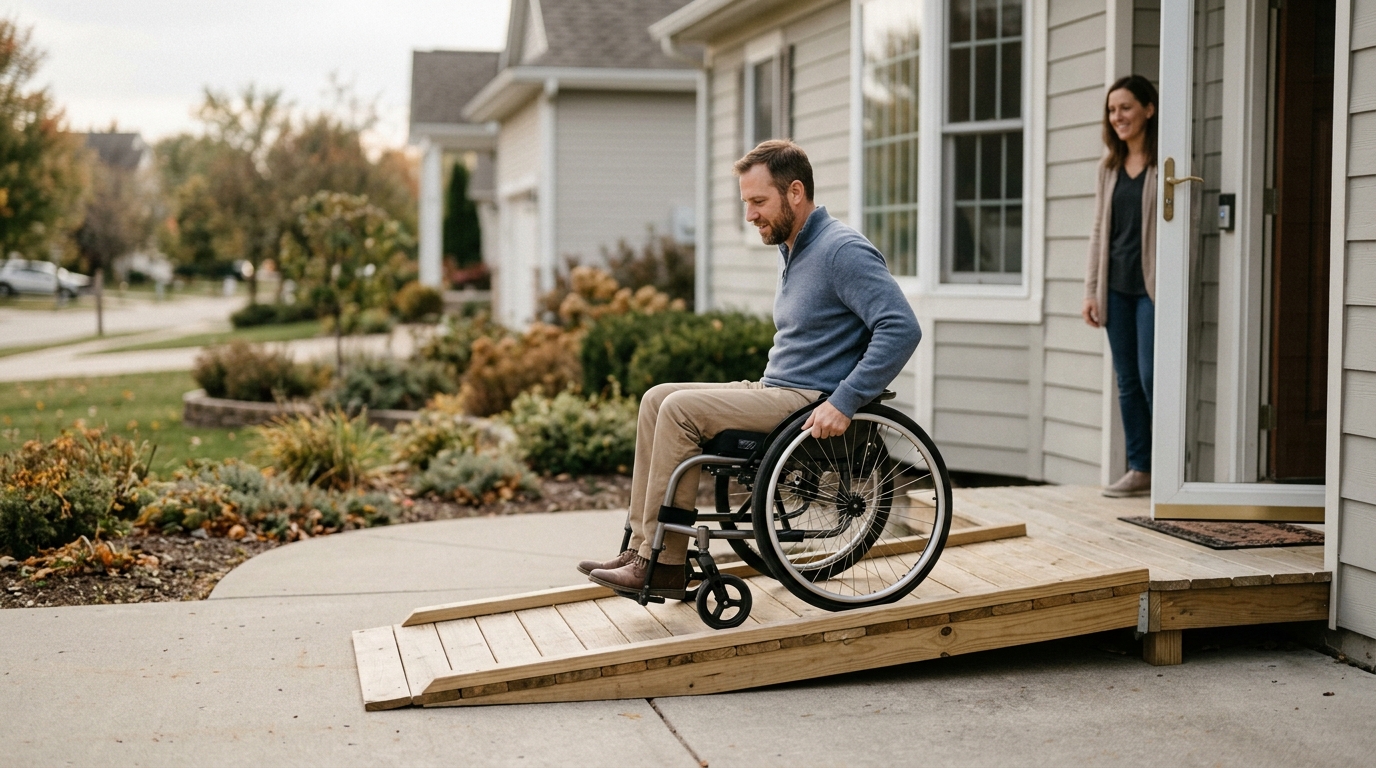
- Ramps to replace steps at entrances.
- Wider doorways (usually 32 to 36 inches) so a wheelchair can pass.
- Threshold changes to remove small bumps between rooms.
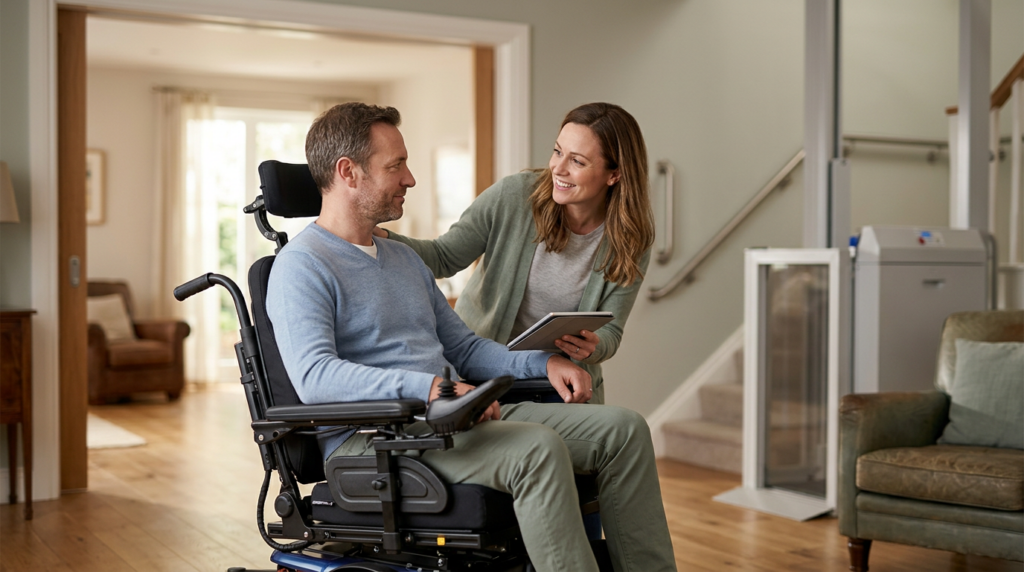
- Stair lifts, platform lifts, or a home elevator in multi-story houses.
Bathroom safety
- Roll-in showers with no curb.
- Grab bars near the toilet and shower.
- Comfort-height toilets and accessible sinks.
- Transfer benches for safe movement.
Kitchen
- Lowered counters and cabinets.
- Pull-out shelving and accessible appliances.
Bedroom and flooring
- Hospital-style adjustable beds.
- Hard-surface flooring so a wheelchair rolls easily.
- Wider hallways where possible.
Automated systems and controls
- Voice-activated or smart-home controls for lights, doors, and temperature.
- Environmental control units (ECUs) — devices that let a person run their home with limited hand movement.
How injury level changes the list: paraplegia vs. quadriplegia
How much you’ll need depends mostly on where the injury happened on the spinal cord. Doctors grade this with the American Spinal Injury Association (ASIA) impairment scale. The Mayo Clinic explains how injury level maps to what a person can do:
- Paraplegia means injuries in the chest, lower back, or tailbone area. It affects the trunk, legs, and pelvic organs. It usually leaves full hand and arm function. Changes tend to focus on wheelchair access. This means ramps, a roll-in bathroom, lowered kitchen counters, and hand controls for driving. Many people in this group can move on their own and drive an adapted vehicle.
- Quadriplegia / tetraplegia means neck-level injuries. It affects all four limbs. A person may have limited or no hand function, depending on the exact level. They may rely on power mobility and help from a caregiver. This is where the expensive items concentrate. They include environmental control units, ceiling-track patient lifts, power door openers, and a full-size accessible van with a lift instead of a fold-out ramp.
In short, the type of change is similar across the board. But the number and complexity climb sharply with a higher, more complete neck injury. Learn more on our paralysis injury lawyer page.
How much do home modifications cost after paralysis?
Home changes can cost about $1,000 for a simple ramp. A full accessible remodel can cost more than $100,000. These are sample ranges, not fixed prices or promises. Every home and injury is different.
- Wheelchair ramp: a few hundred to several thousand dollars.
- Wider doorway: several hundred to a few thousand dollars each.
- Roll-in bathroom remodel: commonly $5,000 to $25,000 or more.
- Stair or platform lift: several thousand dollars.
- Ceiling-track patient lift: usually a few thousand dollars per room.
- Home elevator: often $20,000 to $50,000 or more.
- Full accessible remodel: often $50,000 to $150,000 or more.
Several things drive the range. Injury level matters most. A single-story home costs less to adapt than a multi-story one. Labor and material prices vary a lot by region. An older home may need extra structural work.
Adaptive equipment adds even more on top of construction. This includes transfer devices, adjustable beds, and environmental control units. And these costs come back again and again. Ramps wear out. Lifts need repair. Equipment must be replaced over a lifetime.
This is why a life care plan matters. It’s a document made with medical and cost experts. It maps out every future need and its cost. Learn more on our catastrophic injury claims page.
Vehicle modifications and their costs
A wheelchair-accessible vehicle usually costs far more than most families expect. It often adds $20,000 to $80,000 or more on top of the base vehicle. Independence outside the home depends on reliable transportation.
Common vehicle changes include:
- Wheelchair-accessible vans with lowered floors and ramps or lifts.
- Hand controls so a driver can work the gas and brake by hand.
- Transfer seats that move to help a person get into the driver’s spot.
- Steering adaptations for limited hand or arm function.
You can buy a pre-converted van or adapt a vehicle you already own. Adapting is sometimes cheaper, but not always possible. Vehicles also wear out. Someone living for decades with paralysis may need several modified vehicles over a lifetime.
Most drivers also need a driver rehabilitation evaluation and training program. A certified driver rehabilitation specialist confirms which controls work best. They also teach safe use before a person returns to the road.
Who pays for home and vehicle modifications?
No single program covers everything. Health insurance usually does not pay for home remodeling or the cost of a vehicle. Families often piece together money from several sources:
- Health insurance: usually covers some durable medical equipment, but not structural remodeling or vehicles.
- Medicaid Home and Community-Based Services (HCBS) waivers: may cover some changes, but with dollar caps and eligibility rules that vary by state.
- Medicare: limited to certain durable medical equipment, not construction.
- VA benefits: eligible veterans may qualify for the Specially Adapted Housing (SAH) and Special Housing Adaptation (SHA) grants and help buying adaptive vehicle equipment.
- Workers’ compensation: may apply if the injury happened at work.
- Out-of-pocket savings: many families still face a large gap after all other sources.
The gap is often the hardest part. Grants and waivers rarely cover the full cost. That’s why a legal claim can matter so much when another party caused the injury.
Have questions about what happened?
Ask our team directly. The first conversation is free, confidential, and there is no obligation to continue.
Is there a grant for home modifications for disability?
Yes, grants for home changes do exist. But they’re usually limited and competitive, and rarely cover the full cost. It’s smart to apply to several at once.
Sources worth exploring include:
- Veterans’ housing grants — the VA’s SAH/SHA programs above are among the largest single sources for eligible veterans.
- Nonprofit and foundation grants, including groups that serve people with spinal cord injuries.
- State assistive technology programs, which sometimes help with equipment.
- Centers for Independent Living, which point people to local resources.
- USDA Section 504 rural home repair grants for eligible low-income rural homeowners.
- Local and city accessibility programs in some cities and counties.
The best first step is to work with a hospital case manager or social worker. They know which programs are active in your area. They can also help you apply. Don’t expect any single grant to solve the whole problem. Most families combine several small awards with other funding.
When someone else caused the injury: recovering modification costs in a claim
Did another party’s carelessness cause the paralysis? If so, you can include the cost of an accessible home and vehicle in the money you seek. These count as future, lifetime damages — not just past bills.
Here’s how it works in plain terms. Your lawyer works with medical and financial experts to build a life care plan. This plan lists every change, every piece of equipment, and every replacement you’ll likely need over your lifetime. Cost experts then attach real numbers. Those figures become part of the claim, along with medical care, lost income, and other harms.
Common at-fault situations include:
- Truck crashes, where a trucking company or driver’s carelessness caused catastrophic harm. See our truck accidents page.
- Being attacked on someone else’s property. Maybe you were assaulted, shot, robbed, or otherwise hurt because a property owner failed to provide reasonable security. That means working locks and gates, lighting, cameras, or guards at an apartment complex, parking garage, hotel, or business. In that case, the property owner may be responsible. The legal term for this is negligent security. Learn more on our negligent security page.
We can’t promise any specific amount or result. What we can do is help document your true lifetime needs so nothing gets left out.
How much compensation is available for paralysis?
There’s no fixed dollar figure for paralysis compensation. Every case depends on the injury, the costs, and the facts of fault. Any lawyer who promises a specific amount isn’t being honest with you.
Compensation in a paralysis claim can include several types:
- Medical care, past and future.
- Home and vehicle modifications.
- Adaptive equipment.
- Lost income and reduced earning ability.
- Ongoing personal care and support.
- Pain and suffering.
Fault rules and deadlines shape what you can recover. Florida, for example, follows a modified comparative-negligence rule under Fla. Stat. § 768.81. This is a rule that reduces or blocks your recovery based on your own share of fault. A person found more than 50% at fault for their own harm generally cannot recover damages. Otherwise, any award is reduced by their share of fault. Deadlines matter too. Under Fla. Stat. § 95.11, most Florida negligence claims must be filed within two years. Other states set their own rules and deadlines. That’s one reason to speak with a lawyer early, no matter where you live.
This is also why documenting lifetime needs early is so important. Waiting can make costs harder to prove.
Can a person move (regain movement) again after paralysis?
Some people regain movement after paralysis. But it depends heavily on whether the injury is complete or incomplete. Recovery varies widely. No honest source can predict any one person’s outcome.
The Mayo Clinic explains the difference. In a complete injury, nearly all feeling and movement below the injury is lost. In an incomplete injury, some function remains. The American Spinal Injury Association publishes the standard ASIA scale (grades A through E). Doctors use it to classify these injuries and track change over time.
Rehabilitation and adaptive technology keep advancing, and some people see real gains. Still, home and vehicle changes support independence no matter the recovery outlook. Always rely on your treating doctors for medical guidance about your own case.
Want to know where you stand?
Tell us what happened and our team will walk you through the options available to you, at no cost.
Frequently asked questions
What is the most common home modification after a spinal cord injury?
The most common change is a wheelchair-accessible bathroom, such as a roll-in shower with grab bars. Ramps and wider doorways are also often needed.
Will insurance pay for a wheelchair ramp or accessible bathroom?
Health insurance usually does not pay for home remodeling like ramps or bathroom changes. It may cover some durable medical equipment, but not structural work.
Can I recover the cost of a wheelchair van in an injury claim?
Yes. When another party’s carelessness caused the paralysis, a wheelchair-accessible vehicle can be part of the money you seek. It’s documented as a lifetime cost in the life care plan.
How soon should we start planning modifications?
Start as early as possible, ideally during rehabilitation. That way, your home is ready when you return. Early planning also helps document costs for a legal claim before filing deadlines pass.
We speak Spanish — is help available bilingually?
Yes. Our firm publishes bilingual (English/Spanish) educational content. We also offer Spanish-language help for families in Florida and across the country.
Talk to a paralysis injury lawyer about your situation
You shouldn’t have to guess whether these life-changing costs can be recovered. Did someone else’s carelessness cause the paralysis? If so, the cost of making a home and vehicle accessible may be part of what you can pursue.
Our licensed attorneys are admitted to The Florida Bar. They handle catastrophic-injury cases nationwide, with bilingual service for English- and Spanish-speaking families. We can’t promise a result. But we can review your situation honestly and explain your options.
Request a free case evaluation today. You can also learn more on our paralysis injury lawyer page.
Watch Out: Health Insurance Usually Won't Cover Remodeling
Most health plans treat wheelchair ramps and accessible bathrooms as home improvements, not medical care, and deny them. That's exactly why the cost of these modifications often belongs in a personal-injury claim against the party who caused the injury. Talk to an attorney before you assume you have to pay out of pocket.
Common Home Modifications After Paralysis
Accessible Bathroom
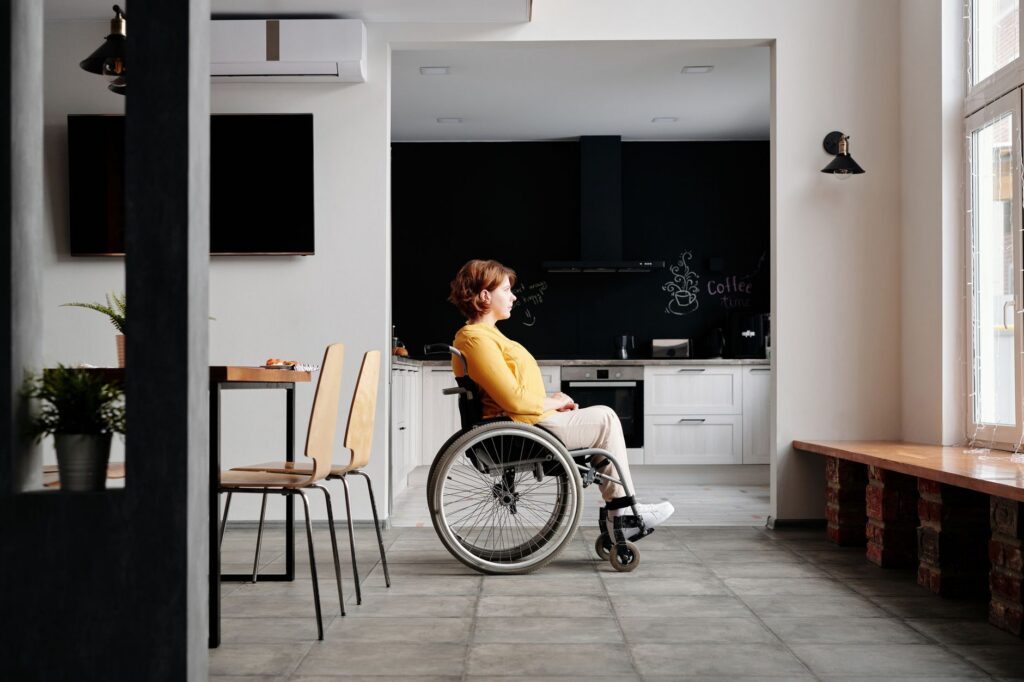
The most common change after a spinal cord injury is a wheelchair-accessible bathroom, such as a roll-in shower with grab bars and a lowered sink.
Ramps & Entryways
Exterior ramps, level thresholds, and modified entrances so a wheelchair user can safely get in and out of the home.
Wider Doorways & Halls
Doorways and hallways often need to be widened to allow a wheelchair to pass through the whole house.
Lifts & Kitchen Changes
Stair lifts or vertical platform lifts, plus lowered counters and reachable cabinets, may be needed for daily independence.
Who Might Be Responsible for These Costs
The At-Fault Party
When someone else's negligence caused the injury — a truck crash, or an unsafe property that failed to prevent a violent attack — the cost of accessible housing can be part of your damages claim.
Insurance Coverage
Auto, commercial, or premises liability policies may apply. Health insurance rarely covers remodeling, so these modifications usually belong in a broader injury claim.
Life-Care Planning
A life-care plan documents future needs — including home modifications — so they are counted and pursued, not overlooked.
Your Family's Future
The goal is a claim that reflects the full, lifelong cost of living with paralysis, not just today's medical bills.