

Catastrophic Injury Guide
Paralyzed in an Accident? Here's What the First 90 Days Should Look Like
A spinal cord injury changes everything in an instant. This plain-language guide walks you and your family through the medical, financial, and legal steps that matter most in the critical months after paralysis.
Guidance You Can Rely On
Nationwide
Catastrophic injury cases accepted
FL Bar
Licensed, admitted attorneys
EN / ES
Bilingual client resources
Free
Confidential case evaluation
By CHG Lawyers · Published August 08, 2026
What to Do in the First 90 Days After a Paralyzing Accident: A Family’s Step-by-Step Guide
Not sure what to do after a paralyzing accident? Focus on three things, in this order. Get the best medical care. Protect your family’s money. Save evidence before it disappears. Everything else can wait until your loved one is stable.
This is one of the hardest moments a family can face. You’re tired, scared, and buried in decisions. This page is a calm, plain-language roadmap. Come back to it as often as you need.
It walks through three phases. First, medical care to steady your loved one. Next, everyday and money survival. Then, protecting your legal rights.
CHG Personal Injury Lawyers helps families nationwide. We publish this guidance in English and Spanish. This article is educational information. It is not medical or legal advice for your case. For that, rely on your doctors and a licensed attorney.
Not sure what your next step is?
Talk it through with our team — the first consultation is free, confidential, and carries no obligation.
First, Understand What Paralysis After an Accident Means
Paralysis after an accident usually means a spinal cord injury. That is damage to the nerves that carry signals between the brain and body. It causes loss of movement and feeling below the injury, according to Mayo Clinic.
Doctors often use two words you’ll hear a lot. Paraplegia affects the legs and lower body. Quadriplegia (also called tetraplegia) affects the arms, trunk, legs, and pelvic organs. The higher the injury on the spine, the more of the body it tends to affect.
You’ll also hear “complete” and “incomplete.” A complete injury means no movement or feeling below the injury. An incomplete injury means some signals still get through. Doctors sort this using the ASIA Impairment Scale from the American Spinal Injury Association.
Many families feel upset when the medical team won’t give a final prognosis (long-term outlook) right away. That’s normal. Swelling and shock can hide what function may return over weeks and months.
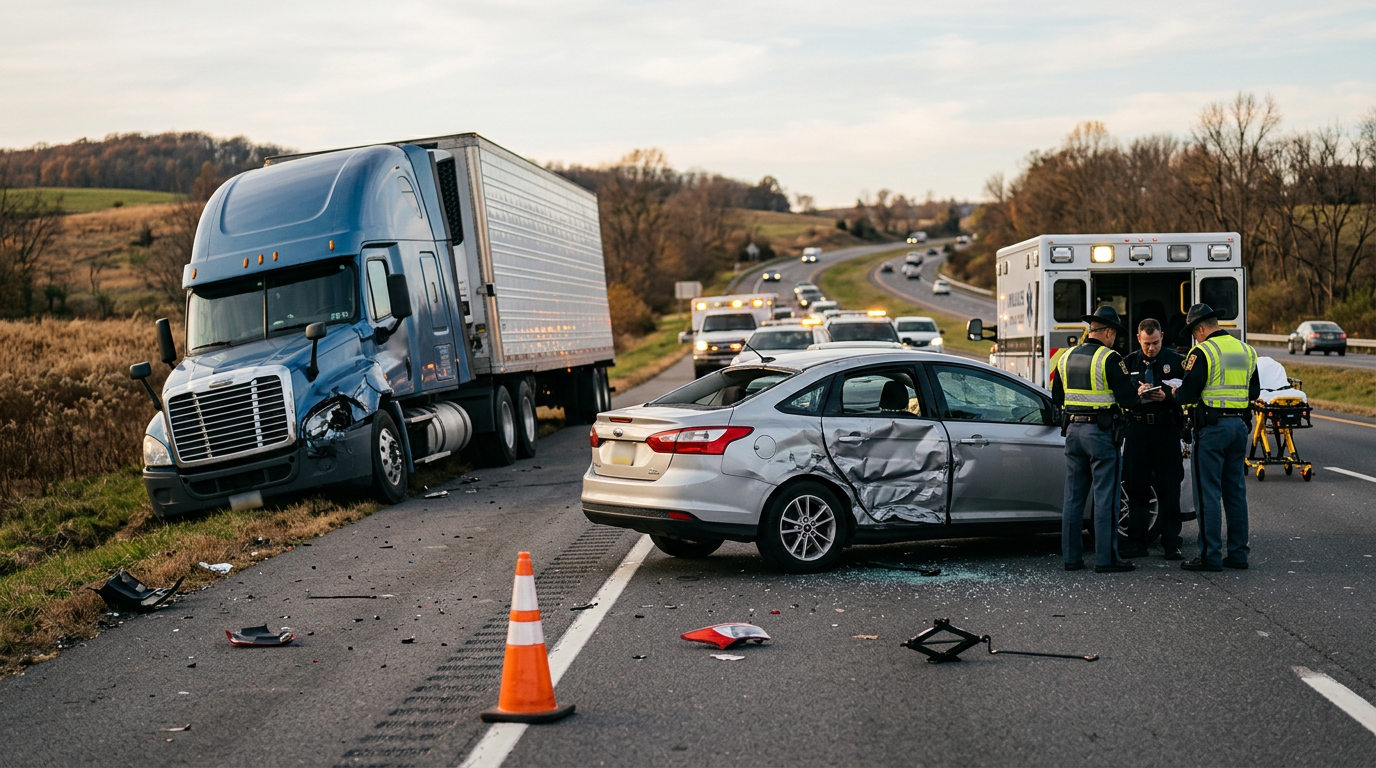
Paralysis can happen many ways. Common causes are truck and car crashes, falls from a height, and violence on unsafe property. For a fuller overview, see our paralysis injury resource hub.
Days 0–14: The Hospital and Medical Stabilization Phase
In the first two weeks, the medical team works to steady the spine. They protect breathing and try to prevent more damage. This phase usually happens in the ICU or acute care unit.
Here is what often happens. Doctors do emergency imaging. They may operate to relieve pressure or steady the spine. They may add breathing support if the injury is high on the neck.
If you were at the scene, remember this. Mayo Clinic advises never moving someone with a suspected spinal injury. You call 911 and keep the person still.
How long do you stay in the hospital after being paralyzed?
There’s no single answer. Hospital stays vary a lot. They depend on the level of injury and any complications. Some people move to rehab within days. Others stay in acute care for weeks. This is common with breathing problems or infections. Ask the care team for their best estimate. Know that it can change.
Questions to ask the medical team
Write these down. Ask them when doctors visit:
- What is the level of the injury? Is it complete or incomplete?
- What surgeries or procedures are planned, and why?
- What are the next steps once my loved one is stable?
- What problems should we watch for?
Mayo Clinic notes that spinal cord injuries can bring problems with breathing, blood pressure, bladder and bowel control, and skin/pressure sores. You don’t need to manage these yourself. Just ask the team how they watch each one.
Here’s a practical tip from the catastrophic-injury cases our attorneys handle. Name one family point person now. That person keeps a simple notebook. Write down doctors’ names, dates, instructions, and questions. This one habit prevents confusion. It becomes priceless later.
Can You Recover From Paralysis After a Car Accident?
Some people regain function after a paralyzing crash. This is more likely with incomplete injuries. Others live with permanent impairment. Only your medical team can judge your loved one’s case. Be careful of anyone who promises a specific outcome.
Rehabilitation aims to rebuild what function is possible. It works to build independence and help someone adapt to daily life. “Recovery” doesn’t only mean walking. For many people, it means regaining strength, managing daily tasks, and building a life that works.
What helps paralyzed patients walk again?
Physical and occupational therapy are the foundation. Sometimes doctors add braces and other assistive technology. Researchers keep studying new treatments. But there is no guaranteed cure. Lean on your doctors for an honest prognosis. Be wary of “miracle” claims online, or from anyone selling hope. The Christopher & Dana Reeve Foundation is a trustworthy resource for families living with paralysis.
Have questions about what happened?
Ask our team directly. The first conversation is free, confidential, and there is no obligation to continue.
Days 14–45: Rehabilitation, Equipment, and Everyday Life
Once your loved one is stable, the focus shifts. Now it moves to inpatient rehab and planning for life at home. This is when many families first grasp the road ahead.
Inpatient rehab combines several kinds of therapy. There is physical therapy, occupational therapy, and training on daily living skills. Does your hospital have a dedicated spinal cord program? If not, ask about moving to one. Specialized programs have staff who work with these injuries every day.
Equipment needs add up fast. A family may need a wheelchair, transfer aids, and a hospital bed. You may also need home changes. These include ramps, wider doorways, and a roll-in shower. Start planning for home accessibility before discharge, not after. Discharge can come sooner than families expect.
Don’t overlook mental health. A paralyzing injury is a shock for the survivor and every caregiver. Ask the rehab team about counseling and peer support. Caregiver burnout is real, and support helps everyone.
Keep saving records. Track every provider, prescription, therapy session, and out-of-pocket cost. These records matter for insurance. Later, they matter for any legal claim.
Protecting Your Finances and Insurance in the First 90 Days
Catastrophic injuries are expensive. Lifetime medical care, lost income, and home and vehicle changes can reach into the millions. So protect your money early. Money worries are one of the biggest stressors families tell us about.
Bills and phone calls start fast. Review your health insurance. Ask a hospital social worker about disability benefits and other programs. Don’t ignore bills. But don’t rush to pay charges you disagree with either. Keep every statement in one folder.
Be careful with insurance adjusters. After a crash, an adjuster may call within days. They may ask for a recorded statement or offer a quick settlement. Don’t give a recorded statement or accept an early offer before you understand the full injury. With paralysis, the true costs unfold over months and years. An early settlement rarely covers a lifetime of care.
Different insurance sources may apply. It depends on how the injury happened. An auto policy may apply after a crash. A property owner’s insurance may apply after an injury on someone else’s property. To learn more, see our guide on whether insurance covers a paralysis injury.
Preserving Evidence Before It Disappears
Act in the first weeks to save evidence. Crash scenes get cleared, and video gets erased quickly. Once proof is gone, it’s often gone for good.
Here’s why timing matters so much. Damaged vehicles get repaired or scrapped. Skid marks fade. Video from a store, garage, or apartment complex is often recorded over within days or weeks. In the cases our attorneys handle, that footage can decide the case. But only if someone asks for it in time.
Take these practical steps now:
- Get a copy of the police or crash report.
- Photograph the vehicles, the scene, and visible injuries if you can do so safely.
- Keep damaged property, like a wrecked car or a broken helmet. Don’t throw it away.
- Save all medical records and bills.
- Write down what happened while memories are fresh. Collect witness names and phone numbers.
There’s an important situation many families don’t realize is a legal claim. Was your loved one assaulted, shot, robbed, sexually assaulted, or otherwise attacked on someone else’s property? This could be an apartment complex, a parking lot or garage, a hotel, a bar, a gas station, or a store. Did they get hurt because the owner failed to provide reasonable security? If so, your family may have a claim against that property owner.
Reasonable security means working locks and gates, decent lighting, cameras, or guards. A property with a history of crime may ignore these basics. When that happens, the law may hold the owner responsible. Lawyers call this a negligent security (or inadequate-security) claim. If this fits your situation, note the property and anything missing — broken locks, dark areas, absent cameras. Save this proof quickly. You can read more on our negligent security resource page.
Finally, legal deadlines matter. Every state has a statute of limitations. That is a deadline to file. In Florida, the deadline for most negligence claims is generally two years. This applies to claims that start on or after March 24, 2023, under Fla. Stat. §95.11. Deadlines vary by state, so acting early protects your options.
When and Why to Talk to a Catastrophic-Injury Lawyer
A catastrophic-injury lawyer looks into what caused the accident. They find out who may be responsible. And they work to secure funds for a lifetime of care. That last part is why these cases matter so much. The costs never really end.
Most personal-injury firms, including ours, offer a free case evaluation and work on contingency. That means no upfront fees. The firm is paid only if it recovers money for you. Reaching out early doesn’t obligate you to anything. It simply helps preserve evidence and gives you clear answers.
A word on fault. Florida uses a modified comparative-negligence rule under Fla. Stat. §768.81. This means a person found more than 50% at fault generally recovers nothing. An insurer may try to shift blame onto your loved one. That’s one more reason to get advice early.
CHG Personal Injury Lawyers focuses on catastrophic, life-altering injuries. Our attorneys are admitted to The Florida Bar. We offer bilingual (English/Spanish) support, and we represent families nationwide. Every case is different, and no lawyer can honestly promise a result. What we can promise is a straight, respectful conversation about your options.
You can learn more about your rights on our paralysis injury lawyer page for Florida or our Miami paralysis injury resource.
Request a free, no-obligation case evaluation whenever you’re ready.
Want to know where you stand?
Tell us what happened and our team will walk you through the options available to you, at no cost.
A Simple 90-Day Checklist to Keep Nearby
Keep this list where you can see it. Check off what you can.
Medical (Days 0–14) – Follow the care team’s lead. Ask the level and whether the injury is complete or incomplete. – Name one family point person. – Start a notebook of doctors, dates, and instructions. – Ask how the team watches breathing, blood pressure, and pressure sores.
Rehab and daily life (Days 14–45) – Ask about a dedicated spinal cord rehab program. – Start planning home accessibility before discharge. – Line up mental health and caregiver support. – Keep every record and receipt in one folder.
Financial and legal (First 90 days) – Review health insurance and ask about disability benefits. – Don’t give recorded statements or accept quick settlements. – Get the police report. Save vehicles, property, and video. – Note any missing security if the injury happened on unsafe property. – Watch the filing deadline for your state. – Request a free case evaluation.
No family should go through this alone. When you’re ready, contact us for a free, no-obligation case evaluation. We’ll meet you where you are — in English or Spanish — and help you take the next step.

Frequently Asked Questions
Can you recover from paralysis after a car accident?
Some people regain function, especially with incomplete spinal cord injuries. Others have permanent impairment. Only your medical team can judge your case.
How long do you stay in the hospital after being paralyzed?
It varies a lot. It depends on the injury level and any complications. Some patients move to rehab within days. Others stay in acute care for weeks.
What injuries can leave you paralyzed?
Serious spinal cord injuries are common causes. These come from truck or car crashes, falls, and violence on unsafe property. Higher injuries on the spine tend to affect more of the body.
Should I talk to the insurance adjuster after a paralyzing accident?
Be careful. Don’t give a recorded statement or accept a quick settlement. Wait until you understand the full, lifelong cost of the injury.
How long do I have to file a claim after a paralyzing accident in Florida?
Most negligence claims must be filed within two years for claims that start on or after March 24, 2023, under Fla. Stat. §95.11. Deadlines vary by state.
Who can be held responsible if I was paralyzed on someone else’s property?
Were you attacked because a property owner failed to provide reasonable security? If so, that owner may be responsible. Lawyers call this a negligent security claim.
Don't Sign or Say Anything to an Insurer First
In the early days after a paralyzing injury, an insurance company may offer a quick settlement or ask for a recorded statement. Do not sign a release or give a statement until you have spoken with an attorney. Catastrophic injuries carry lifelong costs that a fast, early offer almost never reflects.
The First 90 Days at a Glance
Days 1-14: Stabilize
Focus is on emergency care, surgery if needed, and preventing complications. Keep every hospital record, and ask a trusted family member to write down dates, doctors, and decisions while you can't.
Days 15-45: Preserve Evidence
As the medical picture becomes clearer, physical evidence from the accident scene can disappear. Photos, vehicle data, security footage, and witness names should be secured quickly before they are lost.
Days 30-60: Plan for Rehab
Many patients transition from the hospital to inpatient rehabilitation. Understand what your care team recommends and begin documenting the equipment, home modifications, and support you will need.
Days 60-90: Protect Your Claim
Deadlines to file a claim vary by state and circumstance. This is the window to understand your legal options so nothing important expires while you focus on recovery.
How CHG Personal Injury Lawyers Can Help
Investigate What Happened
We work to identify every party responsible for a paralyzing crash, truck accident, or preventable attack, and we move quickly to preserve evidence before it disappears.
Account for Lifelong Costs
Paralysis often means a lifetime of care, equipment, and lost income. We help build a full picture of what your future truly requires.
Support the Whole Family
We work with you and the people who love you, in English or Spanish, so no one has to navigate this alone.
Handle the Legal Pressure
We deal with insurers and opposing parties so you can put your energy into healing and rehabilitation.