

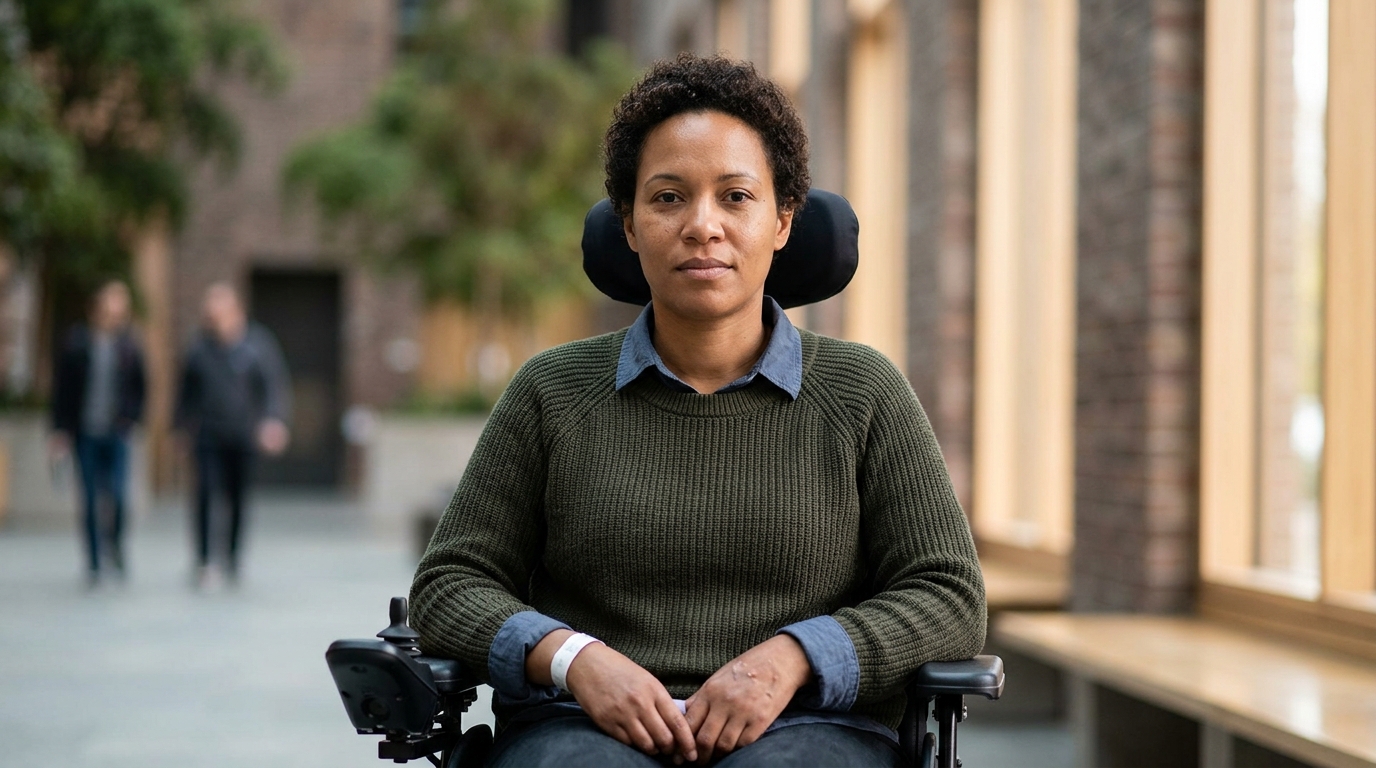
Negligencia Médica · Lesión de Médula Espinal
Cuando un Error Médico Deja a un Ser Querido con Tetraplejia
La tetraplejia (parálisis de los cuatro miembros) cambia la vida para siempre. Si sospecha que un error evitable durante un procedimiento, una cirugía o el manejo de una lesión de médula espinal causó esta parálisis, tiene derecho a respuestas. Le explicamos en lenguaje sencillo cuándo un error se convierte en negligencia.
Por qué las familias confían en nosotros
Abogados
licenciados y admitidos ante el Colegio de Abogados de Florida
Solo casos graves
lesiones catastróficas y permanentes
Bilingüe
atención en español e inglés
A nivel nacional
aceptamos casos en todo el país
By CHG Lawyers · Published August 09, 2026
Negligencia Médica y Tetraplejia: Cuándo un Error Médico Causa Parálisis Permanente
Medical malpractice can cause quadriplegia. This happens when a health provider fails to give reasonable care, and that error harms the spinal cord in the neck. Not every bad result is negligence. But sometimes an avoidable error causes or worsens permanent paralysis. When that happens, the injured person and their family may have the right to file a claim.
This guide covers medical malpractice and quadriplegia. In plain language, it explains how a medical error can cause paralysis. It also covers the signs that point to negligence and the steps you can take now. It is written for you or your family member. This is general information. It is not legal advice for a specific case.

Not sure what your next step is?
Talk it through with our team — the first consultation is free, confidential, and carries no obligation.
¿Qué es la tetraplejia y por qué es una lesión catastrófica?
Quadriplegia is also called tetraplegia. It is paralysis of the arms, trunk, and legs. It comes from damage to the spinal cord at the neck. It is one of the most serious and permanent injuries there is.
The spinal cord carries signals between the brain and the body. The neck has seven bones, called C1 to C7. When the cord is damaged there, a person can lose movement and feeling below that point. According to Mayo Clinic, the higher the injury, the larger the part of the body affected. A high injury — above C4 — can affect breathing. It may force the use of a ventilator, which is a breathing machine. This is because the phrenic nerve, which controls the diaphragm, leaves the spinal cord at C3–C5.
The difference with paraplegia is where the damage is. Quadriplegia affects all four limbs. Paraplegia affects the lower half of the body. The American Spinal Injury Association (ASIA) keeps the international standard classification. This is the ISNCSCI scale, or “ASIA Impairment Scale,” graded A to E. It describes the neurological level. It also shows whether the injury is complete or incomplete. This detail is not just medical. It separates total paralysis from paralysis where some function remains. It often decides the outlook and the cost of care.
The impact lasts a lifetime. According to the Christopher & Dana Reeve Foundation, about 5.4 million people in the U.S. live with some level of paralysis. The National Spinal Cord Injury Statistical Center (NSCISC) is the national registry funded by the federal government. It estimates that first-year costs after a high quadriplegia injury can top one million dollars. Costs then continue for life. You can read more on our page about lesiones de la médula espinal.
Cómo un error médico puede causar tetraplejia
A medical error can cause quadriplegia in two ways. It can directly damage the neck spinal cord. Or it can let a reversible injury turn permanent because no one acted in time.
These causes show up in catastrophic injury cases:
- An injury during surgery on the spine or neck. Or poor patient positioning during long hours of anesthesia.
- A delay in diagnosis. This includes spinal cord compression, an epidural hematoma (a bleed near the cord), or an infection like a spinal abscess — when every hour counts.
- Failure to stabilize the neck. After trauma, an unstable neck fracture can damage the cord if it is not held still.
- Ignoring early “red flag” signs. These include growing weakness, saddle numbness (numbness in the groin and inner thighs), and loss of bladder or bowel control. These signs call for urgent imaging.
Mayo Clinic notes that early, proper care affects the outcome. When spinal cord compression is not relieved in time, damage that started as partial can become permanent.
One important point: not every bad result means negligence. Medicine has known risks. A complication can happen even when the team acts correctly. The key question is different. Did the provider act the way a reasonable professional would in the same situation? When the answer is no, and that error caused the harm, there may be grounds for a claim.
Señales de que la parálisis pudo deberse a negligencia médica
No single sign proves anything on its own. But several signs together deserve attention:
- The decline happened during or soon after a medical procedure.
- The providers do not clearly explain what happened, or give conflicting stories.
- Documented warning symptoms were ignored — severe pain, numbness, or loss of strength — with no imaging ordered.
- There were clear delays in acting on a neurological emergency.
Here is a practical, concrete step. Ask for your full medical record in writing. In the U.S., the HIPAA Privacy Rule gives you the right to get a copy. The provider usually must hand it over within 30 days. Ask for everything: the operative note, the anesthesia record, the radiology reports with the original images (not just the summary), the nursing notes, and the orders with exact times. Our attorneys handle catastrophic cases. In these cases, a minute-by-minute timeline from those records is often the base of the whole investigation. It shows when symptoms appeared. It also shows how long the team took to respond.
Have questions about what happened?
Ask our team directly. The first conversation is free, confidential, and there is no obligation to continue.
¿Qué es la negligencia médica ante la ley?
Medical malpractice happens when a provider fails to meet the standard of reasonable care, and that failure causes harm. In simple terms: they did not do what a careful professional would have done in the same situation.
To prove a case, you usually show four elements:
- Duty: the provider had a duty to care for you.
- Breach: they failed to meet the standard of care.
- Cause: that failure caused your injury.
- Harm: you suffered real harm, such as quadriplegia.
Medical experts play a central role. They are health professionals who explain what should have been done differently. In Florida, the law requires a step before you can sue. Under Fla. Stat. §766.203, the lawyer must do a reasonable pre-suit investigation. They must also get a “verified written medical expert opinion” (verified written medical expert opinion) from a qualified expert. This confirms there are grounds to believe negligence occurred, before filing the lawsuit. That rule, plus the pre-suit notice and discovery process, is why gathering records early matters so much.
Qué puede reclamar una familia afectada por negligencia médica y tetraplejia
A family affected by quadriplegia from medical negligence can claim several types of damages. The goal is to cover the real cost of living with the injury:
- Medical expenses, both current and future, including lifetime care. According to the NSCISC, these figures reach hundreds of thousands of dollars per year in the worst cases.
- Caregivers, therapy, and equipment. This also includes changes to the home and vehicle (ramps, hand controls, and specialized beds and wheelchairs).
- Lost income and lost ability to work.
- Pain, suffering, and loss of quality of life.
When the outcome was fatal, the law opens another path. Under the Ley de Muerte por Negligencia de Florida (Fla. Stat. §768.19), certain family members can file a wrongful death claim. It is the gravest loss there is. The law recognizes the impact it leaves on a family.
Time matters a great deal. In Florida, the general deadline to sue for negligence is two years. This applies to cases that arise on or after March 24, 2023, under Fla. Stat. §95.11. For medical negligence cases, Fla. Stat. §95.11(4)(b) sets a two-year deadline from when the harm was discovered. It also sets an outer limit (statute of repose) that generally does not go past four years. Florida also uses a modified comparative negligence rule under Fla. Stat. §768.81. Anyone found more than 50% at fault for their own harm generally cannot recover compensation. Deadlines vary by state, so it is wise to act soon.
Pasos que puedes seguir ahora
The most helpful step now is to gather information and seek guidance before the legal deadlines pass:
- Ask in writing for all medical records and reports, including the original images.
- Write down dates, names, and what the providers told you. Add the time if you remember it.
- Do not sign any agreements or waivers without guidance first.
- Seek an evaluation of your situation from a lawyer experienced in catastrophic injuries.
CHG Personal Injury Lawyers offers a free evaluation of your case, with bilingual service in Spanish. Our firm is based in Florida and handles cases across the country. You can contactarnos para una evaluación gratuita at no cost and with no obligation.

Want to know where you stand?
Tell us what happened and our team will walk you through the options available to you, at no cost.
Preguntas frecuentes
Does quadriplegia from a medical error always mean there was negligence?
No. A known complication can happen even when the medical team acts with care. There is negligence only when an avoidable error breaks the standard of care and causes the harm.
How much time do I have to file a medical negligence claim in Florida?
Generally, two years from when the harm was discovered, under Fla. Stat. §95.11(4)(b), with an outer limit that is usually four years. Deadlines vary and have exceptions, so it is wise to act soon.
Do I need a medical expert before I sue in Florida?
In practice, yes. Fla. Stat. §766.203 requires a qualified expert to confirm in writing that there are grounds to believe negligence occurred, before you file the lawsuit. Your lawyer handles this step.
How much does it cost to talk to a lawyer about a quadriplegia case?
The evaluation of your case with CHG Personal Injury Lawyers is free. Talking to us has no cost and no obligation.
Do you handle medical negligence cases outside Florida?
Yes. Our firm is based in Florida and handles catastrophic injury cases across the country, with bilingual service in Spanish.
This article is general information. It is not legal advice, and it does not create an attorney-client relationship. For guidance on your situation, contacta a CHG Personal Injury Lawyers para una evaluación gratuita.
Un plazo importante en Florida
En general, en Florida existe un límite de tiempo (por lo común dos años desde que se descubre el daño) para presentar una reclamación por negligencia médica. Los casos de negligencia médica también exigen pasos formales antes de demandar. No espere: la evidencia médica y los expedientes son más fáciles de asegurar cuanto antes actúe.
Cuándo un error puede ser negligencia
No toda complicación es negligencia
Una complicación conocida puede ocurrir incluso cuando el equipo médico actúa con el debido cuidado. Existe negligencia solo cuando un error evitable rompe el estándar de atención y causa el daño.
Se rompió el estándar de atención
La negligencia significa que un profesional actuó de forma diferente a como lo habría hecho un médico razonable en las mismas circunstancias, y esa diferencia provocó la parálisis.
El error causó la lesión
Debe existir un vínculo directo entre el error y la tetraplejia: un retraso en el diagnóstico, un daño durante la cirugía, o el manejo incorrecto de una lesión de médula que empeoró un cuadro tratable.
El daño es permanente y grave
Nos enfocamos en resultados catastróficos: parálisis de los cuatro miembros, dependencia de por vida y, en los casos más devastadores, la muerte que da lugar a un reclamo por muerte injusta.
Cómo le ayudamos
Revisamos los expedientes médicos
Analizamos el historial completo con apoyo de profesionales de la salud para determinar si un error evitable causó la parálisis.
Trabajamos con expertos médicos
Contamos con especialistas que evalúan si se rompió el estándar de atención en su caso específico.
Le acompañamos con empatía
Entendemos el peso de un diagnóstico de tetraplejia. Le explicamos cada paso en un lenguaje claro, sin tecnicismos.
Buscamos la compensación de por vida
Perseguimos los recursos necesarios para atención médica futura, adaptaciones del hogar, cuidado permanente y el impacto en la familia.