

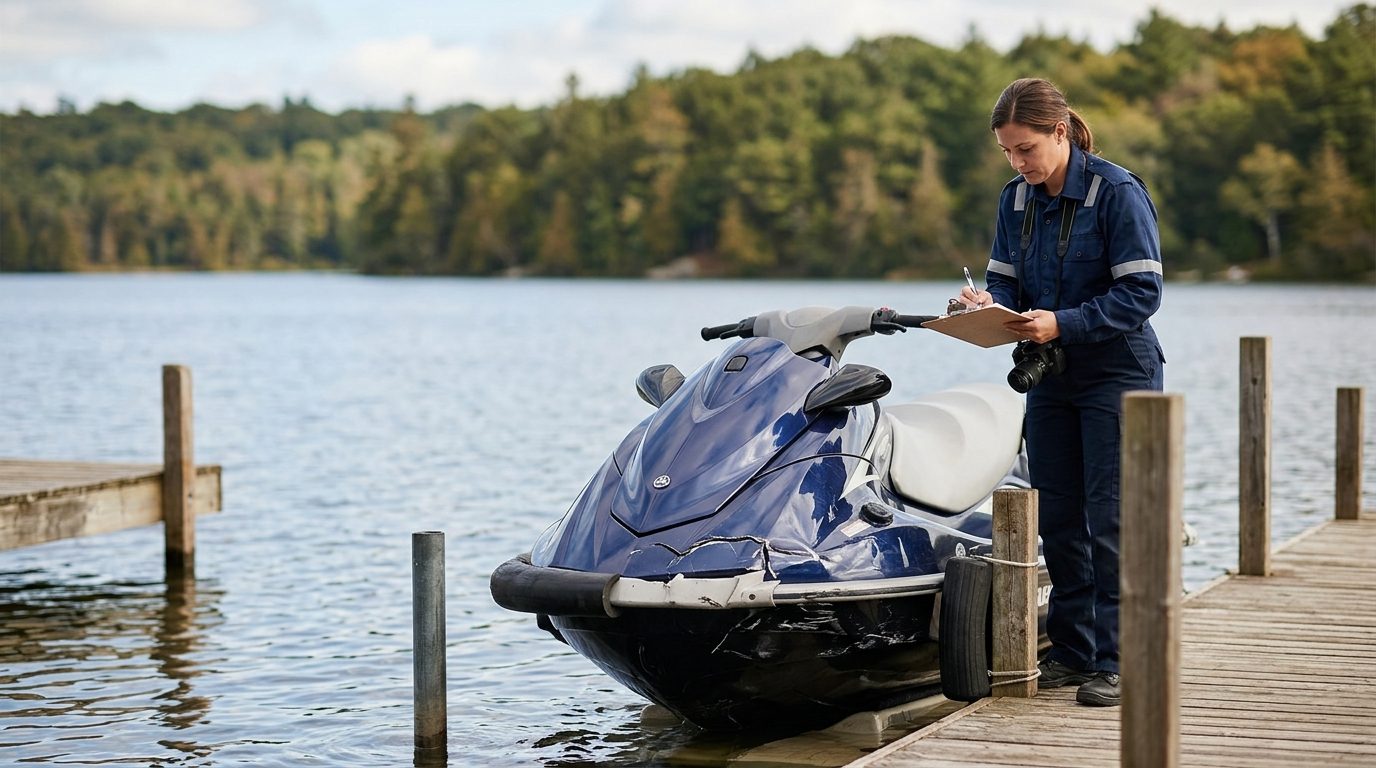
Catastrophic Jet Ski Injuries
Jet Ski Accident Injury Claims: Compensation for Life-Altering Harm
Catastrophic spinal cord injuries, paralysis, traumatic brain injury, amputation, severe burns, and wrongful death from jet ski accidents demand experienced legal representation. We focus exclusively on catastrophic injuries nationwide.
By CHG Lawyers · Published August 31, 2026
Catastrophic Jet Ski Accident Injuries: Legal Rights & Compensation in Florida and Beyond
Catastrophic jet ski injuries—spinal cord damage causing paralysis, traumatic brain injury, amputation and limb loss, severe burns, drowning, and wrongful death—are permanent, life-altering events that often result from negligence by an operator, rental company, manufacturer, or property owner. If you or a family member suffered a catastrophic injury in a jet ski accident, you may have a legal claim for compensation to cover medical care, lost income, pain and suffering, and the lifetime cost of disability.
This guide explains the types of catastrophic jet ski injuries, the common causes of accidents, who can be held liable, and what your legal rights are under Florida and federal maritime law. Understanding your options is the first step toward recovery and justice.
Not sure what your next step is?
Talk it through with our team — the first consultation is free, confidential, and carries no obligation.
What Are Catastrophic Jet Ski Accident Injuries?
Catastrophic jet ski injuries are severe, permanent injuries that fundamentally alter a person’s life and require ongoing medical care and support. These injuries are distinctly different from minor injuries like soft-tissue damage, uncomplicated fractures, or minor lacerations.
Types of catastrophic jet ski injuries include:
-
Spinal cord injury and paralysis: Impact trauma from a high-speed collision or fall can damage the spinal cord, resulting in paraplegia (lower-body paralysis) or quadriplegia (full-body paralysis). According to the Christopher & Dana Reeve Foundation, a spinal cord injury costs over $1 million in the first year alone and $185,000 to $360,000 annually for life, depending on the level and severity of injury. Paralysis requires lifelong medical care, assistive devices, home modifications, and personal assistance.
-
Traumatic brain injury (TBI): Head impact from collision or water immersion can cause cognitive impairment, memory loss, personality changes, seizures, or permanent neurological damage. The Mayo Clinic notes that TBI can affect the person’s ability to work, think, and function independently, often requiring years of rehabilitation and ongoing neuropsychological support.
-
Amputation and limb loss: Propeller strikes, crushing injuries, or severe lacerations can result in loss of fingers, hands, feet, or entire limbs. Amputation requires emergency surgical care, prosthetics, rehabilitation, and lifelong adaptation.
-
Severe internal injuries: Blunt-force trauma from high-speed collision can cause organ damage, internal bleeding, ruptured organs, or other injuries requiring emergency surgery and intensive care.
-
Drowning and near-drowning: Loss of consciousness in water, aspiration (water in the lungs), or hypoxic brain injury (oxygen deprivation) can result in permanent neurological damage or death. Even survivors of near-drowning often suffer lasting brain damage.
-
Severe burn injuries: Fuel fires, engine fires, or chemical burns can cause third-degree burns requiring skin grafts, surgical reconstruction, and lifelong pain management.
-
Wrongful death: Fatal jet ski accidents leave surviving family members facing financial hardship and emotional devastation. Families have legal rights to recover damages for the loss.
The defining characteristic of a catastrophic injury is permanent impairment—the injured person will never fully recover and will live with disability, pain, and dependency for the rest of their life.
Common Causes of Catastrophic Jet Ski Accidents
Catastrophic jet ski injuries typically result from negligence—a failure to exercise reasonable care. Understanding the causes of accidents helps establish who is responsible.
Operator negligence is a leading cause: reckless speed, operation while impaired by alcohol or drugs, failure to maintain control, inexperience, lack of training, and failure to follow navigation rules all create dangerous conditions. Operators owe a duty of care to passengers and other people on the water.
Rental company negligence is common in jet ski rental accidents. Rental companies may fail to provide adequate safety briefings, fail to inspect or maintain equipment properly, rent to unqualified or intoxicated operators, fail to enforce safety rules, or fail to supervise renters. These failures breach the rental company’s duty of care.
Collision with another vessel occurs when operators fail to maintain a proper lookout, violate navigation rules, or operate at excessive speed in congested waters. The operator of the other vessel may be liable.
Collision with fixed objects—docks, piers, rocks, shallow-water hazards, or debris—can cause catastrophic injury if the operator was operating recklessly or failed to maintain control.
Propeller injuries are among the most severe jet ski injuries. The jet ski’s intake and propeller can strike an operator, passenger, or bystander, causing severe lacerations, crushing injuries, or amputation. Propeller injuries often occur when a person falls into the water or when the operator loses control.
Defective equipment including manufacturing defects, design flaws, brake or steering failure, or fuel-system failures can cause accidents. Manufacturers may be liable if a defect contributed to the injury.
Inadequate supervision of minors or inexperienced riders increases the risk of catastrophic injury.
Unsafe water conditions and failure to warn of hazards (shallow water, submerged objects, strong currents) can establish negligence.
Propeller Injuries: The Most Catastrophic Jet Ski Hazard
Propeller injuries are among the most devastating jet ski injuries. The jet ski’s intake and propeller operate at high speed and can cause severe lacerations, crushing injuries, or amputation to operators, passengers, or bystanders who fall into the water or come into contact with the propeller.
Propeller injuries are particularly severe because they occur at high speed and can cause massive tissue damage, bleeding, and loss of limb. In many cases, propeller-injury victims require emergency amputation to survive. The psychological impact of sudden limb loss is profound and lifelong.
Common propeller-injury scenarios include:
- A passenger falls overboard and is struck by the propeller
- An operator loses control and is thrown into the propeller
- A bystander or swimmer is struck by a jet ski and its propeller
- A child is injured because an operator failed to maintain control or was operating recklessly
Who Can Be Held Liable for a Jet Ski Accident?
Establishing liability is essential to recovering compensation. Multiple parties may bear responsibility for a catastrophic jet ski accident.
The operator is liable if they were negligent or reckless—operating at excessive speed, operating while impaired, failing to maintain control, violating navigation rules, or operating without adequate training or experience.
The jet ski owner may be liable if they failed to maintain the equipment in safe condition, allowed an unqualified person to operate it, or failed to warn of known hazards or defects.
The rental company is liable if they failed to provide adequate safety training, rented to an unqualified operator, failed to maintain the equipment, failed to inspect for defects, or failed to enforce safety rules. Rental companies have a heightened duty of care because they profit from the rental and control who operates the equipment.
The manufacturer may be liable if the jet ski had a defect in design or manufacture that contributed to the accident or injury.
The property owner or marina operator may be liable if they failed to maintain safe conditions, warn of hazards, or provide adequate supervision.
In many cases, more than one party bears responsibility. An experienced attorney can investigate the accident and identify all liable parties.
Maritime Law and Jet Ski Accident Claims
Jet ski accidents on navigable waters fall under federal maritime law (admiralty law), not state personal-injury law alone. Maritime law provides distinct remedies, procedures, and statutes of limitations.
Why maritime law matters: Federal maritime law may offer different damages, different statutes of limitations, and different procedural rules than state law. Understanding which law applies to your claim is essential.
Maritime negligence is the legal foundation of jet ski accident claims. To establish maritime negligence, you must prove that the defendant owed a duty of care, breached that duty, and caused your injury.
These statutes provide specific remedies and procedures.
Jurisdiction and venue determine where your claim can be filed. Jet ski accident claims may be filed in federal court, state court, or both, depending on the circumstances and the amount of damages.
Jet Ski Rental Accidents and Liability
Rental companies have a legal duty to provide safe equipment and adequate safety training. When they fail to do so, they are negligent and liable for resulting injuries.
Common rental company negligence includes:
- Failure to inspect equipment for defects or maintenance problems
- Failure to provide adequate safety briefings or training
- Renting to unqualified, inexperienced, or intoxicated operators
- Failure to enforce safety rules or speed limits
- Inadequate supervision of renters
- Failure to maintain equipment in safe condition
Waivers and liability releases are common in the jet ski rental industry. However, waivers do not protect rental companies from liability for their own negligence or gross negligence. A waiver signed before the rental does not absolve the company of responsibility if it failed to provide safe equipment or adequate training.
Safety briefings are a critical part of the rental company’s duty of care. An inadequate or absent safety briefing can establish negligence, especially if the renter was inexperienced or unqualified.
Equipment maintenance is essential. Rental companies must inspect and maintain jet skis regularly to ensure they are safe to operate. Failure to maintain equipment is negligence.
Damages and Compensation in Jet Ski Accident Claims
Economic damages include medical expenses (emergency care, surgery, rehabilitation, ongoing treatment), lost wages, lost earning capacity, home modifications, assistive devices, and future care costs. In catastrophic-injury cases, future medical care and support can cost hundreds of thousands of dollars or more.
Non-economic damages include pain and suffering, emotional distress, loss of enjoyment of life, and loss of consortium (the impact on family relationships).
Punitive damages may be available in cases of gross negligence or intentional misconduct, to punish the defendant and deter similar conduct.
Wrongful-death damages in fatal jet ski accidents include funeral and burial expenses, lost financial support the deceased would have provided, and loss of companionship of surviving family members.
Calculating damages requires the help of medical experts, economic experts, and life-care planners who can establish the full, lifetime cost of catastrophic injury.
Have questions about what happened?
Ask our team directly. The first conversation is free, confidential, and there is no obligation to continue.
Proving Negligence in a Jet Ski Accident Claim
To recover compensation, you must prove negligence. Negligence has four elements:
-
Duty: The defendant owed a legal duty to you. Jet ski operators, rental companies, manufacturers, and property owners all owe a duty of care to others.
-
Breach: The defendant failed to fulfill that duty. Examples include reckless operation, failure to maintain equipment, failure to provide safety training, or failure to warn of hazards.
-
Causation: The defendant’s breach directly caused your injury.
-
Damages: You suffered harm—medical expenses, lost income, pain and suffering, or permanent disability.
Evidence to prove negligence includes police reports, witness statements, medical records, expert testimony, photographs, and video evidence.
Comparative negligence: Under Florida law, you can recover damages even if you were partially at fault, as long as you were not more than 50% at fault. This is called comparative negligence or shared fault.
What to Do After a Jet Ski Accident
Immediate steps after a jet ski accident:
- Ensure safety and call emergency services if anyone is injured
- Provide first aid if trained
- Report the accident to the U.S. Coast Guard or local authorities (most serious jet ski accidents must be reported)
- Take photographs of the scene, the vessels involved, and any injuries
- Obtain contact information from witnesses
- Seek immediate medical attention, even if injuries seem minor (some injuries like internal bleeding or brain injury may not be immediately apparent)
- Keep detailed records of all medical treatment and expenses
- Do not admit fault or make statements that could be used against you; let your attorney handle communications with insurance companies
Preserve evidence by documenting everything and keeping records organized. This evidence will be critical to establishing liability and damages.
Contact an attorney promptly. The statute of limitations in Florida for personal-injury claims is generally two years from the date of injury, but federal maritime claims may have a three-year deadline. Missing the deadline can bar your claim entirely. An experienced jet ski accident attorney can protect your rights and pursue compensation.
Florida Jet Ski Laws and Injury Claims
Florida law governs jet ski operation and establishes duties of care that, when violated, can establish negligence.
Equipment requirements: Jet skis must have life jackets, fire extinguishers, and other safety equipment as required by law.
Liability insurance: Florida law requires jet ski operators to carry liability insurance or post a bond.
Violation of boating laws can establish negligence per se (negligence by definition), making it easier to prove liability in a personal-injury claim.
Statute of Limitations for Jet Ski Accident Claims
The statute of limitations is the deadline for filing a lawsuit. Missing the deadline can bar your claim entirely.
Federal maritime claims may have a three-year statute of limitations.
Wrongful-death claims have a two-year statute of limitations from the date of death.
The discovery rule may extend the statute of limitations in some cases if the injury was not immediately discovered.
Tolling may pause the statute of limitations if the injured person is a minor or legally incapacitated.
Why timing matters: Contacting an attorney promptly ensures that you do not miss critical deadlines and that evidence is preserved while it is still fresh.
Wrongful Death After a Jet Ski Accident
Fatal jet ski accidents can result from drowning, collision trauma, propeller injuries, or other catastrophic events.
Wrongful-death claims allow surviving family members to recover compensation when a jet ski accident causes death due to someone’s negligence.
In Florida, the wrongful-death claim is filed by the personal representative of the estate on behalf of the survivors, such as the spouse, children and parents (Fla. Stat. § 768.20).
Damages in wrongful-death cases include funeral and burial expenses, lost financial support the deceased would have provided, loss of companionship, and pain and suffering of the surviving family members.
Wrongful death is the most catastrophic outcome. Families left behind face financial hardship and emotional devastation. Legal action can help families recover the financial support they have lost and hold responsible parties accountable.
How an Attorney Can Help
Case evaluation: An attorney can review the facts of your accident and determine whether you have a viable claim and what compensation you may be entitled to recover.
Investigation: Attorneys investigate accidents, gather evidence, interview witnesses, obtain police reports and medical records, and identify all liable parties.
Expert consultation: Attorneys retain medical experts, accident reconstructionists, engineers, and other specialists to support your claim and establish liability and damages.
Negotiation: Attorneys negotiate with insurance companies and defendants to reach a fair settlement without the need for trial.
Litigation: If settlement negotiations fail, attorneys file a lawsuit and represent you in court.
Maximizing compensation: Attorneys understand the full scope of damages available in catastrophic-injury cases and pursue maximum compensation for your injuries, lost income, pain and suffering, and lifetime care needs.
Want to know where you stand?
Tell us what happened and our team will walk you through the options available to you, at no cost.
Next Steps: Pursuing Your Jet Ski Accident Injury Claim
Catastrophic jet ski injuries—spinal cord damage, traumatic brain injury, amputation, drowning, and fatal outcomes—are serious, life-altering events that often result from negligence. If you or a family member suffered a catastrophic injury in a jet ski accident, you have legal rights and remedies.
The first step is to discuss your accident with an attorney who understands catastrophic jet ski injuries and maritime law. An experienced attorney can evaluate your claim, identify liable parties, gather evidence, and pursue fair compensation to cover your medical care, lost income, pain and suffering, and lifetime disability costs.
If you suffered a catastrophic jet ski injury—spinal cord damage, brain injury, amputation, or drowning—or if a family member was killed in a jet ski accident, reach out to discuss your situation. People in your circumstances contact us regularly, and our practice focuses exclusively on catastrophic injuries and the accidents that cause them. Contact us for a free case evaluation.
Why Choose CHG Personal Injury Lawyers
Focused on Catastrophic Cases
We focus exclusively on serious, permanent injuries—spinal cord damage, paralysis, traumatic brain injury, amputation, severe burns, and wrongful death. We don't handle minor injuries.
Florida Bar–Admitted Attorneys
National Reach, Local Knowledge
Based in Florida and handling cases nationwide, we understand the unique risks and regulations governing jet ski operations across the country.
Empathetic, Plain-Language Guidance
We communicate clearly about your rights and the path forward—no legal jargon, no pressure, only honest counsel for you and your family.
Common Causes of Catastrophic Jet Ski Injuries
Operator Negligence
Reckless speed, impaired operation, failure to follow safety rules, or inexperienced riders cause severe collisions and drowning.
Rental Company Liability
Poorly maintained equipment, inadequate safety briefings, failure to verify operator competence, or renting to intoxicated individuals.
Manufacturer Defects
Design flaws, faulty steering systems, engine failure, or defective safety equipment that increase the risk of catastrophic injury.
Property Owner Negligence
Failure to maintain safe waterways, inadequate warning systems, or unsafe conditions that lead to collisions and drowning.
Act Quickly
Jet ski accident claims involve complex maritime law, product liability, and insurance disputes. Evidence deteriorates, witnesses move away, and critical details fade. The sooner you contact an attorney, the stronger your claim.
Types of Catastrophic Jet Ski Injuries We Handle
Spinal Cord Injury & Paralysis
Collision impact or submersion causing complete or partial paralysis (paraplegia or quadriplegia), requiring lifelong medical care and adaptive equipment.
Traumatic Brain Injury
Head trauma from impact or drowning leading to cognitive impairment, memory loss, personality changes, and permanent disability.
Amputation & Limb Loss
Severing or crushing of limbs from propeller contact, collision, or entanglement—a sudden, permanent loss requiring prosthetics and rehabilitation.
Severe Burn Injuries
Fuel ignition, engine contact, or fire causing deep tissue damage, scarring, and lifelong pain requiring specialized burn care.
Drowning & Near-Drowning
Submersion causing hypoxic brain injury, organ damage, or death—often preventable through proper safety measures and supervision.
Wrongful Death
Fatal jet ski accidents leave families grieving and facing financial hardship. We help pursue claims for the loss of a loved one.
What Compensation May Cover
Medical Care & Rehabilitation
Emergency treatment, surgery, hospitalization, ongoing therapy, specialized equipment, and lifetime medical management.
Lost Income & Earning Capacity
Wages lost during recovery and compensation for permanent inability to work or reduced earning potential.
Pain, Suffering & Loss of Life Enjoyment
Damages for physical pain, emotional trauma, lost independence, and the permanent changes to your quality of life.
Home & Vehicle Modifications
Adaptive equipment, accessibility upgrades, and specialized transportation needed to support your new circumstances.
Caregiver & Household Support
Cost of in-home care, personal assistance, and services you can no longer perform independently.
Your Next Steps
1. Contact Us for a Free Case Evaluation
Share the details of your jet ski accident with no obligation. We listen, ask clarifying questions, and explain your legal options.
2. We Investigate & Gather Evidence
We obtain accident reports, medical records, witness statements, maintenance logs, and expert analysis to build your claim.
3. Identify All Liable Parties
We determine whether the operator, rental company, manufacturer, property owner, or others bear responsibility for your injury.
4. Pursue Fair Compensation
We negotiate with insurers and, if necessary, file suit to recover the full value of your claim—no attorney’s fees unless there is a recovery.