
Florida Spinal Cord Injury Guide
When someone you love has a spinal cord injury, you do not have to figure out the next steps alone
Practical ways to support your family member through medical care, paperwork, and the questions that come after a serious accident.
Why families contact CHG Personal Injury Lawyers
Free
First consultation, confidential and without obligation to continue
Florida
Florida-based firm serving clients throughout Florida
Licensed
Attorneys admitted to The Florida Bar
By CHG Lawyers · Published November 25, 2026
Watching someone you love face a spinal cord injury is frightening. You want to help, but the medical terms and daily tasks can feel like too much at once.
Here’s the short answer: you help someone with a spinal cord injury most by staying involved, learning what the injury means in plain words, and backing the care team’s plan. You don’t need medical training to do that. This guide covers the basics, from the hospital to home, and where legal questions fit.
What a Spinal Cord Injury Means for Your Loved One
A spinal cord injury interrupts the messages between the brain and the body. Movement, feeling, and some body functions can change below the injury. The World Health Organization notes that this can cause complete or incomplete loss of sensation or movement below the injury level.
A complete injury means no movement or feeling below the injury. An incomplete injury means some function remains. Doctors decide which one applies, often by watching changes over time. You can learn more in our complete vs. incomplete guide.
Two terms come up often. Paraplegia generally affects the legs, and arm function is preserved. Tetraplegia, also called quadriplegia, affects the arms as well. Read our paraplegia vs. quadriplegia guide. Recovery varies widely between people, so rely on the medical team’s assessments.
If your loved one was hurt because of someone else's actions, you don't have to figure out the legal side alone, and we're glad to talk it through. Talk it through with our team — the first consultation is free, confidential, and carries no obligation.

How the Injury Level Shapes Daily Needs
The level of injury on the spine decides which muscles and sensations are involved. That’s why needs differ from one person to the next. MedlinePlus explains that neck-level (cervical) injuries can affect the arms and legs, while mid-back (thoracic) injuries primarily affect the legs.
Take a T9 injury, which sits in the mid-back. Daily needs often center on the legs, along with getting in and out of bed or a wheelchair safely.
Upper-body injuries work differently. When the hands and arms are affected, tasks like eating, dressing, and using a phone can take much more help.
Ask the care team to explain what the level means for your loved one, in everyday terms. Write the answers down and bring your list to each appointment. The doctors and rehab team set the plan for their care, so follow their guidance.
Supporting Your Loved One in the Hospital and Rehabilitation
Your most useful role in the hospital and rehab is to be present, take notes, and ask questions. A notebook often helps more than memory does.
Keep a written list of questions. Take notes at care meetings. Ask for written discharge instructions before anyone leaves the hospital, so the next steps are on paper.
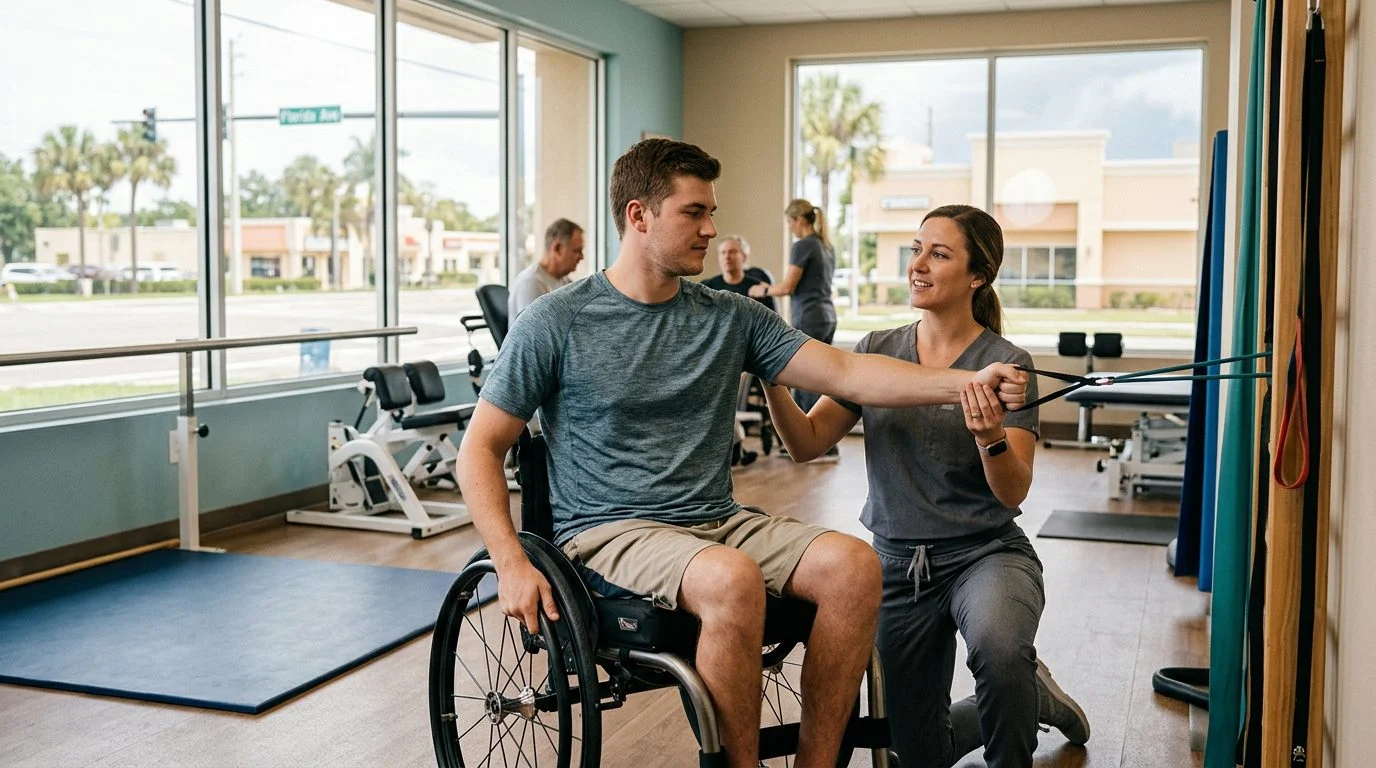
The rehab team usually includes physical therapists, occupational therapists, and a social worker or case manager. Physical therapy works on strength, movement, and moving from one surface to another. Practice only the exercises the therapists have shown you. Ask them before adding anything new.
Speak up when something feels wrong. Report changes to the care team right away.
Practical Help at Home: Safety, Equipment, and Routine
At home, the basics are safe transfers, clear pathways, and a routine everyone can follow.
Start with the layout. Clear walkways, ramps or flat thresholds, bathroom grab bars, and a bed and wheelchair at the right height make daily tasks safer. Ask the therapists which changes matter most.
Learn safe transfers from the therapy team, not from guesswork. A wrong move can hurt both the injured person and the helper. Practice with a therapist until the steps feel steady.
Skin and pressure care is also part of daily life. The medical team sets that routine, so follow it exactly.
Keep a simple schedule. A shared calendar for medications and appointments helps everyone stay on the same page. Post an emergency plan with phone numbers where everyone can see it. In an emergency, call 911.
Emotional Support and Coping With Paralysis
Grief, anger, fear, and frustration are common after a spinal cord injury. These feelings are understandable.
Listen more than you fix. Let your loved one make choices wherever they can, such as what to wear or what to eat. Avoid doing for them what they can still do for themselves.
Caregiver strain is real. Protect your sleep when you can, take short breaks, and ask other relatives or friends to share the work. If you feel worn down for weeks, tell the rehab team. They can refer families to counseling.
If your loved one talks about ending their life or hurting themselves, call or text 988, the Suicide & Crisis Lifeline, right away. Contact their medical team too.

When Someone Else May Be Responsible: Your Next Steps
If another driver, a truck company, or a property owner caused the injury, your family may have a legal claim. Florida deadlines apply.
Start a folder now. Keep medical bills, insurance letters, pay stubs, photos of the scene, and names of witnesses. Florida law requires a crash report for crashes involving injury. Fla. Stat. § 316.066 says the report must be submitted within 10 days after the investigation is completed.
Florida also sets filing deadlines for injury claims, and they can be shorter than families expect. Florida law sets those time limits. Waiting can cost options, so contact a lawyer early.
Medicare may also be involved. The CMS Medicare Secondary Payer overview explains that Medicare may make conditional payments, which must be repaid when a settlement or judgment is paid. Florida’s comparative fault rule, § 768.81, bars a party found greater than 50 percent at fault for his or her own harm from recovering any damages in a negligence action, except for an action for personal injury or wrongful death arising out of medical negligence under chapter 766.
Common Questions
Can our family file a claim?
Possibly. A claim depends on who caused the injury and what the records show.
How long do we have?
Florida deadlines apply and can be short, so act promptly.
Does Medicare need to be repaid?
It may. Ask about it early.
Igor Hernandez, one of the firm’s lawyers, is responsible for this page. CHG Personal Injury Lawyers is a Florida firm. Depending on the case, a matter may be referred to, or handled together with, another law firm. CHG charges no attorney’s fees and no case costs unless there is a recovery.
If you’re caring for someone you love while trying to understand an accident they didn’t choose, you don’t have to sort out the legal side alone. Contact CHG Personal Injury Lawyers for a free, confidential consultation, with no obligation to continue.
How our team can help your family
Organizing the paperwork
We help families gather medical records, accident reports, bills, and insurance letters so nothing important gets lost during a difficult time.
Keeping everyone informed
We explain each step in plain language so the people closest to your loved one know what is happening and what may come next.
Protecting your family's rights
We look at who may be responsible for the accident and what the injury means for your loved one's future, including the costs of ongoing care.
Working with you by phone or in person
Our Florida team is available to talk with your family about your situation at a time that works for you.
Keep records from the start
Save every medical report, bill, insurance letter, and photo from the accident. Follow the treatment plan set by your loved one's doctors, and tell our team early if you receive a letter from an insurer or a request to sign anything.
Ways to support your loved one right now
Go to appointments together
Having a second person in the room helps you remember what the doctors say and ask questions that matter.
Keep a simple daily log
Write down symptoms, medications, therapy sessions, and changes in mood or mobility. This record can help the medical team and your family.
Share the load
Caregiving is demanding. Divide tasks among family and friends, and make time for your own rest and support.
Ask about the legal side early
Questions about who may be responsible, insurance coverage, and Medicare or health plan repayment are easier to answer when they are raised early.