

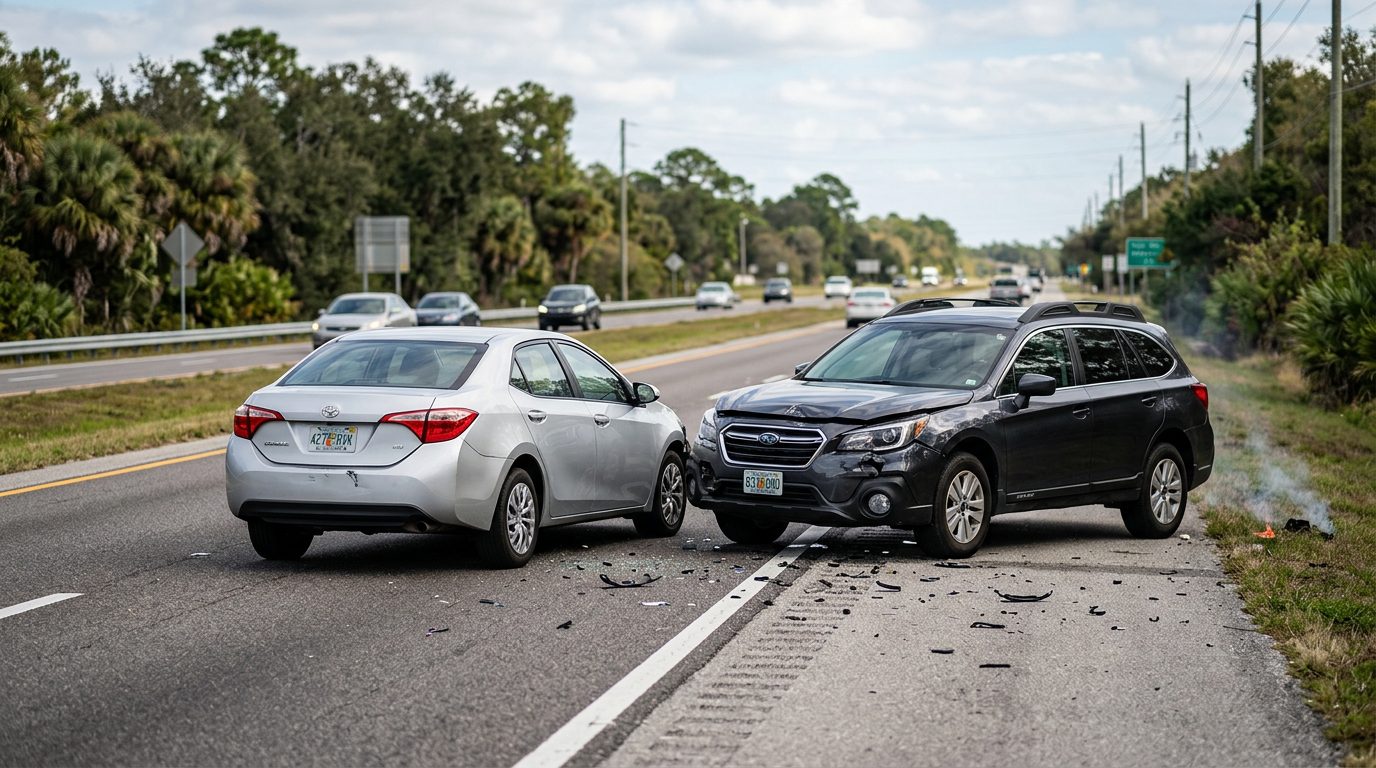
Florida Crash Documentation
How to Get Your Florida Crash Report
A step-by-step guide to obtaining the official accident report you need for your injury claim
By CHG Lawyers · Published September 29, 2026
How to Get Your Florida Crash Report: A Guide for Accident Victims
A Florida crash report is an official document filed by law enforcement after a motor vehicle accident. It records what happened—where, when, how, and who was involved. If you’re injured, this report becomes critical evidence for your insurance claim or legal case. This guide explains how to get your report, what it contains, and why it matters.
If you were seriously injured, an attorney can help you understand whether the settlement offer is fair and what your claim may be worth. Talk it through with our team — the first consultation is free, confidential, and carries no obligation.
What Is a Florida Crash Report?
A Florida crash report is the official record created by the police officer or law enforcement agency that responded to your accident. The officer documents:
- The date, time, and location
- Vehicle details
- Driver information
- Road and weather conditions
- How the crash occurred (the officer’s assessment)
Insurance companies use this report to determine who was at fault. Courts use it in injury lawsuits.
The crash report isn’t just paperwork. It’s often the foundation of your entire claim. The officer’s observations, any citations issued, and their findings about what caused the crash can significantly influence whether you recover damages and how much.
Are Florida Accident Reports Public Record?
Yes. Florida crash reports are public records under Fla. Stat. § 119.07. Anyone can request a copy—you don’t need a special reason or relationship to the crash.
Important: Crash reports are not immediately public. For the first 60 days after the accident, access may be limited. After that, the report becomes fully available. Personal information like Social Security numbers and driver’s license numbers may be removed, but the core facts remain accessible.
How to Look Up an Accident Report in Florida
You have three main options:
Online Request (Fastest)
Visit the Florida Department of Highway Safety and Motor Vehicles (FLHSMV) website or your local police department or sheriff’s office portal. Online requests typically process within hours to a few days.
You’ll need: – The accident date – Location – Names of drivers involved – Case or report number (if you have it)
Mail Request
Send a written request to the law enforcement agency that responded. Include the date, location, and driver names. Mail requests typically take 1–2 weeks. There’s usually a small fee ($5–$15) plus postage.
In-Person Request
Visit the police department or sheriff’s office directly. If the report is ready, you can often get a copy immediately. This is fastest if the 60-day delay has passed and the report is available.
Not sure what your next step is?
Talk it through with our team — the first consultation is free, confidential, and carries no obligation.
Key Details Found in a Florida Crash Report
A complete crash report includes:
- Names, contact information, and insurance details of all drivers and vehicle owners
- Vehicle information: make, model, year, license plate, and VIN (vehicle identification number)
- Date, time, and exact location
- Detailed description of how the accident happened
- Road and weather conditions
- Citations issued and traffic violations (if any)
- Officer’s assessment of fault or contributing factors
- Injuries reported and emergency response details
- Witness names and statements (if provided)
- Diagram or sketch of the accident scene
This information becomes the factual backbone of your claim. If the other driver was cited for a traffic violation—such as distracted driving, speeding, or running a red light—that citation strengthens your position in settlement talks or a lawsuit.
Why Your Crash Report Matters in an Injury Claim
Your crash report serves several critical functions:
Establishes the Facts
The report is an official record created by an impartial officer at or near the time of the accident. It documents what happened before memory fades or stories change.
Determines Liability (Who Was at Fault)
The officer’s findings about how the crash occurred and which driver violated traffic law often influence fault determination. Under Florida’s modified comparative fault rule, your recovery can be reduced if you share fault (Fla. Stat. § 768.81(6)). But the crash report is key evidence in proving the other driver was primarily responsible.
Supports Your Insurance Claim
Insurance companies require the crash report to process your claim. Without it, they have no official record to review.
Evidence in Legal Action
It’s one of the first documents your attorney will obtain.
Protects Your Interests
The report ensures your account of the accident is documented officially. If you reported injuries to the officer at the scene, that’s noted in the report and becomes part of the evidence.
What If You Were Injured in the Crash?
If you were injured, obtaining your crash report immediately is essential. Here’s what to do:
-
Request your report as soon as possible after the 60-day public-record delay (or sooner if you can access it through law enforcement).
-
Check that injuries are documented. If you reported injuries to the officer at the scene, they should appear in the report. If injuries appeared or worsened after the crash, seek medical attention promptly and keep all records.
-
Gather supporting medical records. Your crash report and medical records together form the foundation of your injury claim. Document every visit, treatment, and expense.
-
Preserve evidence of the other driver’s violations. If the other driver was cited for distracted driving, speeding, or another traffic violation, this strengthens your case significantly.
-
Do not settle quickly. Many accident victims settle with the other driver’s insurance company before understanding the full extent of their injuries. Serious injuries—spinal cord injuries, traumatic brain injuries, amputations, or severe burns—often take weeks or months to fully manifest. Settling too early can leave you without compensation for long-term care.
-
Consult a personal injury attorney before accepting any settlement. If you were seriously injured, an attorney can help you understand whether the settlement offer is fair and what your claim may be worth.
Have questions about what happened?
Ask our team directly. The first conversation is free, confidential, and there is no obligation to continue.
Common Questions About Florida Crash Reports
How long does it take to get a crash report?
Online requests: hours to a few days. Mail requests: 1–2 weeks. In-person requests: immediate if the report is available and the 60-day public-record delay has passed.
Can I get a crash report if I wasn’t the driver involved?
Yes. Crash reports are public records, and anyone can request a copy regardless of their relationship to the accident.
What if the report contains errors?
You can request a correction from the law enforcement agency or file a supplemental report with additional information.
Do I need a lawyer to obtain my crash report?
No. You can request it yourself online, by mail, or in person. However, if you’re injured and need the report for a claim, an attorney can help you interpret it and use it effectively.
Is there a fee?
Yes, typically $5–$15 for a copy, depending on the agency. Some online requests may have a small convenience fee.

Next Steps After a Crash
The days and weeks after an accident are critical. Here’s what to prioritize:
- Obtain your crash report within days of the accident (after the 60-day public-record delay if necessary).
- Seek medical attention for any injuries, no matter how minor they seem at first.
- Document all expenses: medical bills, vehicle repair costs, lost wages, and any other accident-related costs.
- Preserve evidence: keep photos of the accident scene, vehicle damage, and your injuries; collect witness contact information; save text messages or emails with the other driver.
- Understand the statute of limitations: in Florida, you generally have two years from the date of the accident to file a personal injury lawsuit.
- Consult with a personal injury attorney before accepting any settlement offer, especially if your injuries are serious or ongoing.
Your crash report is your starting point. Combined with medical records and legal guidance, it forms the foundation of your claim. If you were seriously injured in a Florida crash—whether a car accident, truck collision, motorcycle crash, or another type of motor vehicle accident—and you’re unsure how to proceed, reach out to discuss your situation with an attorney who can review your report and explain your options.
If you were injured in a Florida crash and aren’t sure how your accident report affects your claim, contact us for a free case evaluation. People in your situation reach out regularly to understand their next steps and learn whether they have a valid claim. We’re here to help.
For more information on car accidents and injury claims, visit our car accidents resource page.
Three Ways to Request Your Report
Online Request
Visit the Florida Department of Highway Safety and Motor Vehicles (DHSMV) website to request your report electronically. Processing typically takes hours to a few days.
Mail Request
Send a written request to the appropriate law enforcement agency or the DHSMV. Allow 1–2 weeks for delivery.
In-Person Request
Visit the police department or sheriff's office that filed the report. You may receive it immediately if available and the 60-day public-record delay has passed.
Know the 60-Day Rule
Florida law delays public access to crash reports for 60 days after the accident. This gives law enforcement time to complete their investigation. After that period, the report becomes a public record and anyone can request a copy.
What You Need to Know About Crash Reports
Public Records Access
Crash reports are public records in Florida. You don't need to be the driver or a party to the accident to request one—anyone can obtain a copy.
What's Included
The report contains officer observations, driver and witness statements, vehicle damage details, road conditions, and the officer's preliminary assessment of fault or contributing factors.
Critical for Your Claim
An official crash report is essential evidence for an injury claim. It documents the accident, identifies parties involved, and provides an independent account of what happened.
Act Promptly
Request your report as soon as possible after the 60-day delay. The sooner you have it, the sooner you can move forward with your claim.
Common Questions About Florida Crash Reports
What if I wasn't the driver?
You can still request the report. Crash reports are public records, and anyone—passengers, witnesses, family members, or attorneys—can obtain a copy.
What if the report isn't ready yet?
If the accident occurred fewer than 60 days ago, law enforcement may not have released it. Check back after the 60-day period, or contact the investigating agency for the status.
Can I get a report if I'm injured?
Yes. In fact, if you've been injured in the crash, obtaining the official report is one of the first steps in building your case. It provides crucial documentation of the accident.
What if there are errors in the report?
If you believe the report contains inaccuracies, contact the investigating agency to request a correction or file a supplemental report. An attorney can help you address errors that may affect your claim.
You Don't Have to Navigate This Alone
If you've been injured in a Florida crash, getting the report is just the beginning. An attorney can help you interpret the findings, gather additional evidence, and build a strong case for fair compensation.