

Florida Crash Reports
Access Your Accident Report Through Florida's Official Crash Portal
Learn how to obtain your crash report, what information it contains, and how it supports your personal injury claim.
By CHG Lawyers · Published September 29, 2026
How to Access Accident Reports on Florida’s Crash Portal for Your Injury Claim
If you’ve been injured in a crash, the official Florida crash portal is where you’ll find the accident report. This state database is run by the Florida Highway Safety and Motor Vehicles (FLHSMV). The portal stores crash reports and vehicle records. Your accident report is critical evidence for insurance claims, legal proceedings, and protecting your rights after an injury.

Not sure what your next step is?
Talk it through with our team — the first consultation is free, confidential, and carries no obligation.
What Is the Florida Crash Portal?
The Florida crash portal is the official system where law enforcement files traffic accident reports statewide. The FLHSMV operates it and offers it in English and Spanish.
The portal helps you: – File insurance claims – Investigate accidents – Gather evidence for legal claims – Verify driving status
Whether you were injured in a car, truck, or motorcycle accident, the responding officer’s report goes into this system. You, your insurance company, and your attorney can all access it.
How to Access the Florida Crash Portal
To get your crash report, follow these steps:
- Visit the FLHSMV website at flhsmv.gov/traffic-crash-reports/.
- Look for “Traffic Crash Reports” or “Crash Report Purchasing.”
- Search using: crash report number, accident date, location, license plate, or driver name.
- Create an account if needed for detailed report access.
- Download or print your crash report directly.
Most reports appear within 5 business days. If you don’t see yours right away, wait a few days and search again.
Is There a Fee to Use the Florida Crash Portal?
Basic searches are free. Fees may apply for:
- Detailed or certified crash reports: Usually $5–$10 for processing and printing.
- Expedited requests: Faster processing may cost more.
- Public records requests: Formal requests under Chapter 119, Florida Statutes (Florida’s Public Records Law) may include copying and staff fees.
Check the FLHSMV website for current pricing. Some reports are free through a public records request.
What Information Is in a Crash Report?
A complete crash report includes:
- Accident details: Date, time, location, and weather conditions.
- Parties involved: Names, addresses, phone numbers, and insurance information.
- Vehicle information: Make, model, year, license plate, and VIN.
- Driver information: License number, status, and driving record at the time of the crash.
- Injury and fatality data: Number of people injured or killed and how severe.
- Contributing factors: What the officer observed caused the crash.
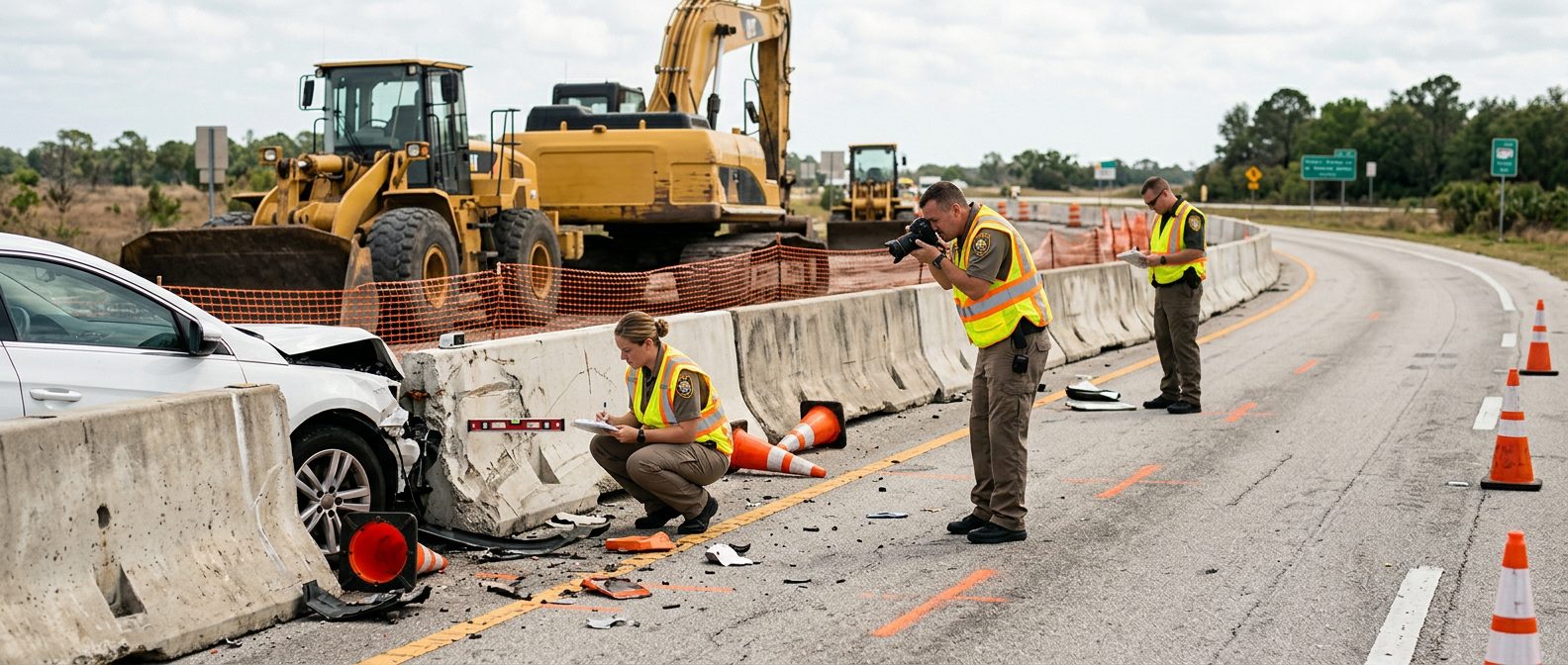
- Accident diagrams: Pictures showing vehicle positions and impact points.
- Officer notes: Written description, witness statements, and citations issued.
This information is essential for understanding who was at fault and supporting your claim for damages.
How to Check Your Driving Status in Florida
You can verify your driver license status through the FLHSMV portal:
- Enter your driver license number and date of birth.
- Review your license status (active, suspended, revoked, or restricted).
- Check for violations, suspensions, or restrictions on your record.
- Confirm your expiration date and renewal eligibility.
This is useful if you need to verify your driving record for insurance. It also confirms you were properly licensed when the accident happened.
Have questions about what happened?
Ask our team directly. The first conversation is free, confidential, and there is no obligation to continue.
How to Request a Public Record from Florida Highway Patrol
If you can’t find your crash report online, submit a formal public records request under Chapter 119, Florida Statutes:
- Specify the exact document: crash report, citation, or accident scene photographs.
- Provide relevant details: accident date, location, report number, and names.
- Submit your request in person, by mail, email, or through your local law enforcement agency or the FLHSMV.
- Allow 5–10 business days for processing.
- Pay applicable fees for certified copies or extensive searches.
Public records requests are a legal right in Florida. They’re often the best way to get reports not yet online or certified copies for court.
Why Crash Reports Matter After an Injury
An official crash report is critical evidence. Here’s why:
Objective documentation: A trained law enforcement officer investigated the scene. The report is a neutral, third-party account of what happened.
Establishes liability: The officer’s observations, accident diagram, and findings about what caused the crash help determine who was at fault. Under Florida’s comparative fault rules (Fla. Stat. §768.81), damages are reduced by your percentage of fault. A strong crash report can show you were not at fault.
Supports medical claims: The report documents how severe the crash was, the impact, and injuries noted at the scene. This backs up your medical records and strengthens your compensation claim.
Protects your legal rights: An official record made right after the accident is more credible than statements made later. It prevents disagreements about what happened.
Enables investigation: The report identifies all parties, witnesses, and vehicles involved. Your attorney can then gather more evidence.
Using Crash Portal Data in a Personal Injury Claim
When you file a personal injury claim, the crash report becomes a cornerstone of your case:
- Insurance negotiation: Insurers use crash reports to decide fault. A report showing the other driver was negligent strengthens your settlement position.
- Officer observations and diagrams are particularly valuable.
- Damages calculation: Injury data in the report supports your claim for medical expenses, lost wages, and pain and suffering.
- Witness identification: The report lists all witnesses. This makes it easier for your attorney to gather more statements.
Under Florida’s two-year statute of limitations for personal injury claims (Fla. Stat. §95.11), you have limited time to file a lawsuit. Getting your crash report early ensures your case foundation is documented and preserved.
Common Reasons to Access the Florida Crash Portal
People access the portal for many reasons:
- Filing an insurance claim after a car, truck, or motorcycle accident.
- Documenting injuries from a crash for medical or legal purposes.
- Investigating a hit-and-run or uninsured motorist incident.
- Gathering evidence for a personal injury lawsuit.
- Verifying accident details for employment or background checks.
- Researching traffic safety and crash statistics by location.
Whatever your reason, the portal provides official, reliable data trusted by insurers, courts, and attorneys.
What to Do If You Cannot Find Your Crash Report
If your crash report isn’t available online yet:
- Wait a few days: Reports typically appear within 5 business days.
- Verify your search details: Use the correct date, location, and people involved.
- Contact the responding agency: Call the local police or Florida Highway Patrol that responded to your crash.
- File a public records request: If delayed, submit a formal request under Chapter 119, Florida Statutes.
- Check with your insurance company: Your insurer may have a copy or can help you locate it.
Want to know where you stand?
Tell us what happened and our team will walk you through the options available to you, at no cost.
Frequently Asked Questions
How long does it take to get a crash report from the Florida crash portal?
Most reports are available within 5 business days. Some may take up to 10 days if investigation is ongoing.
Can I use a Florida crash report as evidence in a personal injury lawsuit?
Yes. They’re often key evidence in personal injury cases.
What should I do immediately after a crash?
Seek medical attention if injured. Call law enforcement. Document the scene with photos if safe. Exchange information with the other driver. Collect witness contact information. Then retrieve your crash report within a few days.
Can I get a certified copy of my crash report?
Yes. The FLHSMV provides certified copies for a small fee. Certified copies are often required for court proceedings and insurance claims.

Next Steps After a Crash
If you’ve been injured in a crash, get your crash report from the Florida crash portal first. That report is the foundation of any claim you pursue. It provides official documentation of what happened, who was involved, and the accident circumstances.
Next, gather your medical records, photograph property damage, and collect witness contact information. These pieces of evidence, combined with your crash report, create a strong case for recovery. Understanding insurance claim documentation requirements will also help you build your case.
If you’ve been injured and are considering a claim for damages, the crash report is your starting point. Many people who’ve been hurt in accidents reach out to discuss how their crash report and medical records can form the basis of a claim.
Learn more about Florida traffic laws and liability to understand how crash evidence supports your recovery. If you need help navigating your claim, contact us for a free case evaluation.
How to Access Your Florida Crash Report
Gather Your Report Details
You'll need the crash date, location, county, and the report number if you have it. Have your driver's license or ID ready.
Visit the Official Portal
Go to the Florida Department of Highway Safety and Motor Vehicles (DHSMV) crash portal online. The portal is free and available 24/7.
Search and Download
Enter your information, locate your report, and download it as a PDF. Most reports are available within 5 business days; some take up to 10 days if investigation is ongoing.
Use It for Your Claim
The official crash report is admissible evidence in court and carries significant weight in settlement negotiations and litigation.
Why Your Crash Report Matters
Official Third-Party Documentation
A crash report is created by law enforcement and carries the authority of an impartial investigation. Courts recognize it as reliable evidence.
Establishes Facts About the Accident
The report documents the scene, vehicle damage, road conditions, weather, and the officer's assessment of fault or contributing factors.
Supports Your Injury Claim
Insurance companies and opposing counsel take crash reports seriously. A detailed report strengthens your position in negotiations and court.
Contains Contact Information
The report includes the other driver's details, insurance information, and witness contact information—all critical for your claim.
Don't Delay—Get Your Report Early
The sooner you obtain your crash report, the sooner you can move forward with your claim. Insurance companies often request it immediately, and it's essential for any legal action. If you've been injured, time matters.
Common Questions About Florida Crash Reports
Can I use the crash report as evidence in court?
Yes. They're often key evidence in personal injury lawsuits and settlement negotiations.
What if I wasn't cited at the scene?
The absence of a citation doesn't mean you weren't at fault or that you don't have a claim. The crash report documents the officer's findings; fault is ultimately determined by evidence and law.
Can I request a copy if I wasn't the driver?
Yes. Passengers, witnesses, and other parties involved can request a copy. You'll need to provide identifying information and may need to show your relationship to the crash.
What if the report contains errors?
You can request a correction through the DHSMV. Contact the law enforcement agency that filed the report and provide documentation of the error. Corrections can take time, so don't wait to pursue your claim.
What Happens After You Get Your Report
Contact the Other Driver's Insurance
Provide your crash report to the at-fault driver's insurance company. This begins the claims process and opens dialogue about compensation.
Document Your Injuries and Damages
Gather medical records, bills, photos of vehicle damage, and evidence of lost wages. Your crash report is the foundation; your injuries and losses are what you're claiming.
Consult With a Personal Injury Attorney
An attorney can review your report, assess your claim, and advise you on next steps—whether that's negotiating a settlement or preparing for court.
Act Within Florida's Time Limits
Florida law sets deadlines for filing personal injury claims. Don't let time slip away. The sooner you take action, the stronger your position.
Your Crash Report Is Just the Start
A crash report documents what happened, but it doesn't automatically determine who pays for your injuries. You need evidence of your damages—medical care, lost income, pain and suffering—and a clear understanding of your legal rights. That's where experienced guidance makes a difference.