

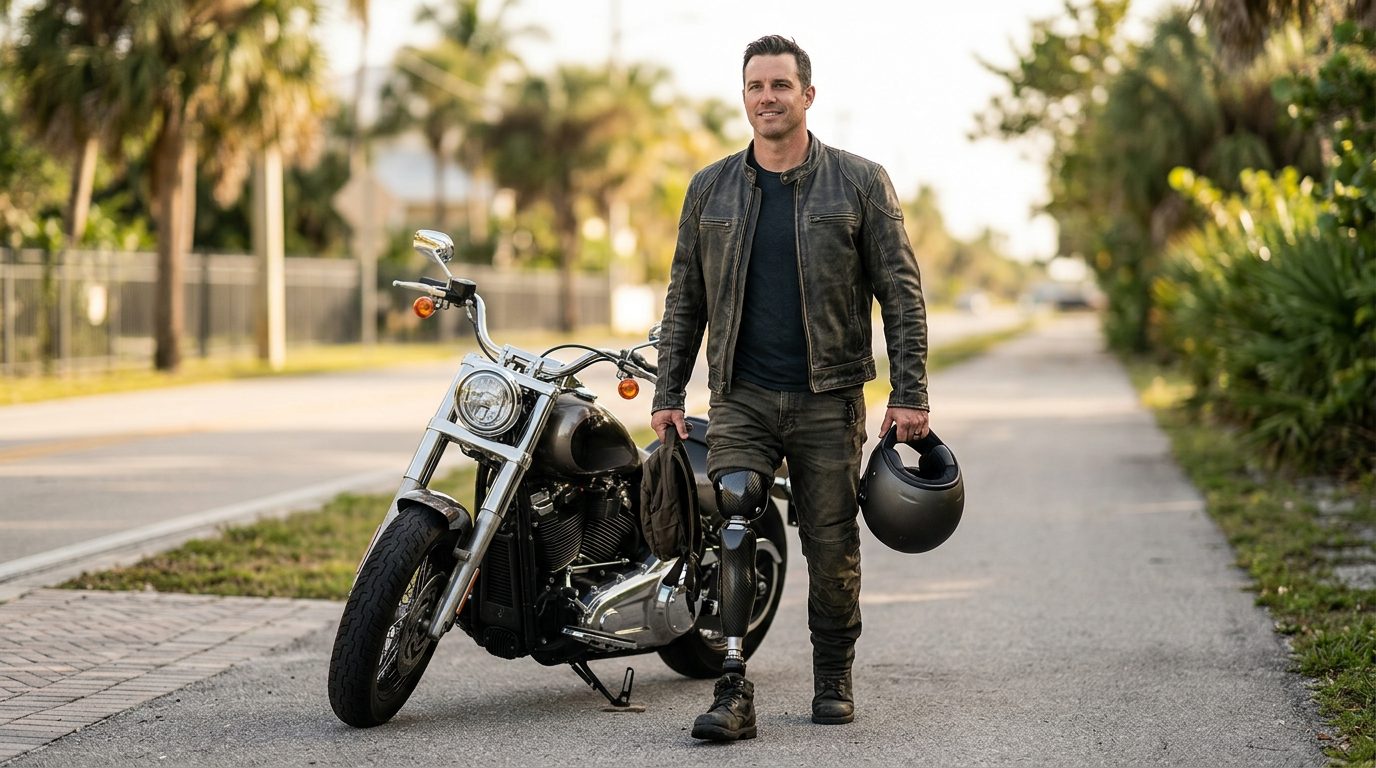
Catastrophic Motorcycle Injuries
Florida Motorcycle Accident Injuries: Life-Altering Harm and Your Path Forward
Motorcycle crashes often cause severe, permanent injuries. If you or a loved one suffered catastrophic harm in a Florida motorcycle accident, CHG Personal Injury Lawyers focuses exclusively on helping you understand your rights and pursue fair compensation.
By CHG Lawyers · Published September 29, 2026
Catastrophic Motorcycle Accident Injuries in Florida: Legal Rights & Recovery
Motorcycles have no protective shell, airbags, or crumple zones. When a crash happens, riders absorb the full force of impact. Catastrophic motorcycle accident injuries in Florida include spinal cord damage, paralysis, traumatic brain injury, amputation, and severe burns. This guide explains why these injuries occur, what compensation you may pursue, and what to do next.
Not sure what your next step is?
Talk it through with our team — the first consultation is free, confidential, and carries no obligation.
Why Motorcycle Crashes in Florida Cause Catastrophic Injuries
Riders are fully exposed to collision, friction, and impact. When a motorcycle crashes at highway speed—or even at an intersection—the rider’s body makes direct contact with pavement, vehicles, or objects. There is no protective barrier between the rider and the force of the crash.
Florida’s warm climate means year-round riding. More riders on the road means more crashes. High-speed collisions, T-bone crashes at intersections, and head-on impacts with trucks or SUVs cause severe injuries.
Road hazards also cause crashes. Potholes, gravel, standing water, and oil slicks can throw a motorcycle off balance. The rider then slides across pavement at high speed, absorbing massive blunt-force trauma.
Types of Catastrophic Motorcycle Injuries in Florida
Spinal Cord Injuries and Paralysis
Spinal cord injuries damage the nerve fibers that carry signals between your brain and body. This results in permanent loss of sensation and motor control below the injury site.
Injuries to the cervical spine (neck) often cause quadriplegia—paralysis of all four limbs. Thoracic or lumbar injuries typically result in paraplegia—paralysis of the legs and lower trunk.
According to the American Spinal Injury Association (ASIA), spinal cord injuries are classified by severity and location. Even an “incomplete” injury—where some nerve function remains—can leave a rider unable to walk. They may require a wheelchair, adaptive equipment, and lifelong care.
Traumatic Brain Injuries
Traumatic brain injuries occur when the head strikes an object or the brain moves violently inside the skull. Motorcycle riders face extreme risk because they have no airbag or protective cabin.
A severe TBI can cause loss of consciousness, coma, permanent cognitive impairment, behavioral changes, and memory loss.
According to the Mayo Clinic, even moderate TBIs result in lifelong complications. These include headaches, dizziness, difficulty concentrating, mood changes, and increased risk of Parkinson’s disease and Alzheimer’s disease later in life.
Amputation and Limb Loss
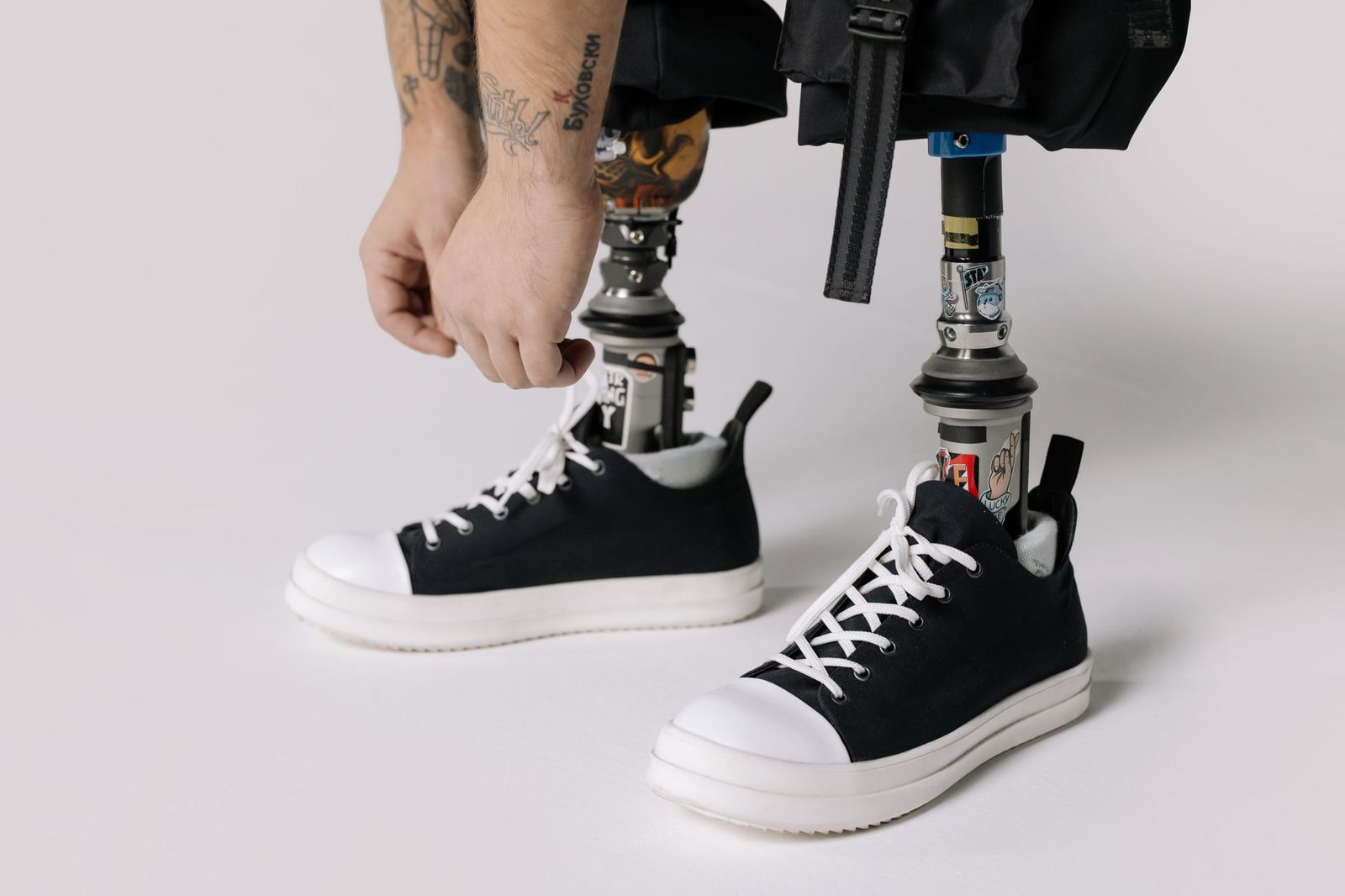
Motorcycle accidents can result in partial or complete amputation of arms, hands, legs, or feet. A limb may be severed in the crash, or injuries may be so severe that surgical amputation becomes necessary.
Amputation is permanent. It requires lifelong prosthetics, replacements as the body changes, and physical therapy.
Severe Burns and Road Rash
Severe burns and road rash occur when a rider’s skin makes high-speed contact with pavement or when fuel ignites. Deep tissue damage requires skin grafts and reconstructive surgery. These injuries leave permanent scarring, contractures, and functional impairment.
Burn injuries often involve infection risk, chronic pain, and psychological trauma.
Catastrophic Back and Neck Injuries
Catastrophic back and neck injuries include vertebral fractures, disc herniation with neurological compromise, and spinal cord contusion. These injuries can cause chronic pain, loss of mobility, and in severe cases, partial or complete paralysis.
Fatal Motorcycle Accidents: What Families Need to Know
A death is the most catastrophic outcome there is. Florida ranks among the highest states in the nation for motorcycle fatalities. Hundreds of riders die in crashes each year, leaving families behind to grieve and navigate financial loss.
When a rider is killed due to another party’s negligence, recklessness, or violation of law, surviving family members may pursue a wrongful death claim. Wrongful death statutes allow spouses, children, and parents to recover compensation for the loss of life, lost income, loss of companionship, and funeral expenses.
Families should understand their rights immediately after a fatal crash. The statute of limitations is strict, and evidence must be preserved quickly.
Head Trauma: A Leading Cause of Fatal Motorcycle Accidents
Head trauma and traumatic brain injury are leading causes of fatal motorcycle crashes. Helmets reduce—but do not eliminate—this risk.
Spinal cord injuries affecting the cervical spine can be immediately fatal or result in respiratory failure. Massive internal bleeding from blunt-force trauma to the chest or abdomen, severe burns from fuel ignition, and collisions with larger vehicles are also common fatal outcomes.
Who Is Liable for a Catastrophic Motorcycle Accident in Florida?
Liability depends on who caused the crash. Common liable parties include:
- Other drivers who failed to see the motorcycle or made an unsafe lane change
- Truck drivers whose negligence caused a collision with a motorcycle
- Manufacturers of defective motorcycle parts, brakes, or tires
- Property owners who failed to maintain safe road conditions
- Government agencies responsible for road maintenance and safety
In catastrophic motorcycle accident injury cases, liability is often clear. Sometimes multiple parties share responsibility, which can increase total compensation available to you.
Have questions about what happened?
Ask our team directly. The first conversation is free, confidential, and there is no obligation to continue.
Florida’s Comparative Fault Rule: The 51% Rule
Florida’s comparative fault statute (Fla. Stat. § 768.81) bars recovery if you are more than 50% at fault. If you are 50% or less at fault, you can recover damages from other liable parties. Your award is reduced by your percentage of fault.
Example: If you are found 30% at fault and your total damages are $100,000, you can recover $70,000 (your 70% share).
This rule applies to catastrophic motorcycle accident injury claims. Even if you share some responsibility, you may still have a valid claim.
Florida’s No-Fault Insurance and Motorcycle Riders
Florida is a no-fault insurance state. Your own Personal Injury Protection (PIP) insurance covers medical expenses and lost wages regardless of who caused the crash—up to your policy limit.
PIP typically covers:
- Reasonable and necessary medical treatment
- Lost income (up to 60% of gross income)
- Essential services you cannot perform due to injury
- Funeral expenses (in fatal cases)
Once PIP is exhausted or if your injuries exceed PIP limits, you may pursue a claim against the at-fault party’s liability insurance for additional compensation.
Statute of Limitations: Two Years to File Your Claim
Florida’s statute of limitations for personal injury claims is two years from the accident date (Fla. Stat. § 95.11). For wrongful death claims, the deadline is also two years from the date of death.
Missing this deadline bars your claim forever. There are limited exceptions. Acting quickly preserves evidence, witness testimony, and your legal rights.
The Lifetime Cost of a Catastrophic Motorcycle Injury
Catastrophic injuries require lifelong medical care, rehabilitation, adaptive equipment, home modifications, and personal assistance. According to the Christopher & Dana Reeve Foundation, a spinal cord injury resulting in paralysis can cost $1 million to $5 million or more over a lifetime.
Traumatic brain injuries often require ongoing cognitive rehabilitation and behavioral therapy. Amputations require prosthetics and replacements as the body changes. Severe burns require reconstructive surgery and scar management.
Compensation should account for these long-term costs, not just immediate medical bills. An attorney who focuses exclusively on catastrophic injury claims will work with life-care planners and medical specialists to calculate lifetime costs accurately.
What Happens After a Catastrophic Motorcycle Accident: Your Next Steps
-
Seek immediate medical attention. Document all injuries and treatment. Some catastrophic injuries (internal bleeding, TBI) may not be immediately obvious.
-
Report the crash to police. Obtain the accident report number and a copy when available.
-
Gather evidence. Take photos of the scene, vehicle damage, road conditions, and your injuries. Get contact information from witnesses.
-
Notify your insurance company. Provide factual information about the crash. Avoid admitting fault or discussing liability.
-
Do not discuss the accident on social media or with the other party’s insurance without legal guidance. Anything you say can be used against you.
-
Consult with an attorney who focuses exclusively on catastrophic injury claims. Early legal guidance protects your rights and maximizes compensation. Your attorney will investigate liability, identify all responsible parties, calculate lifetime costs, and negotiate or litigate on your behalf.
Want to know where you stand?
Tell us what happened and our team will walk you through the options available to you, at no cost.
Why Legal Representation Matters for Catastrophic Motorcycle Injuries
Insurance companies are motivated to minimize payouts. They will use comparative fault arguments and challenge injury severity to reduce what they owe you (Fla. Stat. § 768.81(6)).
Catastrophic motorcycle accident injuries require testimony from medical specialists, life-care planners, and economists. These experts establish lifetime costs and lost earning capacity. An attorney who focuses exclusively on catastrophic injury claims understands the medical, financial, and legal complexity of these cases.
Early representation ensures evidence is preserved, witnesses are interviewed, and your claim is filed before the statute of limitations expires. Others require trial to achieve fair compensation.

Frequently Asked Questions
Can I recover damages if I was partially at fault for the motorcycle accident?
Yes, under Florida’s comparative fault rule (Fla. Stat. § 768.81(6)). As long as you are not more than 50% at fault, you can recover damages reduced by your percentage of fault.
What if the motorcycle accident resulted in a death?
Surviving family members may pursue a wrongful death claim against the liable party within two years of the death.
How quickly should I contact an attorney after a motorcycle accident?
As soon as possible. Early representation protects your rights, preserves evidence, and ensures your claim is filed before the statute of limitations expires.
What compensation can I recover for a catastrophic motorcycle injury?
Compensation may include medical expenses, lost income, pain and suffering, loss of earning capacity, cost of lifetime care, and in fatal cases, loss of companionship and funeral expenses.
If a motorcycle crash left you or a family member with a spinal cord injury, paralysis, brain injury, amputation, or severe burns—or if someone died in a crash caused by another’s negligence—you may have a legal claim. Contact our team to discuss your case and learn what happens next.
Why CHG Handles These Cases Differently
Focused on Catastrophic Injury
We focus exclusively on serious, life-altering injuries—spinal cord damage, paralysis, traumatic brain injury, amputation, severe burns, and wrongful death. We understand the medical, financial, and personal stakes.
Experience Across Florida and Beyond
Clear, Plain-Language Guidance
We explain your legal options in straightforward terms—no jargon. You'll understand what happened, what you may be owed, and what comes next.
Compassionate Advocacy
A catastrophic injury changes everything. We listen to your story, respect your experience, and fight for fair compensation so you can focus on healing and rebuilding.
Wrongful Death from a Motorcycle Crash
If a motorcycle accident caused a death, surviving family members—spouses, children, parents—may pursue a wrongful death claim against the at-fault party or parties. You have legal options, and time matters.
Common Questions About Motorcycle Accident Claims
Can I recover if I was partly at fault?
Yes. Under Florida's comparative fault rule, you can recover damages as long as you are not more than 50% at fault (Fla. Stat. § 768.81(6)). Your recovery is reduced by your percentage of fault.
What damages can I pursue?
Medical expenses, ongoing care, lost wages, loss of earning capacity, pain and suffering, and other losses tied to your injury. In wrongful death cases, family members may recover funeral costs, loss of support, and other harms.
How long do I have to file a claim?
Time limits apply. The sooner you contact us, the sooner we can protect your rights, gather evidence, and build your case. Do not delay.
Do I pay fees upfront?
No. We work on a contingency basis: no attorney’s fees unless there is a recovery. You pay nothing out of pocket while we handle your case.