

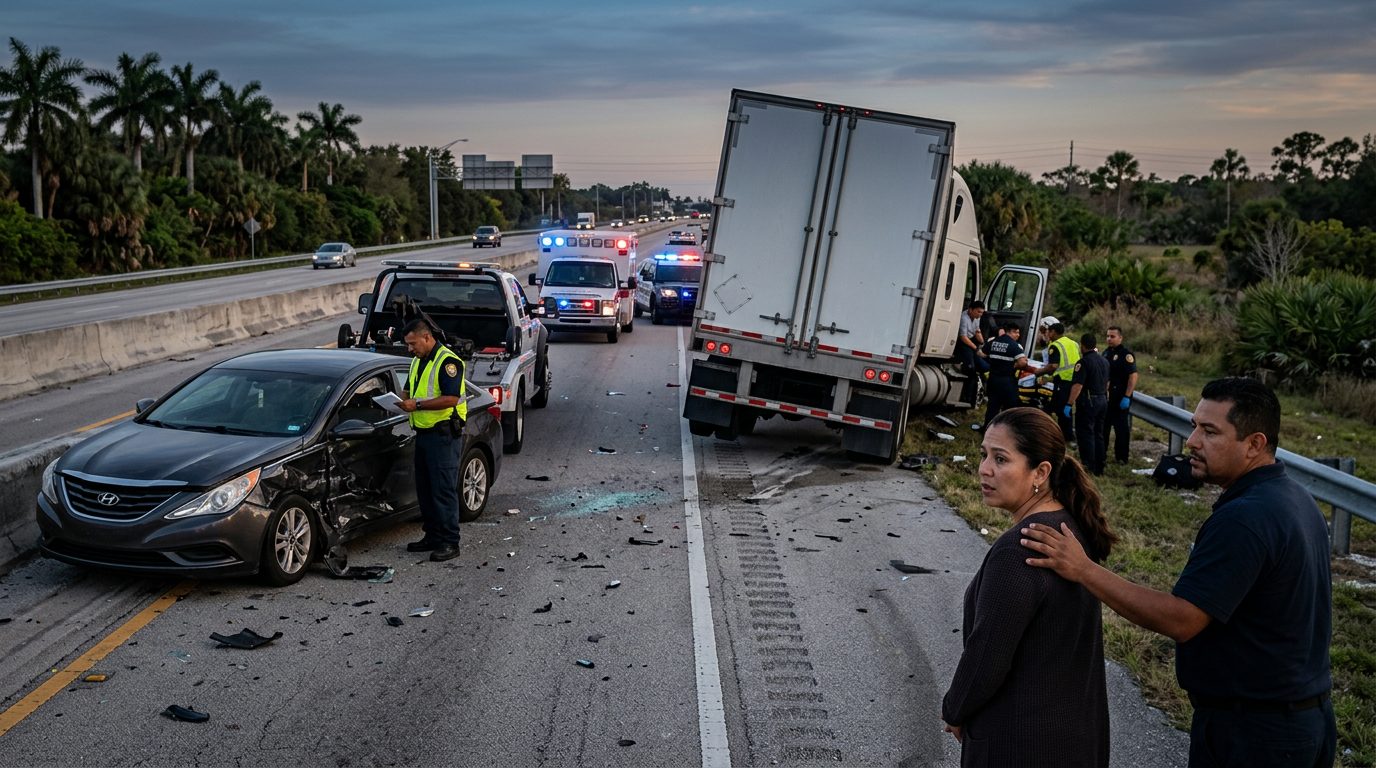
Car Accidents in The Hammocks
Hit in a Car Accident in The Hammocks? Here's What to Do Next
Immediate steps to protect yourself, your health, and your claim—plus what you need to know about Florida law.
By CHG Lawyers · Published September 17, 2026
Car Accidents in The Hammocks: What to Do After a Crash & Your Legal Options
Car accidents happen on residential streets and main roads throughout The Hammocks and southwest Miami-Dade County. You might be hit at an intersection, rear-ended in traffic, or struck by a hit-and-run driver. The hours and days after a car accident are confusing and stressful. What you do immediately can protect your health, preserve evidence, and protect your right to recover money for your injuries. This guide explains what happens next—and what you need to know about your legal options after a car accident.

If you or a family member has been injured in a car accident in The Hammocks, you don't have to navigate the process alone. Háblelo con nuestro equipo: la primera consulta es gratuita, confidencial y sin compromiso.
What to Do Immediately After a Car Accident in The Hammocks
Move to a safe location. Call 911 if anyone is hurt or the scene is unsafe.
If your car still runs and traffic allows, move to the shoulder or a safe spot away from oncoming traffic. Turn on your hazard lights. If anyone is hurt or the crash is serious, call 911 right away.
Get a police report.
Florida law requires you to report a car accident to police if anyone is injured, someone dies, or property damage exceeds $500 under Fla. Stat. §316.061. A police report creates an official record. You’ll need it for your insurance claim and any legal action.
Exchange information with the other driver or drivers.
Get the other driver’s name, phone number, home address, insurance company name and policy number, vehicle make and model, license plate number, and driver’s license number. Do the same with any passenger who witnessed the crash.
Document the scene.
If it’s safe, take photos and video of vehicle damage, the road surface, traffic signs, weather, and the overall scene. Photos taken right away are powerful evidence. They often disappear or change before a claim is filed.
Seek medical attention even if you feel fine.
Some injuries—whiplash, internal bleeding, traumatic brain injury—don’t show symptoms right away. They can appear hours or even days after the crash. A prompt medical exam protects your health and creates a medical record linking your injuries to the accident.
Notify your insurance company. Don’t admit fault or sign anything without understanding it.
Report the accident factually and provide the police report number. Don’t speculate about who was at fault. Don’t sign a recorded statement without legal advice.
Understanding Florida’s No-Fault Insurance System vs. Your Right to Sue
This is the distinction most people miss. It’s critical to your recovery.
Florida is a “no-fault” auto insurance state.
Under Fla. Stat. §627.736, your own insurance company must pay your medical expenses and lost wages up to your policy limit—typically $10,000 in Personal Injury Protection (PIP) coverage—regardless of who caused the accident. This happens quickly and without a lawsuit. It covers immediate medical bills and lost income.
But here’s what changes everything: if your injuries are serious, you can sue the at-fault driver for additional damages beyond what your PIP covers. Learn more about Florida no-fault insurance explained.
What counts as a “serious injury” in Florida?
In Florida, “serious injury” is defined in Fla. Stat. §627.737 as permanent impairment, significant and permanent scarring or disfigurement, or substantial and medically demonstrable injury. This includes:
- A herniated disc confirmed by MRI that causes ongoing pain and limits your ability to work
- A traumatic brain injury with documented cognitive changes
- Spinal cord damage causing partial or complete paralysis
- Broken bones requiring surgery
- Permanent nerve damage or loss of function
- Scarring or disfiguring burns
- Death
If your injury meets this threshold, you can bring a personal injury lawsuit against the at-fault driver. You can recover medical expenses beyond your PIP limit, lost wages, pain and suffering, permanent disability, and loss of enjoyment of life. Your PIP coverage and a lawsuit work together—you use both.
Common Causes of Car Accidents in The Hammocks
Understanding what caused your car accident matters for your claim. If another driver’s negligence caused the crash, you may have the right to recover damages. Common causes include:
- Distracted driving: phone use, texting, eating, adjusting controls
- Speeding or driving too fast for conditions: especially dangerous on residential streets and in bad weather
- Failure to yield: at intersections, when turning, or when changing lanes
- Rear-end collisions: at traffic lights or when a driver follows too closely
- Hit-and-run incidents: when the at-fault driver leaves the scene
- Impaired driving: alcohol, drugs, or prescription medications
- Poor visibility: due to weather, time of day, or inadequate street lighting
- Mechanical failure: defective brakes, tires, or steering systems
The National Highway Traffic Safety Administration (NHTSA) consistently finds that driver behavior is the leading factor in most accidents. Proving what the other driver did wrong is the foundation of your claim.
Types of Car Accident Injuries
Car accident injuries range from minor to catastrophic. Some appear immediately; others develop over days or weeks.
Whiplash and neck injuries are common in rear-end collisions. The sudden jolt strains the muscles and ligaments in your neck, causing pain, stiffness, and limited mobility that can last months.
Back injuries range from muscle strain to herniated discs and spinal cord damage. A herniated disc can press on nerves and cause radiating pain down your leg. Spinal cord injuries can cause partial or complete paralysis—paraplegia (paralysis of the lower body) or quadriplegia (paralysis of all four limbs).
Head and brain injuries include mild concussions and traumatic brain injury (TBI). TBI can cause lasting cognitive problems, memory loss, mood changes, and physical impairment. Symptoms may not appear for hours or days after the crash.
Broken bones and fractures of arms, legs, ribs, and pelvis require surgery and prolonged recovery. Complications can include infection, blood clots, and permanent disability.
Internal injuries include bleeding, organ damage, and injuries not immediately visible. These are especially dangerous because they may not be obvious at the scene.
Severe injuries in high-impact crashes can include paralysis, amputation, or permanent disability. These catastrophic injuries change lives and require lifelong medical care and support.
Psychological injuries like trauma, anxiety, and post-traumatic stress disorder (PTSD) are real and compensable. Many accident survivors struggle with fear of driving.
Death from negligence is the most catastrophic outcome. When a car accident results in death, surviving family members can bring a wrongful death claim. Under Fla. Stat. §768.19, family members can recover funeral and burial expenses, loss of financial support, and loss of companionship. They have the right to hold the at-fault driver accountable.
Comparative Negligence: What If You Were Partially at Fault?
In Florida, you can still recover damages even if you were partially at fault—but there’s a limit.
Under Fla. Stat. §768.81, if you’re found to be 50% or less at fault, you can recover reduced damages by your percentage of fault. For example, if you’re awarded $100,000 but found 20% at fault, you recover $80,000.
If you’re found more than 50% at fault, you can’t recover any damages.
That’s why documenting the accident scene, gathering witness statements, and obtaining the police report matter. They establish what really happened and who was responsible.
¿No sabe cuál es su próximo paso?
Háblelo con nuestro equipo: la primera consulta es gratuita, confidencial y sin compromiso.
Damages You Can Recover in a Car Accident Claim
If you have a valid claim, you can recover several types of damages:
Medical expenses include emergency care, hospitalization, surgery, rehabilitation, ongoing treatment, and future medical needs related to your injuries.
Lost wages cover income you lost while recovering and unable to work, including lost earning capacity if your injuries prevent you from returning to your job.
Pain and suffering compensates you for physical pain, emotional distress, and reduced quality of life caused by your injuries.
Property damage covers repair or replacement of your vehicle and personal property damaged in the crash.
Permanent disability or disfigurement is compensated if the accident caused lasting impairment or visible scarring.
Loss of enjoyment of life applies if your injuries prevent activities and hobbies you once enjoyed.
How to Pursue a Car Accident Claim in The Hammocks
Gather all documentation.
Collect the police report, medical records, photos of the scene and vehicle damage, witness statements, insurance information, and proof of all expenses and lost wages. Learn more about how to document accident evidence.
Report the accident to the at-fault driver’s insurance company.
Provide a factual account of what happened without admitting fault. Stick to the facts: time, location, what you saw, and what happened.
Keep detailed records.
Document all medical bills, receipts, pay stubs, and keep a journal of your recovery, pain levels, and how the injury affects your daily life.
Don’t accept an early settlement offer without understanding your full injuries and long-term needs.
Insurance adjusters are trained to settle quickly and cheaply. An early offer often underestimates your claim, especially if you don’t yet know the full scope of your injuries.
Know your deadline.
Under Fla. Stat. §95.11, you generally have two years from the date of the accident to file a lawsuit. Missing this deadline can wipe out your claim forever.
If the insurance company denies your claim or offers an inadequate settlement, you have the right to pursue a lawsuit.
Many car accident claims settle through negotiation; others require litigation. Understand when to hire a car accident attorney.
Why You Should Talk to a Car Accident Attorney
Going up against an insurance company alone puts you at a disadvantage. Insurance companies are skilled at minimizing payouts. They have teams of adjusters, lawyers, and investigators working to reduce what they owe you. An attorney levels the playing field.
An attorney investigates the accident. He or she identifies all responsible parties (the at-fault driver, their employer if they were working, a vehicle manufacturer if a defect contributed, or a property owner if road conditions were unsafe) and builds a strong case on your behalf.
It avoids costly mistakes. Saying the wrong thing to an adjuster, accepting a low offer, or missing a deadline can cost you thousands or even your entire claim.
An attorney handles all communication and negotiation. You can focus on healing and getting back to your life.
If no settlement can be reached, an attorney prepares your case for trial and represents you in court.
Most car accident attorneys work on contingency: you pay nothing upfront, and fees are paid only if you recover damages. You have no financial risk in hiring an attorney.
Car Accidents in The Hammocks: Next Steps
If you or a family member has been injured in a car accident in The Hammocks, you don’t have to navigate the process alone. The sooner you reach out, the sooner we can begin gathering evidence, protecting your rights, and pursuing the compensation you deserve.
Contact CHG Personal Injury Lawyers for a free case evaluation—people in your situation contact us regularly.
¿Tiene preguntas sobre lo que pasó?
Pregúntele directamente a nuestro equipo. La primera conversación es gratuita, confidencial y sin compromiso.
Frequently Asked Questions
What should I do immediately after a car accident in The Hammocks?
Call 911 to report the crash and get medical help. Move to a safe location if you can. Exchange information with the other driver. Take photos of the vehicles and scene. Even if you feel fine, see a doctor soon. Some injuries take hours or days to show up.
How long do I have to file a car accident claim in Florida?
Florida generally gives you two years from the date of a car accident to file a personal injury lawsuit (Fla. Stat. § 95.11(5)(a)). Time limits are strict and evidence can disappear. It’s wise to talk to an attorney as soon as possible.
Do I have to file with my own insurance first after a car crash in Florida?
Yes, Florida is a no-fault state. Your Personal Injury Protection (PIP) coverage generally pays your initial medical bills and lost wages regardless of who caused the crash. If your injuries are serious or permanent, you may also be able to pursue a claim against the at-fault driver.
What if I was partially at fault for the accident?
Under Florida law, you can still recover damages if you’re 50% or less at fault (Fla. Stat. § 768.81(6)). Your recovery is reduced by your percentage of fault. If you’re found more than 50% at fault, you can’t recover damages.
How much does it cost to hire CHG Personal Injury Lawyers for a car accident case?
CHG Personal Injury Lawyers offers a free case evaluation. It handles car accident cases on a contingency fee basis, which means you typically pay no attorney fees unless there is a recovery. Contact the firm to discuss your situation at no cost.
What to Do Right After a Car Accident
Get to Safety & Call for Help
If you can move safely, get out of traffic. Call 911 to report the crash and request medical help if anyone is injured. Even if you feel okay, injuries like whiplash or internal bleeding can appear hours or days later—get checked by a doctor soon after.
Document the Scene
Exchange name, phone number, address, insurance information, and vehicle details with the other driver. Take photos of both vehicles, damage, the accident scene, road conditions, traffic signs, and any visible injuries. If there are witnesses, get their contact information.
Report & Preserve Evidence
File a police report (required for serious crashes in Florida). Keep all medical records, repair estimates, receipts, and communications with insurance. Do not post about the accident on social media, and avoid discussing fault or injuries with the other driver or their insurance company.
Talk to a Lawyer
Contact a personal injury attorney as soon as possible. Florida law sets time limits for filing claims, and early legal guidance protects your rights and ensures nothing is overlooked.
Don't Delay Medical Care
Even minor-seeming crashes can cause serious injuries that worsen over time. Seeking medical attention promptly creates a clear record linking your injuries to the accident—critical for any claim. Never assume you're fine just because you feel okay in the moment.
Why You Need a Car Accident Attorney
Insurance Companies Aren't on Your Side
Adjusters work to minimize payouts. An attorney levels the playing field and ensures you're not pressured into accepting less than your claim is worth.
We Handle All the Paperwork & Deadlines
Florida has strict time limits for filing claims. We manage filings, correspondence, and evidence so nothing falls through the cracks.
We Investigate & Build Your Case
We gather police reports, medical records, witness statements, and expert analysis to prove liability and the full extent of your damages.
You Focus on Healing; We Handle the Law
While you recover, we negotiate with insurers, handle settlement discussions, and prepare for trial if needed—so you don't have to.
Common Questions About Car Accident Claims in Florida
How long do I have to file a claim?
Florida law generally allows two years from the date of the accident to file a lawsuit (Fla. Stat. § 95.11(5)(a)). However, acting quickly—within weeks or months—is crucial. Early action preserves evidence, witness memories, and your legal options.
What if I was partially at fault?
Florida follows a 'comparative negligence' rule (Fla. Stat. § 768.81(6)). You may still recover damages even if you were partly responsible, as long as you were not more than 50% at fault. Your recovery is reduced by your percentage of fault.
What damages can I recover?
Medical bills, lost wages, vehicle repair or replacement, pain and suffering, and ongoing care or disability costs. The value depends on the severity of your injuries, impact on your life, and the strength of liability evidence.
Do I need to go to trial?
Most cases settle before trial. We negotiate aggressively on your behalf. If a fair settlement isn't offered, we're prepared to take your case to court and fight for you in front of a judge or jury.
Our Approach to Car Accident Cases
Experienced Personal Injury Attorneys
Our team focuses exclusively on personal injury claims, including car accidents. We understand Florida law, insurance tactics, and how to value your case fairly.
Fast, Thorough Investigation
We act quickly to secure evidence, interview witnesses, and consult medical and accident reconstruction experts before details fade or are lost.
Direct Communication
You'll speak with your attorney, not a paralegal or answering service. We keep you informed every step of the way.
No Attorney’s Fees Unless There’s a Recovery
We work on contingency: you pay attorney fees only if we recover compensation for you. You focus on healing while we handle the legal work.