

Grade 3 Diffuse Axonal Injury: Understanding Your Prognosis and Long-Term Path
A grade 3 DAI is a severe brain injury with lasting effects. Learn what recovery looks like, what to expect, and how to protect your rights.
By CHG Lawyers · Published September 22, 2026
Grade 3 Diffuse Axonal Injury: Prognosis, Treatment & Legal Claims
Grade 3 diffuse axonal injury is the most severe form of microscopic tearing throughout the brain. It’s caused by violent rotational or acceleration-deceleration forces—the kind that happen in high-speed crashes. This injury reaches the brainstem, which controls consciousness, breathing, and heart rate. It typically results in prolonged coma or minimally conscious state.
Unlike visible bruising on the brain, axonal tears are microscopic. They often don’t show up on initial CT scans. Families often hear “the scan looks normal” even as their loved one remains unconscious. Understanding what grade 3 diffuse axonal injury means, why it happens, and what to expect is crucial for families facing this life-altering diagnosis.

If your grade 3 diffuse axonal injury resulted from someone else's negligence or wrongdoing, you or your family may have a legal claim for compensation. Talk it through with our team — the first consultation is free, confidential, and carries no obligation.
What Is Grade 3 Diffuse Axonal Injury?
Diffuse axonal injury is microscopic tearing of the brain’s nerve fibers (axons) scattered throughout the brain. Think of axons as the brain’s internal wiring. They carry electrical signals that allow different brain regions to communicate.
When severe rotational or acceleration-deceleration forces shake the brain inside the skull, these delicate fibers tear. The word “diffuse” means damage is spread across many brain areas, not concentrated in one place.
Grade 3 is the highest level on the Adams grading scale for diffuse axonal injury. It means axonal damage extends all the way to the brainstem—the lowest part of the brain at the skull’s base. The brainstem controls vital functions: consciousness, breathing, heart rate, and basic reflexes. When grade 3 diffuse axonal injury reaches the brainstem, the consequences are most severe.
Why Grade 3 differs from a contusion: A contusion is bruising of brain tissue. It shows up on CT or MRI scans. Grade 3 diffuse axonal injury involves microscopic tearing of nerve fibers that often don’t show up on initial imaging. A patient can have no visible contusion on a CT scan yet suffer catastrophic grade 3 diffuse axonal injury. This is why families are sometimes confused: the scan appears “normal,” but their loved one is in a deep coma.
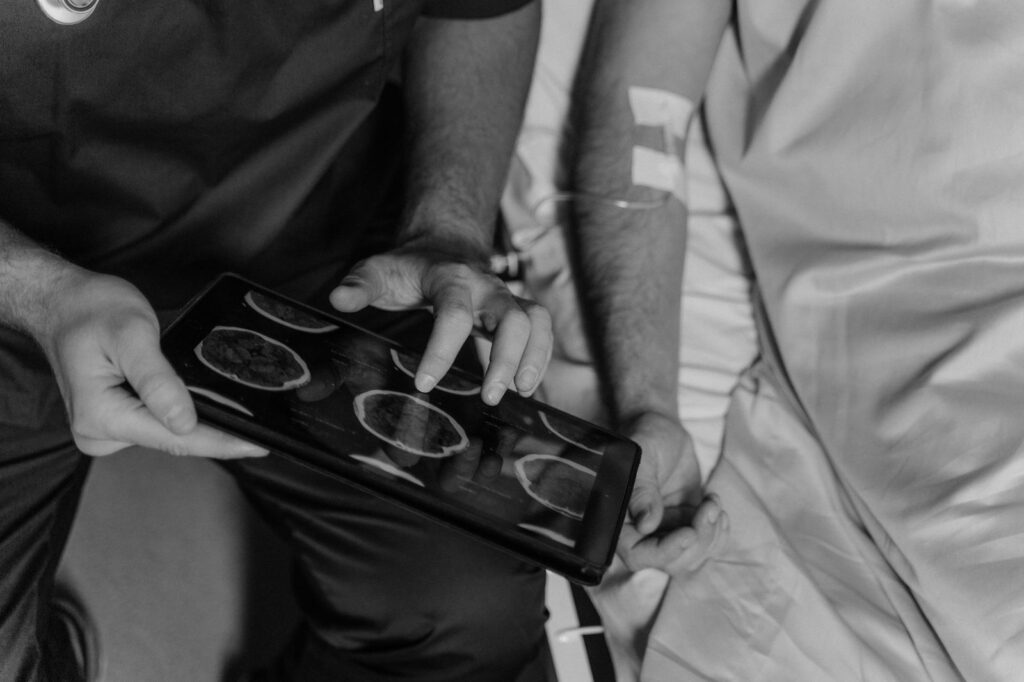
Why initial scans often appear normal: CT scans detect bleeding and large structural damage. Axonal tears are microscopic and invisible on CT. MRI (magnetic resonance imaging) or focused imaging like DTI (diffusion tensor imaging) can reveal axonal injury that CT misses. This is why doctors order advanced imaging after severe head injury, even if the initial CT looks unremarkable.
Why Axons Tear in Severe Head Trauma
Axons tear when the brain is subjected to rapid acceleration, deceleration, or rotational forces that cause it to move violently inside the skull. Your brain floats in cerebrospinal fluid inside a rigid bone case. When a collision occurs, the skull stops or changes direction suddenly. The brain’s inertia causes it to lag behind. This mismatch stretches and shears axons, tearing them at a microscopic level.
Grade 3 diffuse axonal injury is caused by the most violent impacts:
- High-speed motor vehicle crashes, especially head-on collisions, rollovers, and multi-vehicle accidents
- Truck accidents involving commercial vehicles, which generate extreme forces due to their mass and speed
- Motorcycle accidents, where riders are exposed to high-impact forces with minimal protection
- Falls from significant height, such as construction accidents or falls from balconies or roofs
- Severe assaults involving blunt force trauma to the head
The common factor in all these accidents is high-speed rotational or acceleration-deceleration forces. A simple slip and fall typically does not generate the forces needed to cause grade 3 diffuse axonal injury.
The Adams Grading Scale: Understanding Why Grade 3 Is Most Severe
The Adams grading scale classifies diffuse axonal injury into three grades based on the location and extent of axonal damage. Understanding these grades helps explain why grade 3 diffuse axonal injury carries such a grave prognosis.
Grade 1 (Mild): Axonal injury is confined to the cerebral hemispheres (the upper, outer parts of the brain). Patients may lose consciousness, but many regain it within hours or days. Long-term cognitive and physical effects vary. Many Grade 1 patients eventually return to work or school, though they may experience lingering memory or attention problems.
Grade 2 (Moderate): Axonal injury extends to the cerebral hemispheres and the brainstem. Patients typically experience prolonged unconsciousness—often lasting days or weeks. Recovery is slower and more uncertain than Grade 1. Many Grade 2 patients experience permanent cognitive or physical limitations.
Grade 3 (Severe): Axonal injury extends throughout the brain and into the brainstem. This is the most severe classification. Patients typically remain in a coma or minimally conscious state for weeks, months, or longer. The brainstem controls consciousness itself. Grade 3 damage often results in prolonged or permanent loss of consciousness. Patients who do regain consciousness often face profound cognitive, physical, and behavioral disabilities.
Why brainstem involvement matters: The brainstem is not just another brain part. It is the gateway to consciousness and the control center for life-sustaining functions. Damage here is fundamentally different from damage to other brain regions. A patient can have severe injury to the frontal lobe and still regain consciousness. Grade 3 diffuse axonal injury involving the brainstem often prevents consciousness from returning at all.
What Is the Prognosis for Grade 3 Diffuse Axonal Injury?
Prognosis for grade 3 diffuse axonal injury is grave. Most patients remain in a prolonged coma or minimally conscious state and face permanent, life-altering disability. However, prognosis is not a prediction. It is a statistical likelihood based on medical data. Individual outcomes vary widely.
Immediate outlook: Most Grade 3 patients remain unconscious for weeks to months. Some regain consciousness; others do not. Those who do regain consciousness often do so gradually, progressing through stages of minimally conscious state before awareness returns.
Long-term recovery: Recovery from grade 3 diffuse axonal injury is highly variable and depends on:
- The exact location and extent of axonal damage (determined by MRI or advanced imaging)
- The patient’s age (younger patients sometimes recover better than older patients, though this is not absolute)
- Overall health before the injury
- Quality and intensity of medical care and rehabilitation
- Presence of other injuries (many Grade 3 DAI patients have multiple injuries)
Some patients show gradual improvement over months or years. Others plateau early and experience little further change. Full recovery is rare. Most grade 3 diffuse axonal injury patients experience permanent cognitive, physical, and behavioral changes.
Realistic expectations: Families should understand that grade 3 diffuse axonal injury is a life-altering condition. Recovery is measured in small increments. A patient may progress from unconscious to minimally conscious to following commands to speaking a few words. These are real victories. But they do not mean the patient will return to their pre-injury level of function. Long-term care, assistance, and support are typically necessary for life.
Treatment for Grade 3 Diffuse Axonal Injury
There is no procedure or medication that can repair torn axons. Treatment focuses on stabilizing the patient, managing complications, and supporting recovery.
Acute phase (hospital):
- Intensive care monitoring and life support (ventilator, feeding tube, medications)
- Management of intracranial pressure (swelling inside the skull) using medications, positioning, or in some cases, surgical intervention
- Seizure prevention with anti-seizure medications
- Prevention of infection
- Management of pain and agitation
- Nutrition and hydration support
Imaging and diagnosis:
- MRI and sometimes DTI (diffusion tensor imaging) to confirm the diagnosis and assess the severity and location of axonal damage
- Serial imaging to monitor for complications like bleeding or swelling
Medications:
- Drugs to reduce brain swelling (osmotic agents, corticosteroids in some cases)
- Anti-seizure medications
- Pain management
- Medications to manage agitation, depression, or other behavioral effects
Rehabilitation (acute and ongoing):
- Physical therapy to maintain muscle tone, prevent contractures, and support any motor recovery
- Occupational therapy to support activities of daily living
- Speech and language therapy (many Grade 3 patients have swallowing difficulties)
- Cognitive rehabilitation and neuropsychological support as consciousness returns
- Psychological support for the patient and family
Long-term care:
- Many Grade 3 patients require ongoing medical support, assistive devices (wheelchairs, communication aids), home modifications, and 24/7 caregiver assistance
- Ongoing monitoring for seizures, infections, and other complications
- Brain injury rehabilitation programs or home-based therapy
The goal of treatment is to optimize the patient’s recovery potential, manage complications, and support the best quality of life possible. This is a long-term commitment, often lasting years or a lifetime.
If your injury resulted from negligence, you may have a claim to recover those damages and secure your family's financial future. Talk it through with our team — the first consultation is free, confidential, and carries no obligation.
Long-Term Consequences of Grade 3 Diffuse Axonal Injury
Grade 3 diffuse axonal injury typically results in permanent, life-altering disability affecting cognition, physical function, behavior, and independence.
Cognitive effects:
- Severe memory loss (difficulty forming new memories or recalling old ones)
- Difficulty concentrating and sustaining attention
- Impaired judgment and executive function (planning, organizing, problem-solving)
- Personality changes (the person may seem like a different person)
- Reduced processing speed (taking much longer to understand or respond)
- Difficulty with language (speaking, understanding, reading, or writing)
Physical effects:
- Paralysis or severe weakness (often on one or both sides of the body)
- Loss of coordination and balance
- Spasticity (muscle stiffness and involuntary contractions)
- Chronic pain
- Difficulty with fine motor skills (buttoning, writing, eating)
- Fatigue that limits activity
Behavioral and emotional effects:
- Depression and anxiety
- Irritability and anger outbursts
- Emotional lability (sudden, unpredictable mood swings)
- Reduced impulse control
- Reduced motivation or initiative
- Difficulty with social interaction
Consciousness and awareness:
- Some patients remain in a persistent vegetative state (unaware of self or surroundings)
- Others progress to a minimally conscious state (showing inconsistent signs of awareness)
- Those who regain consciousness often have severe limitations in awareness, communication, and interaction
Dependence on caregivers:
- Most Grade 3 patients require 24/7 assistance with all activities of daily living (eating, toileting, bathing, dressing)
- Many require assistance with medical care (medications, catheter care, feeding tube management)
- Caregiver burden is profound and often leads to caregiver burnout and depression
Medical complications and lifespan:
- Increased risk of seizures (even years after the injury)
- Increased risk of infections (pneumonia, urinary tract infections)
- Increased risk of blood clots
- Increased risk of pressure sores (bedsores)
- Potential reduction in life expectancy, though this varies widely
These consequences are not temporary. Grade 3 diffuse axonal injury causes permanent disability. Families must plan for lifetime care, which includes medical expenses, rehabilitation, assistive devices, home modifications, and caregiver support.
How Grade 3 Diffuse Axonal Injury Differs from a Cerebral Contusion
A contusion is bruising of brain tissue; grade 3 diffuse axonal injury is microscopic tearing of nerve fibers. This distinction matters because it affects how the injury appears on imaging and what it means for prognosis.
- Visibility: Contusions show up on CT and MRI scans as areas of bruising or bleeding. Grade 3 diffuse axonal injury is often invisible on initial CT scans and may only be detected on MRI or advanced imaging.
- Mechanism: Contusions result from direct impact to the head. Grade 3 diffuse axonal injury results from acceleration-deceleration or rotational forces.
- Severity: A patient can have a large contusion and relatively mild symptoms, or no visible contusion and catastrophic grade 3 diffuse axonal injury. Grade 3 diffuse axonal injury is typically more severe than a simple contusion.
- Both can occur together: A severe traumatic brain injury often includes both contusion and diffuse axonal damage.
The key point: a “normal” CT scan does not rule out severe grade 3 diffuse axonal injury. If a patient is in a coma after a high-impact accident, advanced imaging (MRI) should be obtained to look for axonal damage.
Why Grade 3 Diffuse Axonal Injury Causes Prolonged Coma
Grade 3 diffuse axonal injury causes prolonged coma because axonal damage disrupts the brain’s ability to maintain consciousness. This is especially true when the brainstem is involved.
Consciousness is not a single function controlled by one brain region. It requires coordinated activity across multiple brain systems. The brainstem contains the reticular activating system, which is essential for wakefulness. Grade 3 diffuse axonal injury damages not just the reticular activating system but also the axons that connect the brainstem to the cerebral hemispheres. These pathways allow the brain to “wake up.”
Additionally, grade 3 diffuse axonal injury involves millions of microscopic axonal tears scattered throughout the brain. While each individual tear is tiny, the cumulative effect of widespread axonal damage is profound disruption of brain communication. The brain cannot function properly when its internal wiring is torn.
This is why a patient can be in a deep coma despite having no visible bleeding or large structural damage on a CT scan. The damage is microscopic and diffuse, but its effect is catastrophic.
Common Causes: What Types of Accidents Lead to Grade 3 Diffuse Axonal Injury?
Grade 3 diffuse axonal injury results from the most violent accidents. These involve high-speed collisions, extreme rotational forces, or severe blunt trauma to the head.
- High-speed motor vehicle crashes: Head-on collisions at highway speeds, rollovers, multi-vehicle pile-ups. The higher the speed and the more violent the impact, the greater the risk of grade 3 diffuse axonal injury.
- Truck accidents: Commercial trucks generate extreme forces due to their mass (up to 80,000 pounds loaded) and speed. A collision with a truck can cause catastrophic grade 3 diffuse axonal injury even if the car’s occupants are restrained.
- Motorcycle accidents: Motorcycle riders have minimal protection. High-speed crashes, collisions with vehicles, or slides across pavement can cause severe head trauma and grade 3 diffuse axonal injury.
- Falls from height: Construction workers, roofers, and others who fall from significant heights can suffer grade 3 diffuse axonal injury from the impact.
- Severe assaults: Violent attacks involving repeated blunt force trauma to the head (beatings, attacks with objects) can cause grade 3 diffuse axonal injury.
In all these cases, the common factor is extreme forces applied to the head, causing the brain to move violently inside the skull and axons to tear.
Not sure what your next step is?
Talk it through with our team — the first consultation is free, confidential, and carries no obligation.
Grade 3 Diffuse Axonal Injury and Legal Responsibility
If your grade 3 diffuse axonal injury resulted from someone else’s negligence or wrongdoing, you or your family may have a legal claim for compensation.
Examples of negligence that can lead to grade 3 diffuse axonal injury include:
- A reckless driver who caused a high-speed collision
- A truck driver who was fatigued, speeding, or distracted
- A property owner who failed to provide adequate security, leading to a violent assault on the property
- A business that failed to maintain safe conditions, leading to a fall or accident
- A manufacturer whose defective vehicle or product failed to protect occupants in a crash
What damages may be available:
- All past and future medical expenses (hospitalization, surgery, rehabilitation, ongoing care)
- Cost of long-term care, including in-home care, assisted living, or nursing facility care
- Lost wages and lost earning capacity
- Pain and suffering
- Loss of enjoyment of life
- In some cases, punitive damages (additional damages meant to punish the defendant for gross negligence or intentional wrongdoing)
Why legal representation matters: Grade 3 diffuse axonal injury cases are complex. They require medical experts to explain the injury, life-care planners to calculate the cost of lifetime care, and experienced attorneys to negotiate with insurance companies or present the case to a jury. The lifetime cost of care for a grade 3 diffuse axonal injury patient can exceed $1 million or more. You need experienced representation to ensure your claim reflects the full scope of your losses.
Time limits matter: Florida’s statute of limitations for personal-injury claims is generally two years from the date of injury (Fla. Stat. § 95.11(5)(a)). This means you have two years to file a lawsuit. If you wait longer, you may lose your right to sue. In catastrophic injury cases, it is important to consult with an attorney promptly.
Frequently Asked Questions
Is grade 3 diffuse axonal injury the same as a traumatic brain injury?
Diffuse axonal injury is one type of traumatic brain injury. All diffuse axonal injuries are traumatic brain injuries, but not all traumatic brain injuries are diffuse axonal injuries. A traumatic brain injury recovery can also include contusions, bleeding, or skull fractures.
Can a person recover fully from grade 3 diffuse axonal injury?
Full recovery from grade 3 diffuse axonal injury is extremely rare. Most patients experience permanent cognitive, physical, or behavioral changes. Some improvement may occur over months or years, but patients typically require ongoing support and care.
Why didn’t the initial CT scan show the diffuse axonal injury?
Axonal tears are microscopic and invisible on CT scans. MRI and focused imaging like DTI can detect axonal injury that CT misses. This is why doctors order advanced imaging after a severe head injury.
Is there a cure for diffuse axonal injury?
There is no cure. Treatment focuses on supporting recovery, managing complications, and optimizing quality of life. Research into therapies to promote axonal healing is ongoing, but no proven treatment can repair torn axons.
How long does recovery take?
Recovery is highly variable. Some patients show improvement over months; others over years. Many patients plateau within the first year and experience little further change. Recovery is typically measured in small increments and often requires years of rehabilitation.
What is the cost of long-term care for grade 3 diffuse axonal injury?
The lifetime cost of care can exceed $1 million, depending on the patient’s age at injury, the level of disability, and the type of care required (in-home care, assisted living, nursing facility). This is why legal claims in these cases can be substantial.
If you or a family member is facing a grade 3 diffuse axonal injury diagnosis after a high-speed crash, truck accident, or violent assault on property without adequate security, you may have a legal claim. The decisions you make now—about medical care, rehabilitation, and legal representation—will affect your family’s future for decades. Contact our team for a free case evaluation to discuss your situation and learn what your claim may be worth. Families in your exact position can reach out to us, and we’re here to help you understand your options.
Time Matters in Brain Injury Claims
If you or a family member suffered a grade 3 diffuse axonal injury due to someone else's negligence—a truck crash, a fall caused by unsafe conditions, or violence on an unsecured property—the steps you take now can affect your ability to recover damages. Contact us to understand your options.
What Grade 3 DAI Means for Recovery
Severity and Classification
Grade 3 diffuse axonal injury represents severe, widespread damage to the brain's nerve fibers. Unlike localized injuries, DAI affects multiple brain regions, often resulting in prolonged unconsciousness and significant long-term impairment.
Common Long-Term Effects
Survivors often face cognitive changes, memory and attention problems, emotional or behavioral shifts, physical disabilities, and chronic pain. Recovery is typically slow and may be incomplete, requiring ongoing medical care and rehabilitation.
Rehabilitation and Support
Recovery from grade 3 DAI usually involves months or years of physical therapy, occupational therapy, speech therapy, and neuropsychological support. Many survivors benefit from structured rehabilitation programs and adaptive strategies for daily living.
Financial and Legal Protection
The costs of long-term care, medical treatment, and lost income can be substantial. If your injury resulted from negligence, you may have a claim to recover those damages and secure your family's financial future.
Why You Need Legal Representation for a Catastrophic Brain Injury
Protection of Your Rights
Insurance companies and liable parties often undervalue brain injury claims. We focus exclusively on catastrophic injury cases and understand the true, long-term cost of your care.
Comprehensive Claim Documentation
We work with medical professionals and life-care planners to build a complete picture of your injury, treatment, and future needs—essential for fair compensation.
Compassionate, Experienced Guidance
A grade 3 DAI changes everything. We listen to your story, answer your questions in plain language, and guide your family through every step of the legal process.
No Attorney’s Fees Unless There Is a Recovery
We take cases on a contingent-fee basis, so you pay nothing upfront. You only pay us if we recover compensation for you.
Common Questions About Grade 3 DAI
Is diffuse axonal injury the same as a traumatic brain injury?
Diffuse axonal injury is one type of traumatic brain injury. All diffuse axonal injuries are traumatic brain injuries, but not all traumatic brain injuries are diffuse axonal injuries. A traumatic brain injury can also include contusions, bleeding, or skull fractures.
Can a person recover fully from grade 3 diffuse axonal injury?
Full recovery from grade 3 DAI is rare. However, many survivors make significant improvements with intensive rehabilitation and time. Recovery is highly individual and depends on the injury's severity, the person's age and health, and the quality of medical care received.
What causes diffuse axonal injury?
DAI typically results from severe head trauma caused by high-impact accidents—truck crashes, motorcycle accidents, falls from height, assaults, or violent impacts. The brain moves and shifts inside the skull, tearing nerve fibers throughout the brain tissue.
How long does recovery from grade 3 DAI take?
Recovery is a long process. Most significant improvements occur in the first 6 months to 2 years, but many survivors continue to progress for years. Some effects may be permanent, requiring lifelong support and adaptation.