

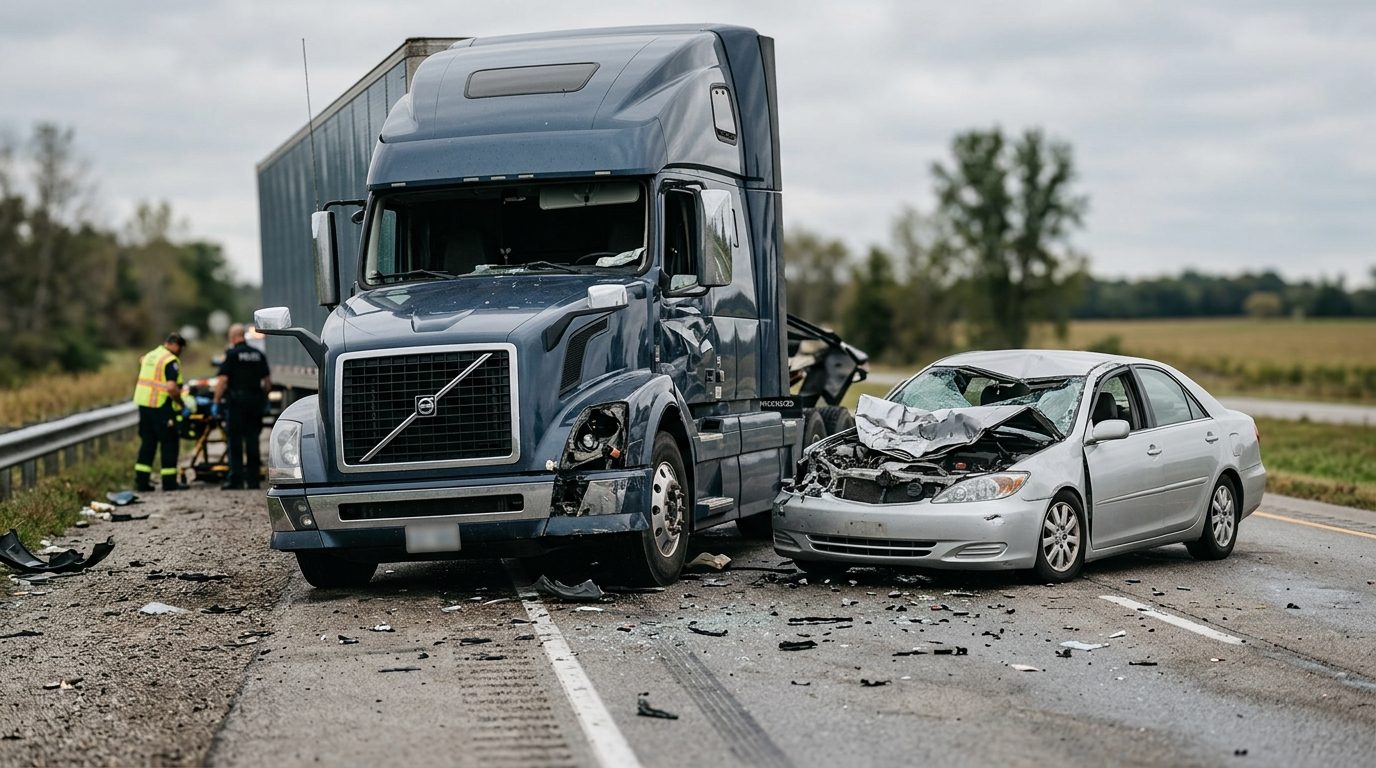
Truck Accidents
Trucking Company Liability: Who Is Responsible for Your Injuries?
When a truck crash leaves you with catastrophic injuries, the driver may not be the only party at fault. Trucking companies can be held legally responsible for negligent hiring, inadequate training, poor maintenance, and the actions of their drivers.
By CHG Lawyers · Published August 28, 2026
Who Can Be Held Responsible in a Truck Crash Besides the Driver
When a truck crash causes catastrophic injuries—spinal cord damage resulting in paralysis, traumatic brain injury, amputation, severe burns, or wrongful death—the driver is often not the only party responsible. The trucking company, maintenance contractors, cargo handlers, equipment manufacturers, and others can all bear legal liability. Understanding who can be sued is the first step toward recovering full compensation for permanent, life-altering harm.
Not sure what your next step is?
Talk it through with our team — the first consultation is free, confidential, and carries no obligation.
Why Multiple Parties Are Often Liable
A trucking company can be held responsible for a crash even if the driver was operating the vehicle at the time of impact. In the catastrophic-injury cases we handle, we regularly identify multiple responsible parties whose negligence or wrongdoing contributed to the collision and the injuries that followed.
Truck crashes that cause catastrophic harm often involve negligence by the trucking company itself—separate from the driver’s personal mistakes. The company may have hired an unqualified driver, failed to maintain the truck, pressured the driver to violate federal safety rules, or allowed cargo to be loaded improperly. Each of these failures can make the company directly liable for the crash and the injuries it causes.
How Trucking Company Liability Works: Vicarious Liability and Direct Liability
When you are injured in a truck crash, the trucking company can be held responsible through two different legal pathways.
Vicarious liability means the company is responsible for the negligent acts of its employees when those acts occur during the scope of employment. If a truck driver causes a crash through reckless driving, speeding, or fatigue, the trucking company that employs the driver is liable for the injuries and deaths that result—even though the company itself did not operate the vehicle. Think of it this way: the company hired the driver, put them behind the wheel, and sent them out on the road. When that driver’s negligence causes harm, the company answers for it.
Direct liability means the company is liable for its own negligence, separate from the driver’s conduct. If the company failed to hire safely, failed to train, failed to maintain the truck, or knowingly pressured the driver to violate safety rules, the company bears direct responsibility for any crash caused by that negligence. In other words, the company itself did something wrong—not just the driver.
Both theories can apply in the same case. For example, a driver might have been speeding (driver negligence) while operating a truck with failed brakes (company negligence in maintenance). Both the driver and the company can be held liable, and both can be sued.
Negligent Hiring and Retention of Drivers
Trucking companies have a legal duty to hire drivers who are qualified, trained, and fit for the job. Before hiring, a company must conduct a thorough background check and verify the driver’s safety record, commercial driver’s license (CDL) status, and medical fitness.
If a company hires a driver with a documented history of reckless driving, substance abuse, safety violations, or previous crashes—or fails to check the driver’s background at all—the company can be held liable for crashes caused by that driver. Similarly, if a company retains a driver it knows or should know is unsafe, and that driver causes a catastrophic crash, the company bears responsibility for the injuries that follow.
Failure to Maintain Trucks and Equipment
Trucking companies are required by federal law to maintain their vehicles in safe operating condition. The Federal Motor Carrier Safety Administration (FMCSA) enforces detailed maintenance standards under 49 CFR Part 396, which require regular inspection, maintenance, and repair of brakes, tires, steering systems, lighting, coupling devices, and all other safety-critical components.
Brake failure, tire blowouts, steering defects, and lighting failures that cause crashes are often the result of negligent maintenance. If a company fails to fix known defects, skips required maintenance to save money, or ignores warning signs of equipment problems, the company can be held liable for injuries and deaths caused by equipment failure.
In many cases, we investigate maintenance records, inspection logs, and repair histories to prove that the trucking company knew about a defect and chose not to fix it—a deliberate choice that can expose the company to punitive damages (additional money awarded to punish wrongdoing).
Improper Loading and Cargo Securement
Cargo that is loaded improperly, overloaded, or not secured can shift during transit, causing the truck to become unstable, tip over, or jackknife. Federal regulations under 49 CFR Part 393 set strict standards for cargo securement. Trucking companies and cargo handlers have a duty to ensure loads are balanced, within legal weight limits, and properly secured with straps, chains, or other devices.
A crash caused by cargo shift, load failure, or improper securement can make the trucking company, the cargo handler, or both liable for catastrophic injuries. This is especially true when the company knew or should have known that the cargo was being loaded unsafely.
Inadequate Training and Supervision
Drivers must receive proper training on vehicle operation, safety procedures, federal hours-of-service rules, hazard recognition, and emergency response. Trucking companies must also supervise drivers to ensure they follow safety rules and do not engage in reckless behavior.
If a company fails to train drivers adequately or fails to supervise them, and a driver causes a crash as a result, the company can be held liable. This includes failing to monitor whether drivers are obeying speed limits, taking required rest breaks, or driving while fatigued or impaired.
Have questions about what happened?
Ask our team directly. The first conversation is free, confidential, and there is no obligation to continue.
Pressuring Drivers to Violate Hours-of-Service Rules
Federal law limits how many hours a driver can work in a day and week to prevent fatigue-related crashes. The Federal Motor Carrier Safety Administration (FMCSA) enforces strict hours-of-service rules under 49 CFR Part 395 to protect drivers and the public. Generally, drivers are limited to 11 hours of driving per 14-hour workday, with mandatory rest periods.
Some trucking companies pressure drivers to exceed these limits, skip required rest breaks, or drive while impaired to meet delivery deadlines or maximize profit. If a company knowingly pressures a driver to violate safety rules and a crash results, the company is liable for the injuries and deaths that follow. This conduct can also expose the company to punitive damages—additional money awarded to punish deliberate wrongdoing.
Can Both the Driver and Trucking Company Be Held Responsible?
Yes. In many catastrophic truck crashes, both the driver and the company share liability. Under Florida law, comparative fault (shared responsibility) rules allow a jury to assign a percentage of fault to each responsible party based on the evidence.
For example, a driver might have been speeding (driver negligence: 40% fault) while also operating a truck with failed brakes (company negligence in maintenance: 60% fault). Both the driver and the company can be sued in the same case, and each can be held responsible for their portion of the harm. The percentage of fault assigned to each party directly affects how much compensation you receive.
Other Parties Who May Be Liable
Beyond the driver and trucking company, other parties can share liability in a catastrophic truck crash:
- Cargo loaders or freight companies that load cargo improperly or fail to secure it.
- Maintenance contractors hired by the trucking company to repair or inspect vehicles.
- Equipment manufacturers if a defect in the truck, trailer, or component part contributed to the crash.
- Other drivers or companies whose negligence contributed to the collision.
- Government entities responsible for road maintenance, design, or safety in some cases.
Identifying all responsible parties requires thorough investigation, including review of maintenance records, driver logs, cargo documentation, and accident scene evidence.
Insurance Coverage and Compensation
Trucking companies are required by federal law to carry liability insurance to cover bodily injury and property damage caused by their operations. Federal minimum coverage is $750,000 for most trucking operations under 49 USC § 31139, though many companies carry higher limits.
Understanding what insurance is available is crucial because it determines the pool of money available to compensate victims for catastrophic injuries. In addition to the trucking company’s insurance, you may also have claims against the driver’s personal insurance, cargo liability insurance, or other sources of coverage.
Catastrophic injuries—paralysis, traumatic brain injury, amputation, severe burns, and wrongful death—result in substantial compensation reflecting the permanent nature of the harm: lifetime medical care, lost wages, pain and suffering, loss of enjoyment of life, and family support. While we cannot guarantee a specific outcome, the severity and permanence of catastrophic injuries are reflected in the compensation available.
Hit-and-Run Truck Crashes
If a truck hits your vehicle and the driver flees the scene, you may still be able to sue the trucking company. The company can be held liable under vicarious liability for the driver’s negligence, even if the driver fled and was never apprehended.
You may also have a claim against your own insurance (uninsured motorist coverage) while pursuing the trucking company. Hit-and-run cases can be more complex because identifying the responsible company requires investigation, but liability can still be established through witness testimony, vehicle identification, traffic cameras, and other evidence.
Statute of Limitations: Time Matters
In Florida, the statute of limitations for filing a negligence or personal-injury claim is two years from the date of the crash. This deadline is firm—if you do not file a claim within two years, you lose the right to sue, regardless of the strength of your case.
For wrongful-death claims brought by family members of those killed in a truck crash, the same two-year deadline applies. Prompt legal action is critical to preserve evidence, interview witnesses, and protect your rights.
Want to know where you stand?
Tell us what happened and our team will walk you through the options available to you, at no cost.
Next Steps After a Catastrophic Truck Crash
If you or a family member has suffered a catastrophic injury—paralysis, traumatic brain injury, amputation, severe burns, or death—in a truck crash, understanding who is liable is the first step toward recovery. Gathering evidence, identifying all responsible parties, and pursuing claims against them requires legal expertise, resources, and knowledge of both state and federal trucking regulations.
The sooner you reach out, the sooner evidence can be preserved, witnesses can be interviewed, and your case can be investigated. People in your situation—facing permanent disability or the loss of a loved one—reach out regularly to discuss what happened and explore their options for holding all responsible parties accountable.
Frequently Asked Questions
What is vicarious liability in a truck accident case?
Vicarious liability means the trucking company is legally responsible for the negligent acts of its employees, including the driver, when those acts occur during employment—even if the company itself did not cause the crash.
Can a trucking company be liable for negligent hiring?
Yes. If a company hires a driver without conducting a proper background check or hires a driver with a history of reckless driving or safety violations, the company can be held liable for crashes caused by that driver.
What is the statute of limitations for a truck accident claim in Florida?
You have two years from the date of the crash to file a negligence claim; after two years, you lose the right to sue.
Can both the driver and trucking company be held responsible in a truck crash?
Yes. Both can be sued in the same case, and a jury can assign a percentage of fault to each party based on the evidence.
Who pays for injuries in a catastrophic truck accident?
The trucking company’s liability insurance typically covers bodily injury caused by the company’s operations. Federal minimum coverage is $750,000, though many companies carry higher limits.
Can you sue a trucking company for a hit-and-run?
Yes. The trucking company remains liable under vicarious liability for the driver’s negligence, even if the driver fled the scene.
If you or a family member has suffered a catastrophic injury in a truck crash, you may have claims against the trucking company, the driver, cargo handlers, maintenance contractors, or other responsible parties. The investigation and legal process can be complex, but you don’t have to face it alone. Contact us for a free case evaluation to discuss what happened and learn about your options for recovery. People in your situation reach out regularly—we’re here to help.
How Trucking Companies Can Be Held Liable
Vicarious Liability
A trucking company is legally responsible for the negligent acts of its employees—including drivers—when those acts occur during employment, even if the company itself did not directly cause the crash.
Negligent Hiring & Retention
Companies can be liable if they hire or keep drivers with poor safety records, substance abuse issues, or a history of traffic violations without proper investigation or monitoring.
Inadequate Training
Failure to provide proper training on safe driving practices, cargo handling, vehicle inspection, and compliance with federal regulations can make a company liable for resulting injuries.
Poor Vehicle Maintenance
Trucking companies must maintain their vehicles to safe standards. Brake failure, tire blowouts, and mechanical defects caused by neglect can create company liability for catastrophic crashes.
Hours-of-Service Violations
Companies that pressure drivers to exceed legal driving-hour limits or fail to enforce rest requirements can be liable when driver fatigue contributes to a crash.
Unsafe Practices & Policies
Policies that encourage speeding, overloading, or unsafe cargo securing—or failure to enforce safety protocols—can establish company liability for resulting injuries.
Federal Regulations Create a Paper Trail
Trucking companies are required by the Federal Motor Carrier Safety Administration (FMCSA) to maintain detailed records: driver hiring files, training logs, vehicle maintenance records, and inspection reports. These documents often reveal negligence and are critical evidence in establishing company liability.
Key Questions About Trucking Company Liability
What is vicarious liability?
Vicarious liability means the trucking company is legally responsible for the negligent acts of its employees, including the driver, when those acts occur during employment—even if the company itself did not cause the crash.
Can a trucking company be liable for negligent hiring?
Yes. If a company hires a driver without checking safety records, ignores a history of violations or accidents, or fails to verify qualifications, the company can be held liable for injuries caused by that driver's negligence.
What role does vehicle maintenance play?
Trucking companies are responsible for maintaining their vehicles in safe condition. If a crash is caused by brake failure, tire defects, or other mechanical problems due to neglect or deferred maintenance, the company can be liable.
How do hours-of-service violations create liability?
Federal law limits how long drivers can operate without rest. If a company pressures drivers to violate these limits or fails to enforce them, and driver fatigue contributes to a crash, the company shares liability for resulting injuries.