

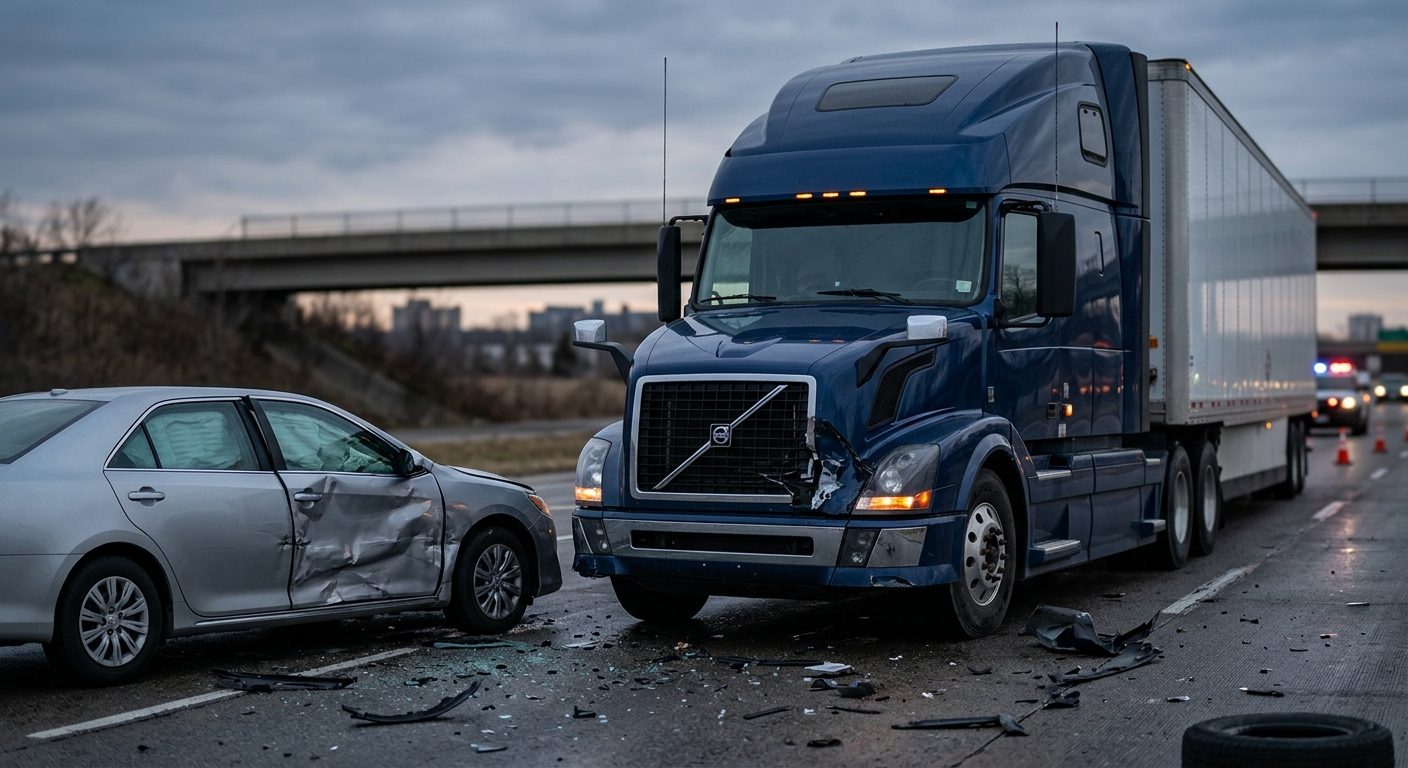
Truck Accidents
Hours-of-Service Violations and Catastrophic Truck Crashes
When a truck driver ignores federal rest and driving-time rules, the result is often a severe, life-altering injury. If you or a family member was harmed in a crash caused by driver fatigue or hours-of-service violations, you may have a claim.
By CHG Lawyers · Published September 02, 2026
Federal Hours-of-Service Rules and Truck Accident Claims: What Violations Mean for Your Injury
When a commercial truck driver crashes into your vehicle, the cause is often not a single mistake. It’s usually the result of pushing too hard for too long without rest. Federal hours-of-service rules exist to prevent driver fatigue from causing serious accidents. If those rules were violated before your crash, that violation is powerful evidence that the driver and trucking company were negligent.
This page explains what federal hours-of-service rules are, how violations happen, why they lead to catastrophic injuries, and how violations become evidence in your claim.

If you or a family member was harmed in a crash caused by driver fatigue or hours-of-service violations, you may have a claim. Talk it through with our team — the first consultation is free, confidential, and carries no obligation.
What Are Federal Hours-of-Service Rules?
Federal hours-of-service (HOS) rules are federal limits on how long commercial truck drivers can work without taking mandatory rest breaks. The Federal Motor Carrier Safety Administration (FMCSA), part of the U.S. Department of Transportation, enforces these rules to reduce driver fatigue and prevent crashes.
These rules apply to drivers of large commercial trucks (Class 8 trucks) that operate across state lines. They exist because research shows that driver fatigue impairs judgment and reaction time in ways similar to alcohol impairment. A tired truck driver is more likely to drift out of their lane, miss hazards, misjudge stopping distance, or lose control entirely. This is especially dangerous in an 80,000-pound vehicle that requires hundreds of feet to stop.
The Core Hours-of-Service Limits: What They Mean in Real Terms
The FMCSA hours-of-service regulations (49 CFR Part 395) set specific limits on driving and work time. Here’s what they mean in plain language:
Daily driving limit: 11 hours after 10 consecutive hours off duty
A truck driver may drive a maximum of 11 hours after taking 10 consecutive hours off duty. This means if a driver works a full 11-hour shift, they must rest for 10 hours before driving again. If they start driving at 6 a.m., they can drive until 5 p.m., then must be off duty until 3 a.m. the next day. The rule exists because a driver who has been awake and working for 11 hours is approaching the fatigue threshold where reaction time slows and alertness drops.
On-duty window: 14 consecutive hours maximum
This includes both driving time and non-driving work like loading, unloading, or paperwork. Then they must take a mandatory 10-hour rest break. This is stricter than the 11-hour driving limit because fatigue builds during all work, not just time behind the wheel. A driver who spends 3 hours loading cargo and then drives 11 hours has been awake and working for 14 hours straight—the legal maximum.
Weekly limits: 60 hours in 7 days or 70 hours in 8 days
Drivers are restricted to 60 hours on duty in a 7-day period, or 70 hours in an 8-day period. After hitting either limit, the driver must take a 34-hour consecutive rest period before resuming work. This rule prevents the cumulative sleep debt that builds when a driver works long hours day after day. A driver who works 12 hours a day for 5 days in a row—all within the 11-hour driving limit—will have accumulated significant fatigue by day 5, even though each day is technically compliant.
Mandatory rest break: 10 consecutive hours off duty
Before starting a new shift, a driver must have been off duty for at least 10 consecutive hours. Drivers may split this rest using a sleeper berth—for example, 8 hours in the sleeper berth plus 2 hours off duty, or 7 hours plus 3 hours. The rule recognizes that drivers need both sleep and time to eat, shower, and handle personal tasks.
What Happens When a Driver Violates Hours of Service
Hours-of-service violations are recorded automatically and permanently. Modern commercial trucks are required to use electronic logging devices (ELDs). These devices automatically record driving time, rest periods, and violations. They create a digital record that cannot be erased or altered without leaving a digital trace.
When violations occur, several consequences follow:
Regulatory penalties: The driver and the trucking company face fines. Drivers can be fined up to $1,000 per violation. Trucking companies can face fines of $16,000 or more per violation. These fines accumulate quickly if multiple violations occurred during a single trip or over a week.
Safety record impact: Violations are recorded in the carrier’s safety file maintained by the FMCSA. This record is public and affects the company’s safety rating, which can influence insurance premiums and customer decisions.
Out-of-service orders: Drivers or vehicles can be pulled from service, preventing further operation until violations are resolved.
License suspension: Repeat violators can lose their commercial driver’s license.
Criminal charges: Drivers who falsify electronic logs or paper logs to hide violations can face criminal prosecution in addition to civil liability.
Legal evidence: Most importantly for injury claims, hours-of-service violations are strong evidence of negligence and reckless disregard for safety.
Most Common Hours-of-Service Violations in Truck Accident Cases
The violations we see most often in the truck accident cases our attorneys handle include:
- Exceeding the 11-hour daily driving limit
- Driving beyond the 14-hour on-duty window
- Failing to take required 10-hour rest breaks
- Violating weekly hour limits (60 hours in 7 days or 70 hours in 8 days)
- Falsifying logs (paper or electronic) to hide violations
- Starting a shift without adequate prior rest
These violations typically happen because of pressure to meet delivery deadlines, driver fatigue and poor judgment, or company negligence. Some trucking companies knowingly push drivers to violate the rules. Others fail to monitor compliance. Either way, the violation shows that safety was not the priority.
How Driver Fatigue Causes Catastrophic Crashes
Fatigued drivers have slower reaction times and impaired judgment. A tired driver is more likely to:
- Drift out of their lane or fail to notice lane markings
- Miss hazards or fail to see other vehicles
- Misjudge stopping distance and tailgate
- Fall asleep at the wheel, especially on long stretches of highway
- Overcorrect when they realize they’re drifting, causing a jackknife or rollover
Large trucks require significantly more time and distance to stop than passenger vehicles. A truck traveling at 65 mph requires approximately 300 feet to stop—the length of a football field. When a fatigued driver is behind the wheel, this problem becomes catastrophic. A truck traveling at highway speed that loses control can cross multiple lanes, strike multiple vehicles, and cause injuries that are life-altering or fatal.
In the catastrophic-injury cases our attorneys handle, truck crashes involving driver fatigue frequently result in spinal cord injuries causing paralysis, traumatic brain injuries, amputations, severe burns, and wrongful death. These are not minor injuries. They are permanent, life-changing outcomes that require immediate medical care, ongoing treatment, and lifelong support.
Not sure what your next step is?
Talk it through with our team — the first consultation is free, confidential, and carries no obligation.
Hours-of-Service Violations as Evidence: How to Prove Negligence
If you were injured in a truck crash, investigating whether hours-of-service violations occurred is a critical part of proving negligence. Here’s how violations become evidence:
Electronic logging devices (ELDs): Modern trucks are required to use ELDs that automatically record driving time, rest periods, and violations. These records can be subpoenaed and analyzed to show exactly when the driver was on duty, how long they had been driving, and whether they violated the 11-hour, 14-hour, or weekly limits. ELD data is admissible in court and cannot be altered after the fact.
Paper logs: Older trucks may still use paper logs. These can be subpoenaed and compared to dispatch records, fuel stops, toll records, and weigh station records to identify discrepancies and violations. Handwritten logs are often inconsistent with other records, revealing falsification.
Black box data: Many trucks have event data recorders (similar to airplane black boxes) that capture vehicle speed, braking, acceleration, and the precise timing of events before the crash. This data can show whether the driver was alert or drowsy at the moment of impact and whether the driver had adequate time to brake or avoid the collision.
Dispatch records: Records from the trucking company show when the driver was instructed to drive, when rest breaks were (or weren’t) allowed, and whether the company was pressuring drivers to meet unrealistic deadlines. These records often reveal company knowledge of violations.
FMCSA safety records: The FMCSA maintains a public database of carrier safety records. This shows whether the company or driver had a history of hours-of-service violations before your crash. A pattern of violations proves negligence, not a one-time mistake.
Medical evidence: Experts can testify about how driver fatigue contributes to loss of control, misjudgment, and the specific mechanism of your crash. They can connect the fatigue to your injuries.
Together, this evidence proves that the driver and company knew the risks, ignored the federal rules, and caused your injuries through negligence.
Wrongful Death: When Hours-of-Service Violations Are Fatal
Fatigue-related truck crashes can be fatal. When a family member is killed in a truck crash involving hours-of-service violations, the family’s wrongful-death claim is strengthened by evidence of the violation.
Under Florida Statute §768.19, the family of a person killed in a negligent crash can recover damages for the loss of the deceased’s earnings, the loss of companionship and support, and the family’s pain and suffering. Hours-of-service violations prove that the driver and company acted recklessly. They chose profit over safety, and that choice cost a life.
If you lost a family member in a truck crash, the violation evidence also supports claims for punitive damages—extra damages meant to punish the company for reckless conduct and deter similar violations in the future.
How Long Do Hours-of-Service Violations Remain on Record?
Hours-of-service violations remain in the carrier’s safety file indefinitely. They don’t expire or disappear. This matters for your case because older violations prove a pattern of negligence, not a one-time mistake. If the company had a history of violations before your crash, that history shows the company’s culture and priorities. It strengthens your claim for damages.
What to Do If You Were Injured in a Truck Accident
If you were injured in a truck crash, take these steps immediately:
Seek medical attention: Get treatment for all injuries and keep detailed records of all medical visits, tests, and treatment. Document the full extent of your injuries, even if some symptoms appear later.
Report the crash: Call police and obtain the official accident report. The report will document the crash details and may note driver fatigue or violations.
Preserve evidence: Request the truck’s electronic logging device (ELD) data, paper logs, and black box information as soon as possible. This evidence can be lost or destroyed if not preserved early. Send a written preservation notice to the trucking company demanding that all evidence be retained.
Do not sign anything: Avoid signing settlement offers, releases, or statements without legal review. Insurance companies often try to settle quickly for far less than your claim is worth.
Gather witness information: Collect names and contact information from other drivers, passengers, and bystanders who saw the crash.
Document the scene: If safe to do so, take photos of vehicle damage, road conditions, traffic patterns, and any visible signs of driver fatigue (e.g., skid marks indicating loss of control).
Contact an attorney: Hours-of-service violations require investigation and expert analysis. An attorney can obtain ELD data, logs, dispatch records, and other evidence to prove negligence.
Why Hours-of-Service Violations Matter in Catastrophic Injury Claims
Hours-of-service violations are powerful evidence in catastrophic injury claims because they directly connect driver negligence to your injuries:
Negligence foundation: Violations show the driver and company disregarded federal safety rules designed to prevent exactly the kind of crash that injured you.
Causation link: Fatigue directly contributes to loss of control, misjudgment, and crash severity. Expert testimony can connect the violation to the crash mechanism and your injuries.
Punitive damages: Willful or reckless violations can support claims for punitive damages beyond your medical costs and lost income.
Company liability: Violations often reflect company culture and pressure to meet deadlines. The company is responsible for the driver’s conduct and for allowing violations to occur.
Victim compensation: Proving negligence is essential to recovering full damages for spinal cord injuries, brain injuries, amputations, severe burns, and other catastrophic outcomes.
Have questions about what happened?
Ask our team directly. The first conversation is free, confidential, and there is no obligation to continue.
Frequently Asked Questions
What is an electronic logging device (ELD)?
An ELD is a device that automatically records a truck driver’s driving time, rest periods, and hours-of-service compliance. It creates a permanent digital record that can be subpoenaed as evidence in injury claims. ELDs became mandatory for most commercial drivers on December 18, 2017.
How do I know if the truck driver violated hours of service?
An attorney can subpoena the truck’s ELD data, paper logs, dispatch records, and black box information. These records will show whether the driver exceeded the 11-hour driving limit, worked beyond the 14-hour on-duty window, or failed to take required rest breaks.
Can I sue the trucking company for a crash caused by driver fatigue?
Yes. If the driver violated hours-of-service rules or the company pressured the driver to violate the rules, the company is liable for negligence. You can recover damages for medical care, lost income, pain and suffering, and other losses.
How long do I have to file a claim after a truck accident?
Under Florida Statute §95.11, you generally have 2 years from the date of injury to file a personal-injury claim. Do not wait. Evidence can be lost and witnesses’ memories fade.
What if the truck driver falsified their logs?
Falsifying logs is evidence of intentional misconduct and can support claims for punitive damages. It also suggests the company knew violations were occurring and did nothing to stop them.

Key Takeaways
Federal hours-of-service rules limit truck driver work time to prevent fatigue-related crashes. Violations are recorded electronically and permanently. Fatigued drivers cause serious accidents that result in spinal cord injuries, brain injuries, amputations, severe burns, and death. Hours-of-service violations are powerful evidence of negligence in injury claims. If you were injured in a truck crash, investigating whether violations occurred is a critical part of building your case. An attorney can obtain and analyze ELD data, logs, and other evidence to prove the driver and company were negligent and hold them accountable for your injuries.
If you or a family member was injured in a truck crash and you’re wondering whether driver fatigue or hours-of-service violations played a role, reach out to discuss what happened. People in your situation contact us regularly to understand their options and get the investigation started. Contact us for a free case evaluation.
Electronic Logging Devices Create Evidence
Federal law requires most commercial truck drivers to use electronic logging devices (ELDs) that automatically record driving time, rest periods, and hours-of-service compliance. These digital records are crucial evidence in injury claims and can be subpoenaed to prove a driver violated federal rest rules.
What Hours-of-Service Violations Look Like
Driving Too Many Hours Without Rest
Federal law limits commercial drivers to 11 hours of driving within a 14-hour window. A driver who ignores this limit becomes increasingly fatigued and loses the ability to react to hazards, brake safely, or stay in their lane.
Skipping Mandatory Rest Breaks
Drivers must take a 30-minute break after 8 hours of driving. Skipping or shortening these breaks leaves a driver dangerously tired and unable to operate the truck safely.
Falsifying Logbooks or ELD Records
Some drivers or companies deliberately log false rest periods or downtime to hide violations. Falsified records are still discoverable evidence and often reveal a pattern of reckless disregard for safety.
Violating the 60-Hour Weekly Limit
Drivers cannot work more than 60 hours in a 7-day period (or 70 hours in 8 days). Chronic overwork impairs judgment and reaction time, increasing the risk of a catastrophic crash.
Why Hours-of-Service Violations Matter in Your Claim
Proof of Negligence
A violation of federal hours-of-service rules is strong evidence that the driver and trucking company acted recklessly. ELD data and logbook records create a clear record of the violation.
Company Liability
Trucking companies are responsible for enforcing hours-of-service rules. A company that pressures drivers to meet unrealistic schedules or ignores violations may be held liable for injuries caused by driver fatigue.
Predictable Harm
Hours-of-service rules exist because fatigue-related crashes cause catastrophic injuries and death. A violation shows the driver and company knew the risk and ignored it.
Digital Evidence
Electronic logging devices create an automatic, tamper-resistant record. Unlike handwritten logs, ELD data is difficult to dispute and often reveals the exact timeline of violations.
Common Injuries from Fatigue-Related Truck Crashes
Spinal Cord Injuries and Paralysis
A fatigued driver may fail to brake or swerve, causing a high-impact collision that severs or damages the spinal cord. Victims may face permanent paralysis, loss of sensation, and lifelong care needs.
Traumatic Brain Injuries
The violent impact of a truck crash can cause severe brain damage, leading to cognitive impairment, memory loss, personality changes, and permanent disability.
Amputation and Limb Loss
Crushing injuries from a truck accident may require amputation of a limb. Survivors face lifelong physical rehabilitation, prosthetics, and profound lifestyle changes.
Severe Burns
Truck fires or explosions can cause catastrophic burns. Survivors endure painful recovery, scarring, infection risk, and often require extensive reconstructive surgery.
How CHG Personal Injury Lawyers Can Help
ELD and Logbook Analysis
We obtain and analyze electronic logging device records and driver logbooks to identify hours-of-service violations and establish a timeline of fatigue.
Expert Investigation
We work with accident reconstructionists and fatigue experts to connect the driver's violation to the crash and your injuries.
Full Liability Assessment
We identify all responsible parties—the driver, the trucking company, the dispatcher, and others—who may be liable for your catastrophic injuries.
Nationwide Representation
We handle truck accident cases across the United States. No matter where your crash occurred, we focus exclusively on catastrophic injury claims.