

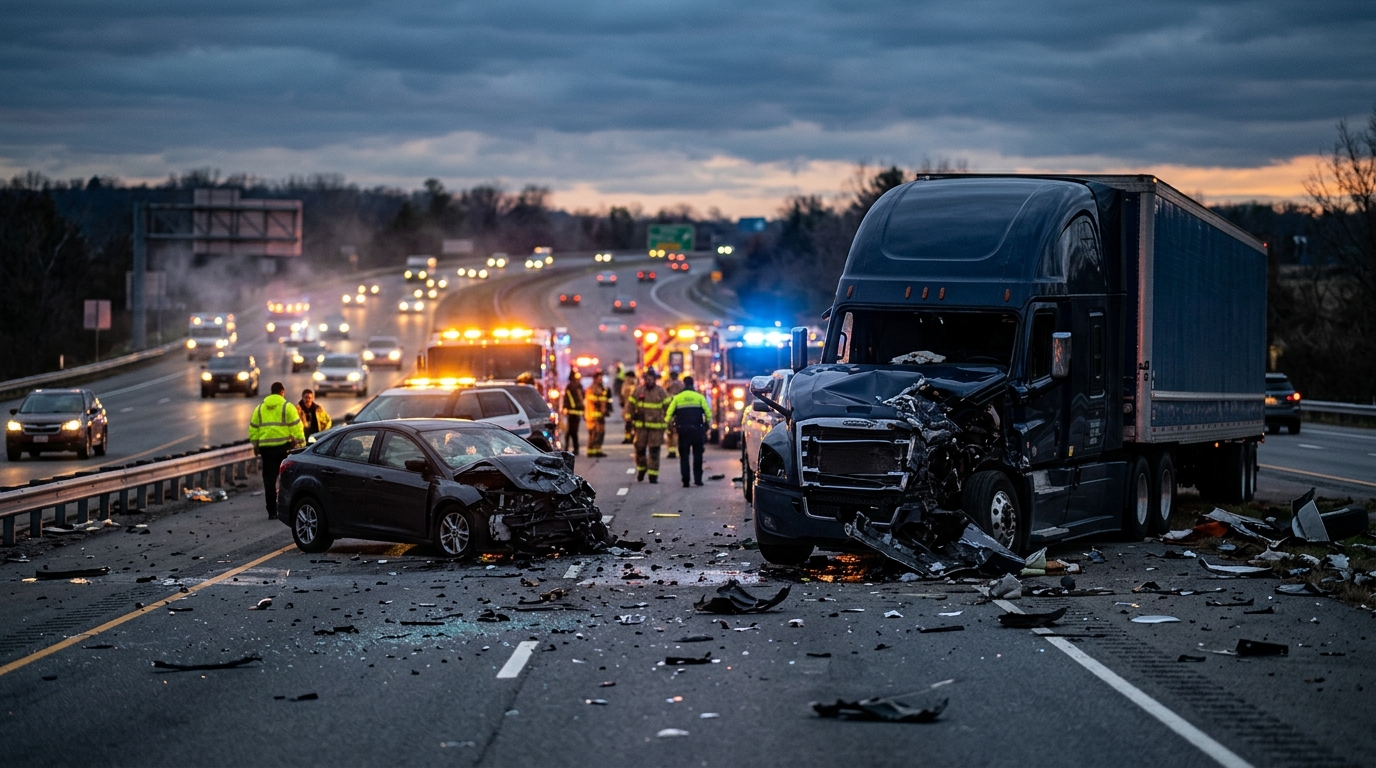
Truck Accidents · Florida & Nationwide
The Truck's Own Computer May Prove What Happened to You
After a serious truck crash, onboard data can reveal speed, braking, and hours behind the wheel. But that evidence can disappear fast. Learn how it works and why acting quickly matters.
Why Families Turn to CHG
Nationwide
Catastrophic injury cases accepted
Bilingual
English & Spanish resources
Licensed
Florida Bar–admitted attorneys
Free
Case evaluation, no cost to start
By CHG Lawyers · Published August 13, 2026
Truck Black Box Data & Your Injury Claim: How the Records Prove What Happened
If you’re reading this, you or someone you love was probably just in a crash with a large truck. And the injuries are the kind that change everything. Maybe it’s a spinal cord injury, paralysis, a brain injury, a lost limb, a severe burn, or the loss of a family member.
You’re facing hospital rooms and impossible decisions. A truck’s onboard computers are the last thing on your mind.
But those computers may hold the clearest proof of what happened. And here’s the hard part: some of that data can be erased within days. That happens unless someone moves quickly to protect it.
This page is written for you, not for lawyers. It explains — in plain words — what each system records. It also covers what the data can and cannot prove, and why the clock is already running.
A big rig doesn’t carry one “black box.” It carries several separate systems. The trucking company controls all of them.
If you're coping with a life-altering injury or the loss of someone you love, we understand how overwhelming this moment is. Talk it through with our team — the first consultation is free, confidential, and carries no obligation.
What people mean by a truck “black box” (and why it’s really several devices)
“Black box” is a nickname borrowed from airplanes. But a commercial truck doesn’t have just one box. It has several systems. Each one captures a different piece of what happened:
- Electronic Control Module (ECM) — the engine’s computer.
- Event Data Recorder (EDR) — records the seconds around a sudden event.
- Electronic Logging Device (ELD) — tracks driving hours and rest.
- GPS / telematics — logs location, route, and timing.
- Dash and in-cab cameras — the road ahead, and sometimes the driver.
You don’t need to memorize these acronyms to have a claim. Reading this data is the lawyer’s job. What matters is knowing it exists — and that it can disappear.
For the full picture of how these claims work, see our pillar guide to catastrophic truck accident injuries.
What devices record data in a commercial truck?
Together, these systems build a timeline of the crash. Each one answers a different question.
Electronic Control Module (ECM). This is the engine’s computer. It often logs road speed, engine RPM, throttle position, and hard-braking events. It’s a record of how the truck was driven in the miles and moments before the wreck.
Event Data Recorder (EDR). This is a short snapshot around a sudden event. In a semi, it may record speed, braking, seatbelt use, and airbag or slowdown data. This captures the collision itself.
Electronic Logging Device (ELD). This is required by federal law on most commercial trucks. The rule took full effect in December 2017 (see the FMCSA ELD rule). It records how long the driver was behind the wheel and when they rested. That ties directly to fatigue and hours-of-service rules.
GPS and telematics. These show where the truck went, the route, and the timing of stops. This can confirm or contradict the driver’s story of the day.
Dash and in-cab cameras. Many trucks have forward-facing cameras. Some record the driver, too. Fleet systems may also store maintenance and inspection records.
What black box data can actually prove about the crash
This data can turn a “he said, she said” dispute into recorded numbers. Depending on the systems, it can show:
- Speed — whether the truck was over the limit or too fast for rain, traffic, or road conditions.
- Braking — how hard and how late the driver braked, or whether they braked at all.
- Throttle and acceleration — what the driver was doing in the final seconds.
- Seatbelt and slowdown data — the force of the impact.
- Hours of driving — from the ELD, which can point to driver fatigue and hours-of-service violations.
Federal hours-of-service rules set limits on driving time. They appear in 49 C.F.R. Part 395. In general, a property-carrying driver cannot drive more than 11 hours after 10 hours off duty. They also cannot drive after being on duty for 14 hours. ELD data can show whether those limits were crossed.
The severe forces these systems record match the injuries we handle — spinal cord damage, brain trauma, and limb loss. Doctors rate how severe a spinal cord injury is using the American Spinal Injury Association’s ASIA Impairment Scale. Crash data can back up how that injury happened.
Why does severity matter so much here? Because these crashes are a leading cause of spinal cord injury, according to the Mayo Clinic. When the forces are that extreme, objective data confirms what the medical records already suggest.
Can a black box prove who is at fault?
A truck’s black box can strongly support a finding of fault. But it usually works alongside other evidence, not alone. We can’t promise any specific result, and no honest lawyer can. Still, here’s how it actually works in a case.
The data is one piece. A full picture usually includes the police report, physical evidence at the scene, witness statements, driver logs, and maintenance records. Together, they show what happened and why.
Black box data can also reveal company failures, not just driver mistakes. It may show a driver pushed past legal hours. It may show a truck sent out with ignored repairs, or a disabled safety system. Those findings can point to the trucking company’s own negligence.
Not sure what your next step is?
Talk it through with our team — the first consultation is free, confidential, and carries no obligation.
Do insurance companies check black boxes after an accident?
Yes. Trucking companies and their insurers often move within hours of a crash to get this data. That speed is exactly why injured families need to act just as fast.
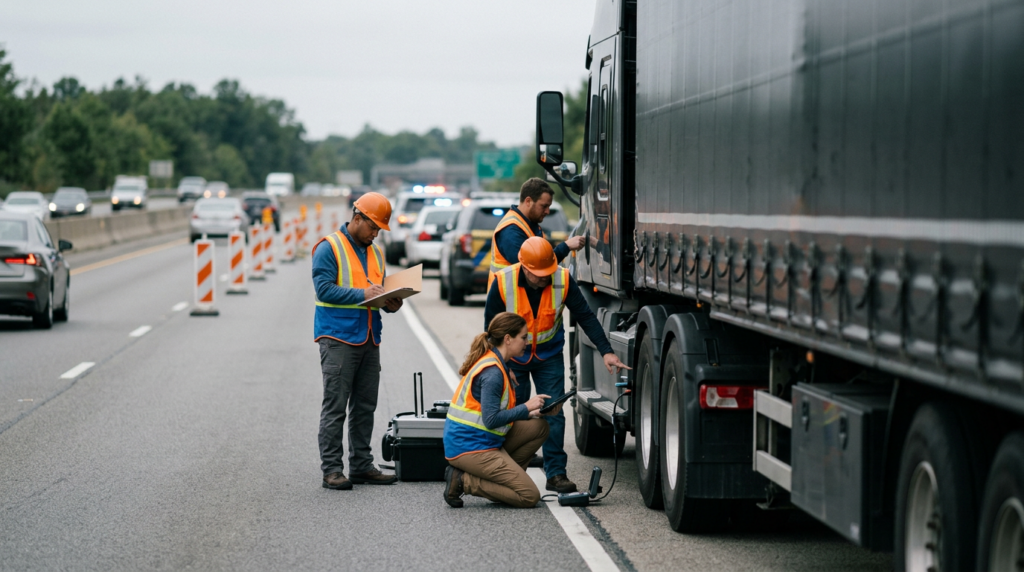
Here’s the concern: the truck, its computers, and its records belong to the company, not to you. Their team may inspect the data first. Or the truck may be repaired and the data overwritten before your side ever sees it.
That’s why an injured person needs their own legal team. Someone must push to preserve the data and review it independently, rather than trust the other side’s version.
How long is black box data stored in a truck?
It varies a lot by device. Some of it can vanish within days or weeks. There’s no single answer, which is exactly why timing is critical.
- EDR data covers only a short window around an event. It can be overwritten quickly once the truck is driven again.
- ECM data can be lost when the truck is repaired, put back in service, or the engine module is reset.
- ELD / hours-of-service records must be kept for a set time under federal law. But the data can still be changed or lost if no one acts.
Under 49 C.F.R. §395.8, carriers must keep records of duty status and supporting documents for six months. But keeping paper records is not the same as protecting the truck’s onboard data. That data is far more fragile.
The takeaway: some of the most important crash data can disappear before an injured family even hires a lawyer.
Does black box data show if a truck driver was fatigued?
The ELD records driving hours and rest periods. This can reveal whether a driver went over the federal hours-of-service limits described above before the crash. Combined with GPS timing and fuel or delivery records, it can show a driver who should have been resting but was still on the road.
What is a spoliation letter — and why is it the most urgent step?
The main tool for protecting truck evidence is a preservation letter, also called a spoliation letter. It’s a formal legal demand that the company keep the truck, its computers, and its records intact.
In plain terms, the letter says: do not repair, sell, reset, or overwrite anything. Once a company gets it, destroying or overwriting that evidence can bring serious legal consequences. A court may punish a company that lets key data disappear.
Timing is everything. This letter often needs to go out within days of the crash, before the truck goes back into service. Acting fast helps protect both the evidence and the strength of a serious-injury or wrongful-death claim.
Have questions about what happened?
Ask our team directly. The first conversation is free, confidential, and there is no obligation to continue.
How black box data connects to the full value of a catastrophic claim
Proving the truck’s conduct is only half of a catastrophic claim. The other half is proving the lifelong impact of the injury.
Objective crash data explains how the injury happened. Medical records and expert planning explain what the injury will cost over a lifetime. That includes surgeries, therapy, equipment, home changes, and round-the-clock care.
The Christopher & Dana Reeve Foundation documents how many Americans live with paralysis. The National Spinal Cord Injury Statistical Center tracks the long-term burden of these injuries.
To learn how future costs are figured out, see our guide to the life-care plan for a catastrophic truck injury. And because deadlines apply to the whole claim, review the Florida truck accident statute of limitations.
Those deadlines are shorter than many people expect. In Florida, most negligence claims that arose on or after March 24, 2023 must be filed within two years. This is set by Fla. Stat. §95.11.
Florida also follows a modified comparative-fault rule under Fla. Stat. §768.81. Under this rule, a person found more than 50% at fault generally recovers nothing. Solid black box evidence can help guard against unfair blame.
Key takeaways
- A truck carries several data systems — not one “black box.” Each records different facts.
- This data can show speed, braking, throttle, and hours behind the wheel.
- It can also reveal company decisions behind the crash, not just driver error.
- The data can be overwritten or lost fast unless a lawyer legally preserves it.
- It usually works alongside other evidence to build the full picture.
- The most important step is acting quickly.
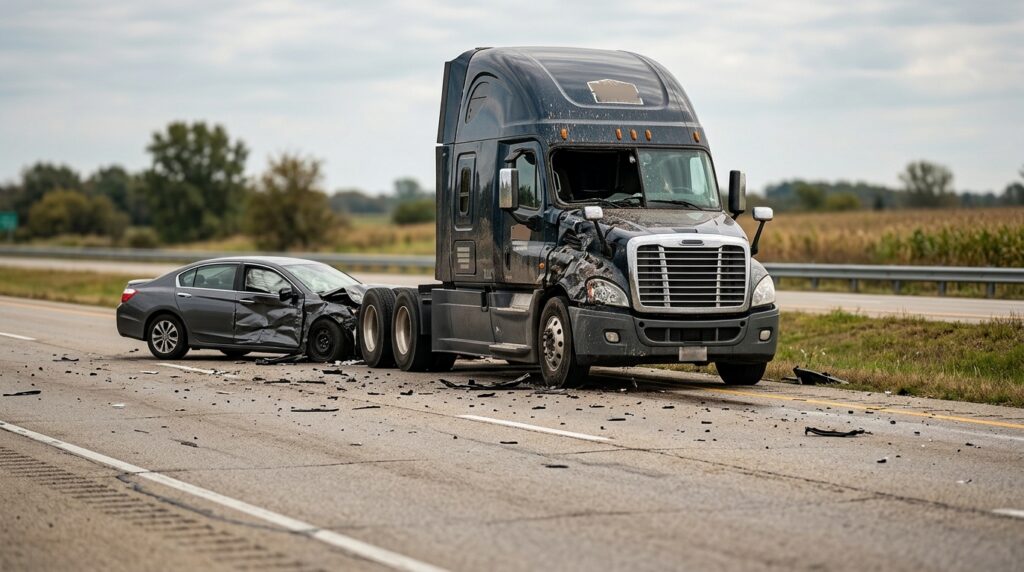
Talk to CHG Personal Injury Lawyers before the evidence disappears
If you’re coping with a life-altering injury or the loss of someone you love, we understand how overwhelming this moment is. You shouldn’t have to chase down a trucking company’s computers on your own.
Our attorneys can move quickly to send preservation demands. We can also secure and analyze the truck’s data on our own before it’s lost. CHG Personal Injury Lawyers are licensed and admitted to the Florida Bar. We handle catastrophic cases nationwide, and we offer service in English and Spanish.
There’s no cost to talk. Request a free case evaluation and let us help you protect the truck black box data that could make the difference in your claim.
Evidence Can Be Erased. Act Quickly.
Trucking companies can overwrite or lose black box data within days or weeks, and some systems record over old information automatically. A formal legal notice may be needed to preserve it. The sooner an attorney is involved, the better the chance this proof is protected.
What Truck Data Can Reveal
Hours of Service
Electronic logging devices show how long the driver had been working, which can point to fatigue or violations of federal driving-time limits.
Speed & Braking
Onboard event recorders can capture speed, sudden braking, and throttle activity in the seconds before a crash.
Engine & System Records
The truck's control modules may log fault codes, cruise-control use, and other details that help reconstruct what happened.
The Full Picture
Combined with maintenance records, driver logs, and dispatch data, this evidence can show whether negligence caused catastrophic injury or a wrongful death.
When This Evidence Matters Most
Life-Altering Injuries
Spinal cord injuries, paralysis, traumatic brain injuries, amputations, and severe burns from a truck crash demand proof of exactly how it happened.
Wrongful Death
When a family loses a loved one, black box and log data can help establish accountability in a wrongful-death claim brought on their behalf.
Disputed Fault
When the trucking company denies responsibility, the truck's own records can tell a very different story than the driver's account.