
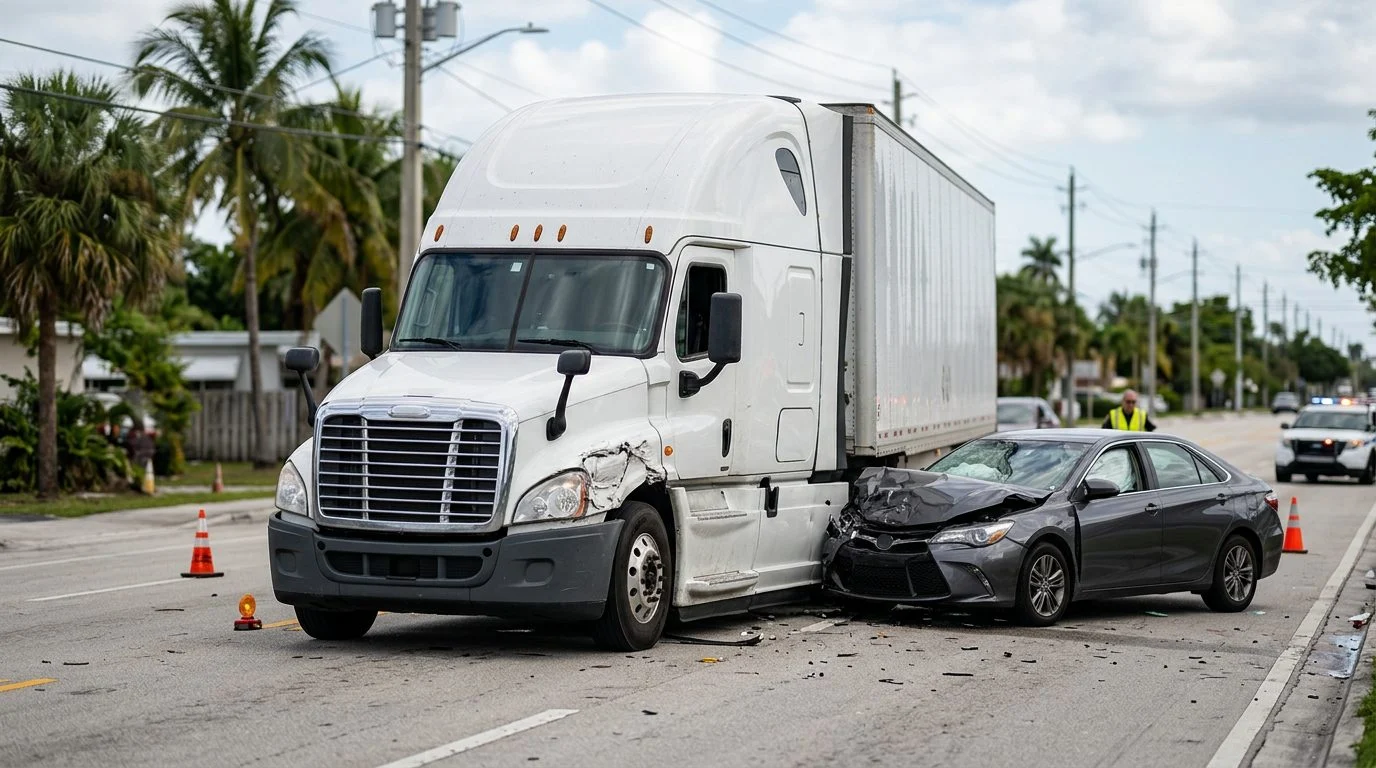
Truck Accidents | Miami Springs, Florida
Hurt in a Truck Accident in Miami Springs? Here Is What to Do Next
Clear, plain-language guidance for injured people and their families, from CHG Personal Injury Lawyers, a Florida firm that handles truck crashes and serious injury cases.
Why Families Contact CHG Personal Injury Lawyers
Florida-Based Firm
We represent people hurt in accidents throughout Florida, including Miami Springs and communities across Miami-Dade and beyond.
Licensed Attorneys
Our attorneys are licensed and admitted to The Florida Bar, and they answer to the people they represent.
Free, Confidential First Consultation
Your first consultation is free, confidential, and comes with no obligation to continue.
No Fees Unless There Is a Recovery
CHG charges no attorney's fees and no case costs unless there is a recovery.
By CHG Lawyers · Published October 25, 2026
If a truck hit you or someone you love in Miami Springs, the first hours matter. Florida law gives injured people and grieving families real rights. Truck crashes often involve several responsible parties, federal trucking rules, and records that disappear quickly. This guide explains the first steps, how Florida law shapes a claim, and what families can do after a fatal crash.
Miami Springs has a proud history, from the historic Curtiss Mansion to its busy neighborhood streets. Going up against a trucking company’s insurer alone can feel like racing a freight train on a bicycle. You don’t have to face it by yourself. CHG Personal Injury Lawyers is a Florida-based firm that handles personal injury cases, including truck crashes, for people throughout Florida.
Not sure what your next step is?
Talk it through with our team — the first consultation is free, confidential, and carries no obligation.
What to Do in the First Hours After a Truck Crash in Miami Springs
Get medical care first, then record the details that are easiest to lose. Call 911 if anyone is hurt. Get checked by a medical provider even if you feel fine, because some injuries show up hours or days later. Follow the care plan your doctors give you.
Write down the truck’s company name, its U.S. DOT number, the unit number, and the license plate. Note the driver’s name and any insurance details the driver shares at the scene.
Take photos from several angles. Capture vehicle positions, road conditions, skid marks, traffic signs, and visible injuries. Ask witnesses for their names and phone numbers, because their accounts can matter later.
Be careful with recorded statements. A trucking company or its insurer may ask you for one soon after the crash. Speak with a lawyer before you give one. Then write down what you remember while it is fresh, including the time of day, the weather, and the traffic.
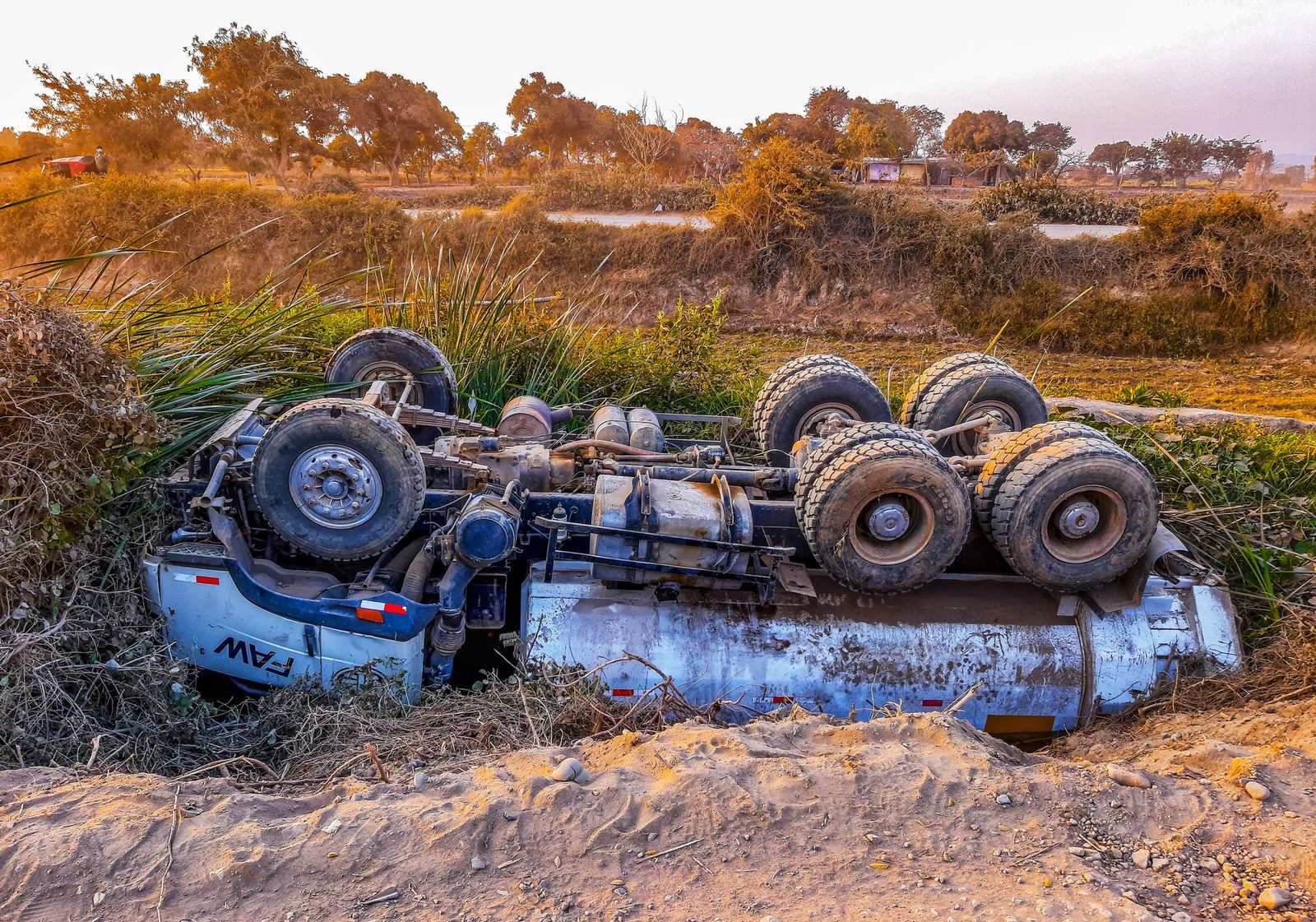
Why Truck Crashes Raise Different Questions Than Car Crashes
A truck crash usually involves more parties, more records, and more federal rules than a typical car crash. Commercial trucks are much heavier than passenger vehicles. They need far more distance to stop, and that changes how a crash unfolds.
Several parties may share responsibility. That can include the driver, the trucking company, the vehicle’s owner, a maintenance contractor, or a company that loaded the cargo. In a negligence case, Florida law directs the court to enter judgment against each liable party based on that party’s percentage of fault, not on the basis of joint and several liability. It does not use joint and several liability, a rule that can make one party pay the whole award.
Federal rules add another layer. Montgomery v. Caribe Transport II
Records matter too. Federal rules require motor carriers, except private motor carriers of passengers (nonbusiness), to require each driver to record the driver’s duty status for each 24-hour period, and most carriers use electronic logging devices. Under 49 CFR § 395.8, a motor carrier subject to the requirements of this part must require each driver to record the driver’s duty status for each 24-hour period using the method prescribed in paragraphs (a)(1)(i) through (iii) of this section, as applicable. Under 49 CFR § 379.7, records may be preserved by any technology that accurately reflects all of the information in the record and remains accessible in a form that can be accurately reproduced later for reference.
Common Truck Crash Situations Near Miami Springs
Most truck crashes in and around Miami Springs fall into a few patterns, and each raises its own questions about fault. Knowing the pattern helps you understand which records to ask about.
Rear-end crashes happen when traffic slows or stops suddenly. Busy routes near Miami Springs, including U.S. 27 (Okeechobee Road) and NW 36th Street, carry both freight and commuter traffic. Questions often turn on speed, following distance, distraction, and brakes.
Lane-change and blind-spot crashes happen when a truck moves over without seeing a car. Trucks have large blind spots, often called no-zones, where drivers cannot see smaller vehicles. Turning-truck crashes happen at intersections and on neighborhood streets, and cyclists and pedestrians are often at risk.
Garbage and refuse truck crashes often happen on residential streets, where trucks stop often and back up. If a city or county owns the truck, Florida’s waiver of sovereign immunity, a law that lets people sue government in certain cases, sets its own rules and recovery limits.
Delivery truck crashes involve large package carriers working in neighborhoods and commercial areas. Those companies often use contractors, which can add more parties to a claim.
Catastrophic Injuries From Truck Crashes and Planning Ahead
Truck crashes can cause injuries that change a person’s life for good. These include spinal cord injuries, paralysis, and traumatic brain injuries. Other serious harms include amputations, severe burns, and serious back and neck injuries. Some need months or years of care, and some are permanent.
Recovery often includes rehabilitation, medical equipment, and changes at home or in a vehicle. Those future needs should be written down with your doctors, not guessed at. Your doctors guide your treatment, so keep every appointment and follow their plans.
Keep a simple journal. Write down pain levels, limits on daily tasks, appointments, missed work, and bills. These notes help show how the injury affects work and family life. They also give your lawyer a clear picture of what you are living with.
Have questions about what happened?
Ask our team directly. The first conversation is free, confidential, and there is no obligation to continue.
When a Truck Crash Is Fatal: Wrongful Death and Next Steps
After a fatal truck crash, Florida law lets the family bring a wrongful death claim. The Florida Wrongful Death Act may be cited as sections 768.16 through 768.26 of the Florida Statutes. Under Florida’s wrongful death law, when a person’s death is caused by the wrongful act, negligence, default, or breach of contract or warranty of any person, including on navigable waters, and the person would have been entitled to sue and recover damages had they survived, the person or watercraft that would have been liable can still be held liable for damages. Fla. Stat. § 768.19
The claim is brought by the decedent’s personal representative, the person who handles the deceased person’s estate. That person recovers for the survivors and the estate.
Families can take practical steps early. A Florida Traffic Crash Report, Long Form, must be completed and submitted within 10 days after the investigation is complete. Fla. Stat. § 316.066 Parties, their legal representatives, and their insurers may access the report.
When a crash involves the loss of human life, federal rules require the employer to test each surviving driver for alcohol as soon as practicable. 49 CFR § 382.303 These are time-sensitive steps, and a lawyer can help the family keep track of them.
Florida sets filing deadlines by statute, and they vary by type of claim. Deadlines apply to injury claims in Florida, so contact the firm promptly. Grief and paperwork can arrive at the same time. You don’t have to sort them out alone.
How Florida Law Shapes a Miami Springs Truck Accident Claim
Florida’s fault rule can reduce what an injured person recovers, and a person found more than 50 percent at fault may recover nothing. In a negligence action, any party found greater than 50 percent at fault for his or her own harm may not recover any damages.
Fault is a question of facts. Photos, witness accounts, the crash report, and trucking records can help show who did what. Insurance adjusters may ask questions aimed at suggesting shared fault, so be careful what you say about how the crash happened.
Every car accident case is different, and the specific facts of what happened often shape which questions are worth asking. Clooney v. Geeting
Each claim depends on its own facts. The evidence, the injuries, and the parties decide how the law applies to a particular crash.
Talking With a Florida Lawyer About Your Truck Crash
A Florida lawyer can review the crash report, the parties, and the records before you make decisions about an insurance claim. CHG Personal Injury Lawyers is a Florida-based firm that handles personal injury claims, including truck crashes, for people throughout Florida.
Igor Hernandez is the responsible lawyer for this page. He is admitted to The Florida Bar. Our lawyers and support staff work together on each matter.
Some truck cases may be referred to, or handled together with, another law firm. If that happens, we will explain it to you before you decide anything.
To prepare, bring what you have. That includes the crash report if you have it, photos, medical bills, pay stubs, and the insurance company names and claim numbers. CHG charges no attorney’s fees and no case costs unless there is a recovery.
Take the Next Step: Request a Free, Confidential Consultation
If a truck crash in Miami Springs left you or someone you love with injuries, lost wages, or a funeral to plan, a conversation now can help you see your options. A free, confidential first consultation comes with no obligation to continue. Share the basic facts with us, and our team can review what happened and talk through possible next steps. Start through the CHG contact page.

Want to know where you stand?
Tell us what happened and our team will walk you through the options available to you, at no cost.
Frequently Asked Questions
What should I do after a truck accident in Miami Springs?
Get medical care right away, even if you feel you have only minor injuries, and follow your doctors’ advice. If you can, call police, write down what happened, and keep records of your medical visits, bills, and time missed from work.
Who can be held responsible for a truck accident in Florida?
Responsibility may fall on the truck driver, the trucking company, the company that loaded the cargo, a maintenance contractor, or the vehicle or parts maker, depending on what caused the crash. Florida law looks at each party’s share of fault, so the facts of your crash matter.
How long do I have to file a truck accident claim in Florida?
Florida generally allows two years to file a lawsuit for a negligence-based injury, and wrongful death claims have their own timing rules. Deadlines can be shorter or longer depending on the facts, so contact a lawyer promptly after a crash.
Do I have to pay anything to talk with a truck accident lawyer?
No. CHG Personal Injury Lawyers offers a free, confidential initial consultation with no obligation to continue. The firm charges no attorney’s fees and no case costs unless there is a recovery.
Five Steps to Take After a Truck Accident
1. Get Medical Care Right Away
Some injuries, including head, neck, and back injuries, may not show symptoms for hours or days. Follow your doctors' care and keep every appointment and record.
2. Report the Crash
If you can, call the police so the crash is documented. Ask for the report number and the name of the officer who responded.
3. Preserve Evidence
Write down what you remember, take photos of the scene, vehicles, and injuries, and save names and contact details of witnesses.
4. Keep Organized Records
Save medical bills, receipts, pay stubs showing time missed from work, and all letters from insurance companies.
5. Speak With a Lawyer Early
Truck crash cases can involve more than one party and a lot of paperwork. A conversation with a Florida attorney can help you understand your options.
Be Careful With the Insurance Company
An insurance adjuster or trucking company representative may call soon after a crash and ask for a recorded statement. Talk with an attorney before giving a statement or signing any documents.