

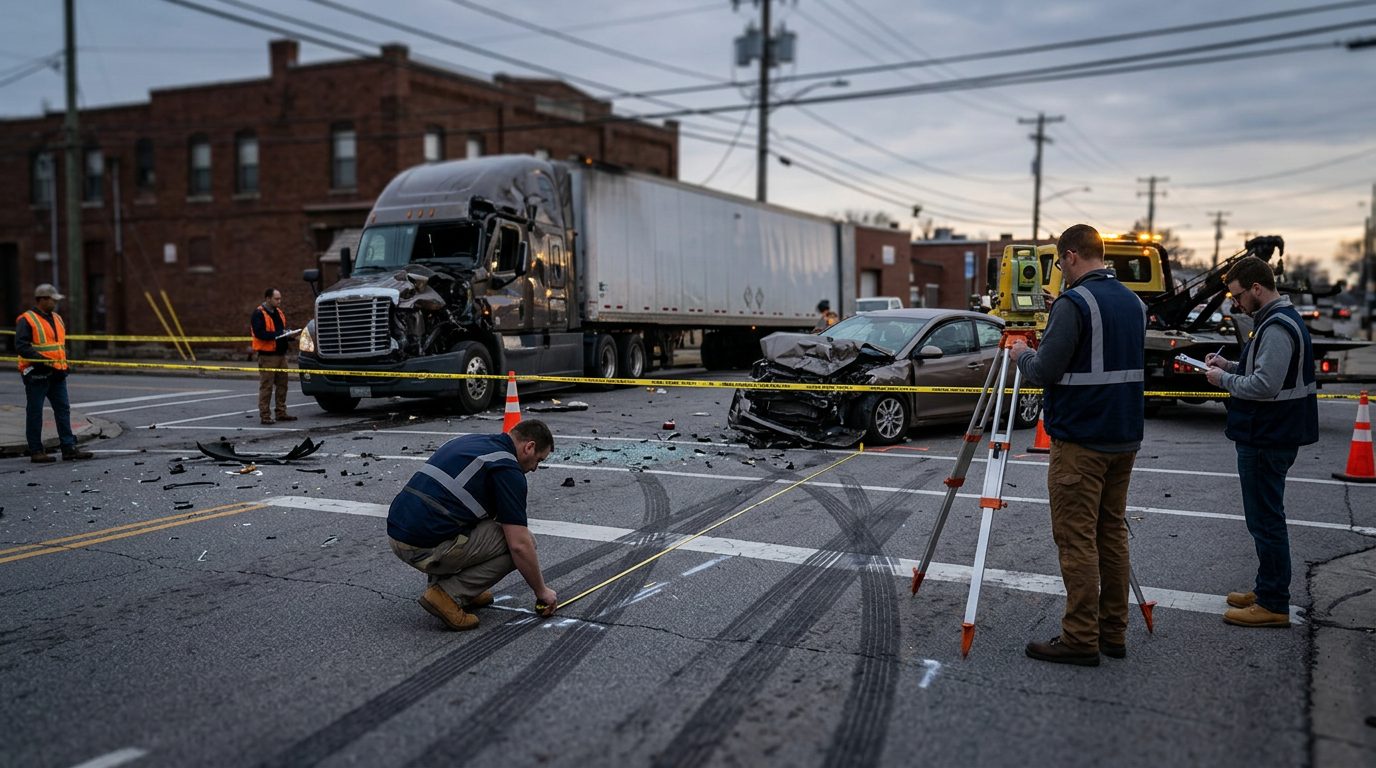
18-Wheeler & Truck Accidents
When a Truck Crash Changes Everything
If you or a loved one suffered a catastrophic injury—spinal cord damage, paralysis, traumatic brain injury, amputation, or severe burns—in a collision with a commercial truck, we investigate every angle of liability and fight for the compensation you need to rebuild.
By CHG Lawyers · Published August 25, 2026
18-Wheeler Accident Lawyer for Catastrophic Injury Claims
An 18-wheeler weighs up to 80,000 pounds. When one hits a passenger vehicle at highway speed, the force is catastrophic. If you or a loved one suffered a permanent, life-altering injury—spinal cord damage, paralysis, brain injury, amputation, severe burns, or death—in a crash with a truck, you likely have a legal claim. This guide explains how catastrophic injury claims work after an 18-wheeler accident, what damages you can recover, the legal timeline, and what to do right now to protect your rights.

Not sure what your next step is?
Talk it through with our team — the first consultation is free, confidential, and carries no obligation.
What Qualifies as a Catastrophic 18-Wheeler Injury?
A catastrophic injury from a truck crash permanently changes your ability to work, move, think, or live independently. These are not minor injuries. They include:
- Spinal cord injury and paralysis: permanent loss of feeling or movement below the injury site—paraplegia (lower body) or quadriplegia (all four limbs)
- Traumatic brain injury (TBI): permanent damage affecting memory, attention, decision-making, speech, or movement
- Amputation and limb loss: permanent loss of a limb, hand, foot, or fingers
- Severe burns: large burns (typically over 20% of body surface) causing permanent scarring, disfigurement, or loss of function
- Catastrophic back or neck injury: permanent pain, nerve damage, loss of movement, or bowel/bladder problems
- Wrongful death: fatal injury caused by truck driver or company negligence, leaving surviving family without income and companionship
An 18-wheeler and a passenger vehicle create vastly different collision forces than typical car accidents. When catastrophic injury occurs, recovery takes longer, medical costs are higher, and the impact on your life is permanent.
Can You Sue After an 18-Wheeler Hits You?
Yes. You have the legal right to pursue a claim against the truck driver, the trucking company, or both. Often multiple parties share responsibility.
The legal basis is negligence: A party is liable if they owed you a duty of reasonable care, broke that duty, and that breach caused your injury.
Examples of truck-driver negligence include:
- Speeding or aggressive driving
- Driving while fatigued (violating federal hours-of-service limits)
- Distracted driving
- Driving under the influence
- Improper lane changes or failure to maintain safe distance
Trucking company liability may arise from:
- Hiring or keeping drivers with poor safety records
- Inadequate training or safety rules
- Failure to maintain the truck (brakes, tires, lights, coupling devices)
- Improper or overweight cargo loading
- Unsafe scheduling that pressures drivers to exceed safe hours
- Failure to monitor driver behavior or enforce safety rules
Other potentially liable parties include:
- The truck owner (if different from the driver)
- A maintenance or repair contractor
- The cargo shipper or loader
- A truck or equipment manufacturer (if a defect caused the crash)
Criminal vs. civil liability: Even if the driver was cited, convicted, or acquitted in criminal court, a separate civil claim exists. Criminal prosecution requires proof “beyond a reasonable doubt.” A civil claim requires proof by a “preponderance of the evidence”—a lower legal standard. You can pursue a civil claim regardless of criminal outcomes.
What Does a Catastrophic Injury Claim Cover?
A catastrophic injury claim seeks to recover all economic and non-economic losses caused by the accident.
Medical expenses:
- Emergency care, surgery, and hospitalization
- Acute rehabilitation and ongoing physical or occupational therapy
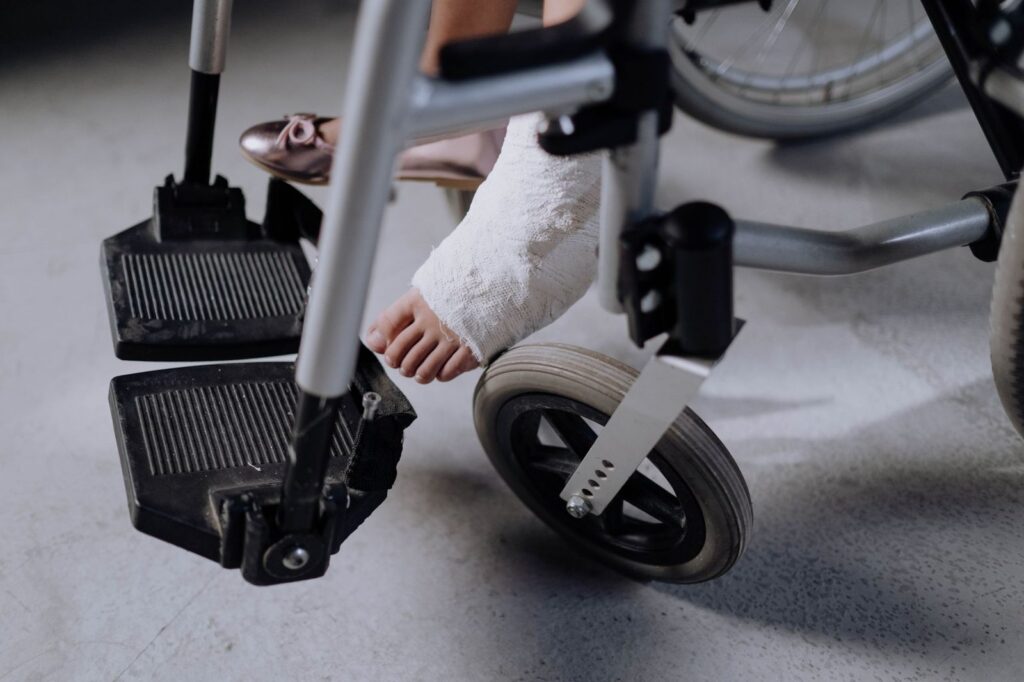
- Adaptive equipment (wheelchairs, braces, prosthetics, orthotic devices)
- Home modifications (wheelchair ramps, accessible bathrooms, medical-grade beds, ceiling lifts)
- Attendant care and nursing services
- Future medical treatment for life (often the largest part of damages)
Lost income and earning capacity:
- Wages lost during recovery and inability to work
- Lost future earning capacity if injury prevents employment or limits career options
- Vocational rehabilitation and retraining costs
Pain, suffering, and loss of quality of life:
- Compensation for physical pain and emotional trauma
- Loss of independence, movement, and bodily function
- Loss of enjoyment of life, hobbies, and relationships
- Permanent disability and psychological impact (depression, anxiety, PTSD)
Wrongful death damages (if applicable):
- Funeral and burial costs
- Loss of financial support to surviving spouse, children, or dependents
- Loss of companionship and parental guidance
- In cases of gross negligence or intentional misconduct, punitive damages may be available
Other recoverable costs:
- Transportation and mobility services
- Home care and personal assistance
- Counseling and mental-health treatment
- Assistive technology and devices
- Modifications to vehicles or workspaces
Damages are calculated based on injury severity, your age, pre-injury earning potential, medical prognosis, and long-term life impact. The goal is to recover what you’ve lost and what you’ll need to rebuild your life.
How Much Money Do You Get From an 18-Wheeler Settlement?
There is no fixed amount. Every case is unique, and settlement amounts vary widely.
This firm does not guarantee or predict a specific outcome or settlement amount. Competitors often publish vague “average settlement” figures—these are misleading because they ignore vast differences between cases.
Factors that drive settlement value include:
- Severity of injury: Permanent quadriplegia is worth more than temporary paralysis; a fatal injury is the most catastrophic outcome
- Age of the injured person: A 30-year-old with 35+ years of lost earning potential and care needs recovers more than a 70-year-old
- Pre-injury income and career trajectory: A surgeon earning $300,000 annually has greater lost earning capacity than a retail worker earning $35,000
- Medical prognosis and lifetime care costs: The future attendant care, adaptive equipment, and medical treatment that a severe injury may require over a person’s lifetime
- Quality and strength of evidence: Clear liability (truck driver at fault, strong witness testimony, electronic data) supports higher settlement value; disputed liability reduces it
- Insurance policy limits: The amount of liability insurance a commercial truck carries can limit how much compensation is available from that policy. If damages exceed policy limits, recovery may be capped
- Jurisdiction and local factors: Juries in some jurisdictions award higher damages for pain and suffering; others are more conservative
What builds trust in settlement discussions: Transparent acknowledgment that damages cannot be predicted, combined with detailed explanation of the factors that will drive value in your case. The goal is fair compensation for actual harm and losses—making you whole to the extent the law allows.
Have questions about what happened?
Ask our team directly. The first conversation is free, confidential, and there is no obligation to continue.
How Long Do 18-Wheeler Accident Claims Take?
Timeline varies widely. Simple cases may settle in 6–12 months. Complex catastrophic cases often take 1–3 years or longer.
The typical process unfolds in phases:
-
Investigation and evidence gathering (weeks to months): Police reports are obtained. Electronic logging device (ELD) data and driver logs are requested from the trucking company. Truck maintenance and inspection records are preserved. Witness statements are collected. Scene and vehicle photographs are documented. Accident reconstruction analysis is performed.
-
Demand letter and negotiation (weeks to months): A detailed demand letter is prepared, supported by medical records, expert reports, and calculations of lifetime costs. The demand is presented to the insurance company, and settlement discussions begin.
-
Litigation (months to years, if settlement fails): A lawsuit is filed in court. Discovery occurs—both sides exchange documents and witness testimony. Expert reports are finalized. Depositions are taken.
-
Trial (additional months, if settlement is not reached): The case proceeds to trial before a judge or jury.
Factors affecting timeline:
- Injury severity and complexity
- Number of parties and insurance companies involved
- Insurance company cooperation or resistance
- Court schedules and backlogs
- Expert testimony needs (accident reconstruction, medical specialists, vocational rehabilitation, economics)
Why rushing to settle is dangerous in catastrophic cases: Early settlement offers are often low because long-term costs are difficult to predict. Spinal cord injury, brain injury, and amputation cases require years of medical data to establish true lifetime needs. Settling too quickly locks you into inadequate compensation.
Immediate Action: What to Do Right Now
Evidence degrades quickly. The first hours and days after a crash are critical.
Seek immediate medical attention if you have not already. Your health is the priority, and comprehensive medical documentation is the foundation of your claim.
Preserve evidence at the scene:
- Take photographs of vehicle damage, crash scene, road conditions, and traffic signals
- Photograph your injuries
- Collect names, phone numbers, and addresses of all witnesses
- Note the truck’s license plate, company name, and any visible identifying information
- Request the police report number
Preserve ongoing evidence:
- Keep all medical records, test results, imaging (CT, MRI), and treatment notes
- Save all medical bills and receipts
- Document all lost wages with pay stubs and employer statements
- Photograph home modifications, adaptive equipment, and assistive devices
- Keep a journal of pain, limitations, and daily struggles
Do not:
- Sign anything or communicate with the other party’s insurance company without legal counsel
- Post about the accident or your injuries on social media—anything you post can be used against you in settlement negotiations or trial
- Accept an early settlement offer without understanding its full implications
Contact this firm for a free case evaluation immediately. The sooner you reach out, the sooner we can begin investigating, preserving evidence, and protecting your rights.
Florida Law and Your Deadline
Statute of limitations: Florida law sets a 2-year deadline to file a personal-injury lawsuit. This clock starts on the date of the accident. If you do not file a lawsuit within 2 years, your claim is generally barred, though Florida law provides some exceptions, such as certain periods of minority or incapacity.
Comparative fault: Florida allows recovery even if you were partially at fault, as long as you were not found greater than 50% at fault for your own harm. Your recovery is reduced by your percentage of fault. For example, if you are found 20% at fault and damages are $1 million, you recover $800,000.
Why This Firm
- Serving Florida: Handles cases throughout Florida, including cases involving out-of-state trucking companies
- Exclusive focus on catastrophic, life-altering injuries—not minor claims or routine accidents
- Resources to investigate thoroughly: Outside experts, such as accident reconstructionists, medical specialists, and vocational experts, to help investigate a case
- Bilingual services: English and Spanish support for clients and families
- No upfront attorney’s fee: This firm works on contingency. You pay no attorney’s fee unless and until a settlement or judgment is recovered
- Transparent process: Clear explanation of what to expect, what factors drive case value, and next steps
Want to know where you stand?
Tell us what happened and our team will walk you through the options available to you, at no cost.
Common Questions
Q: What if the truck driver was not directly at fault?
A: Liability may rest with the trucking company (negligent hiring, inadequate training, poor maintenance, unsafe scheduling) or a third party (manufacturer, shipper, maintenance contractor). We investigate all potential sources of liability.
Q: Do I have to go to trial?
A: No. Most cases settle before trial. If a fair settlement is not offered, this firm will take your case to court.
Q: Will my case go public?
A: Settlement negotiations are typically confidential. If the case goes to trial, court proceedings are public record.
Q: What if the trucking company’s insurance is insufficient?
A: We explore all available sources of recovery, including the truck owner’s insurance, cargo insurance, umbrella policies, and other coverage.
Contact this firm for a free case evaluation.
People facing permanent disability, paralysis, brain injury, amputation, or loss from truck crashes can contact us. We are here to help.
Learn more about catastrophic injury claims, spinal cord injury claims, traumatic brain injury cases, amputation injury claims, and wrongful death claims.
Get a free case evaluation today.
Why Our Approach Matters in Truck Accident Claims
We Investigate Beyond the Driver
Liability in catastrophic truck crashes often extends to the trucking company—negligent hiring, inadequate driver training, poor vehicle maintenance, unsafe scheduling, or failure to comply with federal safety regulations. We pursue all responsible parties.
We Know the Federal Rules
Commercial trucks are subject to strict federal regulations (FMCSA standards, hours-of-service rules, maintenance requirements). We use these rules to build your case and hold companies accountable.
We Understand Catastrophic Injury
Spinal cord injuries, paralysis, traumatic brain injury, amputations, and severe burns demand lifetime medical care, adaptive equipment, and lost earning capacity. We calculate damages that reflect the full scope of your needs.
We Work on Your Timeline
No attorney’s fees unless there is a recovery. We handle the investigation, negotiation, and litigation so you can focus on healing and your family.
Common Truck Accident Scenarios We Handle
Jackknife & Rollover Collisions
High-speed jackknife and rollover crashes often result in catastrophic injuries to occupants of smaller vehicles. Poor maintenance, driver error, or unsafe road conditions are frequent causes.
Underride & Override Crashes
When a passenger vehicle slides under or is crushed by a truck's trailer or cab, the injuries are often severe—spinal cord damage, traumatic brain injury, amputation, or fatal outcomes. Inadequate lighting, reflectors, or guardrails may be factors.
Blind-Spot & Lane-Change Collisions
Trucks have large blind spots. A driver's failure to check mirrors or signal before changing lanes can cause a side-impact or sideswipe that leaves you with life-altering injuries.
Brake Failure & Loss of Control
Defective brakes, poor maintenance, or overloaded cargo can cause a truck to lose control on a highway or downhill grade, resulting in catastrophic multi-vehicle collisions.
Act Quickly—Evidence Fades
Commercial trucks carry data recorders (black boxes), GPS logs, and maintenance records. These critical pieces of evidence can be lost or destroyed if not preserved immediately. The sooner we begin our investigation, the stronger your case.
Questions About Your Truck Accident Claim
What if the truck driver was not directly at fault?
Liability may rest with the trucking company—negligent hiring, inadequate training, poor maintenance, unsafe scheduling, or violations of federal safety rules—or a third party such as a manufacturer, shipper, or maintenance contractor. We investigate all potential sources of liability.
Do I have to go to trial?
No. Most cases settle before trial. We pursue aggressive negotiation and are prepared to litigate if necessary to achieve fair compensation for your injuries.
How much is my case worth?
Catastrophic injury claims depend on the severity of your injuries, lifetime medical costs, lost earning capacity, pain and suffering, and other factors. We conduct a thorough evaluation and explain the value of your claim.
How long does a truck accident case take?
Timeline varies based on the complexity of liability, the extent of your injuries, and whether the case settles or goes to trial. We keep you informed at every stage.