

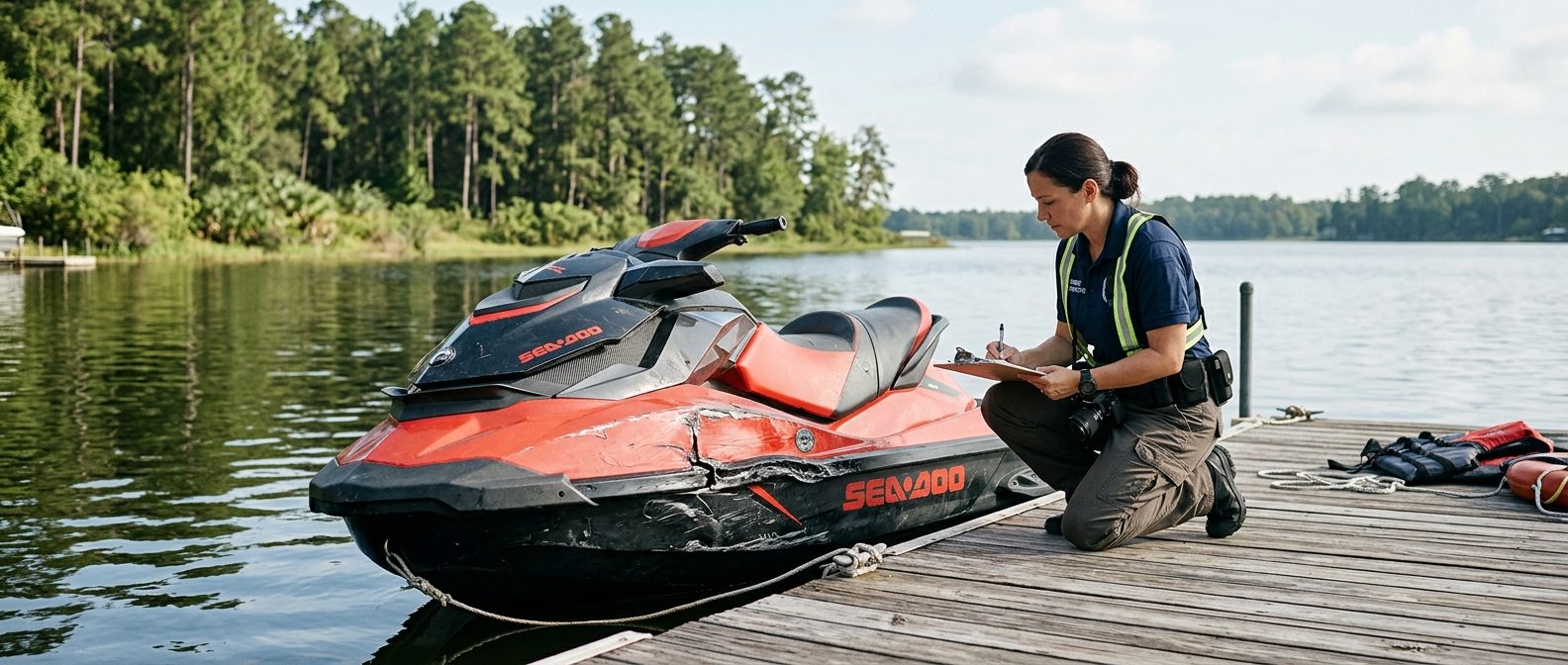
Jet Ski & Water Sports Accidents
Injured in a Jet Ski Accident While Visiting Florida?
Visitors have the same right to pursue compensation as residents. Learn what you need to know about your claim.
By CHG Lawyers · Published September 28, 2026
Tourist Jet Ski Accident in Florida: Legal Rights & Compensation
Jet ski accidents injure thousands of Florida visitors every year. If another watercraft hit you, a propeller caused severe cuts or amputation, or a rental company’s carelessness harmed you, you have legal rights. Florida law protects out-of-state visitors the same way it protects residents. This guide explains what causes these accidents, what serious injuries result, who is legally responsible, and what to do next.
If you were injured in a jet ski accident in Florida, you may have a legal claim against the rental company, another operator, or a property owner. Talk it through with our team — the first consultation is free, confidential, and carries no obligation.
Jet Ski Accidents: Injury and Fatality Data
Florida’s warm waters attract millions of visitors to recreational boating. According to the U.S. Coast Guard’s 2023 recreational boating statistics, Florida reported 738 recreational boating accidents, 133 deaths, and 658 injuries—the highest total of any state. The Florida Fish and Wildlife Conservation Commission tracks these incidents. Personal watercraft (jet skis) cause a larger share of serious injuries and deaths than their numbers in the boating fleet would suggest.
Many jet ski accidents involving tourists go unreported unless serious injury or death occurs. Official numbers likely undercount actual accidents. Being injured while on vacation far from home is traumatic. You’re managing medical care in an unfamiliar state, dealing with insurance companies, and unsure whether you can sue. The truth: your visitor status does not reduce your legal rights. Florida courts treat out-of-state injured people the same as residents.
Common Causes: Why Tourist Jet Ski Accidents Happen
Operator inexperience is the leading cause. Renters unfamiliar with jet ski throttle response, steering, or local water hazards frequently lose control—especially in shallow areas, busy channels, or near docks and seawalls.
High-speed collisions with other watercraft happen regularly. Reckless boat or jet ski operators speed, operate under the influence, or ignore no-wake zones. They strike rental operators with no warning or escape route.
Rental company negligence is a major factor. Companies that skip safety briefings, fail to inspect equipment, rent to intoxicated customers, or don’t enforce life-jacket use create foreseeable dangers. Defective steering systems, fuel-line leaks, and engine failures from poor maintenance are common in serious cases.
Hazardous water conditions include submerged debris, strong currents, shallow sandbars, and poor visibility. Tourists don’t know to avoid these conditions, so accident risk rises substantially.
Propeller and crushing injuries occur when bodies contact spinning propellers or get trapped between jet skis and fixed structures like docks or seawalls.
Catastrophic Injuries: The Real Impact of Jet Ski Accidents
Jet ski accidents cause some of the most severe injuries in recreational boating. High-speed impact, propeller contact, and drowning risk create permanent, life-altering harm.
Spinal cord injuries and paralysis happen when collision trauma damages the spine. High-speed impact can cause partial or complete paralysis. Paraplegia means loss of function below the waist; quadriplegia means loss of all four limbs. These injuries require emergency surgery, intensive rehabilitation, and lifelong medical care. Many survivors face permanent wheelchair dependence, loss of employment, and costs exceeding $1 million over a lifetime.
Traumatic brain injury (TBI) results from the head striking the jet ski, water, or other objects. Concussions, subdural hematoma (internal bleeding), and permanent brain damage follow. TBI survivors often experience memory loss, personality changes, reduced work capacity, and ongoing seizure risk. Moderate to severe TBI can permanently alter thinking, judgment, and social functioning.
Propeller lacerations and crush injuries cause deep tissue damage requiring multiple surgeries and skin grafts. Propeller contact can sever fingers, hands, or limbs, resulting in permanent amputation and phantom pain.
Drowning and near-drowning cause hypoxic brain damage (damage from lack of oxygen). Oxygen deprivation to the brain results in permanent neurological injury or death. Survivors often face cognitive impairment, seizure disorders, and loss of independence.
Severe thermal burns from fuel ignition or contact with hot engine parts require skin grafts and prolonged wound care. Full-thickness burns often cause permanent scarring, contracture, and loss of function.
Amputation from propeller or crushing forces results in permanent disability, phantom pain, prosthetic dependence, and loss of independence. Returning to work or prior activities requires extensive rehabilitation and adaptive equipment.
These injuries typically require emergency surgery, ICU admission, prolonged hospitalization, and months to years of rehabilitation. Many cause permanent impairment and lifelong medical costs.
Liability: Who Is Legally Responsible
Identifying who is liable is essential to your claim.
Jet ski rental companies are liable if they: – Failed to provide adequate safety instruction or life-jacket enforcement – Rented defective equipment without inspection – Rented to intoxicated or incompetent operators – Failed to enforce speed limits or safe-operation rules
Rental companies must inspect their fleet regularly, warn renters of known hazards, and ensure customers are sober and capable.
Other watercraft operators are liable if their reckless or negligent operation caused the collision—speeding, operating under the influence, or failing to watch for other boats.
Property owners (marinas, resorts, beachfront hotels) can be liable if unsafe conditions or inadequate hazard warnings contributed to the accident. Failure to mark submerged hazards or provide adequate supervision creates liability. Learn more about premises liability claims in Florida.
Manufacturers are liable if a defect in the jet ski—steering failure, fuel-system defect, or engine malfunction—caused the accident.
Under Florida Statute §768.81, Florida uses modified comparative negligence. If you are found more than 50% at fault, you recover nothing. If you are 50% or less at fault, you recover damages reduced by your percentage of fault. Your visitor status does not affect this calculation. For more details, see our guide to negligence and liability explained.
Statute of Limitations: Your Deadline to File
Under Florida Statute §95.11, you have two years from the date of injury to file a personal injury lawsuit. This deadline is strict; missing it bars your claim permanently. Out-of-state visitors have the same two-year window as Florida residents. Do not delay—early legal consultation preserves evidence and prevents costly procedural mistakes. Read our Florida statute of limitations guide for more information.
Not sure what your next step is?
Talk it through with our team — the first consultation is free, confidential, and carries no obligation.
Immediate Steps After a Jet Ski Accident
Seek emergency care first. Call 911 if anyone is injured. Do not refuse treatment or downplay injuries—spinal damage, internal bleeding, and brain injury are not always immediately obvious.
Report to authorities. Contact the Florida Fish and Wildlife Conservation Commission or local law enforcement. Request a copy of the official incident report.
Document the scene. Photograph the jet ski, accident location, water conditions, visible injuries, and any hazard warnings (or lack thereof). Photograph the rental agreement and any safety briefing materials provided.
Collect information. Record names, phone numbers, and insurance details from other operators, witnesses, and the rental company. Write down what happened while memory is fresh.
Preserve all evidence. Keep the rental agreement, safety briefing materials, incident reports, medical records, receipts for expenses, and photographs. See our guide on how to document accident evidence for detailed steps.
Do not sign settlement offers or liability waivers from the rental company without legal review. Rental companies often try to limit liability through waivers or undervalued settlement offers.
Damages and Compensation
Medical expenses include emergency care, surgery, hospitalization, rehabilitation, ongoing treatment, adaptive equipment (wheelchairs, prosthetics, home modifications), and future medical care. Catastrophic cases often involve lifetime medical costs exceeding hundreds of thousands of dollars.
Lost wages cover income lost during recovery and reduced earning capacity if permanent disability prevents return to prior work. Compensation reflects the gap between pre-injury and post-injury earning potential.
Pain and suffering compensates for physical pain, emotional trauma, loss of life enjoyment, and psychological injury. Catastrophic injuries typically generate substantial pain-and-suffering awards.
Permanent disability damages apply when the injury causes paralysis, amputation, or other life-altering impairment. Severity and permanence directly correlate to award amount.
Home and vehicle modifications cover costs to adapt living spaces and transportation—ramps, accessible bathrooms, hand-controls for vehicles, specialized equipment.
Wrongful death damages apply if a family member was killed. Surviving family members may recover funeral expenses, loss of companionship, and loss of financial support.
Claim value depends on injury severity, long-term prognosis, liability evidence strength, and defendant insurance coverage.
Insurance Coverage and Out-of-State Claims
Jet ski rental companies typically carry liability insurance with limits of $100,000 to $300,000—often insufficient for catastrophic injuries. Additional recovery may require pursuing the defendant’s personal assets or your own underinsured-motorist coverage.
Your health insurance or travel insurance may cover some medical costs but will not cover pain and suffering or lost income. Homeowner’s or renter’s insurance may provide supplemental coverage.
Florida law permits injured parties to pursue claims against the at-fault party’s insurance. If settlement negotiations fail, you can file a lawsuit in Florida courts. Out-of-state visitors have identical legal standing to Florida residents.
Why Legal Representation Matters
Navigating a claim from out of state is complex. You may be unfamiliar with Florida law, local court procedures, or fair claim valuation. Rental companies and their insurers employ legal teams; you need representation to protect your rights.
An attorney investigates the accident, identifies all liable parties, and builds a strong case for maximum compensation. In catastrophic injury cases, professional valuation prevents undercompensation by early settlement offers. Many injured tourists don’t realize they have a legal claim or how to pursue it. Early legal guidance preserves evidence, prevents costly mistakes, and maximizes recovery.
Most catastrophic-injury attorneys work on contingency: you pay no upfront fee, and attorney fees come from your settlement or verdict. You only pay if you win.
Have questions about what happened?
Ask our team directly. The first conversation is free, confidential, and there is no obligation to continue.
Frequently Asked Questions
Can I pursue a claim if I signed a liability waiver?
Liability waivers have limits under Florida law. Courts often refuse to enforce waivers that shield companies from their own negligence or gross negligence. An attorney can evaluate enforceability.
How long does a jet ski accident claim take?
Simple claims may settle in months; catastrophic cases often take 1–3 years. Timelines depend on injury severity, liability clarity, and insurance-company cooperation.
What if the rental company is out of business?
You may pursue claims against the company’s insurance, the property owner (if the company operated on their property), or other liable parties. An attorney identifies all potential defendants.
Can I recover if I was partially at fault?
Yes, under Florida’s comparative-negligence rule. If you are 50% or less at fault, you recover damages reduced by your percentage of fault (Fla. Stat. § 768.81(6)).
If you were injured in a jet ski accident in Florida, you may have a legal claim against the rental company, another operator, or a property owner. Contact CHG Personal Injury Lawyers for a free case evaluation. We help injured tourists understand their legal options and next steps.
What Visitors Should Know After a Jet Ski Accident
Your Location Doesn't Limit Your Claim
Whether you live in Florida or were visiting, you can pursue a claim for injuries caused by someone else's negligence. Florida courts recognize claims brought by out-of-state visitors injured on Florida waters.
Liability Waivers May Not Protect Operators
Many rental companies ask you to sign liability waivers. Under Florida law, courts often refuse to enforce waivers that shield companies from their own negligence or gross negligence. An attorney can evaluate whether a waiver applies to your situation.
Multiple Parties May Be Liable
Responsibility can rest with the jet ski operator, the rental company, the property owner, or a combination. Determining who is liable requires a thorough investigation of how the accident happened.
Evidence Disappears Quickly
Witness contact information, rental records, maintenance logs, and video footage can vanish within days. Acting quickly to preserve evidence strengthens your claim significantly.
Why You Need an Attorney for a Jet Ski Injury
Protection Against Insurance Tactics
Rental companies and their insurers often minimize claims or deny responsibility. An attorney handles negotiations so you aren't pressured into accepting less than your claim is worth.
Thorough Investigation & Evidence Gathering
We identify all liable parties, secure witness statements, obtain maintenance records, and preserve video evidence before it's lost or destroyed.
Understanding Florida's Timeline Rules
Florida law sets deadlines for filing claims. We ensure your case meets all procedural requirements so you don't lose your right to compensation.
Clear Communication in Your Language
We provide bilingual support and explain your options in plain language so you understand every step of the process.
Act Quickly After Your Accident
Witnesses scatter, memories fade, and evidence disappears. The sooner you contact an attorney, the stronger your position. Don't wait to see if the rental company or operator contacts you—they won't.
Common Questions About Jet Ski Accident Claims
Can I pursue a claim if I signed a liability waiver?
Liability waivers have limits under Florida law. Courts often refuse to enforce waivers that shield companies from their own negligence or gross negligence. An attorney can evaluate whether the waiver applies to your accident.
How long does a jet ski accident claim take?
Simple claims may settle in months; catastrophic cases involving serious injury often take longer. The timeline depends on the severity of your injuries, the clarity of liability, and whether the case goes to trial.
What damages can I recover?
You may recover medical expenses, lost income, pain and suffering, and other losses caused by the accident. If your injuries are catastrophic or permanent, damages can be substantial.
Do I need to be a Florida resident to file a claim?
No. Visitors injured on Florida waters have the same right to pursue claims as residents. Your home state doesn't affect your ability to recover compensation in Florida.