

Jet Ski & Water Sports Injuries
Internal Injuries After a Jet Ski Accident: What You Need to Know
Blunt-force trauma from jet ski collisions can cause life-altering internal bleeding and organ damage. If you or a loved one was hurt, get medical help immediately and contact us for a free case evaluation.
By CHG Lawyers · Published August 27, 2026
Jet Ski Internal Injuries: Catastrophic Orifice & Blunt Trauma
Jet ski accidents produce some of the most severe, life-altering injuries—orifice trauma, internal bleeding, organ damage, and blunt-force injuries to the abdomen and pelvis. These injuries often go unrecognized in the immediate aftermath because they leave no visible marks on the skin. A rider may feel “okay” in the first hours, only to develop shock, severe pain, or bleeding days later. By then, preventable complications—infection, sepsis, organ failure—may already be setting in.
If you or a loved one has suffered such an injury, knowing what to do immediately, why medical professionals sometimes miss these injuries, and what legal recourse exists can mean the difference between recovery and permanent disability.

If your injury resulted from someone else's negligence or wrongdoing, you may have a legal claim for damages. Talk it through with our team — the first consultation is free, confidential, and carries no obligation.
Why Jet Ski Falls Cause Orifice and Internal Injuries
Jet skis routinely reach speeds of 40–60 mph or faster. When a rider falls from the craft or is struck by it or its jet stream, the body absorbs extreme force concentrated on small areas—force comparable to a high-speed motor vehicle collision.
The mechanics of the injury:
When blunt force or penetrating trauma is directed at the genital, rectal, or perineal region (the area between the genitals and anus), the sphincter muscles, rectum, vaginal canal, and surrounding tissue can tear, perforate, or bleed internally. Unlike fractures or head injuries, these injuries often leave no obvious external marks. Emergency responders and even the injured person may not realize the severity of what has occurred.
Symptoms can develop or worsen hours or days after the accident. Internal bleeding may not be apparent until shock, dizziness, or severe abdominal pain sets in—a delay that makes these injuries particularly dangerous and why immediate, thorough medical evaluation is critical.
Types of Internal and Orifice Injuries From Jet Ski Accidents
Vaginal and Perineal Injuries
Severe lacerations, tears, and penetrating trauma to the vagina, perineum, and surrounding tissue. These injuries often require emergency surgical repair and can result in permanent scarring, loss of sexual function, and chronic pain.
Rectal and Anorectal Injuries
Perforation of the rectum, bleeding into the bowel, and damage to the sphincter muscles that control bowel function. Research published in Diseases of the Colon & Rectum (National Institutes of Health) documents severe anorectal injuries from high-speed blunt trauma, including cases requiring colostomy (a surgical opening for bowel elimination) and multiple reconstructive surgeries over months or years.
Abdominal and Pelvic Injuries
Internal bleeding, organ damage (liver, spleen, kidneys, bladder), and trauma to the bowel and reproductive organs. These injuries are life-threatening and require immediate imaging and surgical intervention.
Blunt-Force Trauma to the Torso
Rib fractures, lung injury, liver laceration, and internal bleeding that can cause shock and death if not treated emergently.
Medical Complications and Long-Term Effects
The immediate aftermath of a catastrophic jet ski internal injury is a medical emergency. Survivors typically require emergency surgery to stop bleeding, repair tears, remove damaged tissue, and prevent infection.
The injury doesn’t end in the operating room. Long-term complications are common and severe:
- Permanent scarring and loss of function: Survivors often experience chronic pain, reduced mobility, and permanent changes to bowel and bladder control.
- Sexual dysfunction and infertility: Damage to the reproductive organs and surrounding tissue can impair sexual function and fertility.
- Bowel and bladder dysfunction: Loss of sphincter control may require ongoing medical management, medication, or surgical intervention such as a colostomy or ileal conduit.
- Psychological trauma and PTSD: The shock and trauma of the accident, combined with the intimate nature of the injury, often leads to depression, anxiety, and post-traumatic stress disorder.
- Infection and sepsis: If the injury is not treated promptly or if surgery is incomplete, bacteria can enter the bloodstream, causing life-threatening sepsis.
- Multiple surgeries and reconstructive procedures: Survivors may undergo 5, 10, or more surgeries over months or years to repair damage, manage complications, and restore function.
These injuries reshape a person’s life—their body, their relationships, their work, and their sense of self.
If you or someone you care for suffered a severe internal injury in a jet ski accident, you may have a claim against the operator or rental company. Talk it through with our team — the first consultation is free, confidential, and carries no obligation.
Why These Injuries Are Often Missed or Delayed
One of the most troubling aspects of jet ski internal injuries is how often they go undiagnosed or are diagnosed too late.
Embarrassment and shame: Riders may not report symptoms immediately because the injury involves intimate body areas. They may be too shocked or humiliated to speak up, especially if witnesses are present.
Emergency responders focus on visible injuries: When paramedics arrive at the scene, they prioritize obvious trauma—head injury, broken bones, chest injury. Internal bleeding and orifice trauma leave no visible signs, so they may be overlooked entirely.
Delayed symptom onset: A rider may feel “okay” immediately after the accident, only to develop severe pain, bleeding, or other symptoms hours later. By then, they may not connect the symptoms to the jet ski accident.
Medical professionals unfamiliar with the injury pattern: Many emergency departments and surgeons don’t regularly see jet ski internal injuries. They may not suspect orifice or deep internal trauma, especially if the patient is reluctant to describe what happened.
Victim delay in seeking care: Some injured people wait to seek medical attention, hoping symptoms will resolve on their own. This delay can allow preventable complications—infection, sepsis, organ failure—to develop.
What to Do Immediately After a Jet Ski Internal Injury
If you’ve been injured in a jet ski accident, follow these steps:
-
Seek emergency medical care immediately, even if you feel “okay” or are embarrassed about the injury. Tell the emergency room staff exactly how the injury occurred and what you felt at the time of impact.
-
Request imaging studies (CT scan, ultrasound, MRI) to rule out internal bleeding, organ damage, and other hidden injuries. Don’t assume that because you “look fine” on the outside, you’re fine on the inside.
-
Be honest with medical providers about the location of pain or discomfort, even if it’s in an intimate area. Doctors need this information to diagnose and treat you properly.
-
Follow all medical advice and attend follow-up appointments. Complications can emerge weeks or months after the initial injury. Regular follow-up care is essential.
-
Document everything: Keep copies of emergency room records, imaging reports, surgical reports, pathology reports, and all follow-up medical visits. These records are crucial for both your recovery and any legal claim.
-
Report the accident to the jet ski operator, rental company, or property owner, and request a written incident report. Get the names and contact information of all witnesses.
-
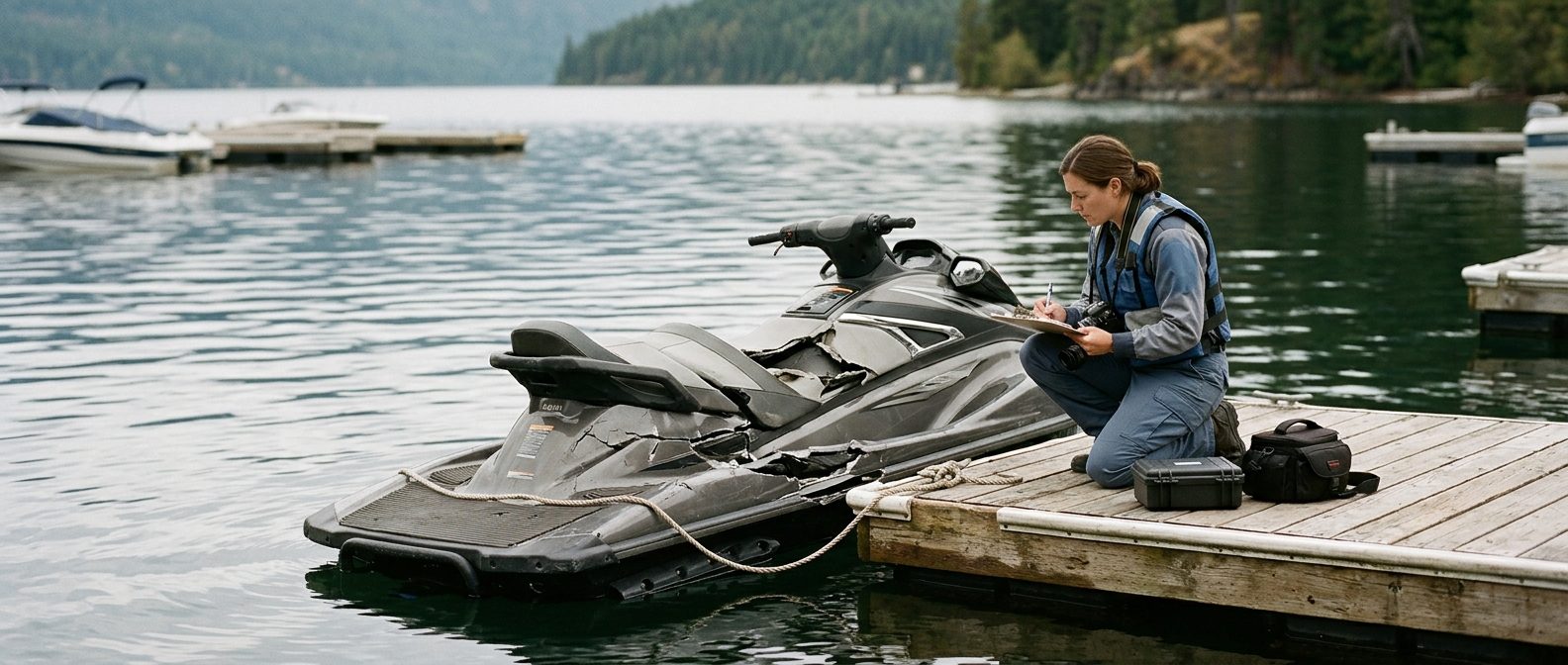
Photograph the scene, the jet ski, and any visible injuries (if it’s safe and appropriate to do so). Preserve evidence of the accident and the equipment involved.
-
Gather witness contact information from anyone who saw the accident or the immediate aftermath.
Legal Rights After a Catastrophic Jet Ski Injury
If your injury resulted from someone else’s negligence or wrongdoing, you may have a legal claim for damages.
Jet ski operators and rental companies have a duty to maintain their equipment in safe working order, provide proper safety instruction to renters, and warn of known risks and injury patterns. If they fail in these duties and someone is injured, they can be held liable.
Property owners can be held responsible if they allow unsafe jet ski operations on their property or fail to warn of known hazards.
Manufacturers can be liable if the jet ski was defectively designed or manufactured, or if warnings were inadequate.
Catastrophic internal injuries often result in substantial damages, including: – Emergency and ongoing medical bills – Surgical and reconstructive procedures – Lost income and reduced earning capacity – Pain and suffering – Loss of enjoyment of life – Permanent impairment and disability
Under Florida’s comparative fault statute (Fla. Stat. § 768.81), you can recover damages even if you were partially at fault for the accident, as long as you were not more than 50% responsible. The amount you recover is reduced by your percentage of fault.
Wrongful-death claims can be brought if the injury is fatal. Family members can pursue damages on behalf of the deceased, including funeral expenses, lost income, and the loss of companionship and support.
Statute of limitations: In Florida, you generally have two years from the date of injury (Fla. Stat. § 95.11) to file a personal injury lawsuit. For wrongful-death claims, the family typically has two years. Don’t delay—evidence can disappear and witnesses’ memories fade.
How We Can Help
We focus exclusively on catastrophic injuries—spinal cord injuries, traumatic brain injuries, amputations, severe burns, and the most severe internal and orifice injuries from accidents like jet ski collisions. We understand that these injuries are life-altering, and we treat them with the seriousness they deserve.
When you come to us with a jet ski internal injury case, we:
- Investigate thoroughly to identify all responsible parties—the operator, the rental company, the equipment manufacturer, the property owner, and anyone else whose negligence contributed to your injury.
- Work with medical specialists to establish the full scope of your injury, the medical care you’ve received, and the ongoing care and support you’ll need for the rest of your life.
- Handle all legal and insurance matters so you can focus on recovery and healing without the stress of dealing with insurance companies and legal proceedings.
- Take cases nationwide, including throughout Florida and beyond. Your location doesn’t limit your right to justice.
- Manage every step of your claim—from gathering evidence and negotiating with insurers to preparing for trial if necessary.
You don’t have to face this alone. Contact us today for a free case evaluation to learn how we can help.

Not sure what your next step is?
Talk it through with our team — the first consultation is free, confidential, and carries no obligation.
Frequently Asked Questions
What should I do immediately after a jet ski accident if I think I’m injured internally?
Seek emergency medical care right away. Tell the ER staff exactly how the injury occurred, describe all pain or discomfort (even in intimate areas), and request imaging studies to rule out internal bleeding and organ damage.
Why didn’t the emergency room catch my internal injury?
Internal and orifice injuries often leave no visible external signs. If you didn’t report symptoms clearly or if the medical team wasn’t familiar with jet ski injury patterns, the injury may have been missed. This is why follow-up care and imaging are so important.
Can I sue if I was renting the jet ski?
Yes. Rental companies have a duty to maintain their equipment and warn renters of known risks. If negligence caused your injury, you likely have a claim against the rental company, the operator, or both.
How much time do I have to file a lawsuit?
In Florida, you generally have two years from the date of injury to file a personal injury lawsuit (Fla. Stat. § 95.11(5)(a)). Don’t wait—evidence can disappear and witnesses’ memories fade.
What if the injury is fatal?
Your family can bring a wrongful-death claim against the responsible parties. These claims allow recovery of funeral expenses, lost income, and the loss of companionship and support.
If you or someone you care for suffered a severe internal injury in a jet ski accident, you may have a claim against the operator or rental company. People in that situation can reach out to us to understand their rights and what comes next. Contact us today for a free case evaluation to learn how we can help.
Seek Emergency Care First
Internal injuries are not always visible. If you've been in a jet ski accident and feel pain, pressure, or discomfort anywhere in your body—especially in the abdomen, chest, or pelvis—go to an emergency room immediately. Tell the ER staff exactly how the injury happened and describe all symptoms, even if they seem minor. Request imaging (CT scan, ultrasound, or X-ray) to rule out internal bleeding and organ damage.
Common Internal Injuries from Jet Ski Accidents
Internal Bleeding
Blunt-force impact can tear blood vessels inside the abdomen, chest, or pelvis. Bleeding may not be obvious at first, but it can become life-threatening within hours.
Organ Damage
The liver, spleen, kidneys, and intestines are vulnerable to crushing injuries. Damage may require emergency surgery and can result in permanent loss of function.
Rib & Chest Injuries
Broken ribs can puncture the lungs or heart. Fluid can accumulate around the heart (hemopericardium) or lungs (hemothorax), causing breathing problems and shock.
Abdominal Trauma
Impact to the belly can rupture the bladder, bowel, or pancreas. These injuries often require surgery and can lead to infection, sepsis, and long-term complications.
Why Internal Injuries Are Often Missed
Delayed Symptoms
Internal bleeding and organ damage may not cause pain or obvious signs for hours or even days after the accident. By then, the injury may have worsened.
ER Oversight
Emergency rooms are busy. If you don't report all symptoms clearly, or if imaging is incomplete, serious internal injuries can be missed on the first visit.
Assumption of Minor Injury
If you seem stable or alert after the accident, medical staff may not order the imaging needed to detect internal bleeding or organ damage.
Follow-Up Care Gaps
If you're discharged without proper imaging or instructions to watch for warning signs, a worsening internal injury may go undiagnosed until it becomes critical.
Warning Signs of Internal Injury After a Jet Ski Accident
Abdominal or Pelvic Pain
Severe or worsening pain in the belly, sides, or lower abdomen—especially pain that feels deep inside—is a red flag for internal bleeding or organ injury.
Chest Pain or Difficulty Breathing
Sharp pain when you breathe, shortness of breath, or a feeling of pressure in the chest may indicate rib fractures, lung injury, or fluid around the heart.
Vomiting Blood or Dark Stool
These are signs of internal bleeding in the stomach or intestines. Seek emergency care immediately.
Dizziness, Fainting, or Shock
Rapid heartbeat, pale or clammy skin, confusion, or loss of consciousness are signs of severe blood loss. Call 911 at once.
Document Everything
Keep records of all medical visits, imaging reports, diagnoses, and treatment. Write down the names and contact information of witnesses. Take photos of the jet ski, the accident scene, and any visible injuries. This documentation is crucial if you pursue a claim.
How CHG Personal Injury Lawyers Can Help
Focused on Catastrophic Injury
We focus exclusively on life-altering injuries—including internal bleeding, organ damage, and other serious trauma from jet ski accidents. We understand the medical, financial, and personal impact.
Investigation & Evidence
We investigate the accident, gather medical records, and work with medical experts to establish the full extent of your injuries and the cause of the crash.
Negotiation & Litigation
We handle all communication with insurance companies and, if necessary, take your case to court to pursue fair compensation for medical care, lost income, and pain and suffering.
No Attorney’s Fees Unless There Is a Recovery
We work on a contingency basis. You pay no attorney’s fees unless there is a recovery.