

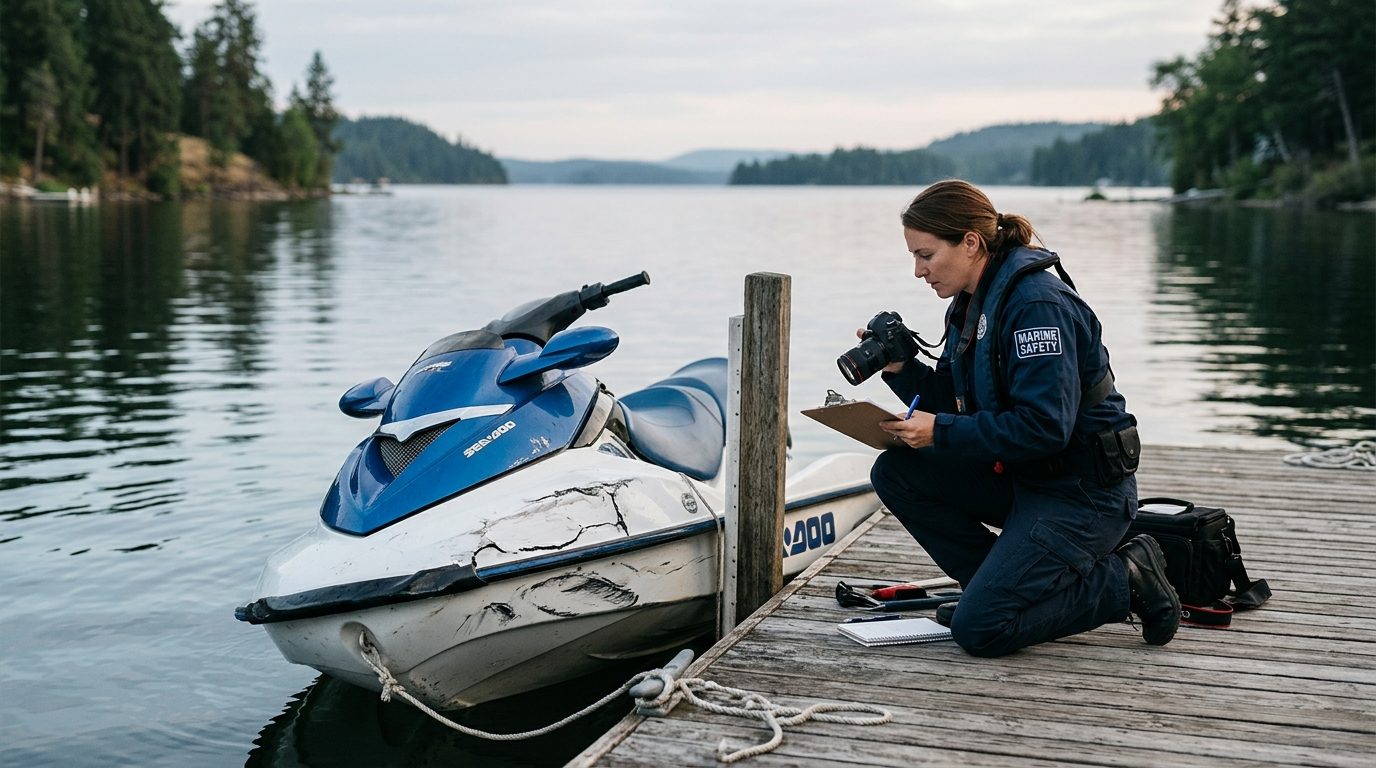
Jet Ski & Boating Accidents
Injured by a Jet Ski Operator Under the Influence?
If you or a loved one was hurt in a boating accident caused by an impaired operator, you may have a claim. We focus exclusively on catastrophic injuries and can help you understand your options.
By CHG Lawyers · Published August 30, 2026
Boating Under the Influence and Jet Ski Accidents: What You Need to Know
Boating under the influence (BUI) means operating a jet ski or motorized watercraft while impaired by alcohol or drugs. In Florida, BUI is a criminal offense treated the same as driving under the influence (DUI). When an impaired operator causes a catastrophic injury, the injured person or their family can pursue a civil claim for damages against that operator. This is separate from any criminal prosecution.
If you or a loved one was hurt in a boating accident caused by an impaired operator, you may have a claim. Talk it through with our team — the first consultation is free, confidential, and carries no obligation.
What Is Boating Under the Influence (BUI)?
In Florida, BUI means operating any motorized vessel—including jet skis, boats, and personal watercraft—while impaired by alcohol or drugs, or with a blood alcohol concentration (BAC) of 0.08% or higher.
You don’t need a high BAC to be arrested for BUI. If a law enforcement officer sees signs of impairment—slurred speech, poor balance, slow reaction time, or erratic operation—you can be arrested for BUI regardless of your BAC level.
The U.S. Coast Guard enforces BUI laws on federal waterways. Florida Fish and Wildlife Conservation Commission and local police enforce state and local waters. Operators can be stopped and tested for impairment just like drivers on land.
Is BUI as Serious as DUI?
But the danger goes deeper than criminal penalties. A jet ski operates in open water with no lane markings, traffic signals, or protective structure like a car. There are no barriers between vessels. An impaired operator loses critical abilities:
- Judgment about speed and distance
- Reaction time to avoid collision
- Coordination to steer and control the craft
At high speed on water, these losses translate directly into catastrophic injury or death.
Jet Ski Accidents Caused by Alcohol: Injury Risks
Alcohol impairs judgment, reaction time, balance, and coordination—all essential to safe jet ski operation. An impaired operator may fail to see another jet ski, a boat, a swimmer, or an obstacle until collision is unavoidable.
High-speed collisions on water frequently result in:
- Spinal cord injuries and paralysis (paraplegia or quadriplegia)
- Traumatic brain injuries from impact or submersion
- Amputations and severe lacerations from propeller contact or debris
- Severe burns from fuel ignition
- Drowning, especially if the operator or passenger is injured and unable to stay afloat
According to the U.S. Coast Guard, alcohol is involved in approximately one-third of all recreational boating deaths. Passengers and other water users have no control over an impaired operator’s decisions. They bear the full injury risk.
Criminal BUI Charges vs. Civil Liability for Injuries
Criminal prosecution and civil injury claims are separate processes.
Criminal prosecution is brought by the state against the operator. It focuses on punishment: jail time, fines, and license suspension.
Civil liability is a claim brought by the injured person (or their family) against the operator. It seeks money damages for medical bills, lost wages, pain and suffering, disability, and long-term care needs.
An operator can be criminally convicted of BUI and be held civilly liable for injuries. You don’t need to wait for a criminal conviction to file a civil claim. The two processes run independently. Evidence from the criminal case—police reports, BAC results, witness statements, citations—can support and strengthen your civil negligence claim.
Liability When an Impaired Operator Causes a Jet Ski Accident
An operator who is boating under the influence and causes an accident is liable for injuries to passengers, other operators, and swimmers. Liability is based on negligence: the operator owed a duty of care, breached that duty by operating while impaired, and caused injury as a result.
Operating a jet ski while impaired is a clear breach of that duty.
Damages in a civil claim can include:
- Emergency medical care, surgery, hospitalization, and rehabilitation
- Assistive devices (wheelchairs, braces, ventilators)
- Home and vehicle modifications
- Lost wages and reduced earning capacity
- Pain and suffering
- Loss of enjoyment of life
- Ongoing care and attendant services for permanent disabilities
In cases of catastrophic injury or death, damages may also include wrongful-death claims brought by surviving family members.
If you're facing this now, whether for yourself or a family member, we're here to listen and help you explore your options. Talk it through with our team — the first consultation is free, confidential, and carries no obligation.
What Is the 1/3 Rule in Boating?
The 1/3 rule is a boating safety guideline: use 1/3 of your fuel to go out, 1/3 to return, and keep 1/3 in reserve. This ensures you have enough fuel to return safely and handle emergencies.
While the 1/3 rule addresses fuel management, it reflects a broader principle: operators must maintain control and awareness of their vessel at all times. Alcohol impairs the judgment needed to follow safety rules. An impaired operator may take unnecessary risks, travel too far, or fail to monitor fuel and other critical factors. This dramatically increases the likelihood of an accident and catastrophic injury.
Florida’s Approach to BUI and Water Safety
Florida law treats BUI as a serious crime because of high injury and fatality rates on the water. The U.S. Coast Guard and Florida Fish and Wildlife Conservation Commission actively enforce BUI laws, especially during holidays and peak boating season.
Operators can be stopped and tested for impairment just as drivers can be on land. Refusal to submit to a breath or blood test carries its own penalties under Florida law.
Florida also recognizes that rental companies and property owners bear responsibility. A jet ski rental company can be held liable if it rents a jet ski to someone the company knows or should know is impaired.
If You or a Loved One Was Injured in a Jet Ski Accident Involving Alcohol
If you’ve been injured in a jet ski accident caused by an impaired operator, take these steps:
-
Gather information: Obtain the operator’s name and contact information, police report number, any citations or arrests, witness names and phone numbers, and photos of the scene and your injuries.
-
Report the accident: If law enforcement hasn’t responded, report the accident to the U.S. Coast Guard, Florida Fish and Wildlife Conservation Commission, or local police.
-
Seek medical attention: Get immediate evaluation and treatment for all injuries. Keep detailed medical records of all treatments, hospitalizations, therapies, and ongoing care.
-
Avoid discussing the accident: Do not speak with the operator, their family, or their insurance company without legal guidance. Anything you say can be used against your claim.
-
Contact an attorney: Reach out to an attorney who focuses exclusively on catastrophic injury claims. An attorney can investigate the accident, obtain police reports and BAC results, identify all liable parties (the operator, rental company, property owner, or others), and pursue a claim for your damages.
Frequently Asked Questions
What is the legal BAC limit for operating a jet ski in Florida?
The legal BAC limit for jet ski operation is 0.08%, the same as for driving a car. You can be arrested for BUI at any BAC if you show signs of impairment.
Can I sue an impaired jet ski operator who injured me?
Yes. An operator who is boating under the influence and causes an accident is civilly liable for injuries to passengers, other operators, and swimmers. You can file a negligence claim to recover damages.
Do I need to wait for a criminal conviction to file a civil injury claim?
No. Civil and criminal cases are separate. You can file a civil claim immediately. You don’t need to wait for the outcome of any criminal prosecution.
What damages can I recover in a civil claim against a BUI operator?
Damages include medical expenses, lost wages, pain and suffering, disability, assistive devices, home modifications, and long-term care costs. In cases of death, family members can pursue wrongful-death claims.
Who enforces BUI laws in Florida?
The U.S. Coast Guard enforces BUI on federal waterways. Florida Fish and Wildlife Conservation Commission and local law enforcement enforce BUI on state and local waters.
What should I do if I was injured in a jet ski accident involving alcohol?
Report the accident to law enforcement, seek immediate medical care, gather information about the operator and witnesses, avoid discussing the accident with the operator or their insurance company, and contact an attorney who focuses exclusively on catastrophic injury claims.
Not sure what your next step is?
Talk it through with our team — the first consultation is free, confidential, and carries no obligation.
Next Steps: Getting Help After a Catastrophic Jet Ski Accident
If you suffered a spinal cord injury, paralysis, traumatic brain injury, amputation, severe burn, or other life-altering injury in a jet ski accident caused by an impaired operator, you have legal options. The path forward involves understanding your injury, the operator’s liability, and the full scope of damages you can recover.
Damages cover medical care, lost income, and long-term disability. An attorney can guide you through investigation, negotiation, and litigation. Many people in your situation—injured by someone else’s impaired operation on the water—reach out to understand what happened and what their rights are. If you’re facing this now, whether for yourself or a family member, we’re here to listen and help you explore your options. Contact us for a free case evaluation.
Know the Law
In Florida, the legal blood alcohol content (BAC) limit for operating a jet ski is 0.08%—the same as for driving a car. An operator can be arrested for Boating Under the Influence (BUI) at any BAC level if they show signs of impairment. If that impaired operator caused your injury, you may have grounds for a civil claim against them.
What Happens After a Jet Ski Accident
Document Everything
Gather names and contact information from witnesses, take photos of the scene and any visible injuries, and obtain a copy of any police or incident report filed at the time.
Seek Medical Care Immediately
Even if injuries seem minor at first, catastrophic boating injuries can develop or worsen. Get a full medical evaluation and keep detailed records of all treatment and medical expenses.
Preserve Evidence
Do not allow the jet ski or any equipment involved to be repaired or altered. Preserve all communications with the operator, rental company, or property owner.
Consult an Attorney Early
Time matters in injury claims. An attorney can investigate the accident, identify all responsible parties, and protect your rights while you focus on recovery.
Why These Cases Matter
Holding Operators Accountable
Boating under the influence puts everyone on the water at risk. A civil claim sends a clear message and helps prevent future reckless behavior.
Covering Lifelong Costs
Catastrophic jet ski injuries—spinal cord damage, traumatic brain injury, amputation, severe burns—often require ongoing medical care, rehabilitation, and adaptive equipment. Compensation can help cover those costs.
Multiple Liable Parties
Responsibility may extend beyond the operator to rental companies, property owners, or others who failed to prevent the accident or enforce safety rules.
Focused Exclusively on Catastrophic Injury
We focus exclusively on serious, life-altering injuries and the accidents that cause them. Your case receives the attention and resources it deserves.