


Truck Accidents · Florida & Nationwide
Why Truck Crashes Cause the Most Severe Spinal Injuries
The physics of an 80,000-pound truck can shatter the spine in an instant, leaving paralysis and permanent impairment. We explain how these injuries happen — and what your family can do next.
Serious Injuries Are All We Handle
Nationwide
Cases accepted across the U.S.
FL Bar
Florida Bar–admitted attorneys
EN/ES
Bilingual client resources
Catastrophic
Our exclusive focus
By CHG Lawyers · Published July 29, 2026
Truck Crashes and the Spine: Why Big-Rig Collisions Cause Catastrophic Back and Neck Injuries
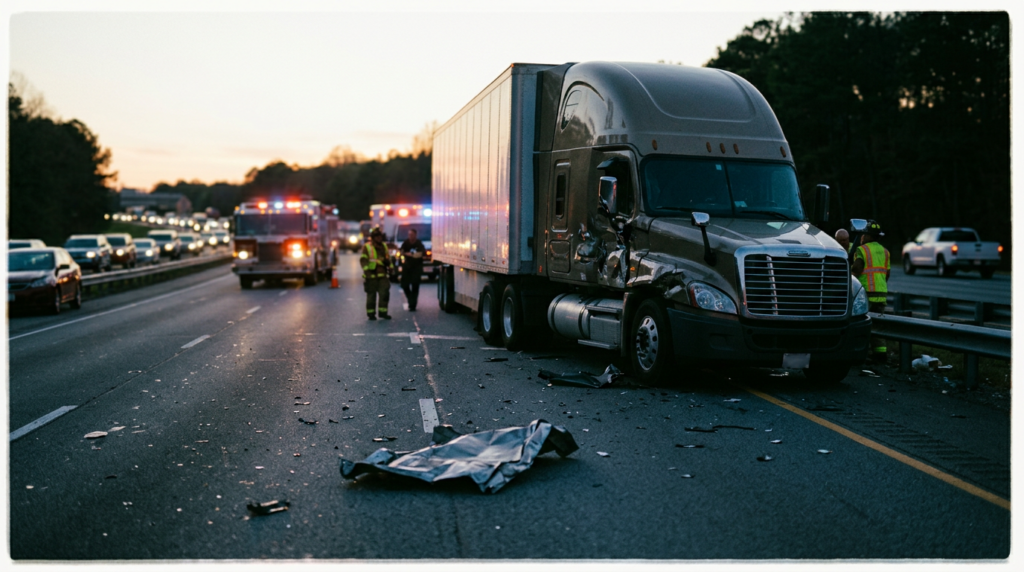
Truck-crash spine injuries come down to one thing: force. Under federal limits, a fully loaded tractor-trailer can weigh up to 80,000 pounds. That is about 20 times the weight of a typical 4,000-pound car. In a crash, that weight sends far more energy into the smaller vehicle and the people inside. The result can be broken vertebrae (the bones of the spine), a crushed spinal cord, and permanent paralysis. These are injuries an ordinary fender-bender rarely causes.
This page explains, in plain language, why big-rig crashes damage the back, neck, and spinal cord so badly. We focus on catastrophic, permanent injuries — the kind that change a life forever. We do not cover minor strains that heal on their own. In the cases our attorneys handle, we have seen how one moment of impact reshapes a family’s future.
Not sure what your next step is?
Talk it through with our team — the first consultation is free, confidential, and carries no obligation.
Why truck crashes are different from ordinary car accidents
The danger starts with physics. More weight moving at speed means more energy released at impact. When a semi weighing up to 80,000 pounds hits a car weighing about 4,000, the smaller vehicle absorbs most of that energy. So do the spines of the people inside.
Height makes it worse. A car sits low. A trailer sits high. In an underride crash, a car can slide partly beneath the trailer. This skips the car’s crumple zones and bumper entirely. It exposes the head, neck, and upper spine to direct force. The Insurance Institute for Highway Safety has long shown underride to be a leading cause of severe truck-crash injuries. That is one reason rear and side underride guards are still part of ongoing federal rulemaking.
We focus here on serious, permanent spine injuries — not temporary strains. When the spinal cord itself is hurt, the damage may last a lifetime.
A quick look at how the spine works
Knowing the parts of the spine explains why some injuries heal and others do not. The spine is a column of bones that protects the spinal cord. The cord is the bundle of nerves that carries signals between your brain and body, per the Mayo Clinic.
Three regions matter most in crashes:
- Cervical spine (neck): the top seven bones, C1–C7.
- Thoracic spine (mid-back): the twelve bones behind the ribs.
- Lumbar spine (lower back): the five bones that carry most of the body’s weight.
Between the bones sit discs — cushions that absorb shock. The bones and discs are one thing. The spinal cord inside the bony canal is another. That difference is everything.
A broken bone can sometimes heal. But when the cord itself is bruised, torn, or crushed, the loss of function below the injury is often permanent. The higher the injury sits on the cord, the more of the body it affects. A neck injury can affect all four limbs. A lower injury may affect only the legs.
The forces that damage the back and neck in a truck crash
Big-rig crashes injure the spine in four main ways.
Sudden speed changes. A crash throws the body forward, then snaps it back. At truck-level energy, this whiplash-type motion can break or dislocate bones — not just strain a muscle.
Direct impact and compression. When the passenger space collapses, the spine is squeezed. Bones break, and pieces can push into the spinal canal and damage the cord.
Twisting and shearing. Jackknife and rollover crashes turn the vehicle in unnatural ways. This can tear the ligaments that hold the spine together.
Ejection and secondary impacts. A person thrown from a vehicle — or slammed against its inside — can take a second, devastating blow to the spine.
These forces separate catastrophic injuries from minor ones. A back strain heals. A broken bone with cord damage often does not.
Catastrophic spine injuries seen after big-rig collisions
Motor-vehicle crashes are a leading cause of spinal cord injury, along with falls and acts of violence, per the Mayo Clinic. According to the National Spinal Cord Injury Statistical Center (NSCISC), vehicle crashes have long been the single most common cause of traumatic spinal cord injury in the United States.
Paralysis. When the cord is badly damaged, a person may lose movement and feeling below the injury. Paraplegia affects the lower body. Quadriplegia (also called tetraplegia) affects all four limbs. Learn more on our paralysis resource page.
Complete vs. incomplete injury. A complete injury means total loss of feeling and movement below the injury. An incomplete injury means some function remains, as the Mayo Clinic explains. Doctors grade the severity using the International Standards for Neurological Classification of Spinal Cord Injury (ISNCSCI) — the ASIA Impairment Scale — published by the American Spinal Injury Association. The scale runs from ASIA A (complete) through ASIA E (normal). This grade often shapes the outlook and the lifetime-care plan.
Fractures and dislocations. Bones in the neck, mid-back, or lower back can break or slip out of place.
Traumatic disc injuries. A disc can rupture and press on the cord or nearby nerves. This causes lasting pain and weakness.
Spine trauma rarely happens alone. Many truck-crash victims also suffer a traumatic brain injury in the same crash.
When the outcome is fatal. The most severe neck and spine trauma can take a life — the most catastrophic outcome of all. When a family loses someone this way, they may have a wrongful-death claim against those responsible. You do not have to face that alone. You can talk with our team about your options.
What are the signs your spine injury is serious?
The Mayo Clinic lists these emergency warning signs:
- Numbness or tingling in the arms, legs, hands, or feet
- Weakness or loss of movement
- Loss of bladder or bowel control
- Intense back or neck pain or pressure
- Trouble with balance or coordination
Here is something crash victims often miss: symptoms can be delayed. Adrenaline can hide pain. You may feel “okay” at the scene and still have a serious injury. That is why prompt medical care matters so much.
If you think someone has a neck or back injury, do not move them. Call 911 and wait for trained responders. Only a doctor can diagnose a spinal injury. This section is educational, not medical advice.
Have questions about what happened?
Ask our team directly. The first conversation is free, confidential, and there is no obligation to continue.
What are the three main causes of spinal cord injury?
The three leading causes are motor-vehicle crashes, falls, and acts of violence, according to the Mayo Clinic. Vehicle crashes have long been the most common, per NSCISC.
Truck crashes sit at the high-energy end of that first group. Because a big rig delivers so much force, the cord damage can be worse than in a typical car crash. The cause also shapes the future — the outlook, the medical needs, and the level of support a person will need for life.
What happens to your spine — and your life — after a serious truck crash
For families, this is where the word “catastrophic” stops being a label and becomes daily reality. Adapting to permanent impairment is nothing like recovering from a temporary injury. A person may need a wheelchair, a modified home and vehicle, and ongoing therapy. They may need help with the most routine tasks — bathing, dressing, and getting in and out of bed.
The Christopher & Dana Reeve Foundation reports that nearly 1 in 50 Americans lives with some form of paralysis. That is a reminder this life is more common — and more possible to live well — than most people assume. But it carries real cost. The NSCISC estimates that lifetime costs from a spinal cord injury can range from roughly $1.2 million to over $5 million. The amount depends on the person’s age at injury and how severe the impairment is. These figures do not even include lost wages.
We cannot promise any particular result. What we can say is this: fair compensation is not a luxury. It is what pays for the care, equipment, and support a person needs to live with dignity for the rest of their life.
Why truck cases are complex: who may be responsible
Truck-crash cases often involve more than the driver. The trucking company, a maintenance provider, or the company that loaded the cargo may each share responsibility.
Trucking is heavily regulated by the Federal Motor Carrier Safety Administration. That regulation creates special evidence: hours-of-service logs, electronic logging device (ELD) data, and maintenance records. This evidence can disappear fast. That is why acting early to save it matters.
Florida law adds important rules. Under Fla. Stat. §768.81, Florida uses modified comparative negligence. This means a person found more than 50% at fault generally cannot recover damages. There is also a filing deadline. Under Fla. Stat. §95.11, most negligence claims must be filed within two years for causes of action arising on or after March 24, 2023. We cannot promise any outcome, but we can help you understand how these rules apply to you.
What families can do next
- Put medical care first. Follow every appointment and instruction, and keep the treatment record complete.
- Keep records. Save medical bills and out-of-pocket costs. Write down how the injury changed daily life.
- Talk to a lawyer early. An attorney can investigate the crash and find responsible parties before logs, ELD data, and vehicles are lost.
CHG Personal Injury Lawyers is a Florida-based firm handling catastrophic-injury cases nationwide, with licensed attorneys admitted to The Florida Bar. We offer a free, no-obligation case evaluation — contact us here.
Want to know where you stand?
Tell us what happened and our team will walk you through the options available to you, at no cost.
Learn more and get help
Start with our pillar guide on catastrophic back and neck injuries. It ties together everything on this page. You may also find these helpful:
- Catastrophic back and neck injuries in Florida
- Miami catastrophic back and neck injuries
- Orlando catastrophic back and neck injuries
- Spinal cord injuries
- Truck accidents
You do not have to navigate this alone. When you are ready, we are here to listen.

Frequently asked questions
What are the three main causes of spinal injury?
Motor-vehicle crashes, falls, and acts of violence, according to the Mayo Clinic. Vehicle crashes have long been the most common, per NSCISC. Truck crashes fall into the high-energy motor-vehicle group.
Why do truck crashes cause more serious spine injuries than car crashes?
A loaded semi can weigh up to 80,000 pounds — about 20 times a typical car. So it sends far more force into the smaller vehicle and the spines of the people inside.
What are the signs your spine injury is serious?
Numbness, tingling, weakness, loss of bladder or bowel control, and intense back or neck pain. Seek emergency medical care right away.
Can symptoms of a spine injury be delayed after a crash?
Yes. Adrenaline can hide pain. You may feel fine at the scene and still have a serious injury. Always get checked by a doctor.
How long do I have to file a truck accident injury claim in Florida?
Most Florida negligence claims must be filed within two years for causes of action on or after March 24, 2023, under Fla. Stat. §95.11. Deadlines vary, so ask an attorney promptly.
What Makes Truck-Crash Spine Injuries Different
Massive Weight and Force
A fully loaded semi can weigh up to 80,000 pounds — many times more than a passenger car. That energy transfers into the human body, producing the kind of high-force trauma that fractures vertebrae and damages the spinal cord.
Underride and Crush Impacts
When a smaller vehicle slides beneath a trailer, the passenger compartment can be crushed at the level of the head, neck, and spine — a mechanism strongly associated with catastrophic, permanent injury.
Permanent, Life-Altering Damage
High-energy spinal injuries can sever or bruise the spinal cord, leading to paraplegia or quadriplegia. Unlike many soft-tissue injuries, these changes are often permanent and require lifelong care.
Complex Liability
Truck cases can involve the driver, the trucking company, cargo loaders, and maintenance providers. Investigating who was at fault takes evidence like logs, inspection records, and crash data.
Evidence Can Disappear Quickly
After a serious truck crash, driving logs, electronic data, and vehicle condition can change or be lost within days. Getting a case reviewed early helps preserve the proof that explains how a spinal injury happened.
Common Questions About Spinal Injury Causes
What are the main causes of spinal injury?
According to the Mayo Clinic, the leading causes are motor-vehicle crashes, falls, and acts of violence. Vehicle crashes have long been the most common cause, and truck crashes fall within that high-energy motor-vehicle group.
Why do truck crashes cause worse spine injuries?
A loaded semi can weigh far more than a car. The greater the mass and speed, the greater the force delivered to the body in a collision — which is why truck crashes are so often linked to severe, permanent spinal damage.
What injuries result from these crashes?
High-force spine trauma can cause paralysis (paraplegia or quadriplegia), catastrophic back and neck injuries, and related permanent impairment — outcomes that reshape a person's life and their family's future.
What can families do after a fatal crash?
A death is the most catastrophic outcome of any crash. Families may be able to bring a wrongful-death claim. We handle these cases with dignity and focus on what surviving loved ones can do next.