


Spinal Cord & Back Injuries · Florida
Who Is Liable for a Spine Injury in Florida?
A spinal cord or catastrophic back injury can change everything in an instant. Understanding who may be legally responsible is the first step toward the support and accountability your family deserves.
Representation You Can Rely On
Nationwide
Catastrophic injury cases accepted
FL Bar
Licensed, admitted attorneys
Bilingual
English & Spanish support
Free
Confidential case evaluation
By CHG Lawyers · Published August 01, 2026
Who Can Be Held Responsible for a Catastrophic Back or Neck Injury in Florida?
In Florida, more than one party can be liable for a catastrophic spine injury. A negligent driver, a trucking company, a property owner, a product maker, a medical provider, or even a government agency may share the blame. But the question is not just who is liable for a spine injury in Florida. It is also who has the insurance and assets to pay for a lifetime of care.
This page explains, in plain language, who may be held responsible. It is general information, not legal advice about your case.
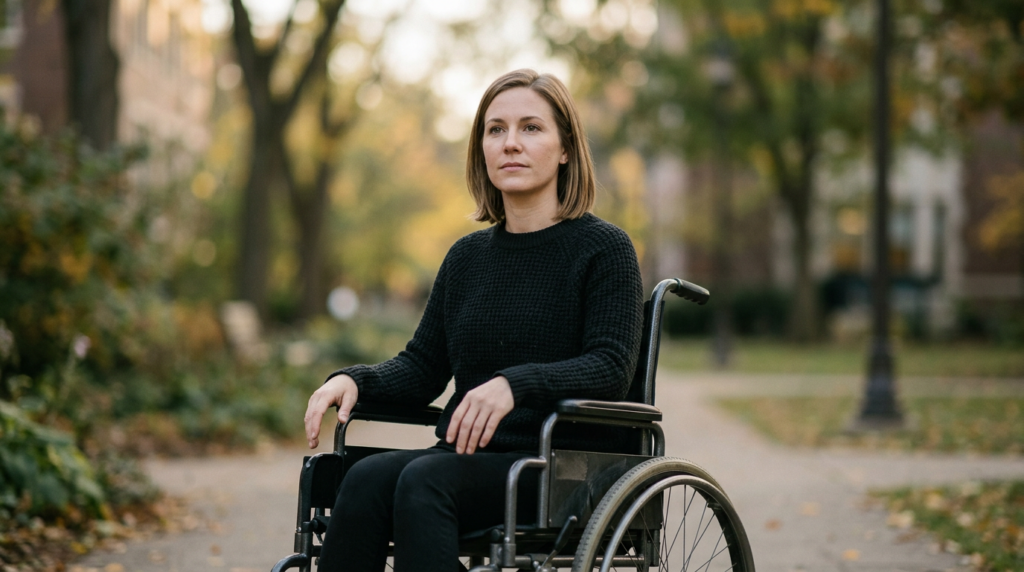
If you or a loved one suffered a life-altering spine injury, we are here to listen. Talk it through with our team — the first consultation is free, confidential, and carries no obligation.
Why ‘who is liable’ matters so much after a catastrophic spine injury
A permanent spine injury changes life in an instant. Paralysis, whether paraplegia or quadriplegia, often means a lifetime of medical care. It can also mean lost income. And it can mean costly changes to your home and vehicle. The Mayo Clinic explains that a spinal cord injury can cause permanent loss of strength, feeling, and function below the injury.
Doctors describe how complete an injury is using the ASIA Impairment Scale. This scale comes from the American Spinal Injury Association. A “complete” (ASIA A) injury means no movement or feeling is left in the lowest part of the spine.
Why does this matter to a legal claim? The level of an injury shapes the whole lifetime care plan. And that plan is what your compensation must cover.
The Christopher & Dana Reeve Foundation reports that about 5.4 million people in the U.S. live with some form of paralysis. The National Spinal Cord Injury Statistical Center (NSCISC) at the University of Alabama at Birmingham publishes the leading dataset. It tracks the causes, patients, and lifetime costs of spinal cord injury in the U.S. Behind each figure is a family facing decades of expense.
That is why finding every responsible party matters. The obvious at-fault person is often not the only one. Sometimes they do not have enough insurance to cover a lifetime of care.
What ‘liability’ actually means in a Florida injury case
Liability means a person or company is legally responsible for harm they caused through negligence. Negligence is the failure to act with reasonable care.
To hold someone responsible, a claim usually must prove four things:
- Duty — they owed you a duty of care.
- Breach — they broke that duty.
- Causation — that breach caused your injury.
- Damages — you suffered real harm and losses.
Here is the important part. More than one party can be liable for the same injury. Responsibility can be shared. Say a driver caused a crash. The trucking company that put an unsafe driver on the road can also answer for it.
Drivers and vehicle owners
A negligent driver is often the first party responsible for a crash. Speeding, distraction, and impaired driving are common causes of spinal cord and catastrophic neck injuries.
Sometimes the owner of a vehicle may also share the blame. Florida follows the “dangerous instrumentality” rule. This means an owner who lets someone drive their vehicle can be held liable for that driver’s negligence.
Florida is a no-fault state. Your own Personal Injury Protection (PIP) coverage pays first. But it is capped at $10,000 under Fla. Stat. §627.736. That is only a fraction of what a catastrophic spine injury costs. A permanent, significant injury clears Florida’s injury threshold under Fla. Stat. §627.737. That lets you step outside no-fault. You can then pursue the at-fault party for the full scope of your losses.
Trucking companies and commercial employers
When a commercial truck is involved, the trucking company itself may be responsible. Under the Federal Motor Carrier Safety Regulations, motor carriers must screen and train drivers. They must maintain their equipment. They must also follow hours-of-service limits (49 C.F.R. Part 395). These limits cap driving time to fight fatigue.
Employers can be liable for employees acting within the scope of their job. Lawyers call this vicarious liability. If a driver caused the crash while working, the company may answer for it too.
Other commercial parties can share fault:
- Cargo loaders who loaded a truck unsafely or over the legal weight.
- Maintenance contractors who did poor repairs.
- Leasing companies that supplied a defective truck or trailer.
This matters for a practical reason. Interstate motor carriers must carry federal minimum liability coverage. This is often $750,000 or more, depending on the cargo. That is far above a private auto policy. More responsible companies can mean more sources of compensation for a lifetime of care. Learn more about how a truck crash causes a spinal cord injury.
Property owners who failed to provide reasonable security
Say you were attacked, robbed, shot, or assaulted on someone else’s property. This might happen at an apartment complex, a parking garage, a hotel, a bar, a gas station, or a store. If you suffered a catastrophic back or neck injury, the property owner may share the blame.
Property owners must take reasonable steps to keep visitors safe. Depending on the place and its history of crime, that can include:
- Working locks, gates, and access controls.
- Enough lighting in lots, stairwells, and hallways.
- Working security cameras.
- Guards or staff where danger is likely.
When an owner ignores clear, likely risks and someone gets hurt, the law may hold that owner responsible. This is a type of premises liability sometimes called negligent security. In 2023, Florida passed Fla. Stat. §768.0706. This law lists specific security steps that apartment owners can take, like lighting and locks that meet code. It changed how these cases are argued, so it is worth understanding early.
This is separate from any case against the attacker. The claim here is against the property owner or management company whose failure allowed the harm. Read more about negligent security and inadequate-security claims.
Not sure what your next step is?
Talk it through with our team — the first consultation is free, confidential, and carries no obligation.
Manufacturers of defective products or vehicles
A defective product can cause or worsen a catastrophic spine injury. Think of a seatbelt that unlatches, an airbag that fails to deploy, or a roof that crushes in a rollover.
When a defect causes harm, the manufacturer may be responsible. Product liability claims usually involve one of three problems:
- A design defect that made the product unsafe as designed.
- A manufacturing defect in how one unit was built.
- A failure to warn users about a known danger.
This is a different legal path from a crash claim. But the two can run together. A driver may cause a crash and a defective part may make it worse.
Medical providers whose negligence caused permanent spine damage
Sometimes the injury, or its worsening, comes from medical care itself. A surgical error, a delayed diagnosis, or mishandling an unstable spine can cause permanent paralysis.
Hospitals, physicians, and other providers may be responsible when their care falls below the accepted standard. That standard is what a reasonably careful provider would have done in the same situation.
Florida medical-negligence claims have their own strict rules before you sue. Under Fla. Stat. §766.203, you must first get a written, supporting opinion from a qualified medical expert. These cases need early investigation and expert review.
Government entities and public property
A government body can be responsible when unsafe public conditions cause a catastrophic injury. Examples include dangerous road design, missing signage, or a poorly maintained public building.
Claims against the government follow special rules. Florida’s sovereign-immunity statute, Fla. Stat. §768.28, caps recovery against a public agency. The limit is $200,000 per person and $300,000 per incident. A higher amount requires a legislative claim bill. The law also requires written notice of the claim before you can sue. This is generally within three years, but you must give notice first.
This is why acting quickly matters. When a public agency may be responsible, missing a notice deadline can end a claim before it starts.
How Florida’s shared-fault rule can affect your claim
Florida uses a modified comparative-negligence system. Under Fla. Stat. §768.81, amended in 2023, your recovery is reduced by your share of fault. If you are found more than 50% at fault, you generally cannot recover at all.
Being blamed for part of an accident does not automatically end your claim. Fault is often a disputed issue that the evidence decides. Say you are assigned 20% of the fault. Your compensation drops by that 20%. But you may still recover the rest.
This is why insurers try to shift blame onto the injured person. Every point of fault they push onto you saves them money. Careful records of the scene, injuries, and losses help push back against unfair blame.
When a spine injury is fatal: who the family can hold responsible
The most catastrophic outcome is death. When a spine injury takes a life, the same parties described above may be responsible in a wrongful-death claim.
Under Florida’s Wrongful Death Act, Fla. Stat. §768.20, the personal representative of the estate brings the claim. They bring it on behalf of surviving loved ones.
No legal claim can undo this loss. Still, holding the responsible parties accountable can bring stability and answers for the family left behind. If you are facing this, learn about fatal spine injury and wrongful-death claims.
Why identifying every responsible party matters
The lifetime cost of paralysis or a catastrophic spine injury is enormous. Round-the-clock care, therapy, adaptive equipment, home changes, and lost earnings add up over decades. A single insurance policy is often not enough.
That is the practical reason to find every responsible party. More parties can mean more policies and more sources of recovery. A truck driver, the motor carrier, a maintenance contractor, and a parts maker could each pay a share.
Time works against you. Footage records over, and witnesses move away. Under Fla. Stat. §95.11, most negligence claims that arise on or after March 24, 2023 must be filed within two years. Government claims have earlier notice deadlines. Early investigation helps save evidence and find every insurer. See also the value of a catastrophic back and neck injury claim.
Have questions about what happened?
Ask our team directly. The first conversation is free, confidential, and there is no obligation to continue.
Talk with a catastrophic-injury attorney
Every case is different, and liability depends on the specific facts. The categories above are a starting point, not a final answer for your situation.
CHG Personal Injury Lawyers are licensed Florida attorneys who focus on catastrophic injury cases, and we take cases nationwide. We offer bilingual support in English and Spanish. Learn more about catastrophic back and neck injuries on our main guide.
If you or a loved one suffered a life-altering spine injury, we are here to listen. Request a free case evaluation so we can review your situation. We can’t promise any outcome, but we can help you understand your rights.

Frequently Asked Questions
Who is liable for a spine injury in Florida?
Liability can rest with a negligent driver, a trucking company, a property owner, a product maker, a medical provider, or a government entity. Often more than one party shares responsibility for the same injury.
Can more than one party be liable for the same catastrophic injury?
Yes. Florida law allows responsibility to be shared among several parties. For example, a truck driver and the motor carrier that hired them can both be held responsible.
Does Florida’s no-fault PIP system cover a catastrophic spinal injury?
No. PIP is capped at $10,000 under Fla. Stat. §627.736. That is only a fraction of the cost. A permanent, significant injury meets the threshold in Fla. Stat. §627.737. That lets you pursue the at-fault party beyond PIP.
Can I sue a property owner if I was attacked at an apartment complex or parking lot?
Possibly, if the owner failed to provide reasonable security like working locks, lighting, cameras, or guards where crime was likely. This premises-liability claim is sometimes called negligent security.
What happens to my claim if I was partly at fault?
Under Fla. Stat. §768.81, your recovery is reduced by your share of fault. If you are found more than 50% at fault, you generally cannot recover damages.
How long do I have to file a spine injury lawsuit in Florida?
Most negligence claims arising on or after March 24, 2023 must be filed within two years under Fla. Stat. §95.11. Claims against government entities have earlier notice deadlines.
Who brings a wrongful-death claim in Florida if a spine injury is fatal?
Under Fla. Stat. §768.20, the personal representative of the deceased person’s estate brings the wrongful-death claim on behalf of surviving family members.
Parties Who May Be Liable for a Spine Injury
A Negligent Driver
When a careless or impaired driver causes a crash that fractures the spine or damages the spinal cord, that driver may be responsible for the harm they caused.
A Trucking Company
In truck crashes, the company behind the driver may share liability for unsafe hiring, scheduling, maintenance, or loading practices that contributed to the collision.
A Property Owner
If you were attacked on unsafe property that lacked working locks, lighting, cameras, or security, the owner who failed to protect you may be accountable.
A Product Maker
A defective vehicle part, safety system, or piece of equipment that fails and causes a spinal injury can point liability toward the manufacturer.
A Medical Provider
When negligent care worsens or causes a permanent spinal injury, the provider or facility involved may bear responsibility.
A Government Entity
Dangerous road design, poor maintenance, or unsafe public property can put a government agency among the responsible parties, subject to special deadlines and rules.
More Than One Party May Share the Blame
Florida law allows responsibility to be divided among several parties for the same catastrophic injury. Identifying every potentially liable party early can matter greatly for a family facing lifelong medical needs. Speaking with an attorney before you accept any offer or give a recorded statement helps protect your rights.
Common Questions About Spine Injury Liability
Who is liable for a spine injury in Florida?
Liability can rest with a negligent driver, a trucking company, a property owner, a product maker, a medical provider, or a government entity. Often more than one party shares responsibility for the same injury.
Can more than one party be liable for the same injury?
Yes. Florida law allows responsibility to be shared among multiple parties. A careful investigation may reveal several sources of accountability for a single catastrophic spinal injury.
What if I was hurt on someone else's property?
If you were assaulted or injured at an apartment complex, parking garage, hotel, or business that failed to provide reasonable security, the property owner may be liable — a claim often called negligent security.
How soon should I speak with a lawyer?
Evidence can disappear and legal deadlines apply, especially in claims involving government entities. Reaching out early helps preserve what your family may need to pursue accountability.