

Truck Accidents · Spinal Cord Injuries
When 80,000 Pounds Meets a Human Spine
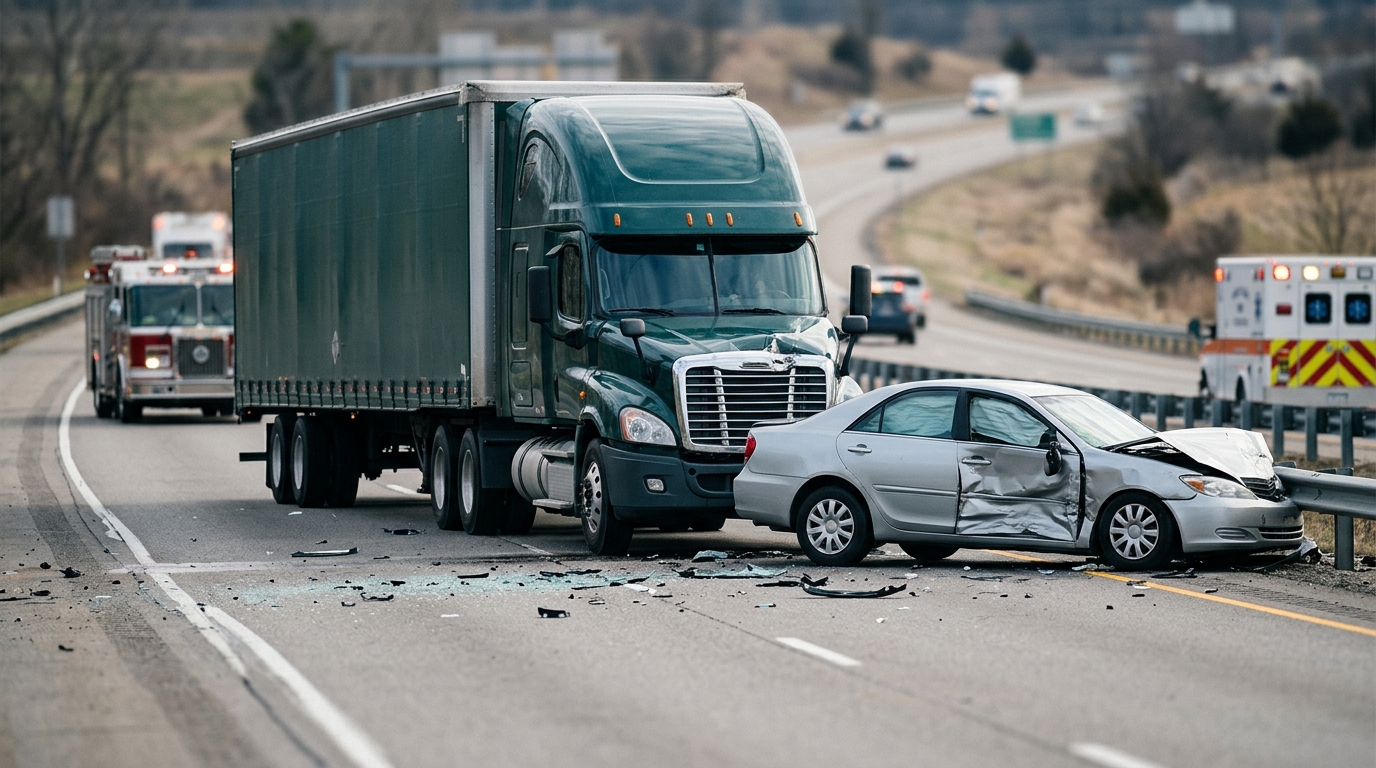
A fully loaded truck can weigh 20 times more than your car. In a crash, that force lands on the people inside the smaller vehicle — and it can permanently change a life in an instant. Here's why these spinal injuries are so severe, and what your family can do next.
Catastrophic Injury Representation
Nationwide
Truck & catastrophic injury cases
Bilingual
English & Spanish support
Licensed
Florida Bar-admitted attorneys
$0
Free initial case evaluation
By CHG Lawyers · Published August 05, 2026
How Truck Crashes Cause Catastrophic Back and Neck Injuries
A loaded commercial truck can legally weigh up to 80,000 pounds. That is about 20 times a typical 4,000-pound car. In a crash, that huge weight difference pushes most of the crash energy into the smaller vehicle and the people inside. This is what turns a survivable wreck into a permanent, life-changing spine injury. This guide explains the physics in plain language. We cover how the spine gets hurt, the severe injuries that can follow, and what families can do next.
This page is part of our resource hub on catastrophic back and neck injuries. Here we answer one question. Why do large-truck crashes so often damage the spine so badly?

Not sure what your next step is?
Talk it through with our team — the first consultation is free, confidential, and carries no obligation.
Why truck crashes are different from other collisions
When two objects crash, the energy has to go somewhere. When one vehicle is much bigger, most of that energy pours into the smaller vehicle and its passengers. The truck cab may look almost untouched. Meanwhile the car — and the spines of the people inside — take the worst of it.
That is the hard truth behind so many severe outcomes. In the truck-crash cases our attorneys handle, the same crash that lets a trucker walk away can leave someone else with lifelong paralysis.
Vehicle crashes are one of the leading causes of traumatic spinal cord injury. This is tracked by the National Spinal Cord Injury Statistical Center (NSCISC). This federally supported body has kept the country’s spinal cord injury database since 1973. We cite NSCISC and medical research rather than round numbers you can’t trace. A claim is only as strong as the source behind it.
A quick look at how the spine works
Your spine is a stacked column of small bones called vertebrae. It protects the spinal cord that runs through its center. The spinal cord is the body’s main communication cable. It carries signals between the brain and the rest of the body, as the Mayo Clinic explains.
The spine has three main regions:
- Cervical spine (neck): the top seven vertebrae.
- Thoracic spine (mid-back): the middle section attached to the ribs.
- Lumbar spine (lower back): the bottom section that carries much of your weight.
Where the cord is hurt matters a great deal. The Mayo Clinic notes that the higher on the cord an injury happens, the greater the harm. A neck injury can affect the arms, legs, and even breathing. A lower-back injury may affect the legs but spare the arms.
The forces that damage the back and neck in a truck crash
Several different forces tear at the spine during a truck crash. These crashes often combine more than one.
The whip-like snap (hyperflexion and hyperextension)
A sudden, violent stop throws the head forward and then backward. Doctors call this hyperflexion and hyperextension. In a high-speed truck impact, this motion can stretch or tear the cord in the neck. The force is strong enough to break vertebrae. This is not the mild strain of a fender-bender.
Vertical crushing (axial loading)
Axial loading means the spine is pressed straight down. Think of a stack of blocks slammed from above. It happens in rollovers, roof crush, and underride crashes, where a car slides under a trailer. The result can be a burst fracture. That is when a vertebra shatters and bone fragments push into the cord.
Twisting and rotation
T-bone and jackknife crashes rotate the body violently. This force can knock vertebrae out of place and shear the delicate cord tissue. High-speed highway crashes and multi-vehicle pileups stack these forces on top of one another. Ejection and second impacts add still more danger. Pedestrians or motorcyclists struck by a truck face these forces with almost no protection.
Catastrophic vs. minor spine injuries — the line we work within
This is where honest sources matter. Many pages blur serious spinal cord damage together with everyday back complaints. We do not.
A muscle strain, a simple whiplash, or a herniated disc without nerve damage is painful. But it is usually not permanent — and it is not what this page is about. The injuries here cause lasting loss of movement, feeling, bladder or bowel control, or breathing. That difference drives everything, from the medical care needed to the value of a claim. So we keep it clear.
Complete vs. incomplete injuries. The Mayo Clinic explains the difference. A complete injury means total loss of feeling and movement below the injury. An incomplete injury means some function remains. Doctors grade this using the ASIA Impairment Scale. It is published by the American Spinal Injury Association as the international standard (the ISNCSCI exam). If your medical records mention an “ASIA A through E” grade, that is the tool being used.
Paraplegia and quadriplegia. Paraplegia is paralysis of the legs and lower body. Quadriplegia (also called tetraplegia) is paralysis of all four limbs. It usually follows a serious neck injury. A high neck injury can even affect the muscles that control breathing, according to the Mayo Clinic.
Warning signs of a serious spine injury after a crash
The Mayo Clinic lists warning signs. These include numbness, weakness, and loss of coordination or movement. Other signs are loss of bladder or bowel control, trouble breathing, extreme pain or pressure in the neck, head, or back, and tingling in the hands or feet.
Here is something important. Symptoms can be delayed. Swelling and bleeding around the cord can build up in the hours after a crash. So someone who feels “okay” at the scene may get worse quickly. That is why immediate emergency care matters.
We are lawyers, not doctors, and this is not medical advice. If you or a loved one may have a spine injury after a crash, get emergency medical care right away.
Have questions about what happened?
Ask our team directly. The first conversation is free, confidential, and there is no obligation to continue.
The lasting impact of a catastrophic spine injury
A catastrophic spine injury often means a lifetime of medical care. The losses reach far beyond the hospital. Recovery often involves many surgeries and years of rehab. The realities families face often include:
- Equipment such as power wheelchairs and ventilators.
- Changes to the home and vehicle for access.
- In-home care or full-time caregiving.
- Lost income and less ability to work.
- A deep emotional toll on the injured person and the whole family.
When the loss is a death. Sometimes the most catastrophic outcome is that a loved one does not survive. When someone dies from a spinal or neck injury caused by a truck crash, Florida law helps the family. Certain surviving family members can bring a wrongful-death claim under the Florida Wrongful Death Act, Fla. Stat. §§768.16–768.26. We treat these situations with dignity. We focus quietly on what the family can do next, not on the details of the loss.
Who may be responsible for a truck-crash spine injury
Fault in a truck case rarely rests with the driver alone. Trucking involves many companies. Responsibility often spreads across several of them:
- The truck driver.
- The trucking company that employed the driver.
- The company that loaded or secured the cargo.
- Maintenance contractors who serviced the truck.
- Parts makers whose equipment failed.
Interstate trucking follows the Federal Motor Carrier Safety Regulations (49 C.F.R. Parts 350–399). These set rules on driver hours, vehicle inspection, and more. When a carrier or driver breaks those rules, the violation can be strong evidence of negligence. Sorting out who is responsible takes investigation. That is one reason acting quickly matters.
Can I still recover compensation if I was partly at fault?
Often, yes. Being partly to blame does not automatically end a claim. But the rules vary by state.
Many states follow a “comparative fault” (shared-fault) rule. Under it, your compensation may be reduced by your share of fault rather than erased. Florida uses a modified comparative-negligence rule under Fla. Stat. §768.81. A person found more than 50% at fault generally cannot recover.
We handle catastrophic-injury cases nationwide, and each state’s rules differ. Don’t assume your claim is worthless because someone blamed you. A case evaluation can tell you where you stand.
Why acting quickly matters
Trucks carry data that most cars don’t. And that data does not last forever. Key evidence can include:
- Driver hours-of-service logs.
- The truck’s electronic control module (ECM, sometimes called the “black box,” which can store speed and braking data).
- Dashcam footage.
- Maintenance records.
Some of this may be erased or thrown out within weeks. Early legal action helps preserve the facts. This is often done through a formal letter telling the carrier to keep the evidence.
Legal deadlines, called statutes of limitations, also apply. In Florida, most negligence claims that arose on or after March 24, 2023 must be filed within two years under Fla. Stat. §95.11. Deadlines differ from state to state. So treat this as general information, not a promise about your specific case.
Want to know where you stand?
Tell us what happened and our team will walk you through the options available to you, at no cost.
How CHG Personal Injury Lawyers can help
CHG Personal Injury Lawyers focus on catastrophic, life-changing injuries. We take cases nationwide. Our team includes licensed attorneys admitted to The Florida Bar. We publish our resources in both English and Spanish (inglés y español). A family facing a spinal cord injury shouldn’t also have to fight a language barrier to understand their rights.
We understand what a truck-crash spine injury does to a family. We can’t promise a certain outcome — no honest lawyer can. What we offer is a careful, caring review of your situation at no cost.
If you or someone you love suffered a spinal cord injury from a truck crash, contact us for a free case evaluation.
Related resources
- Catastrophic back and neck injuries — our main resource hub on serious spine injuries.
- Spinal cord injuries — how these injuries happen and what they mean.
- Paralysis: paraplegia and quadriplegia — understanding permanent paralysis.
- Truck accidents — how large-truck crashes cause catastrophic harm.

Frequently asked questions
Why are truck accident spinal injuries worse than car crash injuries?
A loaded truck can legally weigh up to 80,000 pounds. That is about 20 times a typical car. So in a crash, most of the crash energy moves into the smaller vehicle and its passengers. This puts crushing force on the spine.
What is the difference between a complete and incomplete spinal cord injury?
A complete injury means total loss of feeling and movement below the injury site. An incomplete injury means some function remains, according to the Mayo Clinic. Doctors grade both using the ASIA Impairment Scale.
What is the difference between paraplegia and quadriplegia?
Paraplegia is paralysis of the legs and lower body. Quadriplegia (tetraplegia) is paralysis of all four limbs. It usually comes from a serious neck injury.
Is a herniated disc a catastrophic injury?
Usually no. A simple herniated disc or muscle strain is painful, but it is usually not permanent. This page covers catastrophic injuries that cause lasting loss of movement, feeling, bladder or bowel control, or breathing.
How long do I have to file a claim after a truck accident?
Deadlines vary by state. In Florida, most negligence claims arising on or after March 24, 2023 must be filed within two years. So it’s best to act quickly and get advice early.
This article is general information, not legal or medical advice. For emergencies, seek medical care immediately.
Why Truck Crashes Cause the Most Severe Spinal Injuries
Overwhelming Weight
A loaded commercial truck can legally weigh up to 80,000 pounds — roughly 20 times a typical passenger car. In a collision, most of that crash energy transfers into the smaller vehicle and the people inside it.
Crushing Force on the Spine
That transferred energy places enormous, sudden compression and torsion on the neck and back. This is what can damage the spinal cord and lead to paralysis rather than a temporary injury.
Permanent, Life-Altering Outcomes
Spinal cord injuries can be complete or incomplete, causing paraplegia or quadriplegia. Many survivors face lifelong medical care, adaptive equipment, and loss of independence.
The Whole Family Is Affected
A catastrophic spinal injury — or the loss of a loved one in a fatal crash — reshapes an entire household. Understanding your options early can protect what matters most.
Get Evaluated — Even If You Feel 'Okay' at First
Spinal cord damage is not always obvious in the first hours after a crash. Numbness, tingling, weakness, or loss of function can appear or worsen over time. Seek medical evaluation right away, and keep every record — it matters for both your health and any potential claim.
Common Questions About Truck Accident Spinal Injuries
Why are these injuries worse than in a car crash?
A loaded truck can legally weigh up to 80,000 pounds — about 20 times a typical car. In a crash, most of that energy moves into the smaller vehicle and its occupants, putting crushing force on the spine.
Complete vs. incomplete spinal cord injury?
A complete injury means a total loss of movement and sensation below the injury site. An incomplete injury means some function remains. Both are serious, and the long-term outlook depends heavily on the location and severity of the damage.
Who may be responsible?
Depending on the facts, responsibility can extend beyond the driver to the trucking company, maintenance providers, or others. A careful investigation is needed to identify what went wrong and who may be accountable.
What if my loved one died in the crash?
A fatal crash is the most catastrophic outcome of all. Surviving family members may be able to bring a wrongful-death claim. We handle these cases with dignity and care for the family left behind.