

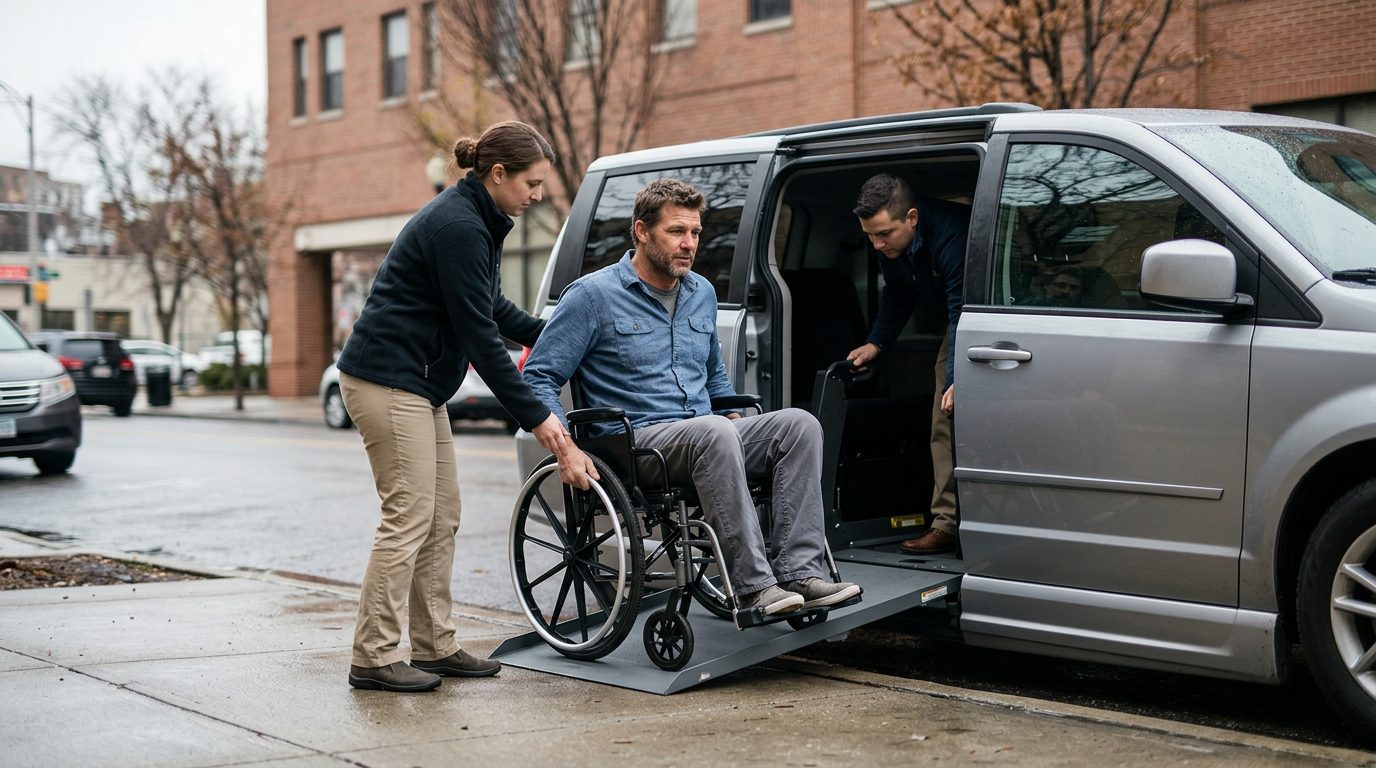
Rideshare Accident Lawyer
Back and Neck Injury from an Uber or Lyft Crash
If you were injured in a rideshare accident, you may have a claim against the driver, the rideshare company's insurance, or both. CHG Personal Injury Lawyers handles rideshare crash cases nationwide.
By CHG Lawyers · Published September 20, 2026
Rideshare Crash Back and Neck Injury Lawyer: Your Rights After an Uber or Lyft Accident
A catastrophic back or neck injury from a rideshare crash—an Uber or Lyft accident—can permanently change your life. You may suffer spinal cord damage, paralysis, chronic pain, or permanent loss of nerve function. If the driver or another party was negligent, you may have a legal claim for compensation.
This page explains who is liable, what insurance covers your injury, and what your rideshare crash back neck injury claim may be worth.

If you were injured in a rideshare accident, you may have a claim against the driver, the rideshare company's insurance, or both. Talk it through with our team — the first consultation is free, confidential, and carries no obligation.
Catastrophic Back and Neck Injuries in Rideshare Accidents
Rideshare crashes cause serious spine injuries that result in permanent damage. A catastrophic spine injury is permanent damage to the vertebrae, discs, or spinal cord—not a routine strain or minor fracture that heals in weeks.
These injuries include:
- Spinal cord damage leading to partial or complete paralysis (paraplegia or quadriplegia)
- Severe disc herniation compressing nerves and causing chronic pain or permanent loss of sensation
- Burst or compression fractures of the vertebrae requiring emergency surgery and months or years of rehabilitation
- Nerve root damage causing permanent weakness, numbness, or loss of motor function
- Cauda equina syndrome (compression of nerve roots at the base of the spine) causing bowel and bladder dysfunction and lower-body paralysis if not surgically decompressed within hours
Why rideshare accidents cause serious spine injuries:
Rideshare vehicles are ordinary sedans or SUVs. They lack the protective structure of commercial trucks. When a rideshare driver is distracted, speeding, or driving recklessly—or when a third-party driver strikes the rideshare vehicle at high speed—the impact can cause severe spinal trauma. Rear-end collisions, T-bone crashes, and rollovers are particularly likely to injure the spine. Passengers in the rear seat are often unrestrained or only partially restrained.
The difference between routine and life-altering injury:
A minor whiplash or uncomplicated fracture may resolve within months. A catastrophic spine injury causes permanent neurological damage. It requires immediate surgery, months or years of rehabilitation, assistive devices (wheelchairs, braces, walkers), home modifications, and lifelong medical care. The lifetime costs—and the damages you can recover—are vastly different.
Who Can Be Held Liable in a Rideshare Spine Injury Crash
Determining liability is critical to your recovery. Multiple parties may bear responsibility for your injury.
The rideshare driver’s negligence:
If the Uber or Lyft driver was distracted, speeding, impaired, or driving recklessly, they may be liable for your injuries. The driver’s personal auto insurance and Uber or Lyft’s corporate insurance may both apply.
Third-party drivers:
If another vehicle struck the rideshare car and caused the crash, that driver and their insurance carrier may be liable. You can pursue a claim against them even if the rideshare driver was not at fault.
Uber or Lyft corporate liability:
In some cases, the rideshare company itself may be liable if it failed to screen drivers adequately or failed to maintain the vehicle. However, rideshare companies typically argue they are not employers but platforms. Proving corporate liability requires skilled investigation and expert testimony.
Other parties:
If a commercial truck driver, delivery service, or negligent property owner contributed to the crash, they may also be liable.
Why determining liability is critical:
Under Florida Statute § 768.81 (comparative negligence), if you are found to be more than 50% at fault, you generally cannot recover any damages. Your attorney must prove that the defendant was primarily responsible for the crash and your injury.
Insurance Coverage in Rideshare Accidents
Rideshare insurance is more complex than standard auto insurance because coverage changes depending on trip phase.
When Uber or Lyft insurance activates:
- App on, no passenger matched: Limited coverage (typically $50,000 per person / $100,000 per accident for liability)
- Passenger in vehicle or driver en route to pick up passenger: Full coverage (typically $1,000,000 or higher for liability and uninsured motorist protection)
- Between trips (app off): Only the driver’s personal insurance applies
The driver’s personal auto insurance:
The rideshare driver’s own auto policy may also cover the accident. However, many rideshare companies exclude coverage for commercial use. Coordination between the driver’s policy and the rideshare company’s policy can be complicated. Insurance carriers often dispute which policy is primary.
Uninsured or underinsured motorist coverage:
If a third-party driver caused the crash but has no insurance or insufficient insurance, uninsured/underinsured motorist (UM/UIM) coverage may apply. Uber and Lyft policies typically include UM/UIM protection for passengers, which is critical if the at-fault driver is uninsured.
Why rideshare insurance is complex:
Insurance companies often dispute which policy applies and which is primary. These disputes can delay your claim by months. An experienced attorney navigates these layers and ensures you recover the maximum available coverage.
What Your Rideshare Spine Injury Claim May Include
Catastrophic spine injuries typically result in substantial claims because the injury is permanent and the lifetime costs are high.
Medical expenses:
- Emergency care, ambulance transport, and hospitalization
- Spinal surgery and surgical follow-up care
- Rehabilitation and physical therapy (often months to years)
- Ongoing pain management, neurology, orthopedic, and urological care
- Assistive devices (wheelchairs, braces, walkers, adaptive equipment)
- Home modifications (ramps, accessible bathrooms, focused beds, lifts)
Lost income and lost earning capacity:
If your injury prevents you from returning to work, you can recover lost wages from the date of the accident forward. If your injury permanently reduces your earning capacity, you can recover the difference between what you would have earned and what you can now earn.
Pain and suffering damages:
For a catastrophic spine injury, pain and suffering damages compensate you for permanent impairment, chronic pain, loss of function, reduced quality of life, and emotional distress.
Home care and long-term care costs:
If your injury requires ongoing in-home care, nursing, or assisted living, these costs can be recovered over your lifetime.
Wrongful death damages:
If a family member was killed in the rideshare crash, surviving family members may pursue a wrongful death claim for funeral expenses, loss of companionship, and loss of financial support under Florida Statute § 768.19.
Why catastrophic spine injuries result in substantial claims:
According to the National Spinal Cord Injury Statistical Center (NSCISC), spinal cord injuries cause permanent neurological changes that affect every aspect of a person’s life. The lifetime cost of care for a person with a spinal cord injury can exceed $1 million, depending on the severity and level of injury. For a 25-year-old with complete paraplegia, lifetime care costs average approximately $1.5 million; for complete quadriplegia, costs average approximately $4.7 million.
Not sure what your next step is?
Talk it through with our team — the first consultation is free, confidential, and carries no obligation.
How Rideshare Accident Claims Work
Understanding the process helps you prepare and know what to expect.
Step 1: Immediate medical care and documentation
Seek emergency medical care immediately. Document all injuries, symptoms, and medical treatment. Keep records of all medical appointments, test results, imaging (X-rays, MRI, CT scans), and prescriptions.
Step 2: Report the accident and preserve evidence
Report the accident to Uber or Lyft through the app immediately. Take photos of the accident scene, vehicle damage, your injuries, and the other vehicle(s) involved. Get the names, phone numbers, and addresses of all witnesses. Obtain the police report and the other driver’s insurance information.
Step 3: Initial consultation with an attorney
Contact an attorney who focuses exclusively on catastrophic spine injuries. Bring your accident report, medical records, photos, and insurance information. The attorney will evaluate your case and explain your legal options.
Step 4: Investigation and evidence gathering
Your attorney will investigate the accident. They will obtain the rideshare driver’s training records and safety history. Your attorney will review vehicle maintenance records and may hire an accident reconstruction expert. Medical experts will review your injuries, imaging, and prognosis.
Step 5: Demand letter and negotiation
Your attorney will send a detailed demand letter to the insurance carriers. The letter will outline your injuries, medical treatment, damages, and legal claims. Insurance adjusters will respond with settlement offers. Negotiation typically takes weeks to months.
Step 6: Settlement or litigation
If a fair settlement is reached, the case settles. If not, your attorney may file a lawsuit and proceed to litigation. Most rideshare accident cases settle before trial.
Timeline expectations:
Investigation typically takes 4–12 weeks. Settlement negotiations can take 6–18 months or longer, depending on the complexity of liability and the severity of your injury. If litigation is necessary, the case may take 1–3 years to resolve.
Why You Should Not Settle Quickly
Insurance companies often make early settlement offers before the full extent of your injury is known. This is a trap.
Why early settlements are dangerous:
Your spine injury may have complications that emerge months or years later (chronic pain, infection, nerve damage, need for revision surgery, or worsening neurological function). You may not know your full prognosis or lifetime care needs until you have completed initial treatment and rehabilitation. Once you accept a settlement, you waive the right to pursue additional compensation—even if your condition worsens or costs increase.
The cost of accepting too little:
A low early settlement may cover your immediate medical bills but leave you unable to pay for future surgery, long-term rehabilitation, home care, or lost income. You cannot reopen the claim or ask for more money.
How an attorney protects you:
An experienced attorney will not allow you to settle until your medical condition has stabilized, your prognosis is clear, and the true lifetime cost of your injury is known. This may take months, but it ensures you recover fair compensation for your permanent injury.
Frequently Asked Questions
Can you sue Uber or Lyft if you get in an accident?
Yes. If the rideshare driver was negligent or a third-party driver caused the crash, you can pursue a claim against the driver, the rideshare company’s insurance, or both. Uber and Lyft carry insurance for passenger injuries.
What insurance covers injuries in a rideshare accident?
Uber and Lyft maintain separate insurance policies that activate based on trip status. If a passenger is in the vehicle or the driver is en route to pick up a passenger, the rideshare company’s insurance (typically $1,000,000 or higher) applies. The driver’s personal auto insurance may also apply, depending on the policy terms.
How much can you recover for a spine injury from an Uber or Lyft crash?
There is no fixed amount. Settlements depend on the severity of your injury, your age, your income, the clarity of liability, and the insurance limits available. Catastrophic spine injuries typically result in six- or seven-figure settlements.
How long do rideshare accident claims take to settle?
Most cases settle within 6–18 months after investigation and negotiation. Some cases proceed to litigation and may take 1–3 years to resolve.
What should I do immediately after a rideshare accident?
Seek medical care, report the accident to Uber or Lyft, take photos, get witness information, and contact an attorney. Do not accept any settlement offer without speaking to a lawyer first.
What is the statute of limitations for a rideshare accident claim in Florida?
Under Florida Statute § 95.11, you must file a negligence claim within 2 years of the date your injury occurred. Missing this deadline bars your claim permanently.
Why Choose an Attorney Who Focuses Exclusively on Catastrophic Spine Injuries
Not all personal-injury attorneys understand catastrophic spine injuries. This is a focused field.
An attorney who focuses exclusively on catastrophic spine injuries brings:
- Deep medical knowledge: Understanding of spinal cord injury classification, prognosis, complications, and lifetime care needs. The American Spinal Injury Association (ASIA) Impairment Scale (AIS) is the international standard for documenting spine injury severity.
- Rideshare experience: Knowledge of how Uber and Lyft insurance policies work, when coverage activates, and how to navigate disputes between the rideshare company’s insurance and the driver’s personal insurance.
- Expert networks: Relationships with spinal surgeons, neurologists, life-care planners, accident reconstruction experts, and vocational rehabilitation experts who can document your injury, prognosis, and lifetime care costs.
- Negotiation skill: Experience negotiating with large insurance companies and rideshare platforms. These companies have sophisticated legal teams; you need an attorney with equal resources and experience.
- Investigative resources: Ability to obtain the rideshare driver’s history, vehicle maintenance records, and accident scene data through discovery. Thorough investigation is essential to proving liability.
- Litigation readiness: Willingness to take your case to trial if settlement negotiations stall. Insurance companies know which attorneys will litigate; this knowledge strengthens your negotiating position.
- Compassion: Understanding that a catastrophic spine injury is not just a legal case—it is a life-changing event for you and your loved ones. Your attorney should treat you with dignity and respect.

Have questions about what happened?
Ask our team directly. The first conversation is free, confidential, and there is no obligation to continue.
Your Next Step: Get a Free Case Evaluation
If you suffered a serious back or neck injury in a rideshare crash, a free case evaluation is the first step toward understanding your rights and options.
What to bring:
- Your accident report (police report number or copy)
- Medical records and imaging (X-rays, MRI, CT scans)
- Photos of the accident scene and vehicle damage
- Insurance information for all parties involved
- Contact information for witnesses
- Rideshare trip details (date, time, driver name)
What to expect:
A confidential conversation about your injury, how the accident occurred, and your legal options. Your attorney will ask questions to understand your situation and explain what a rideshare crash back neck injury claim may include.
No cost, no obligation:
The evaluation is free. You are not committing to anything. You can ask questions and take time to decide.
If a rideshare crash left you with a serious back or neck injury that has changed your life, you may have a claim against the driver, the company, or both. Contact us today for your free case evaluation. We handle rideshare crash back neck injury claims nationwide, and we are ready to listen.
Related resources:
Learn more about the personal injury claim process, insurance coverage, spinal cord injury compensation, or contact an Uber accident lawyer or Lyft accident lawyer today.
Why Choose CHG for Your Rideshare Injury Claim
We Handle Rideshare Cases Nationwide
Uber and Lyft operate across the country. We represent injured passengers in rideshare accidents no matter where the crash occurred.
We Know Rideshare Insurance
Uber and Lyft maintain separate insurance policies for passenger injuries. We navigate these policies to identify all available coverage and pursue the full compensation you deserve.
We Focus on Catastrophic Injuries
Our practice focuses exclusively on serious and permanent injuries—including back and neck injuries, spinal cord damage, and traumatic brain injuries. We understand the long-term impact on your life.
No Fees Unless There Is a Recovery
We work on contingency. You pay nothing upfront, and we only collect a fee if we recover compensation for you.
What Happens After a Rideshare Crash
Seek Medical Care Immediately
Back and neck injuries may not be obvious right away. Get examined by a doctor and keep all medical records. Your health comes first, and documentation is critical for your claim.
Report the Accident to the Rideshare App
Use the Uber or Lyft app to report the crash. Document the driver's name, vehicle details, and the accident location. Take photos of the scene, vehicle damage, and your injuries if safe to do so.
Gather Evidence and Witness Information
Collect contact information from any witnesses. Request the police report if one was filed. Save all communications with the rideshare company and your medical records.
Contact a Rideshare Accident Lawyer
Do not settle or sign anything without legal advice. A lawyer can evaluate your claim, identify all liable parties, and negotiate with insurance companies on your behalf.
Do Not Delay
Back and neck injuries can worsen over time. Prompt medical evaluation and legal action protect your health and your right to compensation. The sooner you contact a lawyer, the sooner we can begin investigating your case and preserving evidence.
Common Questions About Rideshare Crash Claims
Can I Sue Uber or Lyft for a Crash?
Yes. If the rideshare driver was negligent or a third-party driver caused the crash, you can pursue a claim against the driver, the rideshare company's insurance, or both. Uber and Lyft carry insurance for passenger injuries.
What Insurance Covers Rideshare Injuries?
Uber and Lyft maintain separate insurance policies depending on the driver's status at the time of the crash. Coverage varies based on whether the driver was accepting rides, en route to pick up a passenger, or carrying a passenger. A lawyer can identify all available coverage.
What If the Other Driver Caused the Crash?
If a third-party driver caused the accident, you may have a claim against that driver's insurance. The rideshare company's insurance may also cover your injuries. We investigate all sources of liability and compensation.
How Much Is My Claim Worth?
The value of your claim depends on the severity of your injuries, medical costs, lost income, and long-term effects on your life. Back and neck injuries often result in ongoing pain, disability, and treatment. We evaluate your case individually and pursue fair compensation.