


Catastrophic Injury Claims · Florida & Nationwide
How Fault Is Proven After a Catastrophic Spinal Injury
When a spinal cord, back, or neck injury causes paralysis or permanent, life-altering harm, the law asks a hard question: who was responsible? Here is how negligence is established.
Advocacy You Can Rely On
Licensed
Attorneys admitted to the Florida Bar
Nationwide
Catastrophic injury cases across the U.S.
Bilingual
English & Spanish client resources
Focused
By CHG Lawyers · Published July 07, 2026
Proving Fault in a Catastrophic Back or Neck Injury Claim: How Negligence Is Established
To prove fault in a catastrophic injury claim, you must show that someone acted carelessly (negligently) and that this carelessness directly caused your permanent injury. In legal terms, you prove four things: duty, breach, causation, and damages. This page explains how that works for the most serious spinal, back, and neck injuries — the kind that cause paralysis, paraplegia, quadriplegia, or other permanent, life-altering harm.
If you’re reading this while a loved one is in the hospital or in rehab, we understand. The stakes feel overwhelming. Our goal here is to give you clear, honest information so you know what to expect and can protect your rights early.
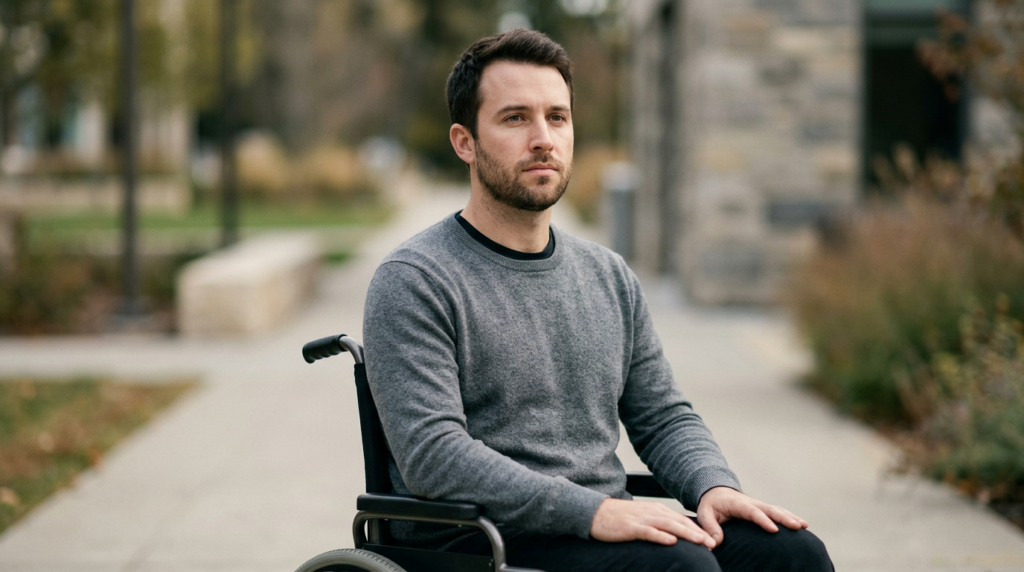
If you're reading this while a loved one is in the hospital or in rehab, we understand. Talk it through with our team — the first consultation is free, confidential, and carries no obligation.
What “Proving Fault” Really Means in a Catastrophic Injury Claim
Fault means legal responsibility, and in most injury cases it’s based on negligence (careless behavior that harms someone). Proving fault in a catastrophic injury claim means showing that another person or company caused a permanent, life-changing injury through that carelessness.
The injured person, called the plaintiff, usually carries the burden of proof. That means it’s your side’s job to present the evidence.
In civil cases, the standard is “preponderance of the evidence.” In plain terms, that means “more likely than not.” You don’t have to prove fault beyond a reasonable doubt like in a criminal case. You must show it’s more likely true than not.
Catastrophic cases involve very high stakes. A spinal cord injury can mean lifelong care and lost income. Because of that, these claims demand heavy, detailed evidence. No article can predict how any single case will turn out.
The Four Elements of Negligence You Must Prove
To prove negligence, you must establish four elements: duty, breach, causation, and damages. All four must be present. An accident alone isn’t enough.
Duty of Care
First, you show the at-fault party owed you a legal duty. A driver must drive safely. A property owner must keep the property reasonably safe. A product maker must sell safe products. A medical provider must meet accepted standards of care.
Breach of Duty
Next, you show that party broke the duty. Maybe a trucker ran a red light. Maybe a store ignored a known hazard. Maybe a manufacturer sold a defective part. That failure is the breach.
Causation
Then you must connect the breach to the injury. This is often the hardest part in catastrophic spine cases. You must prove the careless act directly caused the paralysis or permanent impairment.
Damages
Finally, you show real, measurable harm. In catastrophic cases, that includes permanent paralysis, lifelong medical needs, and lost earning capacity. Doctors often classify the severity using the ASIA Impairment Scale, a standard tool for describing spinal cord injuries.
Why Fault Can Be Harder to Prove in Catastrophic Spine Cases
Fault is often harder to prove in catastrophic spine cases because the money at stake is high, and insurers fight harder to avoid paying it. When lifelong care costs are involved, the defense scrutinizes every detail.
Causation is the biggest battleground. A common defense argument is that the paralysis came from a pre-existing condition, not the accident. The defense may point to old imaging or prior back problems to shift the story.
That’s why severe neurological injuries can be among the hardest to prove after a crash. You often need experts to reconstruct exactly how the harm happened. Linking the trauma to the specific spinal cord damage takes careful medical proof.
Multiple parties can also complicate things. In the catastrophic-injury cases our attorneys handle, fault may involve a driver, an employer, a product maker, and a property owner all at once. Sorting out who’s responsible takes time and investigation.
Evidence Used to Establish Fault
Proving fault relies on strong, well-preserved evidence gathered from many sources. The more serious the injury, the more evidence a case usually requires. Here’s what typically matters most.
- Physical and scene evidence: Photos, vehicle or equipment damage, defective products, and hazardous property conditions.
- Official records: Police or incident reports, complete medical records, and imaging like MRI or CT scans that document the injury.
- Digital evidence: Dashcam or surveillance video, event data recorders (a vehicle’s “black box”), and maintenance or inspection logs.
- Witness statements: Accounts that support your version and can contradict the defense.
Preserving evidence quickly is critical. Video gets erased. Vehicles get repaired or scrapped. Memories fade. Once key evidence is gone, it can be nearly impossible to recover.
The Role of Expert Testimony in Catastrophic Injury Claims
Catastrophic injury claims almost always depend on expert testimony to prove both how the injury happened and what it will cost. These aren’t cases you can prove with a police report alone.
Accident reconstruction experts rebuild the event. They use physics, damage patterns, and data to explain how the crash or fall occurred and who was responsible.
Medical and neurological experts connect the trauma to the permanent impairment. This addresses the causation element head-on. They can explain why the injury came from the incident and not something else.
Life-care planners and economists document the future. They calculate lifelong medical needs, equipment, home modifications, and lost earning capacity. According to the National Spinal Cord Injury Statistical Center, these costs can span a lifetime.
Strong expert opinions can shape both liability and the value of a claim. Still, no expert and no attorney can guarantee any specific result.
Not sure what your next step is?
Talk it through with our team — the first consultation is free, confidential, and carries no obligation.
How Insurance Companies Decide Who Is at Fault
Insurance companies decide fault by having adjusters investigate the incident, review reports and evidence, and take statements from those involved. Their conclusion isn’t the final word — a court can decide fault differently.
An adjuster reviews the police report, photos, medical records, and any statements. They weigh who likely broke a duty of care. Then they assign blame, often to limit what the company pays.
Remember, insurers are businesses. In high-value catastrophic claims, they have a strong reason to dispute fault or shift blame to you. A lower fault finding for their insured means a smaller payout.
Be careful about giving a recorded statement early. A few misunderstood words can hurt your claim. You’re not required to accept an insurer’s fault decision, and it’s wise to get guidance before you agree to anything.
Comparative Negligence: When Both Sides Share Blame
Comparative negligence means fault can be shared, and your share can reduce what you recover (Fla. Stat. § 768.81(6)). If you’re found partly to blame, your compensation drops by your percentage of fault.
Florida follows a modified comparative-negligence rule. Under Fla. Stat. §768.81, a person found more than 50% at fault generally recovers nothing. If you’re 20% at fault, your recovery is generally reduced by 20%. This is general information, not legal advice about your case.
Because our firm handles catastrophic cases nationwide, it’s important to know that these rules vary by state. The law that applies usually depends on where the case is filed. Some states use different comparative-fault rules entirely.
This is exactly why defendants often raise comparative fault (Fla. Stat. § 768.81(6)). Arguing you were partly to blame is a direct way for them to reduce what they owe.
Deadlines: Florida’s Statute of Limitations
You generally must file a catastrophic injury claim within a set time limit, or you can lose your right to recover. This deadline is called the statute of limitations.
For Florida negligence claims that accrue on or after March 24, 2023, the deadline is generally two years under Fla. Stat. §95.11. Before that date, the deadline was generally four years. This is general information, not advice about your specific deadline.
Different rules can apply to claims against government entities or to medical negligence. Deadlines also vary from state to state. You can review the official text at Online Sunshine, Florida’s statute website.
Acting promptly matters for more than the deadline. The sooner you start, the more likely key evidence and witness memories are still available.
Frequently Asked Questions
What three things must be proven to establish negligence?
You must prove duty, breach, and causation — plus damages, which makes four elements in total. All must be shown by a preponderance of the evidence, meaning more likely than not.
What is the hardest injury to prove after a car accident?
Severe internal and neurological injuries, like spinal cord damage, are often the hardest to prove. That’s because the defense frequently disputes causation and blames a pre-existing condition instead.
How do insurance companies decide who is at fault?
Adjusters investigate the incident, review reports, photos, and medical records, and take statements. They then assign a fault percentage, often in ways that limit the company’s payout.
How long do I have to file a catastrophic injury claim in Florida?
For Florida negligence claims accruing on or after March 24, 2023, the deadline is generally two years under Fla. Stat. §95.11. Different rules may apply to government or medical claims, and deadlines vary by state.
Do I need an attorney to prove fault in a catastrophic injury claim?
You’re not required to hire one, but catastrophic cases are evidence-heavy and legally complex. An attorney can gather evidence, retain experts, and handle insurers.
Have questions about what happened?
Ask our team directly. The first conversation is free, confidential, and there is no obligation to continue.
Talk With a Catastrophic Injury Attorney
Proving fault in a catastrophic injury claim is detailed, evidence-intensive, and time-sensitive. These cases involve serious spinal, back, and neck injuries — paralysis, paraplegia, quadriplegia, and other permanent harm. They require careful proof of duty, breach, causation, and damages, plus experts who can explain both how the injury happened and what it will cost.
CHG Personal Injury Lawyers is a Florida-based firm of licensed attorneys admitted to the Florida Bar. We focus on catastrophic spinal and back/neck injury cases and take cases nationwide. We can’t promise any specific result, but we can help you understand your options.
If you or a loved one suffered a catastrophic injury, request a free case evaluation. We offer help in English and Spanish. To learn more, visit our pillar guide on catastrophic back and neck injuries.

Related practice areas
- Jacksonville Catastrophic Injury Lawyer | Spinal & Paralysis
The Four Elements of Negligence
Duty
The other party owed you a legal responsibility to act with reasonable care — for example, a driver's duty to obey traffic laws or a doctor's duty to meet the accepted standard of care.
Breach
That responsibility was violated. Someone acted carelessly or failed to act when a reasonable person or professional would have.
Causation
The careless conduct directly caused the catastrophic spinal, back, or neck injury — not something unrelated.
Damages
You suffered real, measurable harm — permanent paralysis, quadriplegia, paraplegia, or other life-altering impairment, along with the medical and financial consequences that follow.
Evidence Can Disappear Quickly
In catastrophic injury cases, critical proof — vehicle data, surveillance footage, medical records, witness memories — can be lost or altered soon after an incident. Acting promptly helps preserve the facts your claim may depend on.
How Fault Is Documented and Established
Gathering the Record
Police reports, incident documentation, medical records, and photographs help establish what happened and the severity of a permanent spinal or neck injury.
Expert Testimony
Accident reconstructionists, medical specialists, and life-care planners can explain how the injury occurred and the lifelong impact of paralysis or permanent impairment.
Investigating Negligence
For medical negligence, this may mean reviewing whether care fell below the accepted standard. For accidents, it may mean examining conduct, conditions, and equipment.
Connecting Cause and Harm
The goal is to draw a clear line from another party's carelessness to your catastrophic, life-altering injury — the heart of any negligence claim.