

Negligent Security · Florida & Nationwide
Attacked on Someone Else's Property? A Spine Injury Can Change Everything
If you were assaulted, shot, or attacked at an apartment complex, parking garage, hotel, or business — and unsafe conditions helped it happen — the property owner may be legally responsible for your paralysis or catastrophic spinal injury.
Why Families Turn to CHG
Nationwide
Catastrophic injury cases across the U.S.
Bilingual
Help in English and Spanish
FL Bar
Licensed, Florida Bar–admitted attorneys
$0
No fee to start your case review
By CHG Lawyers · Published August 05, 2026
Back and Neck Injuries From Assaults on Unsafe Property: Holding Owners Accountable
Were you attacked on someone else’s property? Did it leave you with a serious back or neck injury? You may be able to sue the property owner — not just the person who hurt you.
Property owners must provide reasonable security. When an owner fails to do this, and that failure lets an attack happen, the law may hold the owner responsible for your harm.
This page is for people and families dealing with permanent, life-altering spine injuries after an assault. That means a violent attack, a shooting, a beating, or a robbery that turned violent. It is not for minor bruises or strains.
If that sounds like your situation, keep reading. Then request a free, confidential case evaluation.

If you are here for someone you lost, we will handle these talks with care. Talk it through with our team — the first consultation is free, confidential, and carries no obligation.
If You Were Attacked on Someone Else’s Property, You May Have a Claim
You may have a legal claim against the property owner. This is true if weak security allowed the attack that hurt you. Many people never realize this is possible. They assume only the attacker is to blame.
Maybe you were assaulted, shot, robbed, or beaten in a place that should have kept you safe:
- An apartment complex or its parking lot
- A parking garage or open lot
- A hotel or motel
- A bar, nightclub, or restaurant
- A gas station, store, or ATM
The person who attacked you is responsible. But the owner or manager who failed to protect you may be responsible too.
Lawyers call this type of case a negligent security claim. It is a form of premises liability. That is the legal rule that owners must keep their property reasonably safe. You don’t need to know that term to get help. You just need to tell us what happened.
Can I Actually Sue the Property Owner? Yes — Here’s Why
This is the first question most people ask, so let’s answer it directly. Yes, you can often sue the property owner. You can do this in addition to — or instead of — suing the attacker.
The reason is simple. Property owners have a legal duty to take reasonable steps to protect people from foreseeable crime on their property.
“Foreseeable” means the danger was predictable. Maybe there were past crimes, a high-crime area, or known threats. If so, the owner was on notice and should have acted. Ignoring that risk can make them liable.
Here’s the practical part most pages skip. Suing the owner often matters more than suing the attacker. The attacker is often unknown, uninsured, or unable to pay. But a business or apartment complex usually carries liability insurance. That insurance is often what actually pays for your medical care and future needs.
One more key point. Your civil claim is separate from any criminal case. You do not need the attacker caught, charged, or convicted to file a claim against the property owner. Even if police never make an arrest, your case against the owner can move forward.
What Counts as a Catastrophic Back or Neck Injury From an Assault
A catastrophic spine injury is a serious, permanent injury. It changes how you move, work, and live. These are the cases we focus on.
Examples include:
- Spinal cord injury and paralysis — paraplegia (loss of use of the legs) or quadriplegia (loss of use of the arms and legs)
- Burst or compression fractures of the vertebrae (crushed spine bones)
- Cauda equina syndrome — nerve pressure at the base of the spine. It can affect the legs, bladder, and bowel, and it needs emergency surgery.
- Penetrating spine wounds from a gunshot or stabbing
- Catastrophic disc or nerve damage that needs spinal fusion surgery
Assaults cause these injuries in violent ways. You might be slammed to the ground or into a wall. You might suffer blunt-force blows, a fall down stairs, or a gunshot or stab wound.
According to the Mayo Clinic, a spinal cord injury can cause loss of movement and feeling below the injury. It can also change bladder and bowel control. These effects are often permanent.
Why does “catastrophic” matter legally? Permanent damage drives long-term costs — lifelong care and lost earning power. That is very different from an injury you recover from in weeks. Learn more on our catastrophic back and neck injuries hub and our spinal cord injuries page.
What Makes Security “Inadequate” — The Evidence We Look For
Security is inadequate when an owner skips reasonable safety measures. These are steps that could have prevented a foreseeable attack. We look for specific failures.
Common examples include:
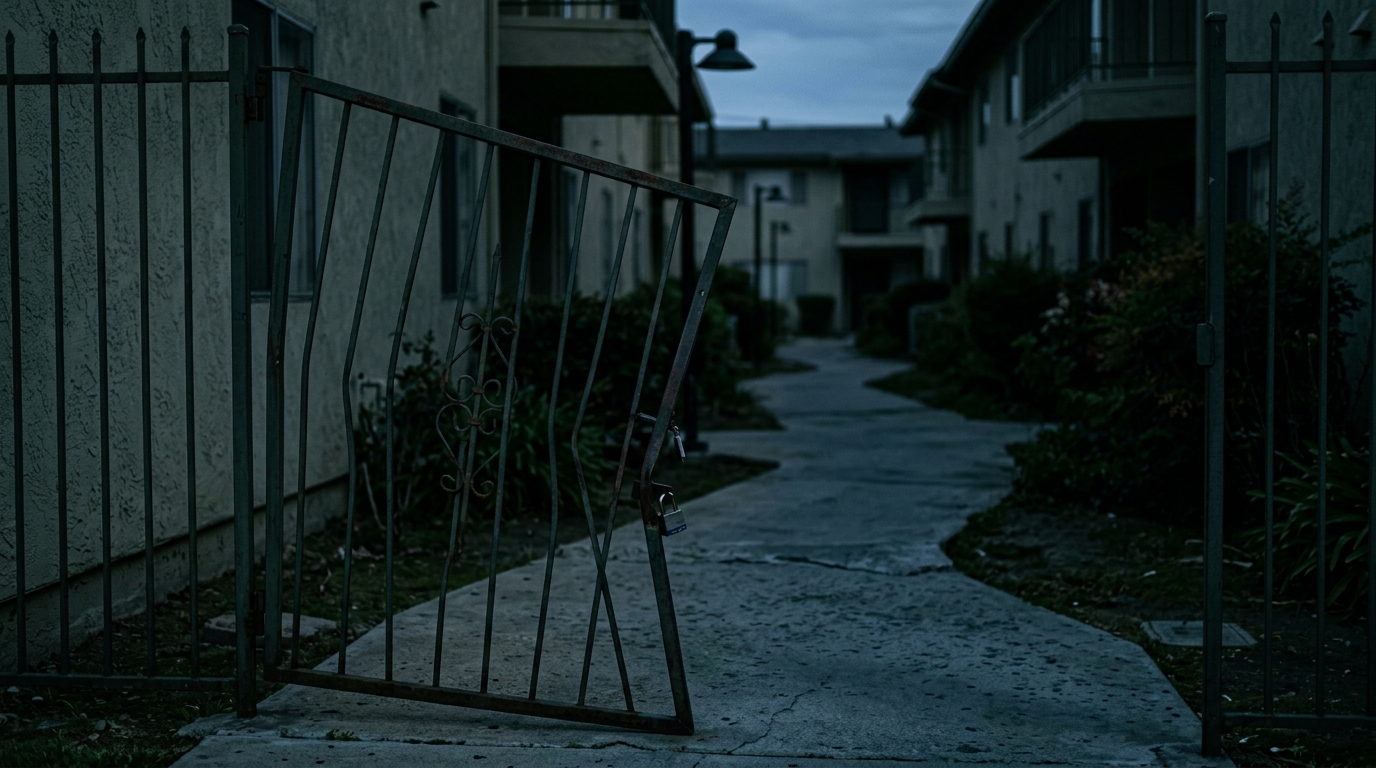
- Broken or missing gates and locks
- Dead or missing lighting in lots, stairwells, and hallways
- Broken, fake, or unmonitored security cameras
- No security guards where they were clearly needed
- Unsecured entry points that let strangers in
We also look for a history that should have warned the owner:
- A pattern of past assaults, robberies, or shootings at or near the property
- Tenant, guest, or employee complaints the owner ignored
- Failure to follow local laws or the property’s own written security policies
To prove these things, our attorneys move fast. We gather police reports, 911 call records, past-incident logs, camera footage, maintenance records, and lease and management documents. We also work with security experts. They explain what reasonable care looked like for that type of property. See our negligent security page for more.
How Hard Is a Back Injury to Prove? Straight Answer
People often worry that back injuries are “invisible” and easy for insurers to dispute. That is a real concern for everyday strains. But the catastrophic spine injuries our attorneys handle are among the most provable injuries there are. They leave hard, objective evidence.
Serious spine injuries are documented with:
- Imaging — MRI and CT scans that show fractures, cord damage, or disc destruction
- Surgical records from procedures like spinal fusion or decompression
- Treating-physician opinions on permanent damage
- Life-care plans that project the cost of future care
- The ASIA classification — the International Standards for Neurological Classification of Spinal Cord Injury. This is the standard doctors use to grade how complete and how severe an injury is.
A negligent security claim usually requires four things:
- The owner owed you a duty of reasonable care.
- The owner failed to provide reasonable security.
- That failure allowed the attack to happen.
- You suffered real harm.
Expect the defense to push back. They may argue the crime “wasn’t foreseeable,” that “security was adequate,” or that “the injury isn’t that serious.” We prepare for each of these.
And don’t let a fear that you were partly at fault stop you. Florida uses a modified comparative negligence rule, Fla. Stat. §768.81. Under this rule, your damages are reduced by your share of fault. You may still recover as long as you are not found more than 50% at fault.
Acting early helps a lot. Camera footage is often erased within days or weeks. Witnesses move away. The sooner we start, the more proof we can protect.
Not sure what your next step is?
Talk it through with our team — the first consultation is free, confidential, and carries no obligation.
What Compensation May Be Available
Compensation depends on your injuries, your future needs, and the insurance available. Every case is different.
Damages may include:
- Medical costs — emergency care, surgery (including spinal fusion), hospital stays, and rehab
- Future and lifetime care — home changes, wheelchairs and equipment, in-home care, and ongoing therapy
- Lost income and reduced earning power when the injury changes how you can work
- Pain, suffering, and loss of enjoyment of life
No lawyer can honestly promise a specific dollar amount. Be cautious of any page that advertises one. There is no reliable “average settlement” for a spine injury. Value depends on how severe the permanent damage is, the cost of future care, lost earnings, and how much insurance exists. This page is not a prediction of your result. It’s an explanation of what the law may allow.
When an Attack Is Fatal: A Family’s Right to Seek Answers
Some attacks do not leave survivors. Say a loved one dies from injuries suffered in a foreseeable attack on unsafe property. Florida law then allows certain family members to bring a wrongful-death claim against the property owner. This falls under the Florida Wrongful Death Act, Fla. Stat. §§768.16–768.26.
This is the hardest situation a family can face. Nothing about a legal claim undoes the loss. But such a claim can hold the owner accountable. It can help cover funeral costs, lost financial support, and the family’s loss of companionship. If you are here for someone you lost, we will handle these talks with care.
How Our Process Works — What to Expect Step by Step
Our process starts with a free case evaluation. Then we move quickly to protect evidence.
- Free, confidential case evaluation. You tell us what happened. No fee to talk, no obligation.
- Investigation. We work to save footage, pull crime history, find insurance, and talk to experts.
- Building the claim. We document your injuries, treatment, and future needs — often with a life-care plan.
- Demand and negotiation with the property owner’s insurer.
- Filing suit and litigation if a fair offer isn’t made.
Most cases settle without a trial. But we prepare each one as if it will go before a jury.
Be realistic about timing. Catastrophic cases are not quick. A case built to withstand a defense fight can take many months to well over a year. We keep you informed at each stage.
We work on a contingency fee. This generally means no attorney fee unless there is a recovery. So you don’t pay us out of pocket to start. We’ll confirm the exact terms in writing during your consultation.
Why Families Choose CHG Personal Injury Lawyers
We focus on catastrophic, life-altering injuries — not routine claims. That focus shapes how we build every case.
- Concentrated work on spinal cord injuries, paralysis, TBI, amputations, severe burns, and catastrophic back and neck injuries
- Licensed attorneys admitted to The Florida Bar. We are a Florida-based firm that takes qualifying cases nationwide.
- A bilingual (English/Spanish) team, so your family understands every step
- Empathetic, plain-language guidance. We deal with the owners and insurers so you can focus on recovery.
Have questions about what happened?
Ask our team directly. The first conversation is free, confidential, and there is no obligation to continue.
Frequently Asked Questions
Can I sue a property owner if I was assaulted on their property?
Yes, potentially. You may have a claim against both the attacker and the owner. This is true if weak security helped allow a foreseeable attack.
Do I need the attacker to be caught or convicted first?
No. A civil claim against the property owner is separate from any criminal case. It can proceed even if no one is arrested.
What is the average settlement for a spinal cord injury?
There is no reliable “average.” Be wary of any source that quotes one. Value depends on severity, permanent damage, future care, lost earnings, and available insurance.
What are the four types of spinal injuries?
Injuries are often described as complete or incomplete. They are also described by region — cervical (neck), thoracic (mid-back), and lumbar or sacral (lower spine). The ASIA scale is the standard clinical system.
What are the symptoms of a T10 spinal cord injury?
A T10 injury may cause loss of function and feeling below the mid-torso. It can affect the legs and core, while often keeping upper-body function. Severity varies, so always follow your treating doctor.
How long do I have to file in Florida?
Florida’s deadline for most negligence claims is generally 2 years under Fla. Stat. §95.11. Deadlines vary by state and by the type of claim. Contact us promptly to protect your rights.

Talk to Us — Free, Confidential Case Evaluation
Do you or someone you love have a serious back or neck injury after an attack? Find out where you stand at no cost. Contacting us early helps save footage and records before they disappear.
Request your free case evaluation now. Our bilingual team is ready to listen. You can also read more on our catastrophic back and neck injuries and negligent security resource pages.
You Don't Need the Attacker Caught or Convicted
A civil claim against the property owner is separate from any criminal case. It can move forward even if the attacker was never identified or arrested. Waiting can cost you critical evidence — security footage is often erased within days or weeks.
When a Property Owner May Be Responsible
Broken or Missing Security
Gates that didn't lock, guards who weren't there, cameras that didn't work, or dark parking lots and stairwells that made an attack easier to carry out.
A Foreseeable Danger
If there had been prior crimes, complaints, or warnings in the area, a reasonable owner should have taken steps to protect people — and may be liable when they didn't.
Two Possible Claims
You may have a claim against the attacker and a separate claim against the property owner. The lawyers call this 'negligent security.' You just call it what happened to you.
Life-Altering Spinal Harm
A gunshot, stabbing, or beating can cause spinal cord damage, paralysis, or catastrophic back and neck injury — the kind of harm this firm focuses on.
How We Help After a Catastrophic Assault
We Preserve the Evidence
We move quickly to secure surveillance video, incident reports, and records of past crimes before they disappear.
We Investigate the Property
We look at lighting, locks, cameras, staffing, and prior warnings to show what a reasonable owner should have done.
We Center Your Recovery
Spinal injuries mean lifelong medical care and lost income. We build your claim around the full cost of your future, with dignity and care.
We Explain Everything Plainly
No legal jargon and no pressure — in English or Spanish. You'll always understand your options.