


Negligent Security | Florida & Nationwide
Attacked on Someone Else's Property? A Serious Back Injury May Not Be Your Fault
If you were assaulted, robbed, or attacked at an apartment complex, parking garage, hotel, or business — and a broken lock, dark lot, or missing security let it happen — the property owner may be responsible for the harm you suffered. We help victims of catastrophic back and spinal injuries.
Why Injured Victims Turn to CHG
Licensed
Florida Bar–admitted attorneys
Nationwide
We take catastrophic-injury cases across the U.S.
Bilingual
English & Spanish client resources
No Fee
Free, no-obligation case review
By CHG Lawyers · Published August 03, 2026
Back and Neck Injuries From an Attack on Someone Else’s Property: When the Owner Is Liable
Were you badly hurt when someone attacked you on another person’s property? You may have a claim against the property owner. This is true even though a criminal caused the harm. When unsafe conditions helped the attack happen, the owner can be held responsible too.
This page is for people and families hurt in an attack on someone else’s property. That includes an apartment complex, a parking lot or garage, a hotel or motel, a bar or nightclub, a store, a gas station, or an ATM. We focus only on catastrophic, life-altering back and neck injuries. We do not cover minor or routine harm.
Talk to us for a free, confidential case evaluation. CHG works from Florida and takes cases nationwide, in English and Spanish.
Not sure what your next step is?
Talk it through with our team — the first consultation is free, confidential, and carries no obligation.
Were You or a Loved One Seriously Hurt in an Attack on Someone Else’s Property?
An attack on someone else’s property can lead to a claim against the property owner. You may be able to sue more than just the attacker. Maybe you were beaten, thrown down, shot, or stabbed. Maybe you were left with a broken spine or nerve damage. The moment felt sudden and terrifying. The harm is permanent.
We handle these cases when the injury is severe and lasting. The main question is simple. Did the owner fail to keep the place reasonably safe? If they did, the law may let you seek money for your losses.
This page does not cover minor injuries. That means no soft-tissue strains, no whiplash, and no simple back pain. It is for serious spine harm that changes a person’s life or takes it.
Can You Really Sue the Property Owner for an Attack Someone Else Committed?
Often, yes. Property owners have a legal duty to take reasonable steps to protect people from foreseeable danger. That means danger the owner should have seen coming. When they ignore that duty and someone gets hurt, they can be held responsible.
In plain terms, you are not suing the owner “for” the crime. You are holding them accountable for not providing reasonable security. Better security might have prevented or reduced the harm. Think broken locks, dark walkways, or no cameras.
Lawyers call this kind of claim negligent security. It is a type of premises liability. That is a property owner’s legal responsibility for what happens on their property.
The key idea is foreseeability. This means whether the owner should have seen the danger coming. Several things can show the risk was foreseeable:
- Prior crimes on or near the property
- Ignored safety complaints
- A known high-crime location
Florida courts look at these factors closely. Similar crimes in the past are often central to whether a case moves forward.
Your civil claim is also separate from any criminal case against the attacker. The two do not depend on each other. As explained below, your case can go forward even if no one is ever arrested.
Who This Applies To — and the Injuries We Handle
This page is for victims and families dealing with serious, permanent spine harm from an attack on unsafe property. If a loved one died from their injuries, the family may bring a wrongful-death claim.
We handle catastrophic back and neck injuries, such as:
- Spinal cord injuries and paralysis (paraplegia and quadriplegia)
- Vertebral fractures (broken bones in the spine)
- Cauda equina syndrome (serious nerve pressure at the base of the spinal cord — a surgical emergency)
- Severe, permanent nerve damage
The Mayo Clinic explains that a spinal cord injury can cause permanent changes below the injury. These include changes in strength, feeling, and body functions. They can include loss of bladder and bowel control.
Doctors often describe how “complete” an injury is. They use the ASIA Impairment Scale, published by the American Spinal Injury Association. A “complete” injury means no movement or feeling below the injury. An “incomplete” injury keeps some function. That difference matters greatly to a person’s future. It also matters to a fair count of their losses.
We do not handle minor or routine injuries here.
For more, see our back and neck injuries hub, our spinal cord injuries page, and our negligent security resource.
What Security Failures Can Make an Owner Liable
An owner may be liable when a reasonable security measure was missing or broken. That failure must have helped the attack happen. Each case turns on its own facts. Common failures include:
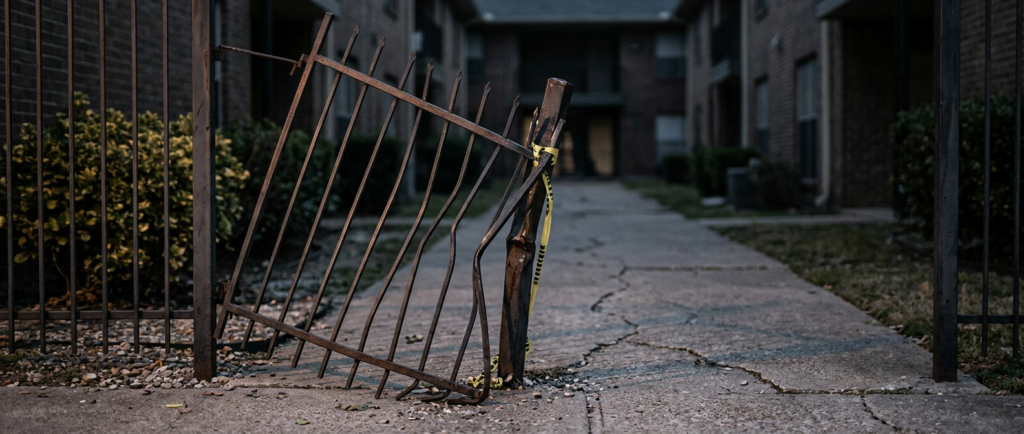
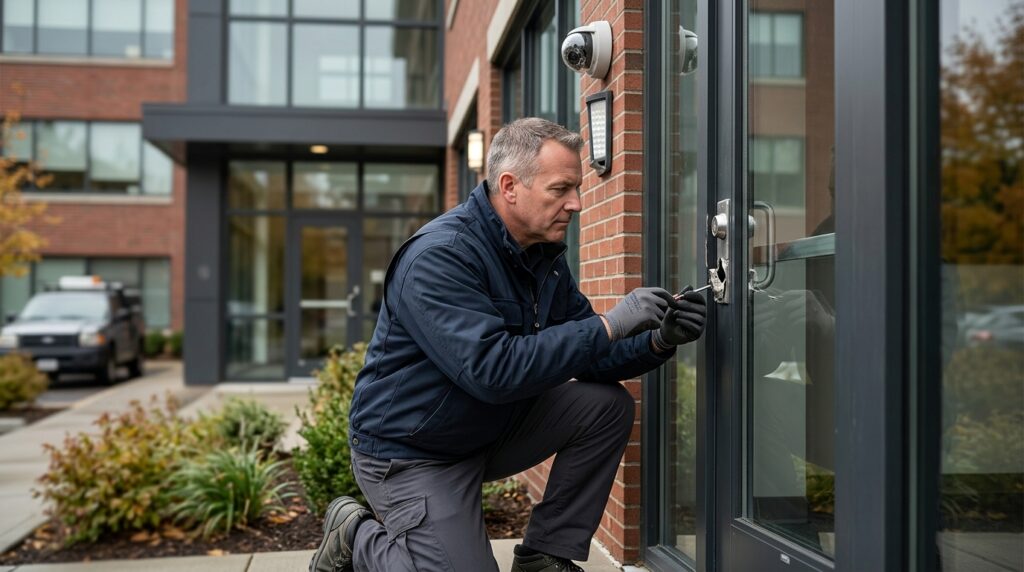
- Broken, missing, or unlocked gates and door locks
- Poor or no lighting in parking areas, stairwells, and walkways
- Broken or missing security cameras
- No security guards, or guards who did not do their job
- Broken fencing that let attackers slip in
Warning signs the owner ignored also matter, such as:
- Prior violent crimes on or near the property
- Safety complaints from tenants or customers that went unanswered
- A known high-crime location the owner did nothing about
These claims often come from apartment complexes, parking lots and garages, hotels and motels, bars and nightclubs, gas stations, stores, and ATMs. A lawyer must review your facts to know whether you have a case.
Have questions about what happened?
Ask our team directly. The first conversation is free, confidential, and there is no obligation to continue.
What a Negligent Security Lawyer Does for You
A lawyer investigates, proves fault, and builds the full picture of your losses. That lets you focus on healing. Here is what the work looks like:
- Preserving evidence fast. Surveillance footage is often erased within days or a few weeks. We move quickly. We send preservation demands and secure incident and police reports before they disappear.
- Finding every responsible party. This may include the property owner, a separate management company, and a hired security vendor. Each may have its own insurance.
- Proving foreseeability. We pull the property’s prior-crime history, often through police call records. We also gather past complaints to show the risk was known.
- Documenting the full impact. We work with treating doctors and life-care planners. Together we detail medical costs, future care, lost income, and long-term needs.
- Handling insurers and litigation. We deal with the insurance companies. If they do not offer a fair result, we take the case to court.
How a Negligent Security Case Works: Step by Step
- Free case evaluation. You tell us what happened. No cost, no obligation.
- Investigation and evidence preservation. This is time-sensitive. Footage and records can vanish fast.
- Medical and damages assessment. We work with doctors and experts to measure your harm and future needs.
- Claim and negotiation. We present a demand. We negotiate with the responsible parties’ insurers.
- Filing suit and litigation. If no fair offer comes, we file a lawsuit and prepare for trial.
Catastrophic cases take time. We must understand the full cost of a permanent injury before we can value it fairly. Legal deadlines also apply. In Florida, most negligence claims must be filed within two years, under Fla. Stat. § 95.11. This was shortened from four years for claims that start on or after March 24, 2023. Deadlines vary by state, so don’t wait to get advice.
What Your Claim May Cover — and Why We Won’t Quote You an “Average”
Some law firm pages show a dollar figure. They call it an “average settlement” for a spinal injury. We won’t do that. Here is the honest reason. Florida Bar advertising rules ban misleading or unsupported statements. And no two catastrophic injuries carry the same losses. A number from someone else’s case tells you nothing about yours.
Instead, here is what actually drives the value of a claim:
- Medical costs. Emergency care, surgery, rehab, assistive devices, and home or vehicle changes.
- Future and long-term care. A life-care plan, prepared by a certified life-care planner, can project decades of medical and personal-care needs.
- Lost income and earning capacity. Wages you lost and the future earnings a permanent injury takes away.
- Pain, suffering, and reduced quality of life.
- Wrongful death. When a loved one dies, surviving family members may recover certain losses under Florida’s Wrongful Death Act, Fla. Stat. § 768.21.
Florida also follows a modified comparative negligence rule. Under Fla. Stat. § 768.81, a person found more than 50% at fault generally recovers nothing.
Why Families Turn to CHG
Families turn to CHG because we focus on catastrophic, life-altering injuries. These include spinal cord injuries, paralysis, traumatic brain injuries, amputations, severe burns, and catastrophic back and neck injuries.
Our attorneys are licensed and admitted to The Florida Bar. We work from Florida and take cases nationwide. We offer empathetic, plain-language guidance during a devastating time, in English and Spanish. We serve clients across Florida, including Miami, Orlando, Tampa, and Jacksonville, and well beyond.
Paralysis is far more common than most people realize. The Christopher & Dana Reeve Foundation estimates that nearly 1 in 50 people in the U.S. lives with some form of paralysis. That is roughly 5.4 million people.
Contact us for a free case evaluation.
Want to know where you stand?
Tell us what happened and our team will walk you through the options available to you, at no cost.
Frequently Asked Questions
How hard is it to prove a back injury from an attack?
You can prove it with the right evidence. That means medical records and imaging. It also means expert testimony linking the injury to the attack, plus proof of the security failure. Acting early helps. Evidence like footage gets saved before it’s lost.
Can a property owner be sued if someone gets hurt on their property?
Yes. This is true when a security failure made the harm foreseeable and the owner did not take reasonable steps to prevent it.
How much is a back or spinal injury claim worth?
It depends on how severe the injury is, whether it is permanent, and your total present and future costs. No honest lawyer can promise an “average” amount. Florida Bar rules also bar misleading value claims.
What if the attacker was never caught?
Your claim against the property owner can still move forward. It does not depend on catching or convicting the criminal.
How much does it cost to hire the firm?
The case evaluation is free. These cases are usually handled on a contingency basis. We discuss fees clearly up front.
Is there a deadline to file?
Yes. Deadlines vary by state. Florida’s is generally two years. Act promptly to protect your rights and preserve evidence.
Talk to Us: Free, Confidential Case Evaluation
You don’t have to face this alone. There are real next steps you can take right now. Security footage and records can disappear quickly, so acting soon matters.
Contact CHG for a free, confidential case evaluation — available in English and Spanish, for clients nationwide.
Act Quickly — Evidence Disappears
Security camera footage is often erased or recorded over within days or weeks. Incident reports, guard logs, and maintenance records can vanish. The sooner a lawyer sends a preservation demand, the better your chance of proving what the property owner failed to do.
What Makes a Property Owner Responsible
Broken or Missing Security
Locks, gates, and fences that didn't work — or were never there. Owners are expected to keep entry points secure when there's a known risk.
Poor Lighting
Dark stairwells, parking lots, and garages give attackers cover. Reasonable lighting is a basic, expected safeguard.
No Cameras or Records
Missing or non-working cameras, and ignored complaints about prior crime, can show the owner knew about danger and did nothing.
Absent or Inadequate Guards
When a property's history of violence called for security personnel and none were provided, that failure can support a claim.
How We Prove a Back Injury From an Attack
Medical Records & Imaging
MRIs, CT scans, and treatment records document the severity of a spinal or catastrophic back injury and connect it to the attack.
The Security Failure
We gather footage, maintenance logs, prior-crime reports, and witness accounts to show the property owner failed to provide reasonable security.
Expert Testimony
Medical and security experts help link your injury to the attack and explain what safeguards a reasonable owner should have had in place.
Understanding 'Negligent Security'
This is the legal term for an owner failing to protect people from foreseeable crime. You don't need to know it to have a case — we handle the law.