

Negligent Security | Back & Neck Injury
Attacked on Someone Else's Property? You May Have a Claim.
When a property owner fails to provide reasonable security and you suffer a catastrophic back or neck injury in an assault, robbery, or violent attack, they may be held accountable. We focus exclusively on catastrophic injury claims and can help you understand your options.
By CHG Lawyers · Published August 26, 2026
Back or Neck Injury from Attack on Unsafe Property: Negligent Security Claims
Were you seriously hurt in an attack on someone else’s property? The attacker is not always the only one responsible. Sometimes the property owner failed to provide reasonable security. When that failure enables a foreseeable attack, the owner may share the blame for your injury.
This page is for people who were assaulted, robbed, beaten, or shot. Maybe it happened in a parking garage, apartment complex, hotel, bar, or gas station. Now your spine or neck is badly hurt. Medical bills keep piling up. You may fear the person who hurt you will never be found.
Below, we explain when someone besides your attacker may be responsible. Why does a serious spine injury raise the stakes? And what can you do next? This is general information, not legal advice.
Not sure what your next step is?
Talk it through with our team — the first consultation is free, confidential, and carries no obligation.
You were attacked on someone else’s property — and now your back or neck is seriously hurt
A violent attack can leave you with a permanent, life-changing spine or neck injury. You may have been thrown to the ground, slammed against a wall, pushed down a stairwell, or shot. Any of these can break bones in your spine (vertebrae) or damage the spinal cord itself.
The criminal case, if there even is one, moves slowly. The attacker may never be caught. Meanwhile, you face surgery, rehab, and a future that looks nothing like your past.
Here is what surprises most people. A claim for your injuries is a separate matter from any criminal case. It also has a lower burden of proof. A civil jury decides by the “greater weight of the evidence”—a lower bar than “beyond a reasonable doubt” in criminal cases. So a civil claim against the property owner can succeed even when a prosecutor files no charges. It can succeed even if the attacker is never found.
Why the property owner may share responsibility for a back or neck injury from attack on property
Businesses and landlords have a duty to keep lawful visitors reasonably safe. When they don’t, and a predictable attack happens, they may share the blame.
Common security failures that enable violent attacks include:
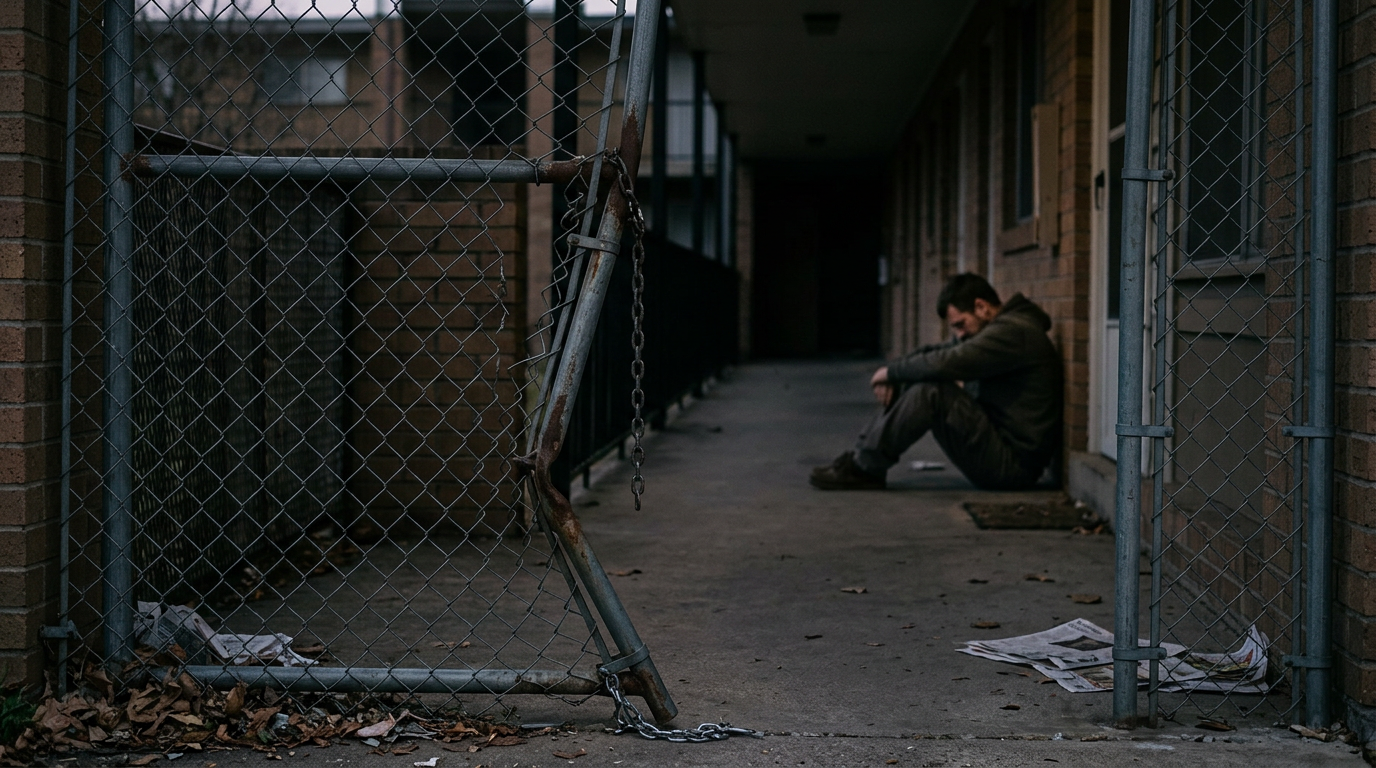
- Broken or missing locks, gates, or fences
- Burned-out or missing lighting in lots, stairwells, or hallways
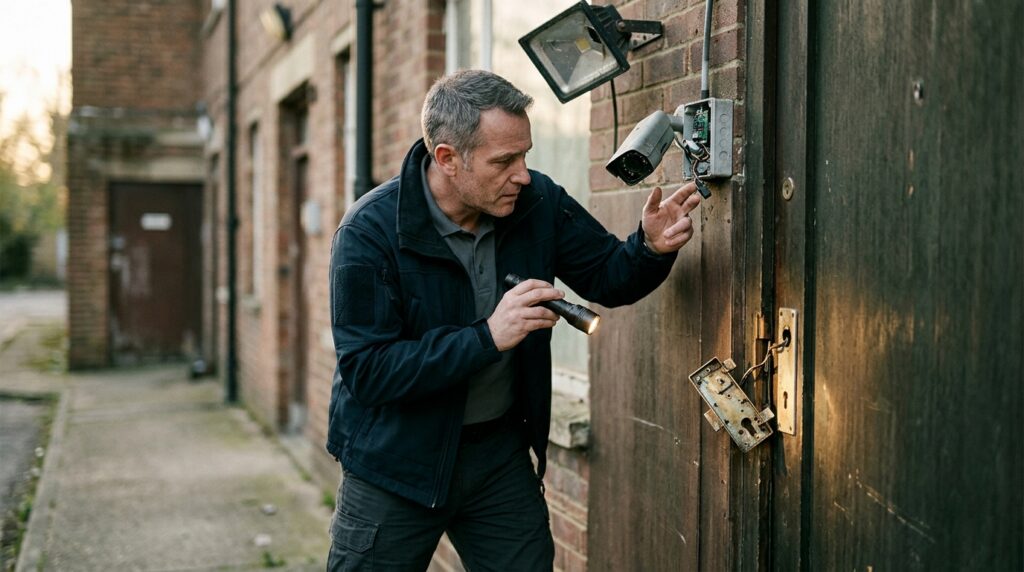
- Cameras that don’t work — or no cameras at all
- No security guards where the risk clearly called for them
- Ignoring a known pattern of crime on or near the property
The legal name for this kind of claim is negligent security. It is a type of premises liability—a property owner’s legal responsibility for what happens on their land. In plain words, the owner didn’t provide reasonable safety measures, and someone got hurt because of it.
To learn more about serious spine and neck injuries, see our catastrophic back and neck injuries resource.
Where these attacks happen — and why location matters to a claim
These attacks most often happen where the public passes through every day: parking lots and garages, apartment complexes, hotels and motels, bars and nightclubs, gas stations, stores, and ATMs. Location matters because it shapes what the owner should have expected.
The key idea is foreseeability—whether the owner should have seen the danger coming. Maybe there were past robberies or assaults on the property. Maybe it sits in an area with repeated violent crime. Maybe someone reported a specific threat. In each case, the owner had reason to expect trouble.
In Florida, lawmakers narrowed this area of law in 2023. Fla. Stat. §768.0706 created a defense for owners of apartment complexes (multifamily residential properties). To use it, an owner must complete a state-approved security check and put certain measures in place: working locks on unit doors, lighting in parking lots and walkways to the levels the law sets, and a peephole on each unit door.
This does not mean tenants have no claim. It means two things are now central: the property’s security history and the specific measures the complex did or didn’t have. That is why an early review of the records matters.
A property’s security history often carries the case. Prior police call logs, past-crime reports, tenant or customer complaints, and proof of ignored warnings can all help. They show the owner knew the risk and did too little. Much of this is time-sensitive. Surveillance footage is often erased in 30 days or less.
What makes a back or neck injury “catastrophic” after an attack
A catastrophic spine or neck injury causes permanent harm or lasting loss of function. It is not a routine strain that heals in a few weeks. This page is about serious, life-changing harm.
Examples include:
- Broken or crushed vertebrae
- Damage to the spinal cord itself
- Injuries that cause paralysis or loss of movement or feeling
- Injuries that require surgery and long-term care
Mayo Clinic explains that a spinal cord injury can cause permanent changes below the injury site, including changes in strength, feeling, and other functions. How much you can control your limbs depends on where the injury sits along the cord and how complete it is.
Doctors grade these injuries using the ASIA Impairment Scale. This is the standard system for rating how severe and complete a spinal cord injury is, using grades A through E. That grade matters medically and legally. It helps show that the harm is permanent, which is central to a serious claim.
Can you prove a back or neck injury?
Yes. Doctors document serious back and neck injuries every day using objective medical evidence. You don’t have to rely on your word alone.
Proof usually comes from:
- Imaging like MRI and CT scans that show fractures or spinal cord damage
- Surgical records and treatment notes
- A doctor’s diagnosis and prognosis, including the ASIA grade
- Evidence of how the injury limits your daily life and work
Prompt, steady medical care helps in two ways. First, it protects your health. Second, it creates a clear record linking the attack to your injury. Gaps in treatment give an insurer room to argue the injury was less serious or came from something else.
Have questions about what happened?
Ask our team directly. The first conversation is free, confidential, and there is no obligation to continue.
Can a property owner be sued if someone gets hurt on their property?
Yes—when the owner’s failure to provide reasonable security helped enable a foreseeable attack that injured you. But it isn’t automatic.
Whether a claim succeeds depends on a few things: What did the owner know? What did they fail to do? Did that failure add to your injury? An owner who ignored months of violent crime stands in a very different spot than one who took reasonable precautions.
You may worry that filing a claim means blaming a victim. It doesn’t. Holding a careless owner accountable is a recognized legal right. It can also help pay for the care you’ll need going forward.
The real costs of a catastrophic spine injury — and what a claim may address
A catastrophic spine injury carries costs that last far beyond the emergency room. A civil claim may seek to address many of them:
- Surgeries, hospital stays, and long-term rehab
- Lifelong or in-home care and daily-living support
- Lost income and reduced future earning power
- Home and vehicle changes, like ramps and lifts
- Physical pain and the toll on your independence
The Christopher & Dana Reeve Foundation reports that about 5.4 million people in the U.S.—roughly 1 in 50—live with some form of paralysis. The lifetime needs behind that number are real. No lawyer can promise a specific result or dollar amount. But seeing the full picture helps you plan.
When an attack is fatal: what the family can do
Sometimes a loved one does not survive a violent attack on unsafe property. When that happens, surviving members may be able to bring a wrongful-death claim against a negligent property owner. This is the most catastrophic outcome of all. It deserves to be handled with care.
In Florida, wrongful-death claims follow the Florida Wrongful Death Act, Fla. Stat. §§768.16–768.26. This law says who may recover and what damages can be sought. A wrongful-death claim can pursue accountability for the same security failures that enabled the attack—broken locks, missing lighting, or ignored crime patterns.
First steps to protect yourself and any future claim
Focus on care first. Then preserve what you can.
- Get medical care and keep going. Follow through on treatment and appointments.
- Report the attack. Keep a copy of the police report and any incident report.
- Preserve evidence fast. Photograph the scene, lighting, and any broken locks or gates. Write down witness names. Ask in writing for the property to save surveillance footage before it’s erased.
- Be careful with insurers. You don’t have to give a recorded statement before you understand your rights.
- Watch the clock. Time limits to file apply and vary by state.
In Florida, most negligence claims have a filing deadline (statute of limitations) of two years under Fla. Stat. §95.11. Florida also follows a modified comparative-negligence rule. A person found more than 50% at fault generally recovers nothing, under Fla. Stat. §768.81.
Want to know where you stand?
Tell us what happened and our team will walk you through the options available to you, at no cost.
How CHG Personal Injury Lawyers can help
CHG Personal Injury Lawyers are licensed attorneys admitted to the Florida Bar. The firm handles catastrophic-injury cases nationwide. We focus on serious, life-changing spine and neck injuries and on negligent security claims.
We know a back or neck injury from an assault on unsafe property changes everything. We offer bilingual (English/Spanish) support and a free, no-pressure case evaluation. That way, you can learn how the process works before you decide anything.
Did you or a loved one suffer a catastrophic spine or neck injury during an attack? Request your free case evaluation. We can’t promise a specific outcome. But we can listen and explain your options in plain language.
Frequently Asked Questions
Can I sue a property owner if I was assaulted on their property?
You may be able to. A property owner can be held accountable when their failure to provide reasonable security helped enable a foreseeable attack that injured you. Learn more about assault and battery claims.
Does it matter that the attacker was never caught?
Not necessarily. A civil claim against the property owner is separate from any criminal case. It also uses a lower burden of proof. So it can move forward even if the attacker is never found.
Can you prove a back injury after an assault?
Yes. Doctors document serious back and neck injuries through objective evidence. This includes MRI and CT scans, surgical records, and a doctor’s diagnosis and ASIA grade.
What is negligent security?
Negligent security is a type of premises liability claim. It means a property owner failed to provide reasonable safety measures—like locks, lighting, cameras, or guards—and someone was hurt in a foreseeable attack.
How long do I have to file a claim?
Time limits vary by state. In Florida, most negligence claims must generally be filed within two years. Still, you should confirm the deadline for where your attack happened.
Important: The Attacker Doesn't Have to Be Caught
Many people believe they can only sue if the person who attacked them was arrested or convicted. That's not true. In a civil claim against the property owner, what matters is whether the owner failed to provide reasonable security—such as working locks, adequate lighting, cameras, or guards—that might have prevented a foreseeable attack. The attacker's identity or capture does not determine your right to hold the property owner accountable.
What Counts as Negligent Security?
Broken Locks or Gates
Entrances that don't work, or security gates left propped open, allow attackers easy access to residents, guests, or visitors.
Poor or Missing Lighting
Dark parking lots, stairwells, hallways, or exterior areas make it easier for criminals to hide and harder for victims to escape or get help.
No Security Cameras
The absence of working cameras in common areas—parking garages, lobbies, courtyards—removes a powerful deterrent and evidence source.
Lack of Security Personnel
Properties in high-crime areas or with a history of violence may have a duty to employ or contract security guards to patrol and respond to threats.
Why Property Owners Can Be Held Responsible
Foreseeability Matters
If a property has a history of crime, is in a high-crime area, or the owner knew of prior attacks or security breaches, a reasonable owner should have taken steps to protect people on the property.
Duty of Care
Property owners have a legal duty to maintain their premises in a reasonably safe condition and to protect invitees and guests from foreseeable harm—including criminal acts they could have prevented or deterred.
Civil vs. Criminal
Even if no criminal prosecution happens, you can pursue a civil claim. The standard of proof is different, and the goal is compensation for your injuries, not punishment of the attacker.
Your Injuries Are What Matter
If you suffered a catastrophic back or neck injury—permanent damage, chronic pain, loss of function, or disability—from an attack on an inadequately secured property, you deserve to recover for your losses.
Common Premises Where Negligent Security Claims Arise
Apartment Complexes & Residential Buildings
Assaults in hallways, stairwells, laundry rooms, parking lots, or garages where locks, lighting, or security staff were inadequate.
Parking Lots & Garages
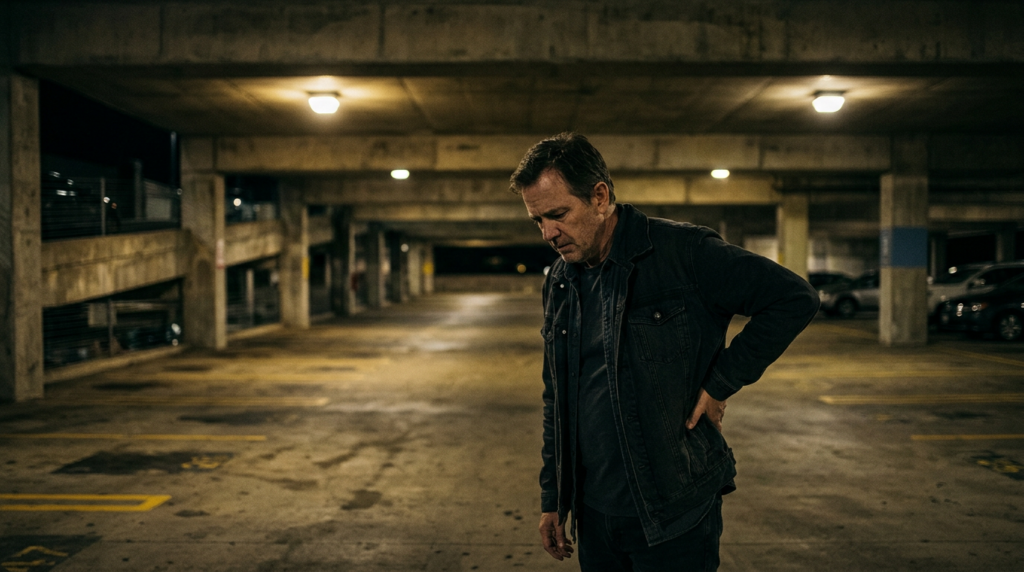
Robberies, assaults, or violent attacks in poorly lit, unmonitored, or unsecured parking structures or outdoor lots.
Hotels & Motels
Attacks on guests or staff in rooms, hallways, lobbies, or grounds due to broken locks, missing security, or failure to respond to threats.
Bars, Nightclubs & Restaurants
Assaults or shootings where the establishment failed to employ adequate security, remove dangerous patrons, or call police when needed.
Retail Stores & Gas Stations
Robberies or violent attacks in stores or gas stations with inadequate lighting, cameras, or security presence.
ATMs & Financial Institutions
Robberies or assaults at ATMs or bank branches in unsecured locations or without adequate surveillance or lighting.