

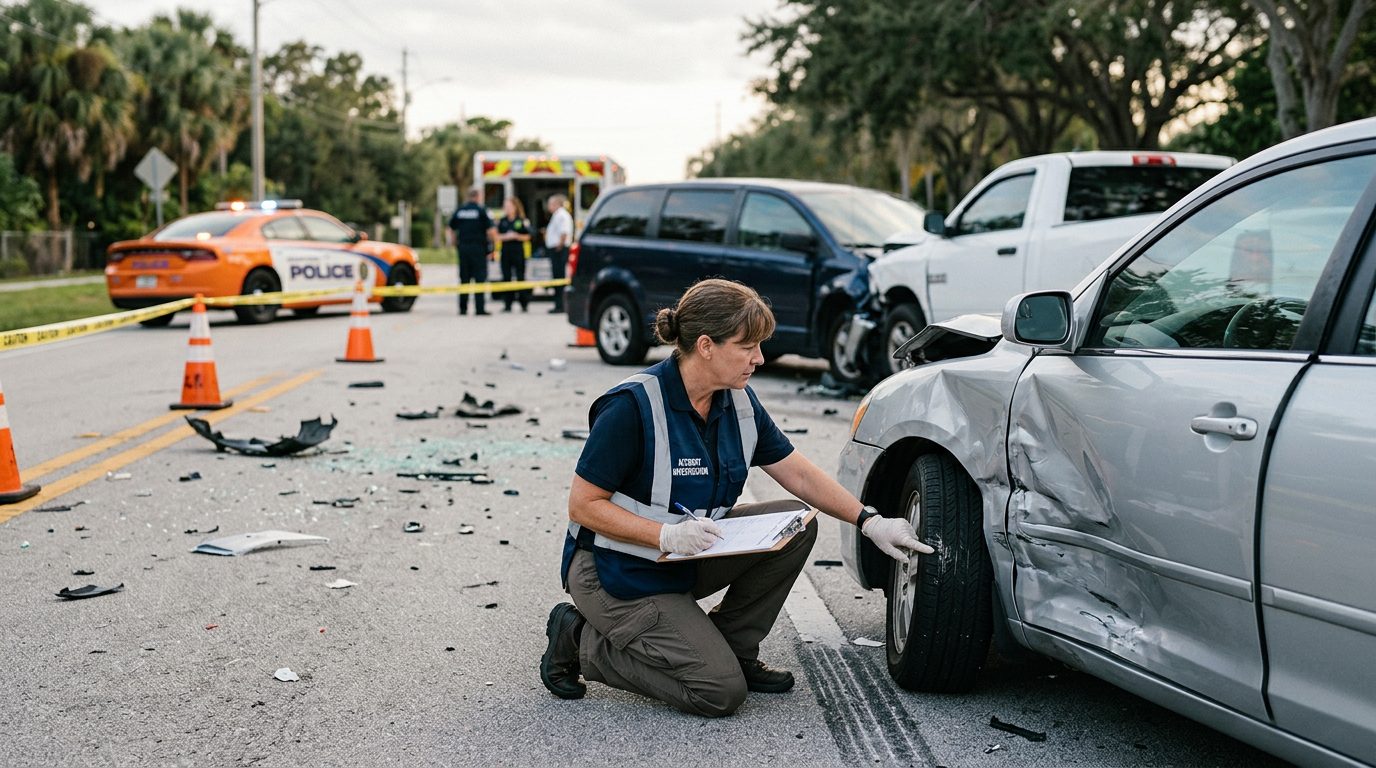
Car Accidents in Sweetwater, FL
Injured in a Car Accident? Know Your Rights
If you or a loved one was hurt in a crash in Sweetwater, Florida, you may have a claim for damages. CHG Personal Injury Lawyers focuses exclusively on car accident cases and can help you understand your options.
By CHG Lawyers · Published September 12, 2026
Car Accidents in Sweetwater: What You Need to Know After a Crash
If you’ve been in a car accident in Sweetwater, you’re not alone. You don’t have to figure out what happens next by yourself. A collision disrupts your work, your family, and your finances. Many people don’t know whether they have a legal claim or how Florida’s insurance rules work. This guide walks you through what happens after a crash in Sweetwater and how to protect your rights.

If you or a loved one was hurt in a crash in Sweetwater, Florida, you may have a claim for damages. Talk it through with our team — the first consultation is free, confidential, and carries no obligation.
Car Accidents Happen in Sweetwater—And They Change Lives
Sweetwater is a residential community in Miami-Dade County. It has school zones, local intersections, and steady traffic. These conditions create collisions.
Whether it’s a rear-end crash at a traffic light, a side-impact at a four-way stop, or a multi-vehicle pile-up on a neighborhood road, a car accident disrupts everything.
You may feel fine at first. Then pain appears days later. You might miss work, rack up medical bills, or feel anxious about driving. Many injured people don’t realize they have a legal claim. Others accept an insurance settlement far below what they deserve.
Understanding your rights after a crash is the first step toward recovery.
Common Types of Car Accidents in Sweetwater
Sweetwater’s traffic patterns create predictable accident scenarios:
- Rear-end collisions at traffic lights and intersections—often cause whiplash and neck injuries
- Side-impact crashes at four-way stops and residential intersections—can cause rib fractures, internal injuries, and head trauma
- Multi-vehicle pile-ups on local roads during heavy traffic—complicate liability and injury claims
- Single-vehicle crashes into fixed objects (poles, barriers, parked cars)—often involve driver error or mechanical failure
- Pedestrian and cyclist accidents in neighborhood areas—sometimes involve children or elderly residents
Each accident type creates different injury patterns and different liability questions. A lawyer can help you understand which driver’s negligence caused the crash and what damages you may recover.
Injuries from Car Accidents: What You Might Face
Car accident injuries range from minor to catastrophic. Some appear immediately. Others emerge days or weeks later.
Common injuries include:
- Whiplash and neck injuries from sudden impact
- Back injuries that worsen over time as inflammation and muscle strain develop
- Head injuries and concussions, even in “low-impact” crashes
- Broken bones, cuts, and soft-tissue damage
- Psychological trauma and PTSD after a frightening collision
In serious crashes, injuries can be life-altering:
- Spinal cord injuries and paralysis (paraplegia or quadriplegia)
- Traumatic brain injury (TBI)
- Amputations or limb loss
- Severe burns
Many injuries don’t show up immediately. Internal bleeding, spinal cord damage, and concussions can take hours or days to become apparent.
Seek medical attention right after your accident, even if you feel fine. Medical records are also critical evidence for your insurance claim or lawsuit.
What to Do Right After a Car Accident in Sweetwater
Your actions in the first minutes and hours after a crash matter. Here’s what to do:
- Check for injuries and call 911 if anyone is hurt or the crash is serious.
- Move to a safe location if vehicles are drivable and it’s safe. Turn on hazard lights.
- Call the Sweetwater Police Department or Miami-Dade Police to file an official report. Get the report number and officer’s name.
- Exchange information with the other driver(s): names, phone numbers, addresses, insurance company and policy number, vehicle make/model/year, and license plate.
- Take photos of vehicle damage, the accident scene, road conditions, traffic signs, and weather. Photos are powerful evidence.
- Get witness contact information. Witnesses strengthen your case.
- Do not admit fault or apologize for the accident. Let police and insurers determine liability.
- Seek medical attention promptly, even for minor symptoms. Document everything.
Insurance and Your Car Accident Claim
Florida is a “no-fault” auto insurance state. This means your own auto insurance—specifically, your Personal Injury Protection (PIP) coverage—pays your medical bills and lost wages after an accident. This happens regardless of who caused the crash. PIP pays 80% of reasonable medical expenses and 60% of lost income, up to the $10,000 policy limit, if you get initial care within 14 days of the crash (Fla. Stat. § 627.736).
Here’s how it works:
- You can use PIP to pay for emergency care, hospitalization, surgery, rehabilitation, and ongoing treatment.
- PIP also covers lost wages if you can’t work while recovering.
If your injuries are serious, you may have a claim against the at-fault driver’s liability insurance. This claim covers pain and suffering, permanent injury, and other damages beyond what PIP covers.
Under Florida Statute §768.81, Florida uses comparative negligence. Even if you were partially at fault, you can still recover damages reduced by your percentage of fault—as long as you’re no more than 50% responsible.
Insurance companies often undervalue claims. Many injured people benefit from legal guidance to ensure they receive fair compensation.
If your injuries are serious, you may have a claim against the at-fault driver's liability insurance. Talk it through with our team — the first consultation is free, confidential, and carries no obligation.
When You May Have a Legal Claim
You have a claim if another driver’s negligence caused the accident and your injuries. Negligence means the other driver failed to exercise reasonable care. Examples include:
- Speeding or reckless driving
- Running a red light or stop sign
- Texting or distracted driving
- Driving under the influence
- Failing to yield the right of way
- Unsafe lane changes
If your injuries are serious—permanent scarring, broken bones, spinal cord injury, traumatic brain injury, or loss of limb—your claim is typically worth more. If a loved one was killed in the crash, your family may have a wrongful-death claim.
Damages You May Recover
If you have a valid claim, you may recover:
- Medical expenses: emergency care, surgery, hospitalization, rehabilitation, ongoing treatment, and future medical needs
- Lost wages: income you missed while recovering or unable to work
- Pain and suffering: compensation for physical pain, emotional distress, and reduced quality of life
- Permanent injury or disfigurement: if the accident caused lasting harm
- Loss of enjoyment of life: if injuries prevent you from activities you once enjoyed
- In wrongful-death cases: funeral expenses, loss of financial support, and loss of companionship
The value of your claim depends on the severity of your injuries, the clarity of liability, and the at-fault driver’s insurance limits.
Why You Should Talk to a Lawyer
Insurance adjusters work for the insurance company, not for you. Their goal is to minimize payouts and close cases quickly. You’re at a disadvantage without legal representation.
A lawyer:
- Investigates the crash and gathers evidence (police reports, witness statements, accident reconstruction, medical records)
- Handles all communication with insurance companies and opposing counsel
- Negotiates on your behalf to maximize your settlement
- Files a lawsuit and represents you in court if a settlement cannot be reached
- Works on contingency: you pay nothing unless you recover money
Many injured people don’t know the full value of their claim. Others accept settlements far below what they deserve. A lawyer levels the playing field and lets you focus on recovery.
Sweetwater Car Accident Claims: Next Steps
If you’ve been injured in a car accident in Sweetwater, here’s what to do:
- Gather your documents: police report, medical records, insurance information, photos of the scene, and any witness contact information.
- Contact a personal injury lawyer as soon as possible. Florida’s statute of limitations gives you 2 years from the date of the accident to file a lawsuit. But acting quickly preserves evidence and witness memories.
- Describe what happened. A lawyer will ask detailed questions about the crash, your injuries, and your recovery.
- Let your lawyer handle negotiations. Your attorney will communicate with insurers and the other driver’s lawyer. You don’t have to.
- You’ll pay your lawyer only from that recovery.

If you've been injured in a car accident in Sweetwater and aren't sure whether you have a claim, reach out. Talk it through with our team — the first consultation is free, confidential, and carries no obligation.
Frequently Asked Questions
What if I was partially at fault for the accident?
Under Florida’s comparative negligence law, you can still recover damages even if you were partially responsible (Fla. Stat. § 768.81(6)). You just need to be no more than 50% at fault. Your recovery is reduced by your percentage of fault.
How long do I have to file a lawsuit after a car accident in Florida?
You have 2 years from the date the accident occurred to file a personal injury lawsuit. Don’t wait. Evidence fades and witnesses move away.
Do I have to accept the insurance company’s settlement offer?
No. You can negotiate for more. A lawyer can help you determine whether an offer is fair. Many initial offers are too low.
What if the other driver doesn’t have insurance?
Your own uninsured motorist (UM) coverage may cover your damages. UM/UIM coverage is optional in Florida and applies only if you purchased it. Your lawyer can help you file a claim under your policy.
Can I recover damages if a family member was killed in the car accident?
Yes. Surviving family members may file a wrongful-death claim to recover funeral expenses, loss of financial support, and loss of companionship.
If you’ve been injured in a car accident in Sweetwater and aren’t sure whether you have a claim, reach out. People in your situation—facing medical bills, lost wages, and uncertainty about their legal rights—can contact our office. We’re here to help you understand your options and recover what you’re owed.
Florida's 2-Year Filing Deadline
In Florida, you generally have 2 years from the date of your accident to file a lawsuit (Fla. Stat. § 95.11(5)(a)). Waiting too long can cost you your right to pursue a claim. If you've been injured, reach out as soon as possible.
What to Do After a Car Accident
At the Scene
Call 911 if anyone is injured. Exchange information with the other driver(s), take photos of the vehicles and scene, and get contact details from witnesses. Do not admit fault.
Seek Medical Care
Some injuries appear hours or days after an accident. Even if you feel fine, get checked by a doctor and keep all medical records. This documentation is crucial for your claim.
Report to Your Insurance
Notify your insurance company promptly. Stick to the facts and avoid speculation about who caused the accident.
Talk to a Lawyer
Before accepting any settlement offer or giving a recorded statement to another driver's insurer, speak with an attorney who can protect your rights.
Why Choose CHG Personal Injury Lawyers
Focused on Your Case
We focus exclusively on personal injury claims, including car accidents. Our entire practice is built around helping injured people and their families.
No Attorney’s Fees Unless There’s a Recovery
We work on contingency—no attorney fees unless we recover compensation for you. You only pay if your case succeeds.
Local Knowledge, National Reach
Based in Florida and licensed to practice here, we understand local courts, insurance practices, and the specific laws that apply to Sweetwater accidents.
Plain-Language Guidance
We explain your rights and options in straightforward terms, never legal jargon. You'll always know where your case stands.
Common Questions About Car Accidents in Florida
What if I was partially at fault?
Under Florida's comparative negligence law, you may still pursue a claim even if you bear some responsibility for the accident—as long as you are no more than 50% at fault (Fla. Stat. § 768.81(6)). Your recovery would be reduced by your share of fault.
How is fault determined?
Fault is established through police reports, witness statements, photos, medical records, and sometimes accident reconstruction. Insurance companies and courts weigh all available evidence.
What damages can I recover?
You may seek compensation for medical expenses, lost wages, property damage, pain and suffering, and other losses caused by the accident. An attorney can help identify all available claims.
How long does a case take?
Timeline varies. Some cases settle quickly; others require litigation. We'll keep you informed every step of the way.