

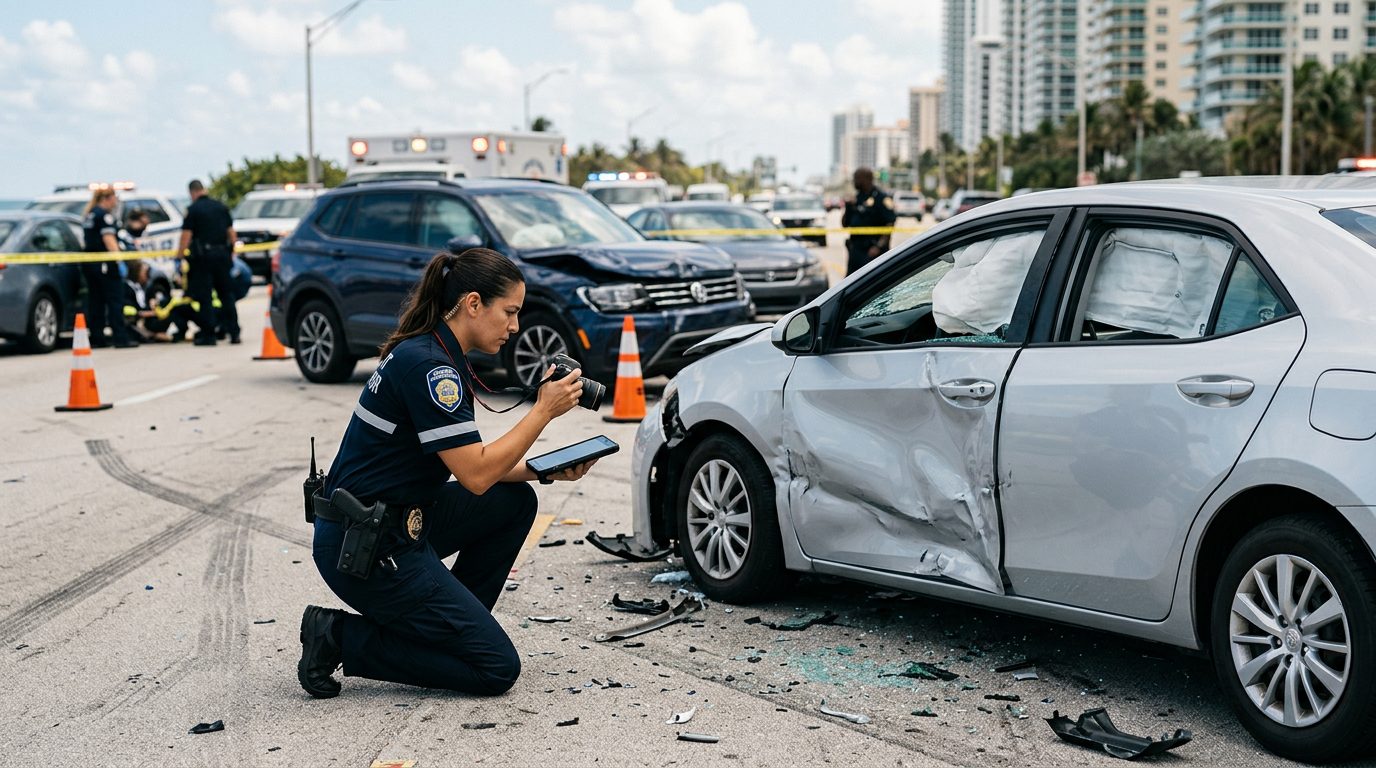
Car Accidents in Sunny Isles Beach
Hit in a crash? Know your rights—and don't settle for less.
The insurance company isn't on your side. Learn what a fair claim looks like, and what it takes to get there.
By CHG Lawyers · Published September 12, 2026
Car Accidents in Sunny Isles Beach: Your Rights, Your Claim & Why You Need an Attorney
You’ve just been hit. Your car is damaged, your neck hurts, and the other driver’s insurance company is already calling. They sound helpful—but they’re not on your side.
If you’ve been injured in a car accident in Sunny Isles Beach, you have legal rights. You may have a claim for medical bills, lost wages, pain and suffering, and permanent disability. But the path to fair compensation is not what the insurance company will suggest.
This guide explains what happens after a crash, why going it alone costs you money, and how an attorney working on contingency removes the financial barrier to getting real help.
If you prefer to communicate in Spanish, we provide bilingual case evaluation, correspondence, and representation. Talk it through with our team — the first consultation is free, confidential, and carries no obligation.
Car Accidents on Sunny Isles Beach Roads: The Reality
Sunny Isles Beach sits where heavy residential traffic, tourist routes, and commercial corridors meet. Accidents happen regularly on Sunny Isles Boulevard, Collins Avenue, and 163rd Street.
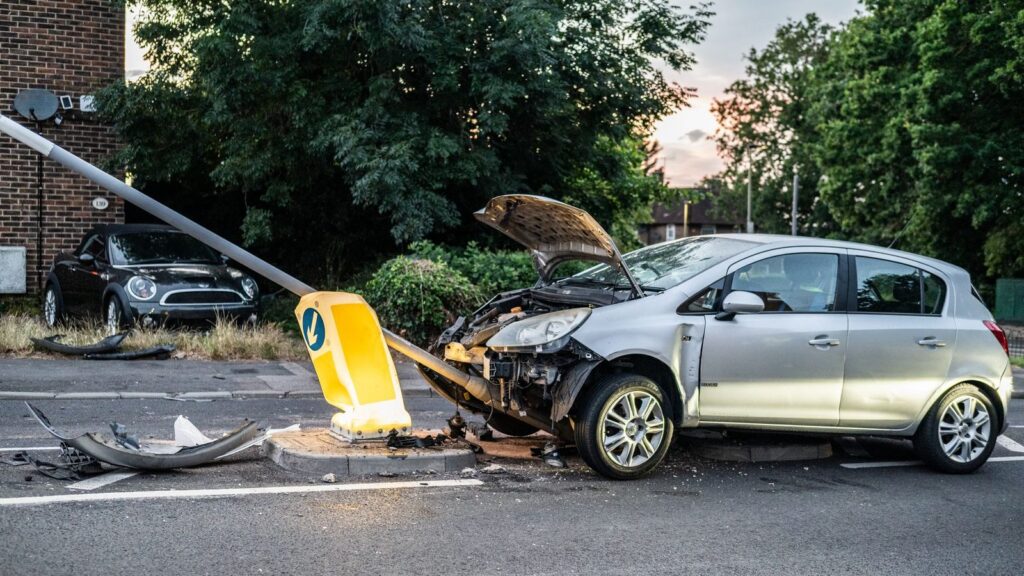
You see rear-end collisions in heavy traffic. Intersection crashes happen when drivers run red lights. Multi-vehicle pileups occur during peak hours. Single-vehicle crashes result from distracted or impaired driving.
When you’re hit, the immediate aftermath is confusing. Pain, shock, and adrenaline make it hard to think clearly. But what you do in the first minutes and hours directly affects your claim.
What to Do Immediately After a Car Accident in Sunny Isles Beach
Check for injuries and call 911. If anyone is hurt—even if the injury seems minor—call emergency services immediately. Do not move an injured person unless there’s immediate danger (fire, oncoming traffic). The 911 call creates an official record. Emergency responders will document injuries at the scene.
Move to safety if possible. If your vehicle is drivable and traffic allows, move it out of the travel lanes. Turn on hazard lights. Set out warning triangles or flares if you have them.
Document the scene thoroughly. Take photos and videos of: – All vehicle damage (multiple angles, close-ups of impact points) – Road conditions, weather, and lighting – Traffic signals, stop signs, and lane markings – The other vehicle’s license plate and VIN (visible on the dashboard or door jamb) – The accident location, nearby businesses, and street names – Skid marks, debris, or other physical evidence
These photos are evidence. Insurance adjusters and opposing counsel will use them; so will you.
Collect the other driver’s information. Get: – Full legal name, phone number, and home address – Driver’s license number and state – Insurance company name and policy number – Vehicle make, model, year, color, and license plate – Employer name and address (if they’ll provide it)
Get witness contact information. Ask anyone who saw the accident for their name, phone number, and email. Witness statements are often the most credible evidence in a dispute over fault.
Report to police. Call the Sunny Isles Beach Police Department or Miami-Dade Police (depending on jurisdiction). Obtain the police report number. This report is critical. It includes the officer’s observations, any citations issued, and an official record of the crash.
Notify your insurance company carefully. Report the accident to your own insurer as your policy requires. But do not admit fault, do not speculate about what happened, and do not sign anything without legal advice. Stick to facts: date, time, location, and the other driver’s information. Insurance companies record these calls. Anything you say can be used against you later.
Seek medical attention within days. Even if you feel fine, see a doctor. Whiplash, internal injuries, head trauma, and spinal injuries often don’t cause symptoms immediately. A medical record created shortly after the crash—not weeks later—is crucial evidence. It establishes that your injuries are linked to the accident, not a pre-existing condition or something that happened afterward.
Common Causes of Car Accidents in Sunny Isles Beach
Establishing fault requires understanding how the accident happened. Common causes include:
- Distracted driving: Cell phone use, texting, eating, adjusting controls
- Speeding or aggressive driving: Particularly on Sunny Isles Boulevard during peak hours
- Failure to yield: At intersections, when merging, or in parking lots
- Rear-end collisions: Following too closely in congested traffic
- Unsafe lane changes: Failing to check blind spots or signal
- Driving under the influence: Alcohol or drug impairment
- Running red lights or stop signs: Ignoring traffic control devices
- Poor visibility: Due to weather, darkness, or inadequate street lighting
Your attorney will investigate which of these factors caused your accident and gather evidence to prove it.
Types of Injuries from Car Accidents
Common injuries include whiplash and neck strain (often painless at first but causing chronic pain and mobility loss), back injuries including herniated discs and spinal damage, broken bones and fractures, and soft-tissue damage. Insurance adjusters routinely undervalue these injuries. They offer settlements that don’t account for long-term pain, physical therapy, or permanent stiffness.
Serious injuries include traumatic brain injury (TBI)—ranging from concussion to permanent cognitive impairment—internal injuries and organ damage, severe lacerations and scarring, and vision or hearing loss.
Catastrophic injuries are the most severe. They include spinal cord damage resulting in permanent paralysis (paraplegia affecting the lower body, or quadriplegia affecting all four limbs), amputation or limb loss, severe burns requiring grafting and lifelong wound care, and fatal injuries.
In catastrophic cases, a single crash transforms a person’s entire life. A quadriplegic client requires 24/7 care, wheelchair accessibility modifications to their home, specialized medical equipment, ongoing rehabilitation, and lost earning capacity for life. These damages are calculated in the millions of dollars—not thousands. Insurance companies know this and will fight hard to avoid paying what these cases are worth.
Why Handling a Car Accident Claim Alone Costs You Money
Insurance companies have teams working against you. Adjusters, lawyers, and investigators are trained to minimize payouts. They know that most injured people don’t understand the true value of their claims and will accept lowball offers.
Early settlement offers are deliberately too low. The insurance company’s first offer is not a good-faith estimate of your claim’s value. It’s a test. They’re betting you’ll accept it because you need money now, you’re in pain, and you don’t know what your claim is really worth.
Once you sign a settlement agreement, you cannot ask for more money later—even if your injuries worsen, even if you need surgery, even if you discover permanent nerve damage. The deal is final.
Your damages are more extensive than you realize. Medical bills add up fast: emergency room visit, imaging (X-rays, MRI), specialist consultations, physical therapy, injections, and surgery. Lost wages accumulate if you miss work during recovery. Pain and suffering is real and compensable. Rehabilitation costs money. Assistive devices (braces, canes, wheelchairs) cost money. Home modifications (ramps, grab bars, widened doorways) cost money.
If your injury is permanent, future medical care costs money—for years or decades. You may not know the full extent of your injuries for weeks or months. An attorney calculates all of these costs, including future care you’ll need.
An attorney investigates thoroughly. We obtain police reports, medical records, witness statements, and expert analysis. We identify all liable parties—sometimes the at-fault driver isn’t the only one responsible. We may find that a vehicle defect contributed to the crash, or that the road was poorly maintained, or that a traffic signal was malfunctioning. We gather evidence the insurance company might overlook or suppress.
Your attorney negotiates on your behalf. We handle all communication with the insurance company and opposing counsel. You don’t have to answer their calls or respond to their requests. We know their tactics—delay, denial, and low offers. We know how to counter them. If a fair settlement cannot be reached, we file a lawsuit and represent you in court.
Insurance companies know whether you have an attorney. If you’re representing yourself, they know it. They’ll push harder, delay longer, and offer less.
If you've been injured in a car accident in Sunny Isles Beach, you may have a claim against the at-fault driver. Talk it through with our team — the first consultation is free, confidential, and carries no obligation.
Car Accident Settlements in Florida: How Damages Are Calculated
Settlement amounts depend on several factors: the severity of your injuries, your medical costs, lost income, your age and earning capacity, the degree of fault, and the at-fault driver’s insurance limits.
Your attorney calculates your damages. This includes: – Past medical care (emergency room, imaging, surgery, therapy) – Future medical care (ongoing treatment, rehabilitation, assistive devices) – Lost wages (past and future, including reduced earning capacity if you can’t return to your job) – Pain and suffering (physical pain, emotional distress, loss of enjoyment of life) – Permanent disability or disfigurement – Home modifications and assistive equipment – Caregiver costs (if your injury requires ongoing care)
We demand compensation from the at-fault driver’s insurance company. We send a detailed demand letter explaining your injuries, your damages, and the evidence supporting liability. If they refuse a fair offer, we file a lawsuit.
Florida is a “comparative fault” state. Under Fla. Stat. §768.81, if you are found partially at fault for the accident, your recovery is reduced by your percentage of fault. For example, if you’re awarded $100,000 but found 20% at fault, you recover $80,000. However, if you’re found more than 50% at fault, you cannot recover any damages. This is why establishing fault is critical—and why an attorney’s investigation matters.
Many cases settle without trial. But your attorney must be prepared to litigate if the insurance company will not offer fair compensation. We don’t rush settlements. We take the time to understand your full medical picture, your lost wages, your pain, and your future needs. If the insurance company won’t match that value, we go to court.
Know your deadline. Under Fla. Stat. §95.11, you have two years from the date of the accident to file a lawsuit. After that, your claim is barred forever. Don’t wait.
How CHG Personal Injury Lawyers Handles Car Accident Claims
We focus exclusively on personal injury cases, including car accidents ranging from minor injuries to catastrophic, life-altering harm. Here’s what we do:
- Investigate thoroughly: We obtain police reports, medical records, witness statements, and expert analysis. We reconstruct the accident and identify all liable parties.
- Handle all communication: We manage all contact with insurance companies and opposing counsel. You don’t have to answer their calls or respond to their tactics.
- Calculate full damages: We pursue compensation for all of your losses—medical bills, lost wages, pain and suffering, permanent impairment, and future care—not just what the insurance company initially offers.
- Prepare for trial: We’re ready to take your case to court if the insurance company won’t settle fairly. We don’t bluff; we litigate.
- Serve you nationwide: While we’re based in Florida, we represent clients throughout the country.
- Work on contingency: You pay nothing unless we recover compensation for you. No upfront fees, no hourly charges, no out-of-pocket costs. We advance case expenses (expert witnesses, medical records, court filings) and recover them from the settlement or judgment.
Why Contingency Representation Matters
The contingency-fee model removes a major barrier to legal help. You don’t need to pay an attorney upfront or worry about hourly bills while you’re recovering. We only get paid if we win. This aligns our interests with yours: we have every incentive to maximize your recovery because our fee depends on it.
Bilingual Support for Sunny Isles Beach
Sunny Isles Beach is home to a diverse community, and we serve it in both English and Spanish. If you prefer to communicate in Spanish, we provide bilingual case evaluation, correspondence, and representation. Your language should never be a barrier to legal help.

If you've been injured in a car accident in Sunny Isles Beach, you have rights—and you don't have to face the insurance company alone. Talk it through with our team — the first consultation is free, confidential, and carries no obligation.
Next Steps: Getting Help After Your Accident
If you’ve been injured in a car accident in Sunny Isles Beach, you may have a claim against the at-fault driver. You don’t have to negotiate with the insurance company alone, and you don’t have to pay an attorney upfront.
Contact CHG Personal Injury Lawyers for a free case evaluation. We will review the details of your accident, your injuries, and your medical treatment. We will explain your rights and options in plain language. We will answer your questions honestly.
If we take your case, we handle everything—investigation, negotiation, and litigation if needed. You focus on healing; we focus on your claim.
Frequently Asked Questions
How long do I have to file a car accident claim in Florida? You have two years from the date of the accident to file a lawsuit (Fla. Stat. § 95.11(5)(a)). After that, your claim is barred by the statute of limitations and you cannot recover anything.
What if I was partially at fault for the accident? Florida’s comparative-fault rule allows you to recover damages even if you’re partially at fault—but your recovery is reduced by your percentage of fault. If you’re found more than 50% at fault, you cannot recover.
Can I recover damages for pain and suffering? Yes. In addition to medical bills and lost wages, you can recover for pain and suffering, emotional distress, loss of enjoyment of life, and any permanent disability or disfigurement.
Should I accept the insurance company’s first settlement offer? Usually not. Initial offers are typically far below what your claim is worth. An attorney can evaluate the offer, calculate your true damages, and negotiate for fair compensation.
What if the at-fault driver has no insurance? Your own uninsured motorist coverage may cover your damages. An attorney can help you pursue this claim and hold the uninsured driver accountable.
How long does a car accident settlement take? It depends on the complexity of the case, the severity of your injuries, and whether the insurance company cooperates. Some cases settle in weeks; others take months or longer. Your attorney will keep you informed throughout the process.
Do I have to go to court? Most cases settle without trial. But if the insurance company won’t offer fair compensation, we’re prepared to file a lawsuit and represent you in court.
If you’ve been injured in a car accident in Sunny Isles Beach, you have rights—and you don’t have to face the insurance company alone. Contact CHG Personal Injury Lawyers for a free case evaluation. We’re here to help you understand your claim and pursue the compensation you deserve.
Why you need an attorney after a car accident
Insurance companies minimize payouts
They have teams trained to settle claims for as little as possible. An attorney levels the playing field and fights for fair compensation for your medical bills, lost wages, and pain and suffering.
The claim process is complex
Proving liability, documenting injuries, calculating damages, and negotiating with insurers requires evidence, medical records, and legal knowledge. A misstep can cost you thousands.
Time matters
Evidence disappears, witness memories fade, and legal deadlines exist. An attorney protects your claim by acting quickly and preserving what matters.
You focus on healing
After a crash, you need to recover. Let an attorney handle the paperwork, calls, and negotiations so you can concentrate on getting better.
What happens after a car accident in Sunny Isles Beach
Right after the crash
Get medical attention, call police, document the scene with photos and witness contact info, and report the accident to your insurance company. Do not admit fault or sign anything the other driver offers.
The insurance claim begins
The other driver's insurance company will contact you. They may seem helpful, but their job is to pay you as little as possible. Do not give a recorded statement or accept an early settlement offer without legal advice.
Building your claim
Your attorney gathers medical records, accident reports, repair estimates, and proof of lost wages. This evidence shows the full cost of the crash—not just the obvious damage.
Negotiation or litigation
Your attorney negotiates with the insurance company for fair compensation. If they refuse, your case may go to court. Either way, you have an advocate fighting for you.
Don't talk to the other driver's insurance company alone
Anything you say can be used against your claim. Even innocent statements can be twisted to reduce what you're owed. Let an attorney handle all communication with insurers.
Types of damages you may recover
Medical expenses
Emergency care, hospital stays, surgery, physical therapy, medications, and ongoing treatment—past and future.
Lost wages and earning capacity
Income you lost while recovering, and reduced earning power if the injury causes permanent limitations.
Pain and suffering
Compensation for physical pain, emotional distress, and reduced quality of life caused by the accident.
Property damage
The cost to repair or replace your vehicle and any personal property damaged in the crash.