

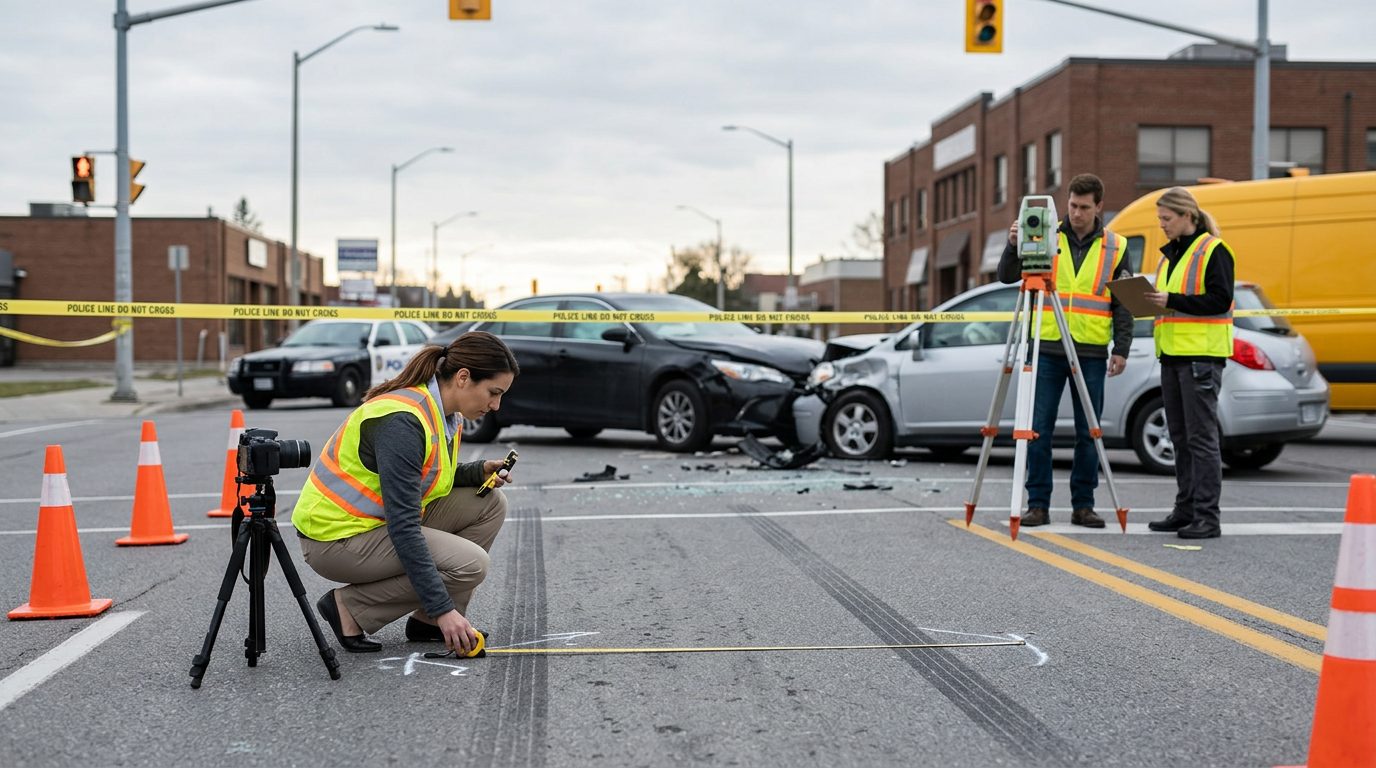
Car Accidents
Intersection Car Accident: Who's Liable and What You Can Recover
Intersection crashes often involve complex liability questions. Learn how fault is determined in Florida and what compensation may be available to you.
By CHG Lawyers · Published September 28, 2026
Intersection Car Accident Claims: Liability, Compensation & Your Rights
Intersection car accidents often cause severe injuries. Vehicles collide at higher speeds and from angles that create greater force than other accident types. If you were hit at an intersection, understanding how liability is determined—and what compensation you may recover—is the first step toward protecting your rights.
Not sure what your next step is?
Talk it through with our team — the first consultation is free, confidential, and carries no obligation.
What Happens in an Intersection Car Accident?
Intersection car accidents involve vehicles crossing paths at a junction, often at high speeds. Common causes include running red lights or stop signs, failure to yield the right of way, distracted driving, speeding, and misjudging oncoming traffic.
The angle and speed of these collisions often cause severe injuries. Head trauma, spinal cord damage, internal bleeding, and broken bones are common. These injuries can be life-altering.
A driver who runs a red light and T-bones your vehicle can leave you with permanent paralysis, brain damage, or amputation. Understanding who is liable is the foundation for recovering the compensation you need to rebuild your life.
How Is Liability Determined in an Intersection Car Accident?
Liability depends on who violated traffic laws or acted negligently. The driver with the legal right to proceed through the intersection is not automatically at fault simply because they were struck. Fault lies with whoever violated that right.
Right-of-way rules are the starting point. If you had a green light and proceeded through the intersection, and another driver ran a red light and hit you, that driver violated your right of way. That driver is likely liable. If you were turning left across oncoming traffic and collided with a driver going straight, the driver going straight had the right of way. You may bear fault for the collision.
Traffic signals and signs create strong evidence of fault. Running a red light, ignoring a stop sign, or failing to yield when required by law establishes negligence. Police officers document these violations in accident reports. Traffic camera footage often captures them. Witness statements corroborate what happened.
Comparative fault in Florida means you may still recover damages even if you share some responsibility. Under Florida Statute § 768.81, if you are found 50% or less at fault, you can recover damages reduced by your percentage of fault. If you are found more than 50% at fault, you generally recover nothing. Even partial fault does not bar your claim if you were less responsible than the other driver.
Police reports, witness statements, traffic camera footage, and vehicle damage patterns all help establish liability. An accident reconstruction expert can analyze the physics of the collision—determining vehicle speeds, impact angles, and which driver’s actions caused the crash.
How Much Compensation Can You Get From an Intersection Car Accident?
Compensation depends on the severity of your injuries, your medical costs, lost wages, and the degree of the other driver’s fault. No two accidents are identical. No two injury claims are worth the same amount.
Economic damages cover your actual financial losses. These include emergency medical care, hospitalization, surgery, ongoing treatment and rehabilitation, prescription medications, medical equipment, lost income, and lost earning capacity. Keep receipts, medical bills, and pay stubs to document these losses.
Non-economic damages compensate for pain and suffering, emotional distress, loss of enjoyment of life, and permanent scarring or disfigurement. These damages are harder to quantify but are real and recoverable. A person left with chronic pain, limited mobility, or visible scars has suffered a genuine loss of quality of life.
Punitive damages are rare but possible in cases of gross negligence or intentional misconduct—for example, if the other driver was racing or driving under the influence. Punitive damages punish the wrongdoer and deter similar conduct.
Insurance policy limits set a ceiling on what the at-fault driver’s insurer will pay. If the driver’s liability coverage is $25,000 and your damages are $100,000, the insurer will pay only $25,000. Your own uninsured/underinsured motorist coverage may bridge the gap. This coverage allows you to recover the difference from your own insurer. Reviewing your own insurance limits is critical after an accident.
Beware: The ‘2026 Car Accident Compensation Program’ Scam
There is no federal or state “2026 car accident compensation program” offering automatic payouts to crash victims. This is a scam. Scammers use this false claim to lure injured people into paying upfront fees or sharing personal information.
Red flags that signal a scam:
- Unsolicited contact: Calls or emails you did not request, claiming you qualify for a payout
- Upfront payment demands: Requests for money before any legal work is done or before you receive compensation
- Vague “government” language: References to a “federal compensation fund,” “government program,” or “settlement pool” that cannot be verified through official channels
- Artificial urgency: Pressure to act immediately, provide personal information today, or “claim your funds before the deadline”
- Unverifiable sources: A website, phone number, or caller you cannot confirm through the National Highway Traffic Safety Administration (NHTSA), the Federal Highway Administration (FHWA), or your state’s Department of Transportation
Real compensation comes through three legitimate paths: filing an insurance claim with the at-fault driver’s insurer, negotiating a settlement with that insurer, or filing a lawsuit and obtaining a court judgment. None of these involve a mysterious “program,” automatic payouts, or upfront payments to you.
If you received a call about a 2026 compensation program, hang up and do not provide personal information. The legitimate path forward is reporting the accident to your own insurer, documenting your injuries and losses, and consulting an attorney.
Have questions about what happened?
Ask our team directly. The first conversation is free, confidential, and there is no obligation to continue.
What Is the Settlement Process for an Intersection Car Accident?
After an intersection crash, the settlement process typically unfolds in stages. You report the accident to your own insurer and the at-fault driver’s insurer. You document your injuries, medical treatment, and losses with receipts, medical records, pay stubs, and photos of vehicle damage.
The at-fault driver’s insurer investigates liability. If they accept fault, they may make a settlement offer. Your attorney negotiates with the insurer to reach a fair settlement. If the insurer’s offer is too low or they deny liability, you may file a lawsuit and take the case to trial.
Most intersection accident claims settle before trial. Knowing your case’s value and being willing to litigate strengthens your negotiating position. An insurer is more likely to offer fair compensation if they know you are prepared to fight in court.
Intersection Accidents and Catastrophic Injuries
Intersection collisions—especially those involving trucks, high speeds, or multiple vehicles—can cause catastrophic, permanent injuries. Spinal cord injuries and paralysis, traumatic brain injuries, amputations, and severe burns are more common in high-impact intersection crashes.
In catastrophic injury claims, intersection accidents involving trucks or multiple vehicles often result in permanent spinal cord damage. Victims may be paralyzed from the waist or neck down. These injuries demand lifelong medical care, adaptive equipment, home modifications, and attendant care. Compensation must reflect not just immediate medical costs but decades of future care and lost earning potential.
Catastrophic injury claims involve much larger compensation because the victim faces a lifetime of consequences. Insurance policy limits may be insufficient. You may have claims against multiple parties: the driver, the vehicle manufacturer if a defect contributed to the crash, and the property owner if the intersection was poorly maintained or lacked proper signage. An attorney experienced in catastrophic injury claims can identify all sources of recovery.
What Should You Do After an Intersection Car Accident?
Immediate action protects your health, your evidence, and your legal rights.
Seek medical attention immediately, even if you feel fine. Some injuries—internal bleeding, spinal cord damage, traumatic brain injury—appear hours or days after the crash. A medical record created on the day of the accident establishes the link between the crash and your injuries.
Call police and obtain a copy of the accident report. The report documents the scene, the officers’ observations, and any traffic violations.
Collect contact information from witnesses and the other driver(s). Witness statements are powerful evidence of fault.
Take photos of vehicle damage, the accident scene, traffic signals, road conditions, and any visible injuries. Photos preserve evidence that may change or disappear.
Report the accident to your insurance company promptly. Most policies require prompt notice.
Keep all medical records, bills, and documentation of lost wages. These prove the extent of your injuries and losses.
Do not accept a settlement offer without understanding the full extent of your injuries and losses. Early settlement offers from insurers are often far below what your claim is worth.
Why Intersection Accidents Require Legal Guidance
Intersection liability can be complex. If both drivers share some fault, if traffic signals were malfunctioning, or if visibility was poor, determining who was responsible requires careful analysis. Insurance companies often undervalue claims or deny liability.
Accident reconstruction experts may be needed to prove fault and the severity of your injuries. Florida’s comparative fault law means you need an attorney who understands how to maximize your recovery even if you bear partial responsibility (Fla. Stat. § 768.81(6)). An attorney can identify all available sources of compensation—the at-fault driver’s insurance, your own coverage, third-party liability—and pursue them aggressively.
Want to know where you stand?
Tell us what happened and our team will walk you through the options available to you, at no cost.
Frequently Asked Questions
What is the deadline for filing a lawsuit after an intersection car accident in Florida?
For most injury claims that arose on or after March 24, 2023, you have two years from the date of the accident to file a lawsuit under Florida law. Missing this deadline means losing your right to sue. Acting promptly is critical.
Can I recover compensation if I was partly at fault for the intersection accident?
Yes, if you were 50% or less at fault (Fla. Stat. § 768.81(6)). Florida’s comparative fault rule allows you to recover damages reduced by your percentage of fault, as long as you were not more responsible than the other driver.
What if the at-fault driver’s insurance limits are too low to cover my damages?
Your own uninsured/underinsured motorist coverage may cover the difference. This allows you to recover from your own insurer for losses exceeding the at-fault driver’s policy limits.
What should I do if I receive a call about a “2026 car accident compensation program”?
Hang up. This is a scam. Do not provide personal information or pay any fees. Real compensation comes through insurance claims and lawsuits, not mysterious programs.
If you or a family member were injured in an intersection car accident—whether the injuries are still healing or you’re facing permanent, life-altering damage—you don’t have to navigate the insurance company or the legal system alone. People in your situation reach out to discuss their accident and explore what compensation they may be entitled to recover. Contact us for a free case evaluation.
How Intersection Accident Liability Is Determined
Right-of-Way Rules
Florida law assigns the right of way based on traffic signals, stop signs, and road markings. The driver who violated the right-of-way rule is typically found at fault—but liability can be shared if both drivers acted negligently.
Negligence and Duty of Care
Every driver has a legal duty to operate their vehicle safely and follow traffic laws. If a driver breaches that duty—by running a red light, speeding, failing to yield, or driving distracted—and causes a crash, they may be liable for injuries and damages.
Comparative Fault in Florida
Florida allows recovery even if you share some responsibility for the accident. You can pursue compensation as long as you are not more than 50% at fault (Fla. Stat. § 768.81(6)). Your award is reduced by your percentage of fault.
Evidence That Proves Fault
Police reports, traffic camera footage, witness statements, vehicle damage patterns, and accident reconstruction can all establish who caused the crash. Early documentation is critical to building a strong claim.
Time Matters
Florida law sets strict deadlines for filing a lawsuit after an intersection accident. Waiting too long can cost you your right to recover. Contact an attorney as soon as possible after the crash to protect your claim.
What Compensation May Be Available
Medical Expenses
Emergency care, hospitalization, surgery, rehabilitation, ongoing treatment, medications, and medical devices—all costs related to your injuries can be recovered from the at-fault driver.
Lost Wages and Income
If your injuries prevent you from working, you can seek compensation for lost income during recovery and, in cases of permanent disability, lost earning capacity over your lifetime.
Pain and Suffering
Beyond medical bills, you may recover damages for physical pain, emotional distress, loss of enjoyment of life, and the impact the injury has had on your daily activities and relationships.
Property Damage
The cost to repair or replace your vehicle, as well as any personal property damaged in the crash, can be included in your claim.
Why You Need a Personal Injury Attorney
Protect Your Rights
Insurance companies often minimize claims or deny liability. An attorney ensures your interests are represented and you are not pressured into accepting less than you deserve.
Navigate Complex Claims
Intersection accidents can involve multiple vehicles, unclear fault, and disputes over damages. We handle the investigation, negotiation, and legal filings so you can focus on recovery.
Accurate Damage Assessment
We work with medical professionals, economists, and accident reconstructionists to calculate the true value of your claim—including future medical care and long-term disability.
No Attorney’s Fees Unless There Is a Recovery
We handle your case on a contingency basis. You pay nothing upfront, and we only collect a fee if your claim results in a settlement or judgment in your favor.