

Igor Hernandez, Attorney | Florida Car Accident Claims
Partly at Fault? Understand How Florida Comparative Fault Can Affect Your Car Accident Claim
Here is a plain-language guide to how fault is shared, why it matters, and what to think about after a collision.
By CHG Lawyers · Published October 14, 2026
Comparative Fault Car Accident Florida: How It Affects Your Recovery
Not sure what your next step is?
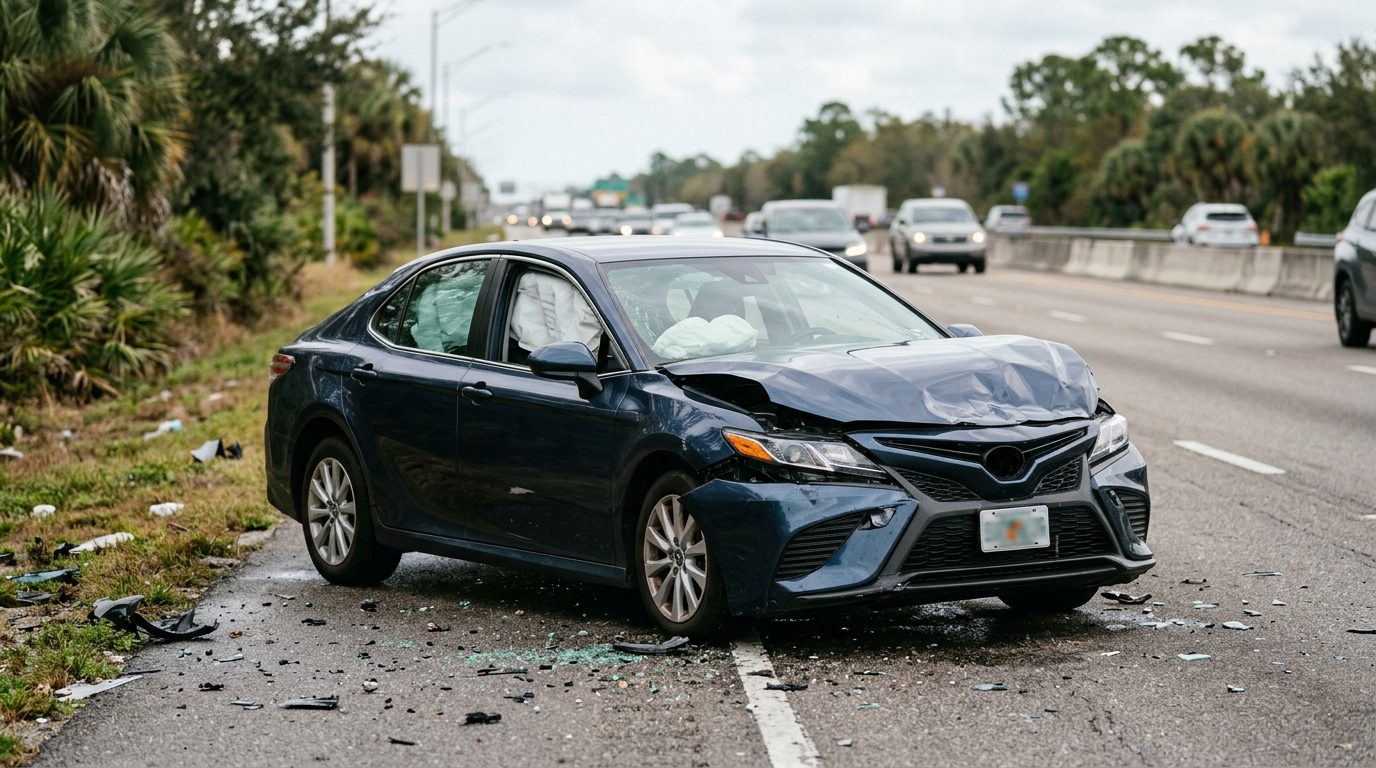
Comparative Fault in Florida: How It Affects Your Settlement
Comparative fault generally refers to each person’s share of the blame for an accident (Fla. Stat. § 768.81(6)). Under Florida’s comparative fault rules, you generally may recover damages even if you were partly at fault. Damages means money for your losses.
There is a limit. If you are found partly at fault, the amount you can recover is generally reduced by your percentage of responsibility.
Under Fla. Stat. § 768.81, for negligence actions filed after March 24, 2023, a person found greater than 50 percent at fault for their own harm generally may not recover damages. This rule does not apply to medical negligence claims under chapter 766, and whether it applies to your case depends on the facts of that case.
This rule matters most when you have a serious or catastrophic injury. Even a small reduction in fault can lower the amount you recover for long-term care and rehabilitation. Rehabilitation means therapy that helps you regain skills.
What Is Comparative Fault Car Accident Florida Law?
Florida generally allows injured people to recover damages. This is true even if they were partly responsible for the accident.
One important limit to note: for negligence actions filed after March 24, 2023, a person found greater than 50 percent at fault for their own harm generally may not recover damages, and this rule does not apply to medical negligence claims under chapter 766.
Under Fla. Stat. § 768.81, Florida follows a modified comparative fault rule. Your recovery is reduced by your own percentage of fault.
The statute also sets a limit. Under the statute, a party found greater than 50 percent at fault for his or her own harm generally may not recover damages in a negligence action filed after March 24, 2023, and medical negligence claims under chapter 766 are not subject to this rule.
The rules on this page are Florida’s. Florida’s rule is a middle ground. You get a chance to recover. But the other side may try to push your fault percentage as high as possible.
Why This Matters
You may still have a valid claim even if you made a driving error. For example, you may have missed a traffic signal or been speeding.
The question is not whether you were perfect. The question is whether you were more than 50 percent responsible.
If the other driver was more negligent than you, you may still be able to recover damages under Florida law. Negligence means failing to use reasonable care. Your recovery is reduced by your share of the blame. But you may still recover.
How Fault Is Determined in a Car Accident
Fault percentages are not arbitrary. They are based on evidence.
That evidence is gathered during the investigation. It may be presented to a jury if the case goes to trial.
Evidence Used in Fault Determination
Police reports form the foundation. The responding officer documents the scene. The officer also talks with witnesses and notes traffic violations. Often, the officer records preliminary fault findings.
A police report is a starting point. It is not the final word.
Insurance companies may conduct their own investigations. They may review:
- Witness statements from people who saw the accident
- Traffic camera footage from nearby intersections or businesses
- Vehicle damage patterns that show the point and force of impact
- Accident reconstruction (a study of how the crash happened) by engineers who analyze speed, braking, and trajectory (the path a vehicle travels)
- Traffic violations by either driver, such as running a red light, failing to yield, speeding, or distracted driving
- Road and weather conditions at the time of the accident
Both drivers’ actions are examined side by side. A driver who was speeding but had a green light may be found less at fault. A driver who ran a red light at normal speed may be found more at fault.
A driver distracted by a phone may share fault with a driver who did not keep a proper following distance.
Fault may be divided among the people involved in different percentages. Under Fla. Stat. § 768.81, the court enters judgment against each party. A judgment is the court’s final decision. It is based on that party’s percentage of fault. Percentages vary based on the specific facts of each accident.
How Comparative Fault Reduces Your Settlement
Your recovery is calculated by multiplying your total damages by the percentage you are not at fault.
The Math
Suppose your total damages are set at a certain amount. You are found 20% at fault. Your recovery would be reduced by 20 percent of that amount.
If you are found 40% at fault, the reduction would be 40 percent. The reduction is direct and proportional.
In everyday car accidents with minor injuries, a modest fault reduction may mean a relatively small loss. In catastrophic injury cases, the stakes are much higher.
Why Catastrophic Injuries Make Fault Disputes Critical
Catastrophic injuries include amputation, paralysis, traumatic brain injury, severe burns, and spinal cord injury. These injuries can involve long-term medical care, rehabilitation, prosthetics (artificial limbs or devices), and home modifications.
They can also involve lost earning capacity. This means lost ability to earn money in the future.
Claims in these cases may involve large losses. Those losses depend on the facts of each case.
Even a modest fault reduction in a larger claim can remove a significant amount. That money may be needed for prosthetics, home modifications, or years of rehabilitation. A larger reduction takes even more.
That may be the difference between long-term care and inadequate support.
Insurance companies may argue that you were more at fault than you were. Each percentage point assigned to you reduces your recovery.
If you have suffered a catastrophic injury and need guidance on fault disputes, you can learn more about catastrophic injury claims and how they are pursued.
Comparative Fault in Serious Truck Accidents
Truck accidents can involve more parties and records than typical car-to-car collisions.
Fault determination must account for:
- Truck driver negligence: speeding, distracted driving, fatigue, improper lane changes
- Company liability: inadequate driver training, pressure to meet unrealistic schedules
- Maintenance failures: faulty brakes, worn tires, defective equipment
- Hours-of-service violations: driving beyond legal limits without required rest
- Improper loading: cargo that shifts, falls, or causes instability
- The truck’s physical characteristics: size, weight, stopping distance, and blind spots
Even if you made a minor driving error, the truck driver’s negligence may be the primary cause. Truck crash claims often look closely at how the professional driver and the trucking company acted before the crash.
Catastrophic injuries in truck accidents can involve large losses. So fault percentage disputes can carry high stakes. An attorney can investigate the accident. An attorney can also challenge fault percentages that may be overstated.
Not sure what your next step is?
Why Comparative Fault Matters in Catastrophic Injury Cases
When an injury is permanent and severe, the losses may be large. So even a small percentage of fault can mean a meaningful reduction.
A person with an amputation may face long-term prosthetic replacement, medical care, physical therapy, and vocational rehabilitation. Vocational rehabilitation means job-retraining help.
A person with paraplegia or quadriplegia (paralysis from spinal cord injury) may require home modifications, accessible transportation, attendant care, and ongoing neurological treatment.
A person with a traumatic brain injury may need cognitive rehabilitation, assistive technology, and lifetime supervision.
These costs may continue over a lifetime. Insurance companies may be prepared to contest fault in these negotiations.
Accurate fault determination matters. It may affect your long-term financial security. It may also affect your ability to pay for the care you need.
How to Protect Your Settlement from Unfair Fault Assignment
You can take steps soon after an accident. These steps may help protect your claim.
At the scene:
- Take photos of vehicle damage, the accident scene, traffic signals, and road conditions
- Collect contact information from witnesses
- Do not admit fault or apologize. Statements like “I’m sorry” may be used against you
- Call police and request an accident report
After the accident:
- Document your injuries and medical treatment from day one
- Keep all records, bills, and provider notes
- Do not post about the accident on social media. Insurers may review posts and use them to argue you were less injured or at fault
- Preserve evidence. Keep your vehicle and do not repair it until the insurance company inspects it
- Do not give a recorded statement to the other party’s insurance company without legal advice
Legal consultation:
An attorney can investigate the accident independently. An attorney may be able to challenge fault percentages that seem overstated.
Early legal consultation may be helpful if you have suffered a serious or catastrophic injury.
When to Contact a Lawyer About Comparative Fault
Reach out to an attorney if any of these apply:
- You have suffered a serious or catastrophic injury (amputation, paralysis, traumatic brain injury, severe burns, spinal cord injury)
- The other party or their insurance company says you were significantly at fault
- You were told you cannot recover because you were partly responsible.
- The accident involved a truck, commercial vehicle, or multiple parties
- You are unsure whether your injuries qualify as catastrophic or what your claim may involve
Learn more about spinal cord injury settlements and traumatic brain injury claims. Comparative fault may affect different types of catastrophic cases, depending on the facts of each case (Fla. Stat. § 768.81(6)).

Frequently Asked Questions
What is Florida’s fault bar rule?
Under Florida’s modified comparative fault law, a person found greater than 50 percent at fault for their own harm generally may not recover damages in a negligence action filed after March 24, 2023. The rule does not apply to medical negligence claims under chapter 766, and results depend on the facts of each case.
Can I recover damages if I was partially at fault?
In most Florida negligence cases, generally yes. This is true as long as you are not found greater than 50 percent at fault for your own harm under Fla. Stat. § 768.81.
Your recovery is reduced by your percentage of responsibility.
How much does a fault reduction cost?
Your recovery is reduced in direct proportion to your share of fault. So each percentage point may matter more in a larger claim.
In a catastrophic injury claim, even a small reduction may be a significant loss for long-term care.
How does comparative fault apply to different types of personal injury cases?
For negligence actions filed after March 24, 2023, Fla. Stat. § 768.81 may, depending on the facts of each case, bar recovery for a party found more than 50 percent at fault for his or her own harm. The statute does not apply to medical negligence claims under chapter 766, and other exceptions and conditions may apply.
Each case depends on its own facts.
What if both drivers are equally at fault?
If you are found 50% at fault, you can generally recover 50% of your damages. Florida law may limit recovery when a claimant is found to be greater than 50 percent at fault, depending on the facts of each case.
How long do I have to file a lawsuit?
Deadlines for filing a lawsuit depend on the type of claim, when it accrued, and other facts of your case. “Accrued” means when the claim legally began.
Florida’s time-limit rules are in Fla. Stat. § 95.11. The rules for when a cause of action accrues are addressed in Fla. Stat. § 95.031.
Because these deadlines depend on the facts of each case, ask about your specific deadline promptly. Waiting can make it harder to gather evidence.
We can help you understand your rights.
People dealing with catastrophic injuries and fault disputes can reach out to us. You do not have to handle this alone.
Our free first consultation is confidential and carries no obligation to continue. CHG charges no attorney’s fees and no case costs unless there is a recovery.
Contact us for a free case evaluation.
Questions to Think About After a Florida Crash
What happened, and who was involved?
Police reports, photos, witness names, and vehicle damage can help show how the collision occurred. Keep copies of anything you receive.
What injuries have been documented?
Medical records and treatment notes may be relevant to your claim. Whether an injury is connected to the crash depends on the medical facts of your case.
Who may be responsible, and in what share?
Florida's comparative fault rules can affect how damages are reduced when more than one person contributed to a crash. Each case turns on its own facts.
Who has spoken with you?
Insurance adjusters may contact you early. Talking with a lawyer before giving a recorded statement or signing anything may help you understand your options.
Important: Do Not Assume Fault Is Settled
How CHG Can Help You Understand Your Options
Florida-Based Representation
CHG Personal Injury Lawyers represents people injured in car accidents and other crashes throughout Florida, including Miami, Orlando, Tampa, and Jacksonville.
Focused Practice
Our practice focuses on personal injury matters, including serious crashes, truck accidents, and catastrophic injury claims, and is guided by the experience of Igor Hernandez, who is admitted in Florida as a member of The Florida Bar.
We explain how Florida law may apply to your facts in plain language, so you can make informed decisions about your case.
CHG charges no attorney's fees and no case costs unless there is a recovery.