
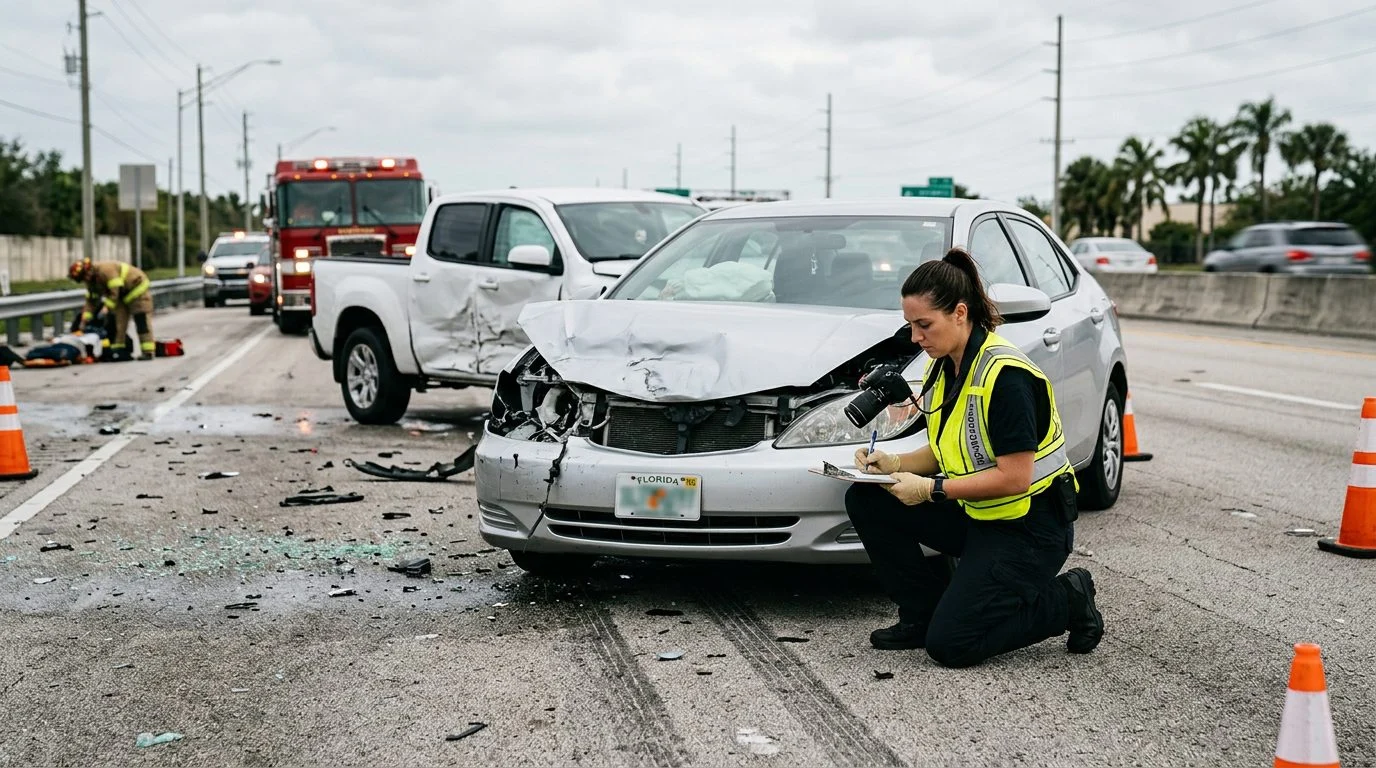
Car Accident Injuries | Coral Gables, Florida
Pain Days After a Car Accident? Here Is What to Know and What to Do Next
By Igor Hernandez, CHG Lawyers, Coral Gables, Florida. CHG charges no attorney's fees and no case costs unless there is a recovery.
Pain After Car Accident in Florida | CHG Lawyers
Still in pain after a car accident in Florida? You may wonder whether that pain counts legally. Pain after a crash can raise a legal question. But the answer is not automatic.
In many Florida motor-vehicle cases, a statutory permanency test limits pain and suffering claims. Comparative fault may also reduce what a person recovers, depending on the facts of each case and applicable Florida law (Fla. Stat. § 768.81(6)). Whether that test applies to you depends on your medical records and the facts of your crash.
By Igor Hernandez, responsible lawyer, CHG Personal Injury Lawyers, Coral Gables, Florida. Igor Hernandez is admitted in Florida as a member of The Florida Bar.
Not sure what your next step is?
Talk it through with our team — the first consultation is free, confidential, and carries no obligation.
Why Pain After a Car Accident Raises a Legal Question in Florida
Pain that lasts after a crash raises a legal question.
Many people leave a collision with neck pain, back pain, or headaches. Some have pain that comes and goes. Some miss work. Others skip activities they enjoy. They often wonder whether any of this matters legally.
In Florida, the answer depends on three things:
- The kind of injury
- What the medical records show
- How Florida’s motor-vehicle laws apply to your case
Pain is first a medical matter. Follow your doctors’ care. Attend your appointments. Describe every symptom, even the ones that seem minor.
Keep copies of bills, prescriptions, work notes, and letters from insurers. These records help your care team. They may also matter later if your claim is reviewed.
This page is general information. It is not medical advice. Whether any claim exists depends on your facts, your records, and Florida law. No result can be promised.
Economic vs. Non-Economic Damages, in Plain Terms
Damages are money awarded for harm. There are two main kinds.
Economic damages are money losses you can document. Examples include medical bills and lost wages.
Non-economic damages cover harms that do not come with a receipt. Examples include pain, suffering, mental anguish, and inconvenience.
Economic losses are usually shown with bills, pay records, and employer letters. Non-economic harm is harder to measure.
Florida also limits when non-economic harm can be pursued in a motor-vehicle case. That limit is why the permanency test matters most in this discussion.
Florida’s motor-vehicle statute uses the words pain, suffering, mental anguish, and inconvenience. § 627.737(2) sets out when those damages may be pursued. Pain alone does not automatically open that door.
Any recovery depends on the facts of each case. No one can predict how an insurer, a judge, or a jury will value a claim (Florida crash settlement procedures). Do not assume any amount from this page.
How Florida’s No-Fault System and PIP Work
Florida uses a no-fault system. Many motor-vehicle injuries are covered by Personal Injury Protection (PIP). Section 627.736 describes the PIP benefits Florida law requires. It also describes how those benefits are handled.
PIP is part of the coverage that applies to the vehicle in the crash.
Under § 627.737(1), owners, operators, and occupants with required coverage are generally exempt from tort liability for bodily injury. Tort liability means legal responsibility for harm. This exemption applies to the extent PIP benefits are payable.
The exemption does not apply if the person may sue for pain and suffering under subsection (2).
PIP has limits and conditions. They depend on the policy and the facts. Your policy documents and the benefits you have already received shape what remains. Ask about your PIP status when you review your case. Do not assume it covers everything.
The Permanency Threshold Under § 627.737(2)
Under § 627.737(2), pain and suffering damages in a motor-vehicle tort case are available only in the event that the injury or disease consists in whole or in part of the conditions listed in that subsection, and whether a particular injury meets that requirement depends on the facts and medical records of each case. This is the permanency threshold. It is a legal test for whether the injury is permanent.
In plain language, the categories are:
- Significant and permanent loss of an important bodily function. A body function is lost in a way that is both significant and permanent.
- Permanent injury within a reasonable degree of medical probability, other than scarring or disfigurement. Medical evidence must support that the injury is permanent.
- Significant and permanent scarring or disfigurement. Lasting, significant visible changes may fit this category.
- Death. The statute lists death as a category. Families with questions about this category may contact CHG Personal Injury Lawyers to discuss their situation.
Whether an injury meets a category depends on the facts. The statute says the injury must consist “in whole or in part” of one of these categories. So an injury may fit more than one.
The statute also lets a defendant ask the court, one time, to decide whether the plaintiff can submit evidence of meeting the requirements. Under § 627.737(3), that motion is decided 30 days before trial or a pretrial hearing, whichever comes first.
If the court finds the plaintiff cannot submit that evidence, the claim is dismissed without prejudice. That term means the dismissal does not decide the merits of the claim.
What Medical Records Need to Show
Medical records are central to any permanency question. They show what your doctors found. They also show how your condition has changed over time.
A crash alone does not establish that an injury is permanent. A crash alone does not establish that the crash caused the injury. Causation and permanency depend on the records of each case.
Insurers can ask for proof. Under § 627.736, if an insurer requests it, a physician, hospital, clinic, or other medical institution must furnish a written report. That report covers the history, condition, treatment, dates, and costs of treatment. The provider must also give a sworn statement identifying which expenses resulted from the bodily injury.
What can you do?
- Tell your doctors about every symptom, including ones that come and go.
- Keep appointment notes.
- Follow the care your doctors recommend.
- Keep your records organized.
Gaps in treatment, unclear notes, or missing bills may make the story harder to explain. None of this is medical advice. Your doctors make decisions about your care.
Have questions about what happened?
Ask our team directly. The first conversation is free, confidential, and there is no obligation to continue.
How Comparative Fault May Limit Recovery
Comparative fault means more than one person can share blame for a crash. Each share can affect what a person recovers. Florida’s comparative fault rule is in § 768.81.
Under § 768.81, contributory fault chargeable to the claimant diminishes proportionately the amount awarded as economic and noneconomic damages for an injury attributable to the claimant’s contributory fault, and how that applies depends on the facts of each case. It does not bar recovery on its own, subject to subsection (6).
Subsection (6) covers negligence actions. Under § 768.81(6), for negligence causes of action filed after March 24, 2023, a party found more than 50 percent at fault for their own harm generally may not recover any damages, and the statute’s conditions and exceptions depend on the facts of each case. This rule does not apply to personal injury or wrongful death arising from medical negligence under chapter 766.
Under § 768.81, the court shall enter judgment against each party liable on the basis of such party’s percentage of fault, and how that applies depends on the facts of each case. This is not joint and several liability.
Who was at fault depends on the evidence. That evidence includes photos, police reports, witness accounts, and vehicle damage (Florida crash claim procedures). Florida has amended these rules over time. So the dates of your crash matter. Contact CHG Personal Injury Lawyers to ask how these rules may apply to your facts.
Deadlines Apply: Why Timing Matters
Florida sets time limits for filing lawsuits in statutes. The deadline depends on the type of claim, the date it arose, and any exceptions. Florida’s limitations statute, § 95.11, is the starting point for these questions.
Because of this, the date of your crash matters. Contact CHG Personal Injury Lawyers to review which timing rule may apply to your facts.
Missing a deadline may affect a claim. The effect depends on the facts and any applicable exceptions.
Waiting can also make it harder to gather records and witness information. Those materials may not stay available forever. Deadlines apply to every claim. Plan your timing early.
Talk With Igor Hernandez About Your Situation
If pain from your crash has not gone away, you do not have to sort out the permanency rules alone. Our team can review the basics of your situation with you. Igor Hernandez can discuss the medical records, dates, and fault questions that apply to your case.
CHG Personal Injury Lawyers is based in Coral Gables and serves people throughout Florida. Igor Hernandez is admitted in Florida as a member of The Florida Bar.
CHG charges no attorney’s fees and no case costs unless there is a recovery. To discuss your situation, contact CHG Personal Injury Lawyers. CHG charges no attorney’s fees and no case costs unless there is a recovery.
To get started, contact CHG Personal Injury Lawyers. Share the basics of your crash, your treatment, and your key dates.

Frequently Asked Questions
Why might I feel pain a day or two after a car accident?
Some people do not notice pain right away. Soreness or stiffness can show up later. Whether any pain is related to a crash depends on your medical records and the facts of your case. Tell your doctor about any new symptom.
Should I see a doctor if my pain seems mild after a car accident?
Yes. It is generally a good idea to get checked by a doctor after any crash. This is true even if the pain seems minor. Follow your doctor’s care plan. Keep a record of your symptoms and appointments.
Can I recover compensation for pain and suffering after a car accident in Florida?
In Florida, pain and suffering damages in a car accident claim generally require meeting the permanent-injury threshold in Florida Statute § 627.737(2). Whether comparative fault limits recovery depends on the facts of each case and applicable Florida law (Fla. Stat. § 768.81(6)). Whether that threshold applies to you depends on your medical records and the facts of your case.
What should I do if I have pain after a car accident and I’m not sure my claim is worth pursuing?
Get a medical evaluation. Keep written notes about your symptoms, treatment, and any related expenses. To discuss your situation with CHG Personal Injury Lawyers in Coral Gables, Florida, contact the firm. CHG charges no attorney’s fees and no case costs unless there is a recovery. CHG charges no attorney’s fees and no case costs unless there is a recovery.
Want to know where you stand?
Tell us what happened and our team will walk you through the options available to you, at no cost.
How CHG Personal Injury Lawyers Can Help
Focused Florida Practice
CHG Personal Injury Lawyers focuses on personal injury cases for people across Florida, including car accidents, from our Coral Gables, Florida office.
Help Organizing Your Records
We can help you gather accident reports, medical records, bills, and photos so that the facts of your situation are clear from the start.
A Clear First Conversation
Call us to talk through what happened and what you are experiencing. Whether a claim exists depends on the facts, the medical records, and applicable Florida law.
CHG charges no attorney's fees and no case costs unless there is a recovery.
Important: Do Not Wait to Get Checked
If you have new or worsening pain, numbness, weakness, headaches, or dizziness after a crash, contact your doctor promptly and follow your doctors' care. Medical advice must come from your own health care providers.
Steps That May Help After a Crash
Tell Your Doctor About Every Symptom
Mention pain in your neck, back, shoulders, or head, even if it seems mild or started later.
Keep a Pain Journal
Write down where it hurts, how often, and what daily tasks have become harder, such as driving, working, or sleeping.
Save Accident Paperwork
Keep the police report number, insurance letters, receipts, and photos of your vehicle and injuries in one place.
Contact CHG Lawyers
Reach out to CHG Personal Injury Lawyers in Coral Gables, Florida to discuss your situation. CHG charges no attorney's fees and no case costs unless there is a recovery.