

Car Accidents in Kendall
Injured in a Car Accident? Know Your Rights
From minor collisions to life-altering injuries, you may have a claim. Learn what happens next and how to protect your recovery.
By CHG Lawyers · Published September 11, 2026
Car Accidents in Kendall: Florida’s 2-Year Deadline & Your Claim Rights
If you’ve been in a car accident in Kendall, you’re dealing with injuries, property damage, insurance calls, and a critical legal deadline you may not know about. In Florida, you have exactly two years from the date of your accident to file a lawsuit—after that, your right to sue is gone. Here’s what you need to know to protect yourself and your claim.

Not sure what your next step is?
Talk it through with our team — the first consultation is free, confidential, and carries no obligation.
The Two-Year Filing Deadline: Why It Matters Now
Florida Statute § 95.11 gives you two years from the date of your accident to file a personal injury lawsuit. This is not a suggestion—it’s a hard legal deadline. Miss it, and you lose your right to recover anything, no matter how serious your injuries or how clear the other driver’s fault.
Why this matters: Many people settle their claims through insurance long before the two-year mark. But if negotiations stall, the insurer denies your claim, or you discover new injuries later, you need the option to sue. The clock starts ticking the day of your accident. If you were hit on January 15, 2025, your deadline is January 15, 2027.
What to Do Immediately After Your Kendall Car Accident
Kendall sits in southwest Miami-Dade County, where traffic moves fast along major corridors like Kendall Drive, SW 88th Street, and the Palmetto Expressway. Multi-vehicle pileups, intersection collisions, and rear-end crashes happen regularly. The first hours after a crash are critical for your safety, your health, and your legal claim.
Immediate steps:
-
Move to safety if you can do so without further injury. Turn on hazard lights. If you’re on a busy road, move to the shoulder or a safe location away from traffic.
-
Call 911. Report the crash and request police and medical help. Even if injuries seem minor, emergency responders assess you and create an official record—this documentation is crucial for your claim.
-
Get the police report number. Officers file a crash report with the Miami-Dade Police Department or Florida Highway Patrol. Ask for the report number, the officer’s name, and badge number. You’ll need this for your insurance claim and any lawsuit.
-
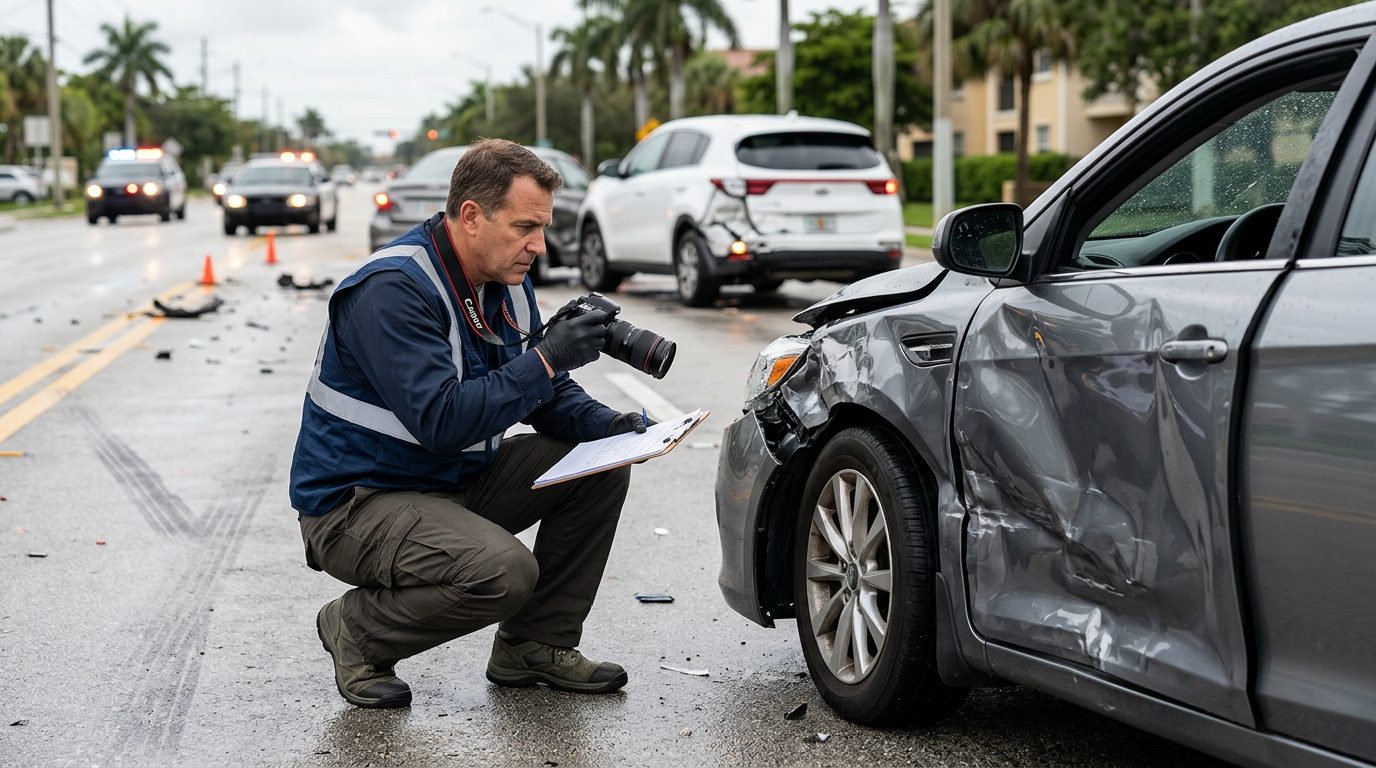
Photograph the scene if you’re able: vehicle damage, road conditions, traffic signals, skid marks, and the overall scene. Take photos of any visible injuries too.
-
Collect witness contact information. Get names, phone numbers, and email addresses from anyone who saw the crash. Witness statements often become critical if your case goes to trial.
-
Exchange information with the other driver(s): name, phone number, address, driver’s license number, license plate, vehicle make and model, and insurance company and policy number.
-
Seek medical attention, even if you feel fine. Injuries like whiplash, concussion, and internal bleeding can appear hours or days later. A medical evaluation creates a documented link between the crash and your injuries—essential for your claim.
Why the first hours matter: Insurance companies investigate quickly. Evidence disappears. Memories fade. Witnesses move away. The sooner you document everything, the stronger your claim and your position in settlement negotiations.
Florida’s Comparative Negligence Rule: How Shared Fault Affects Your Recovery
In Florida, liability—who is legally responsible for the crash—depends on who acted negligently (carelessly or recklessly). Common causes include speeding, running red lights, distracted driving, following too closely, and failing to yield.
Florida’s comparative negligence rule is critical—and it directly affects how much you can recover:
Under Florida Statute § 768.81, if you’re found to be more than 50% at fault for the accident, you cannot recover any damages. If you’re 50% or less at fault, you can recover damages—but your recovery is reduced by your percentage of fault.
Example: Your claim is worth $100,000. You’re found 20% at fault. You recover $80,000 (the $100,000 minus your 20% share of fault).
This rule means the insurance company’s investigation of fault directly impacts your payout. It’s why early legal guidance matters: a lawyer can help ensure the fault determination is accurate and fair.
You may be entitled to recover:
- Medical bills (emergency care, surgery, rehabilitation, ongoing treatment)
- Lost wages (time away from work during recovery)
- Pain and suffering (physical pain and emotional distress)
- Property damage (vehicle repair or replacement)
- In catastrophic injury cases, lifetime care costs and loss of earning capacity
Have questions about what happened?
Ask our team directly. The first conversation is free, confidential, and there is no obligation to continue.
Protecting Your Claim: What to Do and What NOT to Do
What you do—and don’t do—in the days and weeks after a crash can make or break your claim.
Do:
- Keep all medical records, bills, and receipts related to your injuries.
- Document your lost wages: get a letter from your employer stating the dates you missed work and your hourly rate or salary.
- Follow your doctor’s treatment plan completely. Missing appointments or stopping treatment early can be used against you to argue your injuries aren’t serious.
- Write down your memories of the crash while they’re fresh: what you were doing, what you saw, how you felt immediately after, and any pain or symptoms that appeared later.
- Report the crash to your insurance company promptly, but keep your statement brief and factual. Don’t volunteer extra details or opinions.
Don’t:
-
Post about the accident on social media. Insurance adjusters and defense lawyers monitor social media constantly. A photo of you at a family gathering, smiling or standing, can be twisted to suggest your injuries aren’t serious—even if you’re in significant pain. Don’t post about the accident, your injuries, your treatment, or your recovery. Don’t “check in” at medical appointments or rehabilitation facilities.
-
Give a recorded statement to the other driver’s insurance company without legal guidance. Adjusters are trained to ask questions designed to get you to say things that minimize your claim. A casual comment (“I feel a little better today”) can be used to argue you’re recovering faster than you actually are.
-
Accept an early settlement offer without understanding what your claim is worth. Insurers often lowball initial offers, hoping you’ll take less than you’re entitled to. You may not know the full extent of your injuries for weeks or months. A lawyer can review the offer and advise whether it’s fair.
-
Delay seeking medical care. The longer you wait to see a doctor, the weaker the link between the crash and your injuries. Insurance companies will argue that if your injuries were serious, you would have sought care immediately.
-
Sign medical records releases or settlement agreements without review. These documents can have long-term consequences for your claim and your medical privacy.
When a Car Accident Results in Catastrophic Injury
Some Kendall car accidents cause catastrophic, life-altering injuries. Crashes involving high-speed collisions, multi-vehicle pileups, or trucks can result in:
- Spinal cord injuries causing permanent paralysis (paraplegia or quadriplegia), loss of sensation, loss of motor function, and chronic pain
- Traumatic brain injuries causing cognitive impairment, memory loss, behavioral changes, and long-term disability
- Amputations and limb loss requiring prosthetics, rehabilitation, and lifetime adaptive equipment
- Severe burns requiring specialized wound care, skin grafts, and reconstruction surgery
Catastrophic injuries dramatically change the value and complexity of your claim. Lifetime medical care, home modifications, assistive equipment, and lost earning capacity can add up to millions of dollars. These cases require experienced legal representation to ensure you recover what you truly need.
Why Legal Representation Matters
You might think: “It’s just a car accident. I can handle this myself.” But here’s the reality: insurance companies have teams of adjusters, investigators, and lawyers. They’re trained to minimize payouts. You deserve representation too.
A lawyer handles:
- Negotiating with insurance companies so you don’t have to
- Gathering and organizing evidence (medical records, police reports, expert opinions)
- Calculating the true value of your claim, including damages you might not know about
- Meeting filing deadlines (remember: you have only two years to file a lawsuit)
- Preparing your case for trial if settlement negotiations fail
- Navigating Florida’s comparative negligence rule to ensure fault is determined fairly
Many car accident victims don’t know what their claim is worth without legal guidance. An insurer might offer $15,000 for injuries that deserve $75,000. A lawyer reviews your medical records, lost wages, and long-term needs to ensure you understand your claim’s real value.
Cost is not a barrier. Personal injury lawyers work on a contingency fee basis: you pay no upfront costs, and the attorney is paid only if you recover compensation. If you don’t win, you don’t pay.
Want to know where you stand?
Tell us what happened and our team will walk you through the options available to you, at no cost.
Frequently Asked Questions
How long do I have to file a car accident claim in Florida?
You have two years from the date of the accident to file a lawsuit. This is a hard deadline. After it passes, you lose the right to sue and may lose your claim entirely. Don’t wait.
What if I was partially at fault for the accident?
Under Florida’s comparative negligence rule, you can still recover damages if you’re 50% or less at fault—but your recovery is reduced by your percentage of fault. If you’re more than 50% at fault, you cannot recover anything. This is why the fault investigation matters—and why legal guidance early on can protect your recovery.
Should I accept an insurance settlement offer?
Not without understanding what your claim is truly worth. Early settlement offers are often too low. A lawyer can review the offer and advise whether it’s fair or whether you should negotiate further or pursue a lawsuit.
What if my injuries don’t show up right away?
Delayed injuries are common after car accidents. Whiplash, concussion, and internal injuries can appear hours or days later. Seek medical attention even if you feel fine, and report any new symptoms to your doctor immediately. Document everything.
What if the other driver doesn’t have insurance?
Florida requires all drivers to carry personal injury protection (PIP) insurance. If the other driver is uninsured or underinsured, your own uninsured or underinsured motorist coverage may apply. A lawyer can help you navigate this and ensure you recover from the right source.

Get Help Now—Your Two-Year Deadline Is Ticking
If you’ve been hurt in a car accident in Kendall—whether it’s a minor fender-bender or a serious, life-altering injury—and you’re unsure about your next steps, a free case evaluation can help you understand your options, your rights, and your deadline. People in your situation reach out regularly, and there’s no obligation to move forward.
Don’t let the two-year deadline pass. Contact us today for a confidential conversation about your accident and injuries.
What to Do After a Car Accident
At the Scene
Check for injuries. Call 911 if anyone is hurt. Move to safety if possible. Exchange names, phone numbers, insurance information, and vehicle details with the other driver. Take photos of vehicle damage, the accident scene, and road conditions. Get contact information from witnesses.
After You Leave
Report the accident to your insurance company. Seek medical attention even if you feel fine—some injuries appear hours or days later. Keep records of all medical visits, prescriptions, and treatment. Document lost wages and other expenses related to the accident.
Protect Your Claim
Do not post about the accident on social media. Do not sign anything from the other driver's insurance company without legal advice. Do not accept a quick settlement offer without understanding the full extent of your injuries. Contact a personal injury attorney as soon as possible.
Your Legal Options
You may file a claim against the at-fault driver's insurance or pursue a lawsuit. An attorney can help you understand whether your injuries and damages warrant legal action and guide you through the process.
Time Matters
Florida law sets a deadline for filing a lawsuit after a car accident. The sooner you act, the sooner evidence can be preserved and your case can move forward. Waiting too long can cost you your right to recover.
Why CHG Personal Injury Lawyers
Focused on Your Recovery
We focus exclusively on personal injury cases. We understand the physical, emotional, and financial toll a car accident takes on you and your family.
No Fees Unless There's a Recovery
We work on contingency. You pay no legal fees unless we recover compensation for you. Your recovery comes first.
Available When You Need Us
We're here to answer your questions and guide you through every step. Contact us for a free case evaluation—no obligation.
Local Experience, National Reach
Based in Florida and serving clients nationwide, we bring local knowledge and resources to your case.