

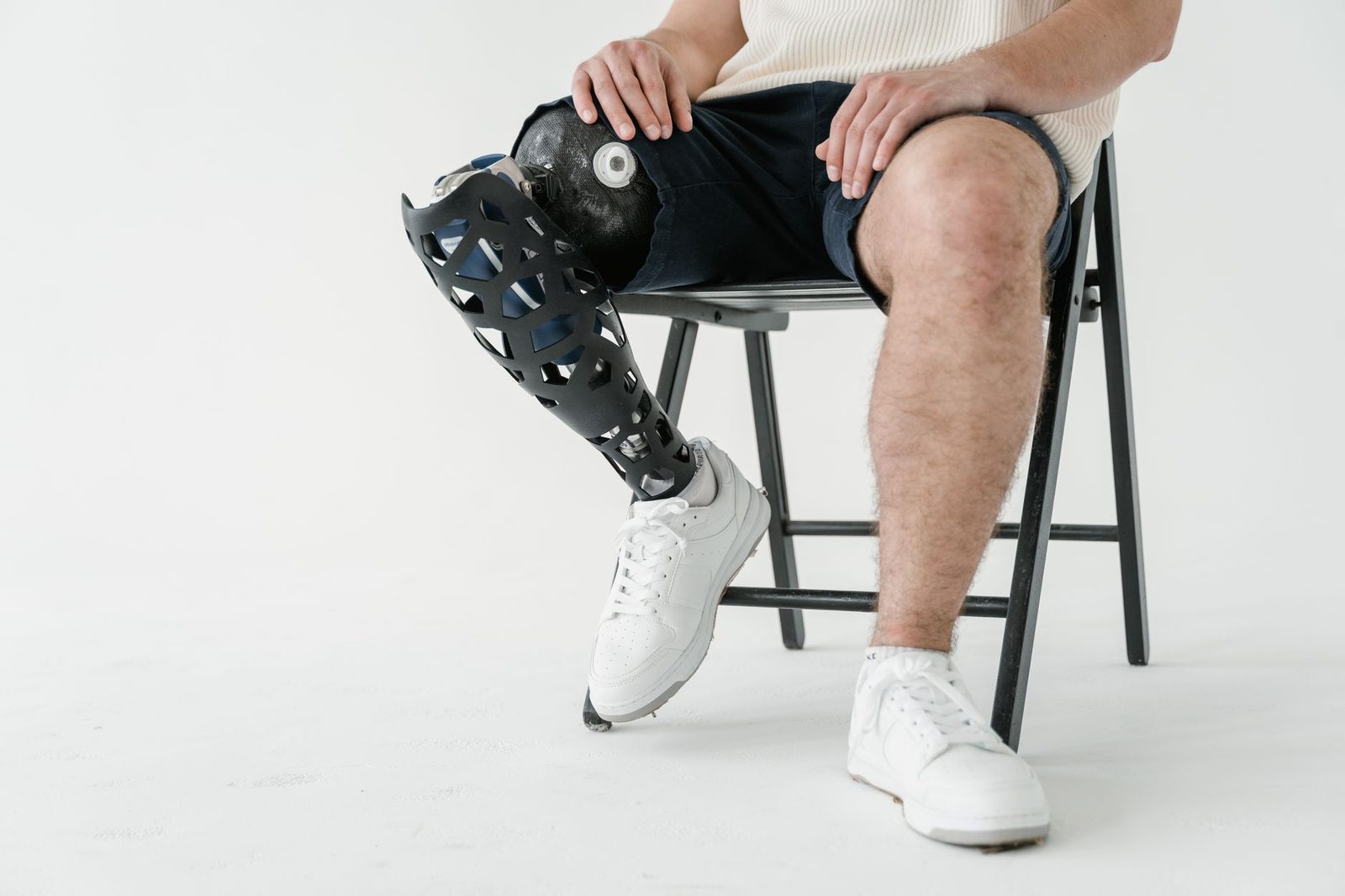
Amputation & Limb Loss Claims
How to Prove Fault After a Life-Changing Amputation Injury
Losing a limb changes everything. Winning your claim comes down to proving who was responsible and how their carelessness caused your loss. Here is how fault is established, in plain language.
Why Families Turn to CHG
Nationwide
Catastrophic injury cases accepted across the U.S.
Bilingual
English & Spanish client support
Licensed
Florida Bar–admitted attorneys
No Fee
Free, no-obligation case evaluation
By CHG Lawyers · Published July 26, 2026
How to Prove Fault in an Amputation Injury Case
To prove fault in an amputation case, you must show two things. First, someone else’s carelessness caused your limb loss — or the injury that led to it. Second, you suffered real losses because of it.
In plain terms: someone had a duty to be careful. They failed. That failure caused your amputation and its lifelong costs.
Losing a limb changes everything. Maybe a careless driver caused it. Maybe an unsafe property did. Maybe it was a dangerous machine or a medical error. If so, you may have the right to hold that party responsible. This page explains how fault is proven, step by step. That way, you can decide what to do next.
No lawyer can promise a result. What we can do is explain the process honestly. It is based on the catastrophic-injury cases our attorneys handle.
Not sure what your next step is?
Talk it through with our team — the first consultation is free, confidential, and carries no obligation.
What “proving fault” really means in an amputation case
Proving fault means using evidence to show that someone else’s negligence caused your amputation. Negligence means careless or unsafe conduct. Here, “fault” is not everyday blame. It is a legal standard. You meet it with documents, records, and expert opinions — not just your word that someone did wrong.
Amputation is permanent. You can’t undo it. That is why getting fault right matters so much. The party responsible should pay for the full, lifelong impact. That means more than your first hospital bill. Building that case takes careful proof from the start.
The 4 elements of negligence you must prove
You must prove four things: duty, breach, causation, and damages. This is the standard framework in U.S. personal-injury law. Miss one, and the claim fails. Here is what each one means in plain language.
- Duty. The other party owed you a reasonable standard of care. A truck driver must drive safely. A property owner must keep the property reasonably safe. An equipment maker must sell products that don’t maim.
- Breach. They failed to meet that duty. Examples: speeding, ignoring a broken gate, removing a machine guard, or missing an infection that led to amputation.
- Causation. That failure directly caused the injury that led to your limb loss. This is often the hardest part to prove. Insurers fight it the hardest.
- Damages. You suffered real losses — medical bills, lost income, permanent impairment, and pain.
Here is how the four connect. A trucking company skips required brake maintenance. That breaks a duty. The truck can’t stop and crushes a driver’s leg. That is causation. Surgeons must amputate, and the victim faces a lifetime of prosthetics and lost wages. Those are damages. All four parts are there.
The evidence that proves each element
Each element needs its own kind of proof. Strong cases match specific evidence to each one.
Duty and breach
To show the duty owed and how it was broken, we gather:
- Police and crash reports
- The specific safety rule that was broken — a traffic law, a Federal Motor Carrier Safety Administration rule for commercial trucks (the FMCSRs, 49 C.F.R. Parts 350–399), or an OSHA machine-guarding standard (29 C.F.R. §1910.212)
- Truck maintenance and inspection records, driver hours-of-service logs, and electronic logging device or “black box” (ECM) data
- Surveillance or dash-camera footage
- Property inspection and repair records for unsafe-premises cases
Causation
To link the accident to the amputation, we rely on:
- Complete medical records, from the emergency room through surgery
- Statements from treating surgeons and physicians
- Independent medical experts who explain why the limb couldn’t be saved
Causation is where many claims are won or lost. Our attorneys use the medical chart to tie the injury to the surgical decision. That means the operative report, the vascular or orthopedic consult, and the pathology. That is what makes causation stick.
Damages
To prove your losses — past and future — we gather:
- Hospital bills, prosthetic estimates, and future-care costs
- A professional life-care plan that projects lifelong needs
- Wage records and vocational-expert opinions on lost earning power
- Evidence of how the injury changed daily life
Physical evidence matters too. The vehicle, the machine, or the defective part can prove exactly what went wrong. Accident reconstructionists and biomechanical engineers often rebuild the event to show fault.
Acting early is critical. Camera footage is often erased within days or weeks. Vehicles get repaired or scrapped. Memories fade. The sooner someone saves this evidence, the stronger the case.
Who can be held responsible for an amputation injury
More than one party can be at fault. It depends on how the amputation happened. Finding every responsible party is a key part of building the claim.
- Truck and highway crashes. The driver, the trucking company, a maintenance contractor, or a cargo loader may share fault. Learn more on our truck accident claims page.
- Workplace and machinery incidents. Unguarded or defective equipment can support a claim against a manufacturer. It can also support a claim against a party other than your employer. This is true even when workers’ compensation covers the employer.
- Medical negligence. A surgical error can cause avoidable limb loss. So can a missed compartment syndrome or infection, or a delayed diagnosis.
- Attacks on unsafe property. Maybe you were assaulted, shot, or attacked at an apartment complex, parking garage, hotel, bar, or store. And maybe the owner failed to provide reasonable security — working locks, gates, lighting, cameras, or guards. If so, that owner may be responsible.
That last situation has a legal name: negligent security. You don’t need to know the term to have a claim. Say a property owner failed to keep people reasonably safe. And say that failure led to a violent attack that cost you a limb. You may be able to sue that owner. Our negligent security claims page explains how these cases work.
Why amputation cases can be hard to prove
Amputation cases are among the hardest injury claims to prove. The cause is often disputed, and the losses are lifelong. Disputed causation needs strong medical and expert evidence.
Insurers push back in predictable ways. They may argue a pre-existing condition weakened the limb, such as diabetes or peripheral artery disease. They may claim the amputation wasn’t truly necessary. Or they may say you share fault for the accident.
Florida law makes shared fault matter. Under Fla. Stat. §768.81, Florida uses modified comparative negligence. In short, if you’re found partly at fault, your recovery drops by your share. And under the March 2023 amendment (HB 837), there is a hard limit. If you’re found more than 50% at fault, you generally recover nothing. That threshold is exactly why insurers work so hard to shift blame onto you. Pushing you past 50% ends the claim.
The answer is thorough proof of the full, lifelong impact. Documenting decades of future needs is what separates a strong claim from a weak one.
Have questions about what happened?
Ask our team directly. The first conversation is free, confidential, and there is no obligation to continue.
What amputation claims can seek to recover
There is no fixed dollar figure for an amputated leg or arm. The value depends entirely on the specific losses you can prove. Anyone quoting a set number is guessing.
Amputation claims commonly seek to recover:
- Past and future medical care
- Prosthetics and their lifetime replacements
- Home and vehicle changes for accessibility
- Lost wages and reduced earning capacity
- Pain, suffering, and permanent impairment
A professional life-care plan is central to valuing these needs. It projects the cost of prosthetics, therapy, medical care, and equipment across your lifetime. That includes the fact that many prosthetic limbs must be replaced every few years and adjusted often. Without this plan, future costs get badly undercounted. To understand this document, see our overview of catastrophic injury claims.
Common mistakes that weaken an amputation claim
The most common mistakes are waiting too long, talking to insurers too soon, and undervaluing lifelong costs. Any one of these can quietly damage an otherwise strong case.
- Waiting too long. Evidence disappears, and legal deadlines can bar the claim entirely. In Florida, Fla. Stat. §95.11 generally gives you two years to file a negligence claim for causes starting on or after March 24, 2023.
- Giving a recorded statement or taking a quick settlement. Insurers often push early offers before your future costs are known. Once you settle, you can’t reopen it.
- Gaps in treatment. Missing appointments or ignoring your doctor gives insurers room to dispute causation.
- Posting on social media. Photos and comments can be twisted to undercut your claim.
- Guessing at lifelong needs. Valuing decades of care without a life-care plan almost always shortchanges you.
First steps to protect your right to prove fault
Save evidence, get steady medical care, and document everything. If you’re able:
- Photograph the scene, the vehicle, the machine, or the property hazard.
- Keep the defective product or damaged item if you safely can.
- Write down witness names and contact information.
- Save every medical record, bill, and receipt in one file.
- Follow your treatment plan and keep all appointments.
A catastrophic-injury attorney can take the investigation from there. That means sending letters to preserve footage before it’s erased. It means hiring reconstruction and medical experts. It means finding every liable party. And it means building a life-care plan that captures the true, lifelong cost of your injury.
Talk to CHG Personal Injury Lawyers about your case
Life after limb loss is hard enough without fighting an insurance company alone. You shouldn’t have to prove fault on your own while you’re still healing and adjusting.
CHG Personal Injury Lawyers handle catastrophic injury and amputation cases nationwide. Our attorneys are licensed and admitted to The Florida Bar. We offer a free, no-obligation case evaluation in English and Spanish (en español). This way, you can understand your options with no pressure.
We can’t promise a specific result. What we can offer is an honest, careful look at what happened. We can also explain what it would take to hold the responsible party accountable.
Request your free case evaluation. To learn more, visit our amputation and limb loss resource.

Want to know where you stand?
Tell us what happened and our team will walk you through the options available to you, at no cost.
Frequently asked questions
What are the 4 elements of negligence in an amputation case?
Duty, breach, causation, and damages. You must show the other party owed you care, failed that duty, caused your amputation, and left you with real losses.
What is the hardest injury to prove in a personal-injury claim?
Catastrophic injuries like amputation are among the hardest. The cause is often disputed, and the losses last a lifetime. This needs strong medical and expert evidence.
How much is an amputated leg worth in a lawsuit?
There is no fixed amount. The value depends on your specific documented losses — medical care, prosthetics, lost earnings, home modifications, and permanent impairment.
How long do I have to file an amputation injury lawsuit in Florida?
Florida generally allows two years to file a negligence claim for causes starting on or after March 24, 2023, under Fla. Stat. §95.11. Deadlines can vary, so act quickly.
Can I still recover money if I was partly at fault?
Possibly. Under Fla. Stat. §768.81, your recovery is reduced by your share of fault. But you generally recover nothing if you’re found more than 50% at fault.
The Four Elements of Fault You Must Prove
1. Duty
The other party owed you a reasonable level of care — a trucking company must maintain safe vehicles, a manufacturer must build safe equipment, a doctor must meet the accepted standard of care.
2. Breach
They failed that duty. A distracted driver, a defective machine guard, an ignored safety rule, or a missed diagnosis can all be a breach of the care that was owed to you.
3. Causation
That failure actually caused your amputation. This is often the hardest link to prove, connecting the wrongdoing directly to the loss of your limb.
4. Damages
You suffered real, measurable losses — medical bills, prosthetics, lost income, home modifications, and the profound impact on your daily life.
The Evidence That Builds a Strong Amputation Case
Medical Records
Surgical notes, imaging, and treating-physician statements document the injury and confirm the amputation was necessary.
Expert Testimony
Medical, engineering, and accident-reconstruction experts help explain how the injury happened and why the other party is responsible.
Preserved Physical Evidence
A defective product, a truck's black-box data, or a maintenance log can be decisive — and can disappear quickly if not preserved.
Life-Impact Proof
Records of prosthetic needs, rehabilitation, lost earning capacity, and how your life has changed all support the full value of your losses.
Act Quickly to Protect the Evidence
Critical proof — a damaged machine, vehicle data, or surveillance footage — can be repaired, overwritten, or lost within days. The sooner an attorney can send preservation notices and investigate, the stronger your ability to prove fault.