

Pedestrian Accident Attorney in Miami, FL
Focus on Your Healing We’ll Handle the Path Forward
Pedestrian Accident Attorney in Miami, FL
The driver who hit you has an insurance company with a legal team already building their defense. You have the right to one too.
Miami is one of the most dangerous cities in the United States for people on foot. Wide arterials, aggressive driver culture, high-speed urban roadways, and a pedestrian population that includes millions of tourists, elderly residents, and workers who depend on walking and transit create a lethal combination on Miami's streets.
When a driver strikes you in a crosswalk or intersection, the injuries are catastrophic. And the insurance landscape is more complex than most victims realize: PIP, bodily injury liability, underinsured motorist coverage, commercial policies, every source matters.
CHG Lawyers' attorney team personally handles every pedestrian accident case in English and Spanish. Free, confidential consultation available 24 hours a day.
Free consultation, 24 hours, English and Spanish.
Get Your Free Case Review
Takes 30 seconds. Our team will respond in under 10 minutes.
Recent Recoveries for Accident Victims
Insurance Research Council data shows that represented pedestrian accident victims recover 3.5 times more than unrepresented victims — a gap that is widest in cases involving the most serious injuries.
South Florida
Miami-Dade County
Miami-Dade
Settlement
Does Florida PIP Cover Pedestrians? Yes.
However, under Florida’s no-fault system, you must use your own auto insurance (or a resident relative's) first. You can only use the striking driver's insurance if you do not own a car or live with a relative who does. Additionally, your injuries must be permanent or severe before you can sue the driver for pain and suffering.
Florida Law and Miami Pedestrian Rights — F.S. 316.130
When Drivers Must Yield
Florida Statute 316.130 governs pedestrian rights and duties on Florida roadways. Drivers are required to yield to pedestrians in marked crosswalks and in unmarked crosswalks at intersections. When a pedestrian is in a crosswalk, drivers approaching from both directions must stop and remain stopped until the pedestrian has cleared the lane. Miami drivers rolling through rights on red without yielding, and accelerating through yellow signals into intersections where pedestrians have begun crossing, are core liability bases in Miami pedestrian accident cases.
Comparative Fault Defenses and the 2023 Tort Reform 51% Bar
Under Florida's modified comparative fault standard (HB 837, effective March 24, 2023), insurance adjusters aggressively argue that pedestrians were jaywalking, crossing against a 'don't walk' signal, distracted by smartphones, wearing dark clothing at night, or walking in the roadway rather than on a sidewalk — any argument to push your fault above 50% and eliminate all recovery.
CHG Lawyers defeats them systematically: We obtain signal timing records from Miami-Dade County Transportation proving which signal was displayed at the moment of impact. We request surveillance footage from nearby businesses before it overwrites on 24 to 72-hour deletion cycles. We retain traffic engineering experts who evaluate whether crosswalk markings met FDOT standards. Where Miami-Dade County or FDOT failed to maintain safe infrastructure, we pursue government entity liability under F.S. 768.28.
Immigration Status is Confidential
You do not have to give your name to ask a question. We protect your rights under Florida law regardless of documentation.
Miami's Most Dangerous Pedestrian Corridors
NW 7th Avenue — Miami-Dade's Most Dangerous Pedestrian Corridor
Smart Growth America's Dangerous by Design research and FHSMV crash data consistently identify Northwest 7th Avenue — running through Liberty City, Allapattah, and into Hialeah — as Miami-Dade County's single most dangerous pedestrian corridor. High vehicle speeds, inadequate median refuges, long signal cycles that leave pedestrians crossing mid-block out of necessity, and faded crosswalk markings across multiple intersections create predictable, preventable crashes that Miami-Dade County and FDOT have repeatedly failed to adequately address.
Other High-Risk Miami Pedestrian Zones
- Biscayne Boulevard through downtown, Wynwood, the Design District, and Edgewater combines high tourist foot traffic with aggressive commuter driving.
- Southwest 8th Street (Calle Ocho) through Little Havana has chronic visibility issues from vehicles parked across sightlines.
- US-1 through Coral Gables, South Miami, and Kendall is particularly dangerous due to wide travel lanes, high speeds, and infrequent formal crossing infrastructure.
- Brickell Avenue generates rideshare pickup and drop-off conflicts and active construction zone pedestrian hazards daily.
CHG Lawyers' litigation strategy uses corridor-specific discovery: subpoenaing signal timing records, crosswalk maintenance logs, and prior accident incident reports from the precise location of your crash.
Damages Available to Miami Pedestrian Accident Victims
When Florida's serious injury threshold is met, pedestrian accident victims can recover all past and future medical expenses, lost wages and loss of earning capacity, pain and suffering, emotional distress, permanent impairment, loss of enjoyment of life, and loss of consortium. For catastrophic injuries — traumatic brain injury, spinal cord damage, pelvic fractures, amputations — lifetime care calculations and vocational impact assessments produce multi-million-dollar valuations.
Urgent: Evidence Preservation
The insurance adjuster will claim you crossed against the signal or "came out of nowhere."
- ⏱️ 24-72 Hours: Surveillance footage is deleted.
- ⏱️ Subpoena Required: Miami-Dade signal timing records must be formally requested.
Florida 2-Year Deadline
Florida's 2023 tort reform set a strict 2-year filing deadline for crashes occurring after March 24, 2023.
What to Do After Being Hit by a Car in Miami
Call 911 & Accept Transport
Accept transport even if you feel you can walk. Spinal fractures and TBI are frequently asymptomatic early on due to adrenaline.
Photograph Everything
Before moving. The vehicle, license plate, crosswalk markings, traffic signals, and your injuries from multiple angles.
Collect Witness Info
Names and phone numbers of everyone who saw the impact. Bystander testimony is often the deciding factor.
Request a Police Report
Regardless of how minor the driver claims it was. The report documents the driver's initial account.
Notify Nearby Businesses
Tell them to preserve surveillance footage. Most systems overwrite in 24 to 72 hours.
Seek Medical Evaluation
The gap between the crash and first medical documentation is what insurers use to minimize injury severity.
Call CHG Lawyers
Before giving any insurance statement. Under Florida's 51% bar, any admission can eliminate all recovery.
Why Miami Families Choose CHG Lawyers
Extensive trial experience. Complete confidentiality. Bilingual representation.
If I could give 5 more stars I would! Partner Igor Hernandez handled my case from the very beginning. He's knowledgeable, well versed in personal injury laws, and works diligently to achieve the best outcome.
These attorneys are amazing! I had a case with another lawyer I had to fire because he wouldn't pay attention to my case. CHG took my injury case over, got straight to work, and resolved it faster than expected.
I must say I had the best experience possible. Everyone I talked to was fantastic. John represented me and did an awesome job. I am very happy with the outcome.
Meet Your Personal Injury Team
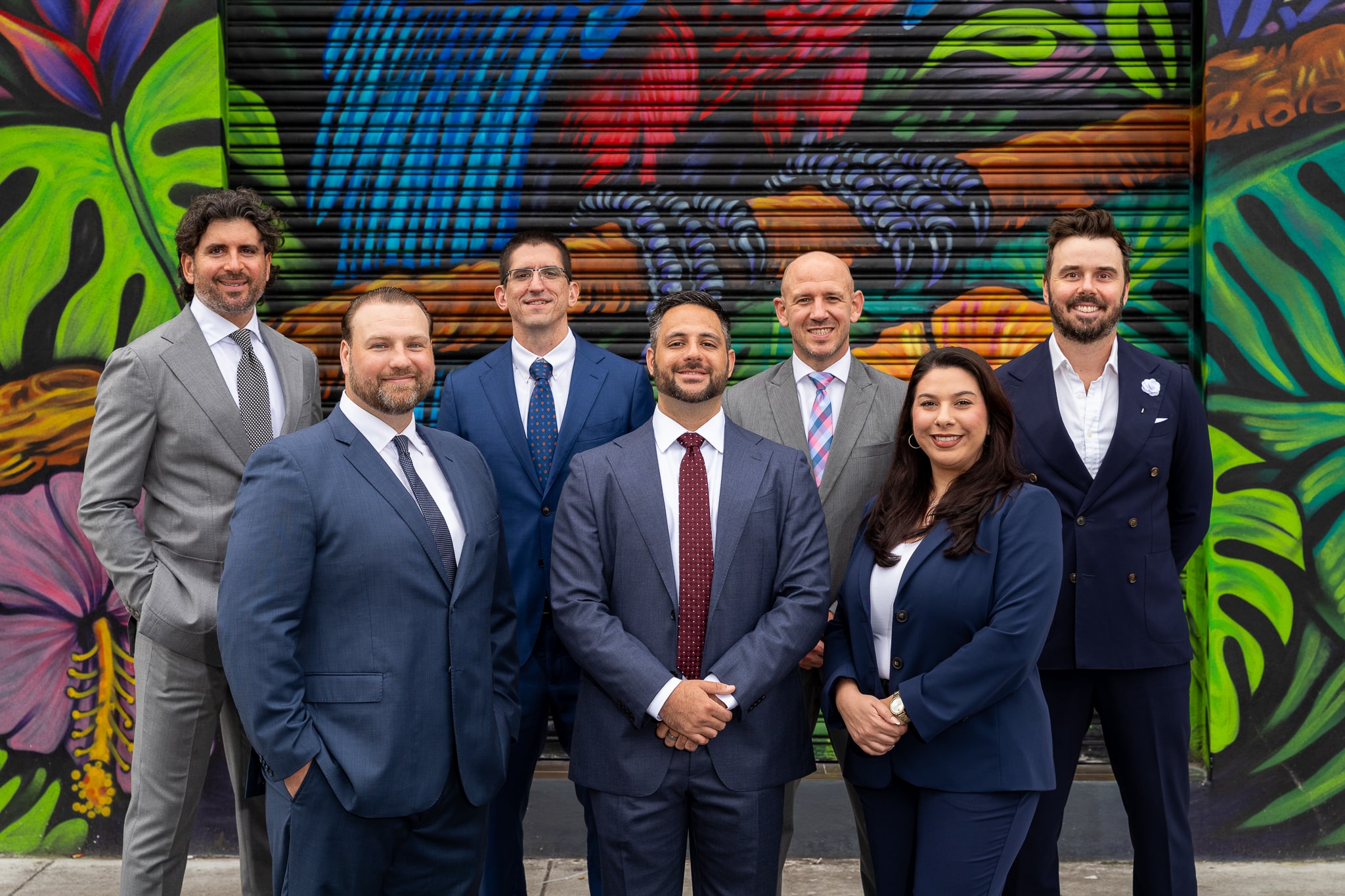
Let Us Fight For The Compensation That Is Owed To You
We’re here to fight for you, and we won’t rest until we get you the outcome you deserve.
Questions Miami Pedestrian Accident Victims Actually Ask
I was crossing mid-block — not in a crosswalk — when I was hit. Is this my fault?
Not necessarily, and possibly not at all. Florida law does not prohibit mid-block crossing in all circumstances — and even where crossing mid-block constitutes a traffic infraction, it does not automatically push your fault above 51% under the 2023 comparative fault standard. Drivers have a duty to avoid collisions with pedestrians they can see or should be able to see. The analysis turns on whether the driver was maintaining an appropriate lookout, traveling at a speed that allowed them to stop, and whether the pedestrian was visible for sufficient distance to allow the driver to react. CHG Lawyers investigates the specific conditions at the location — vehicle speed, road width, lighting, sightlines, the driver's stated account — to establish the driver's contributory negligence regardless of where in the roadway the crossing occurred.
The driver says I came out of nowhere. What happens now?
This is the sudden-emergence defense — the most common narrative Miami insurance adjusters use in pedestrian accident cases. It is frequently contradicted by physical evidence. If the driver had adequate sightlines, was traveling at the posted speed, and was maintaining appropriate lookout, a pedestrian in a normal walking path does not 'come out of nowhere.' The sudden-emergence argument collapses when surveillance footage shows the pedestrian was visible for multiple seconds before impact, when skid mark analysis shows the driver did not brake until after the collision, or when the driver's phone records show distraction in the seconds before impact. We investigate all of this from the first day. The driver's initial narrative to the responding officer is not the final word.
Does immigration status affect my right to file a claim in Florida?
No. Florida personal injury law protects every person injured on Florida roads regardless of citizenship, immigration status, or documentation. You are not required to disclose immigration status to obtain legal representation, pursue an insurance claim, or file a personal injury lawsuit in Florida courts. CHG Lawyers handles every case with complete confidentiality. No information about your immigration status is disclosed in the course of pursuing your claim. You do not have to provide your name to ask a question. Call 24 hours, English or Spanish, completely confidential.
The driver was uninsured. Can I still recover?
Possibly — and often more than you expect. Uninsured motorist (UM) coverage on any household vehicle you are related to may apply to your pedestrian accident injuries even though you were not in a vehicle. If a commercial vehicle struck you, the employer's commercial policy is a separate and typically much larger source of recovery than personal auto coverage. If road infrastructure failures — inadequate crosswalk markings, failed signals, inadequate lighting — contributed to the accident, government entity liability under Florida Statute 768.28 provides an additional recovery source. We identify every dollar available.
Can I still file if I signed something at the hospital or at the scene?
Call us and describe what you signed. Hospital intake forms, insurance claim forms, and even some roadside forms that look like simple documentation can contain language that affects your claim. In most cases these documents do not release your legal rights — but the specific language matters. Do not assume you signed away your case. Call us, tell us what the document said, and we will tell you what it means.
Contact CHG Lawyers — Free Confidential Consultation
The driver who hit you has an insurance company already working to close your case for the minimum amount. Every day without representation is a day that gap widens.
Call (305) 501-8021 NowSurveillance footage deletes in 24 to 72 hours. Call now.
2525 Ponce de Leon Blvd., Suite 300, Coral Gables, FL 33134
CHG Law
With years of experience in the field of personal injury law, the attorneys at CHG Law in Coral Gables, Florida, near Miami, have a proven track record of success. They have helped clients recover millions of dollars in compensation, and they are ready to help you too.
-
2525 Ponce de Leon Blvd. Suite 300
Coral Gables, FL, 33134 - (305)-501-8021
- [email protected]
You Don't Pay Until We Win
Don’t be held back by your injuries. Give us a call or submit the simple form below to speak with a lawyer within 24 hours.