

Car Accident Attorney in Coral Gables, FL
The Other Driver's Insurance Has Lawyers Working Right now. You Should Too.
Injured in a Coral Gables Crash? Recover Every Dollar You're Owed.
The at-fault driver's insurance company had lawyers on their file within minutes. You deserve the same firepower. CHG Lawyers has recovered $Millions for South Florida crash victims — and you pay $0 unless we win.
- Free case review — response in under 10 minutes
- No upfront fees. No fees unless we win.
- Available 24/7 · Se habla Español
Get Your Free Case Review
Takes 30 seconds. Our team will respond in under 10 minutes.
Every case is different but our strategy is the same: pursue every dollar you're owed.
Serious fall, permanent injury
Miami-Dade commercial vehicle
Rear-end, spinal injuries
Jury trial, disputed liability
Crosswalk, Coral Gables
Prior results do not guarantee a similar outcome. Each case is evaluated on its individual facts.
Car accident claims in Florida follow a set of rules most people don't know about — Florida's no-fault PIP system, the "serious injury" rule, and a 2023 law change. Knowing these rules before you speak with any insurance adjuster is the difference between getting the full amount you're owed and settling for less.
Florida's No-Fault PIP System
Florida is a no-fault state. Your own Personal Injury Protection (PIP) coverage pays first — regardless of who caused the crash.
How Your Own Insurance Pays First
Under Florida law (F.S. 627.736), every registered Florida vehicle carries a minimum $10,000 PIP policy. After a car accident, your own PIP pays 80% of reasonable medical expenses and 60% of lost wages, up to the $10,000 limit. In serious crashes — spinal injuries, traumatic brain injuries, complex fractures — $10,000 is exhausted quickly.
Going After the Other Driver's Insurance
Once PIP is used up and your injuries meet Florida's "serious injury" rule, you can go after the other driver's insurance directly for pain and suffering, future medical care, and lost income.
Why this matters before accepting any offer: Insurance adjusters know these rules. Early settlement offers are designed to close your claim before you can go after the other driver's full insurance. CHG Lawyers does not allow your medical records to be rushed.
Insurance adjuster already called you?
Do not give a recorded statement. Talk to us first — free.
Coral Gables Crash Corridors
US-1 (South Dixie Highway)
High-speed crashes are common near the SW 27th Ave interchange and the UM campus approach. The state (FDOT) is responsible for road maintenance here.
Ponce de Leon Boulevard
Left-turn and intersection crashes. Most crashes happen at stoplights, especially at Bird Road, Salzedo, and Alhambra.
Miracle Mile & Giralda
Intersection and pedestrian accidents. Delivery vehicles blocking the view of oncoming traffic create dangerous crosswalk situations.
Alhambra Circle
Drivers pulling out of driveways without being able to see oncoming traffic. These are slower crashes, but the injuries can still be serious.
What to Do After a Crash
1. Call 911 and remain at the scene
The police report creates the official record — who was at fault and how much damage was done.
2. Accept emergency medical evaluation
If you skip the ambulance, the other side's lawyers will use that gap in your medical records against you.
3. Photograph the crash scene comprehensively
Both vehicles, skid marks, traffic controls, road conditions, and injuries. Request dashcam footage immediately.
4. Collect witness information
Witnesses who saw what the other driver did are key when there's a disagreement over who was at fault.
5. Do not give recorded statements to any insurer
Under Florida law, if you're found more than 50% at fault, you get nothing. An early recorded statement can be twisted to make it look like the crash was your fault.
6. Call CHG Lawyers immediately
We start working on your insurance claim, medical documentation, and finding every source of money to pay you — all from day one.
Why CHG Lawyers for Your Case
Local at 2525 Ponce de Leon Blvd
Direct knowledge of US-1, Ponce de Leon, Miracle Mile, and Alhambra Circle crash patterns.
Complete coverage investigation
The other driver's insurance, uninsured driver coverage, Uber/Lyft policies, employer insurance, and government claims from day one.
Protecting you from shared-fault rules
Accident reconstruction, dashcam analysis, and witness accounts to prove the other driver caused the crash.
Bilingual — English & Spanish
Contingency fee — you pay no fees unless we win your case.
Every Coverage Layer
CHG Lawyers investigates all recovery sources:
- Bodily Injury Liability: The main source of money once your injuries qualify.
- UM/UIM Coverage: When coverage is inadequate.
- Commercial Vehicle: Uber/Lyft $1M policies.
- Employer Liability: Their employer can be held responsible too.
2023 Tort Reform
Statute of limitations — 2 years: Crashes after March 24, 2023. The clock starts immediately.
51% comparative fault: More than 50% at fault = zero recovery. We build reconstruction to defeat this.
What Happens When You Call Us
No legal jargon. No confusing forms. Here's exactly what to expect.
Call or Text
Reach us 24/7. Tell us what happened — in English or Spanish.
Free Case Review
An attorney evaluates your case within minutes. No cost. No obligation.
We Build Your Case
We investigate, preserve evidence, and deal with all insurance adjusters.
You Get Paid
You focus on healing. We fight for the maximum compensation you deserve.
Why Miami Families Choose CHG Lawyers
Attorneys with extensive car accident trial experience. Deep understanding of Miami-Dade courtrooms.
If I could give 5 more stars I would! Partner Igor Hernandez handled my case from the very beginning. He's knowledgeable, well versed in personal injury laws, and works diligently to achieve the best outcome.
These attorneys are amazing! I had a case with another lawyer I had to fire because he wouldn't pay attention to my case. CHG took my injury case over, got straight to work, and resolved it faster than expected.
I must say I had the best experience possible. Everyone I talked to was fantastic. John represented me and did an awesome job. I am very happy with the outcome.
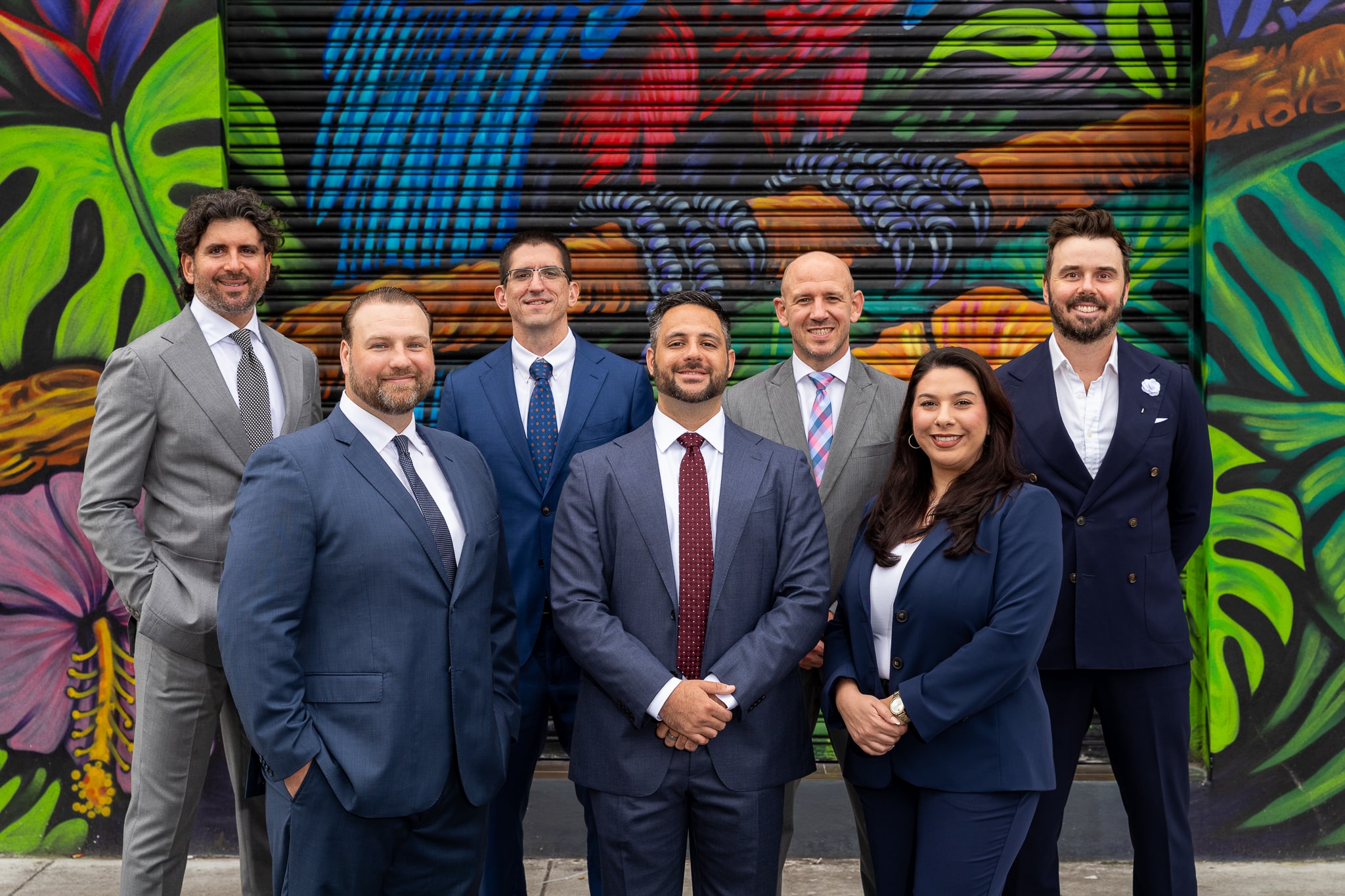
Meet Your Personal Injury Team
Let Us Fight For The Compensation That Is Owed To You
We’re here to fight for you, and we won’t rest until we get you the outcome you deserve.
Questions Coral Gables Car Accident Victims Actually Ask
The other driver's insurance company called and offered a settlement. Should I accept?
Not before speaking with a car accident attorney. The insurer contacts you early because early settlements close claims before your doctors know the full extent of your injuries and before anyone knows how much your future medical bills and lost income will add up to. Once you sign, you cannot seek additional compensation.
My own PIP insurer is offering $10,000. Is that all I can recover?
Almost certainly not. PIP is the first layer — not the only layer. Once PIP is used up and your injuries are serious enough, you can go after the other driver's insurance for pain and suffering, future medical care, and other damages beyond PIP. Your own uninsured/underinsured motorist coverage may also kick in.
The other driver was working or making a delivery when they hit me. Does that matter?
Significantly. Their employer can be held responsible too, and their business insurance is usually much larger than a regular person's car insurance. Active Uber/Lyft drivers trigger a $1,000,000 commercial insurance policy. The difference can exceed $990,000 in the same crash.
The crash was partly my fault. Can I still recover?
Possibly. Under a 2023 Florida law, if you are 50% or less at fault, you recover a reduced amount. More than 50% = nothing. We use accident reconstruction to prove the other driver was the one who actually caused the crash.
How long do I have to file a car accident claim in Coral Gables?
Two years from the crash date for crashes after March 24, 2023 (HB 837), reduced from 4 years. If a government vehicle or road defect was involved, there are extra steps and a separate deadline. Evidence, witness memory, and medical records all get weaker with time.
How much does it cost to hire CHG Lawyers?
Nothing upfront. We work on a contingency fee — meaning we only get paid if we recover money for you. No hourly bills. No retainer. No surprise charges. If we don't win your case, you owe us zero.
What if the at-fault driver doesn't have insurance — or fled the scene?
You may still recover through your own Uninsured/Underinsured Motorist (UM/UIM) coverage. If you were hit by a hit-and-run driver, your UM policy typically applies. We investigate every possible recovery source — including commercial policies, employer liability, and umbrella coverage.
How much is my car accident case worth?
Case value depends on medical bills, future care needs, lost wages, pain and suffering, and the available coverage layers. Minor soft-tissue cases often settle in the low five-figures; cases involving surgery, permanent injury, or commercial vehicles can reach six or seven figures. The only accurate answer comes from a free case review.
How long will my case take?
Most car accident cases resolve in 4–12 months. Complex cases involving catastrophic injury, disputed liability, or commercial defendants may take longer. We push every case aggressively — but we never rush a settlement at the expense of your full recovery.
Contact Our Coral Gables Car Accident Attorneys
The insurer handling your claim began building their defense the moment you reported the accident. CHG Lawyers begins fighting for you the moment you call.
Call Us Today. Free Consultation.Call (305) 501-80212525 Ponce de Leon Blvd., Suite 300, Coral Gables, FL 33134
Email: [email protected] · 24/7 · English & Spanish
CHG Law
With years of experience in the field of personal injury law, the attorneys at CHG Law in Coral Gables, Florida, near Miami, have a proven track record of success. They have helped clients recover millions of dollars in compensation, and they are ready to help you too.
-
2525 Ponce de Leon Blvd. Suite 300
Coral Gables, FL, 33134 - (305)-501-8021
- [email protected]
You Don't Pay Until We Win
Don’t be held back by your injuries. Give us a call or submit the simple form below to speak with a lawyer within 24 hours.